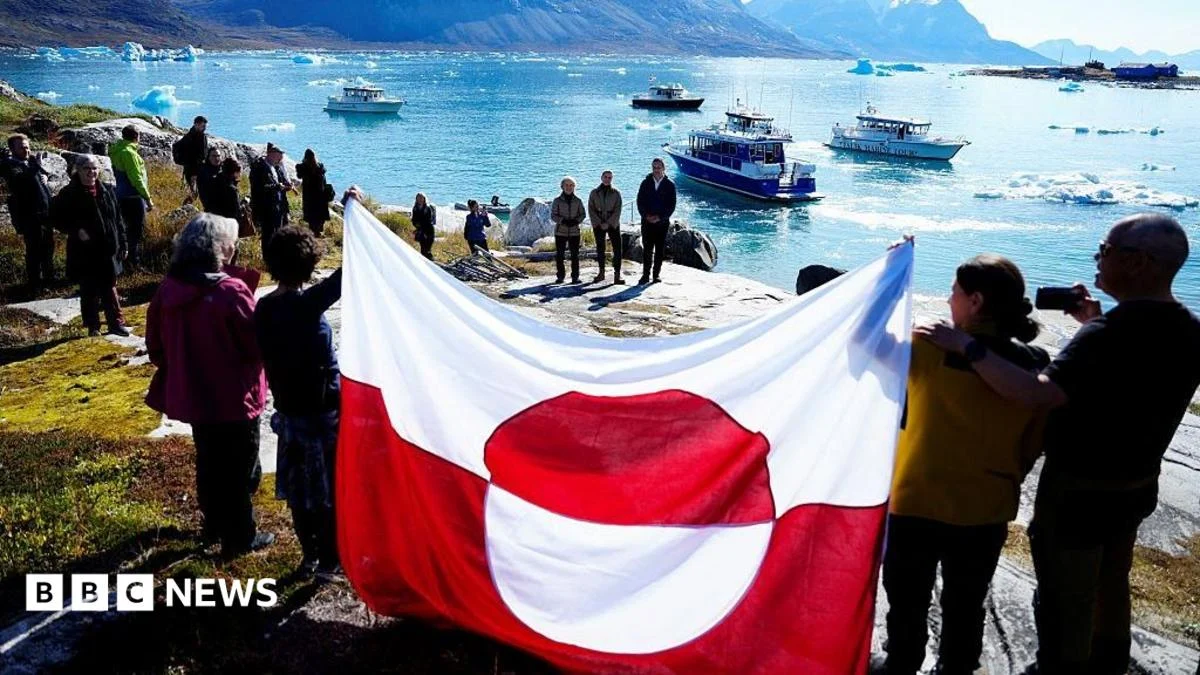
The groundbreaking deal, confirmed by both US President Donald Trump and Danish Prime Minister Mette Frederiksen, aims to solidify security arrangements for the strategically vital autonomous territory within the Kingdom of Denmark. President Trump, in a post on Truth Social, declared that the agreement would grant the United States "permanent control over security, and all other needs" in Greenland. He further asserted that the deal comes with "no cost to the United States" and would empower the US "to do what is necessary" to "secure and defend the security of Greenland." A critical provision highlighted by Trump states that no US adversary can maintain a military presence in Greenland or "make sensitive investments in Greenland, without our express written approval," underscoring Washington’s intent to counter growing influence from rival powers in the region.
Danish Prime Minister Mette Frederiksen, while confirming the impending signing, offered a more circumspect interpretation of the agreement’s specifics than her US counterpart. Frederiksen emphasized that the deal would "strengthens our common security in the Arctic and the North Atlantic area," while simultaneously affirming that it "at the same time recognizes the sovereignty and territorial integrity of the Kingdom and the right of the Greenlandic people to self-determination." This nuanced statement suggests a careful balancing act between enhanced security cooperation and the preservation of Greenlandic autonomy and Danish sovereignty, a point of potential divergence in emphasis compared to President Trump’s more assertive claims of "permanent control." The agreement comes after months of intense diplomatic engagement, following President Trump’s earlier, unconventional proposals to purchase Greenland, which had initially been met with outright rejection by Copenhagen.
The Genesis of the Agreement: Trump’s Initial Overtures
The path to this security agreement traces back to a highly unusual diplomatic episode in August 2019, when President Trump publicly expressed interest in acquiring Greenland from Denmark. Citing its strategic location for defense purposes and its vast mineral wealth, Trump framed the potential purchase as a matter of significant national security. The idea, initially dismissed as a joke by many, quickly escalated into a diplomatic spat when Trump canceled a planned state visit to Denmark after Prime Minister Frederiksen called the notion of selling Greenland "an absurd discussion." This blunt rejection by Copenhagen highlighted the deeply rooted historical and sovereign ties between Denmark and Greenland, an autonomous territory since 1979, with significant self-governing powers over domestic affairs, while Denmark retains control over foreign policy, defense, and monetary policy.
Despite the initial frosty reception, Trump’s persistent focus on Greenland brought its strategic importance into sharp international relief. His administration continued to press for greater US engagement in the Arctic, leading to intensified discussions with Denmark and Greenlandic authorities on security and economic cooperation. The threats to "take" Greenland, while controversial, served to underscore the US perception of the territory’s critical role in its defense architecture and its concerns over the geopolitical shifts occurring in the high North.
Greenland’s Strategic Importance: A Geopolitical Chessboard
Greenland, the world’s largest island, holds immense geopolitical significance due to its unique location between the North American and European continents, straddling the Arctic and North Atlantic. Its ice sheet, covering over 80% of its landmass, is rapidly melting due to climate change, opening up new shipping lanes and revealing access to vast untapped natural resources. These resources include rare earth elements, uranium, zinc, lead, gold, and oil and gas, which are increasingly critical for global industries and energy security. The island’s strategic position offers a prime vantage point for missile defense systems and a crucial staging ground for military operations in the Arctic.
The melting Arctic ice cap is transforming the region into a new geopolitical frontier, with nations vying for influence, resources, and control over emerging maritime routes like the Northwest Passage and the Northeast Passage. Russia has been aggressively militarizing its Arctic coastline, reopening Cold War-era bases and deploying advanced military hardware. China, though not an Arctic nation, has declared itself a "near-Arctic state" and has invested heavily in polar research and infrastructure, including its "Polar Silk Road" initiative, raising concerns in Western capitals about its long-term strategic ambitions. These developments have heightened the urgency for the US and its allies to secure their interests in the region, making Greenland an indispensable asset in this evolving geopolitical chessboard.
Historical Context of US Presence
The United States has a long-standing military presence in Greenland, primarily centered around Thule Air Base in the northwest. Established during World War II and expanded significantly during the Cold War, Thule has served as a critical component of North American air defense and a key early warning radar station for ballistic missile attacks. Its location provides unparalleled capabilities for monitoring space and detecting intercontinental ballistic missiles.
The legal framework for this presence stems from the 1951 Defense Agreement between Denmark and the United States, which granted the US rights to operate military facilities in Greenland. This agreement has been periodically reviewed and updated, reflecting the evolving security landscape. The deep historical roots of US military cooperation with Denmark concerning Greenland underscore the continuity of strategic interest, even if the recent Trump-era discussions introduced new levels of intensity and specific concerns. The current deal can be seen as an evolution of these existing security arrangements, tailored to address contemporary threats and the escalating competition in the Arctic.
Key Provisions and Interpretations
While the full text of the agreement is yet to be released, the statements from President Trump and Prime Minister Frederiksen offer initial insights into its core provisions and potential areas of interpretation. President Trump’s assertion of "permanent control over security, and all other needs" suggests a robust and perhaps expansive role for the US, potentially extending beyond traditional military cooperation into areas like infrastructure development, resource security, and intelligence sharing. His emphasis on "no cost to the United States" implies that the financial burden of implementing and maintaining this security framework would either be negligible for Washington or offset by other arrangements, perhaps involving Danish or Greenlandic contributions, or a reallocation of existing US defense budgets.
The explicit prohibition on "US adversaries" maintaining a military presence or making "sensitive investments" without express US approval is a direct response to concerns about Chinese and Russian activities. China’s previous attempts to invest in Greenlandic airports and mining projects, including rare earth elements, have been viewed with suspicion by the US and Denmark, who fear such investments could grant Beijing dual-use capabilities or strategic leverage. This provision aims to create a clear barrier to such influence.
Divergent Emphases: US vs. Danish Perspectives
The public statements reveal a subtle but important divergence in emphasis between Washington and Copenhagen. President Trump’s language is assertive, focused on US control and national security imperatives. Prime Minister Frederiksen, conversely, framed the agreement in terms of "strengthening common security" while meticulously highlighting the recognition of "the sovereignty and territorial integrity of the Kingdom and the right of the Greenlandic people to self-determination." This Danish emphasis is crucial, as Denmark has consistently championed Greenland’s autonomy and its path toward greater self-reliance, even as it maintains responsibility for defense and foreign policy.
This difference in framing likely reflects the internal political complexities within Denmark and Greenland. Any agreement that appears to undermine Greenlandic self-determination or Danish sovereignty would face significant domestic opposition. Therefore, the Danish government is keen to present the deal as a collaborative effort that respects existing constitutional relationships, rather than a unilateral US assertion of control. This dual narrative suggests that while the US is primarily driven by strategic security concerns, Denmark is balancing these concerns with its commitments to Greenland’s future and its own sovereign responsibilities.
The Arctic Race: Broader Geopolitical Implications
The US-Denmark-Greenland security deal has significant implications for the broader geopolitical landscape of the Arctic. It signals a more assertive US posture in the region, aiming to counter the growing influence of Russia and China. For NATO, of which Denmark is a member, the agreement strengthens its northern flank and enhances its ability to project power and maintain situational awareness in the High North. It could lead to increased military exercises, infrastructure investments, and intelligence gathering in the region.
Other Arctic nations, such as Canada, Norway, Sweden, and Finland, will likely view this development with a mix of support and scrutiny. Allies will likely welcome enhanced security cooperation, particularly concerning intelligence sharing and maritime surveillance. However, non-aligned states and Russia may view it as an escalation of militarization in a region traditionally characterized by cooperation. Russia, in particular, may perceive the agreement as a direct challenge to its own Arctic ambitions and could respond by further strengthening its military presence. China, whose "Polar Silk Road" ambitions are directly targeted by the agreement’s restrictions on "sensitive investments," is also likely to react, potentially through diplomatic channels or by seeking alternative avenues for influence in the region.
Greenlandic Self-Determination and Economic Aspirations
For Greenland itself, the agreement presents both opportunities and challenges. On one hand, enhanced security cooperation with the US and Denmark could bring much-needed investment in infrastructure, communications, and defense capabilities, potentially creating jobs and stimulating the local economy. The explicit recognition of Greenlandic self-determination by Prime Minister Frederiksen is vital, reassuring the populace that their aspirations for greater autonomy, and even eventual independence, are not being undermined by security pacts. Greenland’s government, Naalakkersuisut, has consistently sought to diversify its economy beyond fishing, with mining and tourism seen as key growth sectors. A stable security environment, coupled with foreign investment, could facilitate this diversification.
However, there are also potential concerns. A greater US military presence could lead to environmental impacts in a fragile Arctic ecosystem. Furthermore, the balance between security imperatives and the right to self-determination will be a delicate one. Greenlanders will want to ensure that any security arrangements do not infringe upon their ability to make independent decisions regarding their land, resources, and future development. The specific details of how "permanent control over security" translates into practical terms on the ground, and how it aligns with Greenland’s own governance structures, will be closely watched. The deal could also open doors for more direct economic engagement between the US and Greenland, potentially bypassing traditional channels through Copenhagen, which could further fuel Greenlandic aspirations for greater economic independence.
Reactions and Future Outlook
Initial reactions to the announcement have been varied. US officials are likely to laud the agreement as a crucial step in securing US national interests and projecting strength in the Arctic. Danish officials will emphasize collaboration and the protection of sovereignty. The Greenlandic government is expected to welcome the security enhancements while reiterating its commitment to self-determination and the sustainable development of its resources.
Analysts suggest the deal marks a new chapter in Arctic geopolitics, signaling a shift from a predominantly cooperative framework to one increasingly characterized by strategic competition. The agreement’s success will depend on its implementation, particularly on how the US, Denmark, and Greenland navigate the nuances of shared security interests, national sovereignty, and the unique aspirations of the Greenlandic people. The formal signing at the United Nations General Assembly next week will provide a global platform for both nations to articulate the details and vision behind this pivotal security pact, setting the stage for the future of the High North.