The intersection of major sporting events and international tourism has become a cornerstone of the United States’ national marketing strategy, yet the execution of these campaigns requires a sophisticated navigation of intellectual property and timing. Brand USA, the nation’s destination marketing organization, has identified the Super Bowl as a premier catalyst for driving high-value international visitation, even as the organization avoids the direct use of the "Super Bowl" trademark in its primary promotional materials. This strategic nuance reflects a broader trend in the travel industry where the "halo effect" of a global sporting event is utilized to showcase the diversity of American destinations to a worldwide audience.
Recent data underscores the growing appetite for American football beyond the borders of the United States. International viewership for the NFL’s championship game saw a 10% increase between 2023 and 2024, signaling a robust expansion of the league’s global footprint. This surge in interest translates directly into physical travel; the 2026 game, hosted in the San Francisco Bay Area, is estimated to have attracted approximately 90,000 visitors from outside the immediate region, a significant portion of whom originated from international markets. For Brand USA, these figures represent more than just a single day of television ratings; they represent a multi-day, high-spending demographic that contributes substantially to the domestic hospitality and service sectors.
The Strategic Marketing Paradox of the Super Bowl
Despite the clear economic benefits associated with the event, Leah Chandler, Chief Marketing Officer of Brand USA, has highlighted the inherent difficulties in marketing the NFL calendar directly to international audiences. The primary hurdle involves the strict trademark protections surrounding the term "Super Bowl," which often forces non-sponsor entities to use euphemisms such as "the big game" or focus on the host city’s broader cultural appeal.
However, the strategy employed by Brand USA is less about the four quarters of the game and more about the destination’s identity as a sports and entertainment hub. By highlighting the host city—whether it be Las Vegas, New Orleans, or Santa Clara—Brand USA can leverage the excitement of the event to promote regional attractions, culinary experiences, and extended travel itineraries. This approach allows the organization to bypass the complexities of direct NFL scheduling while still capturing the attention of sports fans who are planning their annual vacations around major athletic milestones.
A Chronology of the NFL’s Global Expansion and Tourism Impact
To understand the current surge in international interest, it is necessary to examine the timeline of the NFL’s concerted effort to globalize its brand, which has acted as a precursor to increased tourism.
- 2007: The NFL launches the International Series with its first regular-season game at Wembley Stadium in London. This marked the beginning of a shift in how international fans consumed American football.
- 2016: The league expands its international reach to Mexico City, tapping into a massive and underserved market in North America.
- 2022: The first regular-season game is played in Munich, Germany, resulting in record-breaking merchandise sales and a surge in European travel interest toward the U.S.
- 2024: The NFL plays its first game in South America (São Paulo, Brazil) and announces future fixtures in Madrid, Spain.
- 2025-2026: The league is expected to increase the number of international games to eight per season, further cementing the connection between global fans and U.S.-based teams.
This chronological expansion has created a "virtuous cycle" for tourism. As fans in London, Frankfurt, and São Paulo become more engaged with the sport, their desire to witness the pinnacle of the season—the Super Bowl—on American soil increases. This has led to a shift in visitor behavior, where international tourists are no longer just visiting New York or Orlando, but are specifically targeting cities that host major NFL franchises and championship events.
Supporting Data: The Economic Engine of Sports Tourism
The economic impact of international visitors for events like the Super Bowl is significantly higher than that of domestic travelers. According to research presented at the Skift Creator Summit, international visitors typically stay longer—averaging 7 to 10 days—and spend approximately three times more per trip than domestic attendees.
In the context of the 2026 game in the Bay Area, the 90,000 non-local visitors provided a massive boost to the regional economy. Host cities often see Average Daily Rates (ADR) for hotels triple or quadruple during the week of the event. For international travelers, the Super Bowl serves as the "anchor" for a larger U.S. tour. A visitor from the United Kingdom or Japan attending a game in San Francisco is likely to extend their stay to visit Napa Valley, Yosemite National Park, or Los Angeles, thereby spreading the economic benefits across multiple jurisdictions.
The 10% increase in international viewership between 2023 and 2024 is particularly telling. This growth was driven largely by key markets such as Mexico, Canada, Germany, and the UK. Emerging interest in Australia and China has also been noted, providing Brand USA with new territories to target with sports-adjacent lifestyle marketing.
Stakeholder Perspectives and Official Responses
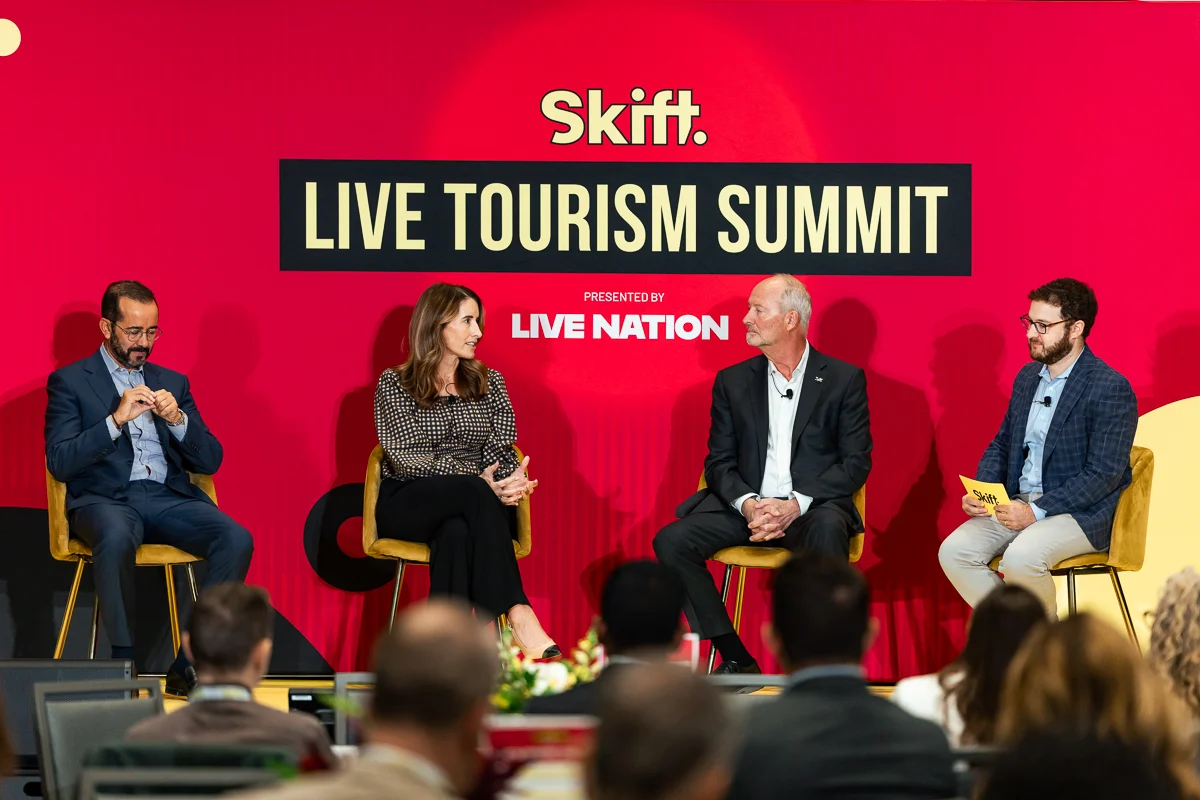
At a recent industry forum, leaders from various tourism sectors discussed the collaborative effort required to manage this influx of global interest. Steve Hill, CEO of the Las Vegas Convention and Visitors Authority (LVCVA), noted that the success of Super Bowl LVIII in Las Vegas provided a blueprint for how a city can reinvent itself as the "Sports Capital of the World." Hill emphasized that the infrastructure required for such an event—world-class airports, high-capacity transit, and a dense inventory of luxury hotel rooms—is exactly what high-spending international tourists demand.
Leah Chandler of Brand USA reiterated that while the "NFL calendar" is difficult to market due to its fluidity and licensing, the ethos of the American sports experience is a powerful draw. "It is about the spectacle," Chandler suggested during discussions. "International travelers are looking for uniquely American experiences that they cannot find anywhere else. The Super Bowl is the ultimate expression of that."
From a global perspective, Achraf Fayda, CEO of Morocco National Tourism, observed that the American model of sports tourism is one that many other nations are now looking to emulate. The ability to turn a one-day sporting event into a month-long marketing campaign for the entire country is a feat of strategic coordination that requires deep cooperation between the public sector (Brand USA) and private entities (airlines, hotel chains, and sports leagues).
Broader Implications for the U.S. Travel Industry
The success of indirect Super Bowl marketing has broader implications for how the United States prepares for a "Golden Decade" of sports. With the FIFA World Cup coming to North America in 2026 and the Summer Olympics scheduled for Los Angeles in 2028, the lessons learned from the NFL’s international growth are invaluable.
- Visa and Entry Facilitation: The influx of 90,000 visitors for a single event highlights the ongoing need for efficient visa processing. Industry advocates continue to pressure the federal government to reduce wait times in key markets like Brazil and India to ensure that sports fans can actually make the trip they are planning.
- Infrastructure Demands: The concentration of international visitors in host cities puts immense pressure on local infrastructure. The 2026 Bay Area experience demonstrated that secondary airports and regional rail systems are vital for distributing the crowd and ensuring a positive visitor experience.
- Digital and Creator-Led Marketing: As seen at the Skift Creator Summit, the role of social media influencers and content creators in shaping international perceptions of U.S. destinations is growing. Brand USA is increasingly leaning on creators to tell the story of the "game day experience" in an authentic way that resonates with younger, tech-savvy global audiences.
Analysis: The Shift from Event-Based to Passion-Based Travel
The data suggests a fundamental shift in the travel industry. We are moving away from a model where people travel simply to see a landmark, and toward a model of "passion-led" travel. In this new paradigm, an international tourist’s primary motivation might be a sport, a music festival, or a culinary trend.
Brand USA’s decision to avoid the "Super Bowl" text in its campaigns, while still capitalizing on the event’s gravity, is a masterclass in modern destination marketing. It recognizes that the brand of the event is so powerful that it doesn’t need to be named to be felt. By focusing on the "where" and the "how" of the travel experience, rather than the "what" of the game itself, the organization successfully captures the economic upside while maintaining a flexible and legally compliant marketing strategy.
As the 2026 Super Bowl demonstrated, the Bay Area became a gateway for tens of thousands of international visitors. The challenge for the future will be ensuring that these visitors return, not just for the next championship, but for the culture, the people, and the uniquely American spirit that the Super Bowl represents on the world stage. Through data-driven strategies and regional collaboration, Brand USA is ensuring that the roar of the stadium is heard—and felt—thousands of miles away, long before the first kickoff.