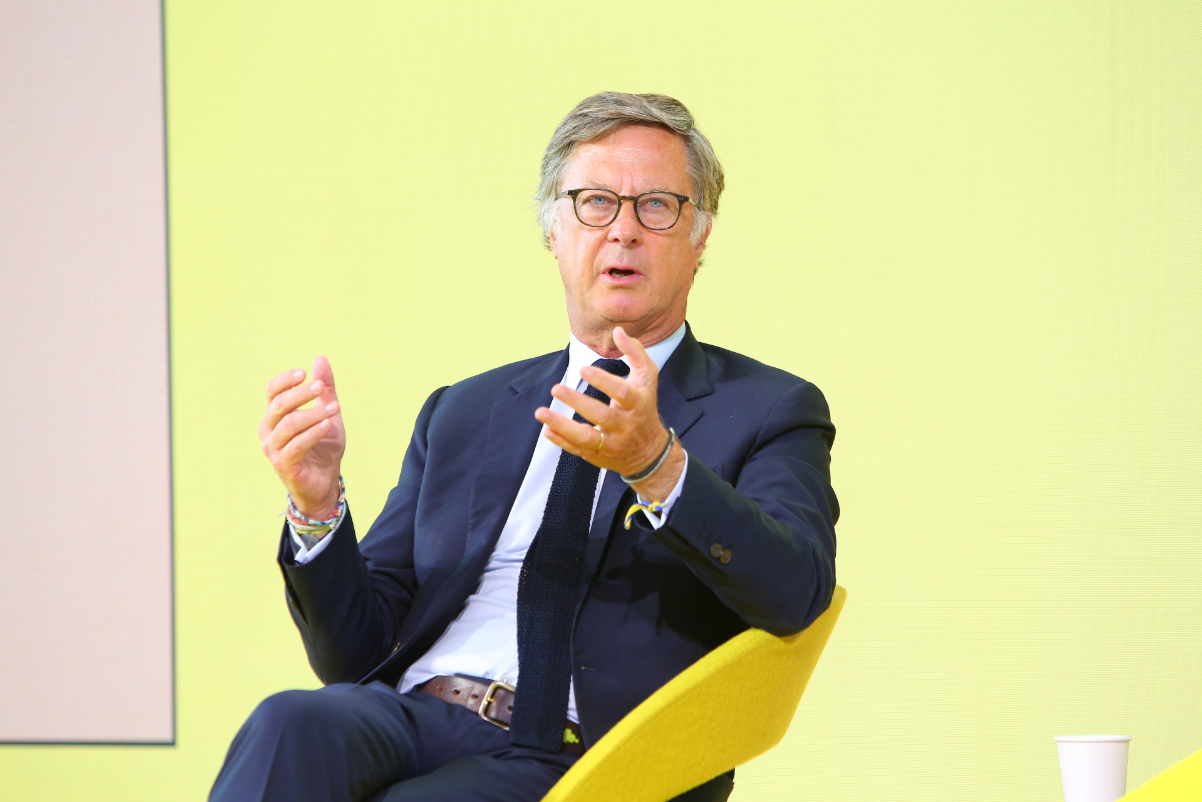
Sébastien Bazin, the Chairman and CEO of Accor, has signaled a pivotal moment for Ennismore, the group’s high-growth lifestyle hospitality division, as it prepares for a major strategic push into the United States market. Speaking at the Skift Global Forum 2026 in New York on Wednesday, Bazin addressed the critical question of how to capitalize the joint venture to meet its ambitious expansion goals. While the U.S. remains the primary target for growth, the financial mechanism to fund this trajectory remains a subject of intense internal debate, with Accor weighing the merits of a public listing against further direct investment from the parent company.
The decision carries significant weight for the French hospitality giant, which holds a 62% stake in Ennismore. As the end-of-month deadline for a formal announcement approaches, the global hospitality industry is closely watching Bazin’s next move. The CEO acknowledged the complexity of the situation, noting that while an Initial Public Offering (IPO) is a viable path, it brings inherent challenges that may not align with the long-term agility required for the lifestyle sector.
The Strategic Importance of the U.S. Market
For Accor, the United States represents both a significant challenge and an unparalleled opportunity. Despite being one of the largest hotel operators in the world, Accor has historically had a smaller footprint in the U.S. compared to domestic titans like Marriott International, Hilton, and Hyatt. Ennismore, with its portfolio of "lifestyle" brands—defined by their focus on design, culture, and high-margin food and beverage (F&B) offerings—is seen as the vehicle that will finally allow Accor to penetrate the North American market effectively.
Bazin emphasized that Ennismore’s success is central to Accor’s broader global strategy. The ambition is to double the size of the Ennismore portfolio, which currently includes 17 distinct brands such as The Hoxton, Mondrian, SLS, Delano, and Mama Shelter. To achieve this, particularly in high-barrier-to-entry markets like New York, Miami, and Los Angeles, a massive infusion of capital is required. The U.S. market is characterized by high real estate costs and a competitive labor environment, necessitating a robust financial foundation for any brand seeking to scale rapidly.
The IPO Dilemma: Valuation versus Autonomy
One of the most discussed options for Ennismore’s future is a potential IPO. Financial analysts have estimated Ennismore’s market value to be between $3.4 billion and $5.8 billion, a figure that reflects the premium investors often place on the lifestyle segment of the hospitality industry. A public listing would provide Ennismore with a dedicated "currency" for acquisitions and a clear valuation that could be used to attract further talent and partnerships.
However, Bazin was candid about the "drawbacks" of going public. "It’s a very complex decision to make," he told the audience at the Skift Global Forum. "Yes, we can be listed, but it has a lot of drawbacks to being listed." These drawbacks typically include the pressure of quarterly earnings reports, which can discourage long-term brand building in favor of short-term gains, and the regulatory burdens associated with public markets.
Furthermore, Bazin suggested that Accor itself might be the best source of capital. "Accor could put more money into it," he noted, hinting at a scenario where the parent company maintains tighter control while providing the necessary liquidity to fund Ennismore’s U.S. roadmap. This would allow Ennismore to remain private, shielding it from the volatility of the stock market while it focuses on the intensive task of international expansion.
A Timeline of Ennismore’s Evolution
The current crossroads for Ennismore is the result of a multi-year transformation that began in late 2020 and early 2021. The timeline of this evolution highlights the rapid pace at which Accor has moved to dominate the lifestyle space:
- November 2020: Accor and Ennismore founder Sharan Pasricha announced they were entering into negotiations to form a new autonomous entity. The goal was to merge Accor’s existing lifestyle brands (such as Mondrian and SLS) with Pasricha’s Ennismore (The Hoxton and Gleneagles).
- October 2021: The merger was officially completed, creating the world’s largest and fastest-growing lifestyle hospitality company. Ennismore became a joint venture, with Accor holding the majority stake.
- 2022-2024: Ennismore underwent a period of rapid consolidation and growth, expanding its footprint in Europe, the Middle East, and Asia. During this time, the lifestyle segment began to significantly outperform traditional luxury hotels in terms of Revenue Per Available Room (RevPAR) and F&B profitability.
- Late 2025: Accor began formalizing its review of Ennismore’s capital structure, setting a deadline for September 2026 to decide on a funding path for the next phase of growth.
- September 2026: At the Skift Global Forum, Bazin confirmed that a decision is imminent, as the company seeks to capitalize on its 62% stake.
Supporting Data: The Rise of the Lifestyle Segment
The financial logic behind Ennismore’s expansion is supported by industry-wide data showing a shift in consumer preferences. Lifestyle hotels are no longer a niche market; they are a primary driver of growth in the hospitality sector. According to recent industry reports, the lifestyle hotel segment has seen an annual growth rate of approximately 15% to 20% over the past five years, significantly outpacing the 5% growth seen in the broader hotel industry.
Key data points influencing Accor’s decision include:
- Revenue Mix: Unlike traditional hotels where room revenue accounts for the vast majority of income, Ennismore properties often derive 40% to 50% of their revenue from food, beverage, and nightlife. This diversified income stream is highly attractive to real estate developers and investors.
- Brand Loyalty: Lifestyle brands tend to attract a younger, more affluent demographic that values "experience" over standard luxury amenities. This leads to higher direct booking rates and reduced reliance on third-party online travel agencies (OTAs).
- Asset-Light Model: Accor has moved toward an "asset-light" strategy, focusing on management and franchise fees rather than owning the physical real estate. Ennismore fits perfectly into this model, allowing for rapid scaling without the capital intensity of property ownership.
Inferred Reactions and Stakeholder Perspectives
While Bazin’s comments represent the official stance of Accor, other stakeholders are likely viewing the situation through different lenses. Sharan Pasricha, the founder and co-CEO of Ennismore, has historically prioritized brand integrity and creative autonomy. For Pasricha, an internal funding round from Accor might be preferable to an IPO, as it would likely allow Ennismore to maintain its unique culture without the scrutiny of public shareholders.
Conversely, Accor’s institutional investors may be eager for an IPO. A public listing would "unlock" the value of Ennismore, potentially boosting Accor’s own stock price by demonstrating the worth of its parts. Analysts at major financial institutions have noted that Accor’s current market capitalization may not fully reflect the value of its stake in Ennismore, and an IPO would provide a clear market benchmark.
Industry competitors are also watching. Marriott’s Edition and W brands, as well as IHG’s Kimpton and Voco, are Ennismore’s primary rivals in the lifestyle space. A massive capital injection for Ennismore—whether via Accor or an IPO—would signal a new era of competition in the U.S. market, potentially leading to an "arms race" of brand acquisitions and flagship property openings.
Analysis of Implications for the Hospitality Industry
The decision Bazin faces reflects a broader trend in the global economy where specialized subsidiaries of large conglomerates seek their own path to funding. If Accor chooses to list Ennismore, it could set a precedent for other hotel groups to spin off their high-growth segments. If Accor chooses to fund the expansion internally, it reaffirms the company’s commitment to being a diversified hospitality powerhouse that can nurture niche brands under a corporate umbrella.
The push into the U.S. is particularly significant because it marks a shift in Accor’s geographic focus. For decades, Accor’s strength has been in Europe and Asia-Pacific. By leveraging Ennismore to win over the American consumer, Accor is attempting to challenge the dominance of U.S.-based hotel chains on their home turf. Success in the U.S. would not only increase Ennismore’s valuation but also enhance Accor’s global prestige and negotiating power with international developers.
Furthermore, the "complex decision" Bazin mentioned highlights the current volatility of the global IPO market. With fluctuating interest rates and economic uncertainty, the window for a successful hospitality IPO can be narrow. This suggests that Bazin’s caution is rooted in a desire to ensure Ennismore’s growth is sustainable and not subject to the whims of a potentially cooling market.
Conclusion and Future Outlook
As the September deadline approaches, the hospitality industry remains on high alert for the official word on Ennismore’s future. Whether through a landmark IPO or a significant reinvestment from Accor, the goal remains the same: to turn Ennismore into a dominant force in the U.S. and beyond.
Sébastien Bazin’s appearance at the Skift Global Forum 2026 has clarified the stakes. The "one ambition" for Ennismore is to double its footprint, and the capital required to do so will be the catalyst for the next chapter in Accor’s history. For now, the group stands at a crossroads, balancing the allure of the public markets against the stability of internal growth, with the future of lifestyle hospitality hanging in the balance.