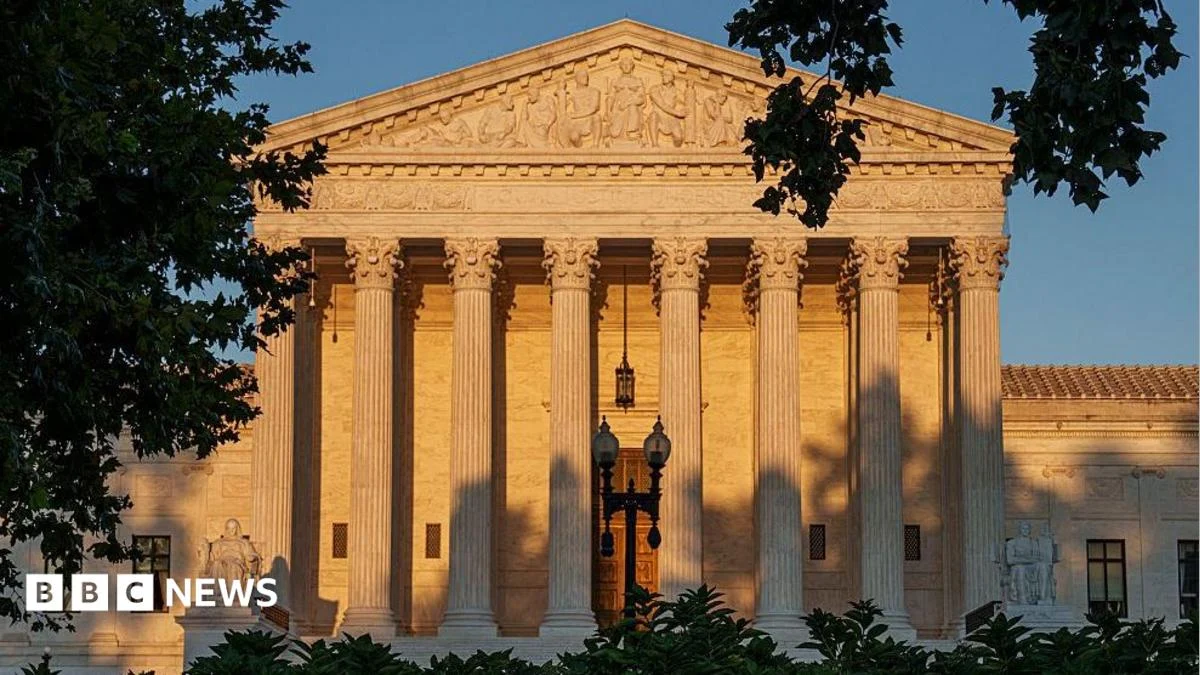
The United States Supreme Court has lifted restrictions on the Trump administration’s ability to utilize a contentious federal database, designed to verify citizenship information and other sensitive data, to identify voters suspected of being non-citizens. This pivotal decision reverses lower court rulings that had previously deemed the system illegal and a violation of privacy rights, thereby allowing states greater leeway in their voter roll maintenance efforts, albeit with caveats related to the proximity of elections.
Critics of the database have consistently raised concerns about the reliability of the underlying data, warning that its application could inadvertently lead to eligible U.S. citizens being wrongfully purged from electoral rolls. These concerns are amplified by a broader national debate on election integrity versus voter access, where measures ostensibly aimed at preventing fraud are often viewed by civil rights advocates as attempts at voter suppression.
The Court’s Decision and Dissenting Voices
The Supreme Court’s conservative majority ruled that while the National Voter Registration Act (NVRA) prohibits broad purges of voter rolls in the immediate weeks leading up to an election, this particular limitation would mitigate any "potential impact" of the decision ahead of the upcoming midterms. This interpretation suggests that while states cannot conduct wholesale purges based on this data right before an election, they are not entirely barred from using the system to check the citizenship of individual voters at other times. The ruling effectively empowers states that choose to participate in the program, asserting that a 1996 law mandates the Department of Homeland Security (DHS) to provide citizenship and immigration data to federal agencies, and that DHS has "an obligation to respond" to states seeking such information. The Court further stated that the previous judge’s order "prevents the federal government from using the programme it believes is best suited to the task."
In a notable dissent, the three liberal-leaning justices on the Supreme Court expressed profound reservations about the majority decision. Justice Ketanji Brown Jackson, one of the dissenting justices, articulated specific concerns that the ruling could mistakenly revoke the voting rights of eligible voters. In her powerful written dissent, Justice Jackson stated, "The harm caused by burdening or disenfranchising even a few lawful voters outweighs the non-existent harm that the government experiences when it is prevented from taking an action that it likely lacks the authority to take." Her argument underscores a fundamental tension in election administration: the balance between ensuring the integrity of the ballot box and safeguarding every eligible citizen’s right to vote. The dissent highlights a perspective that even a minimal risk of disenfranchisement of lawful voters is a significant detriment, particularly when weighed against unproven or exaggerated claims of widespread non-citizen voting.
Understanding the SAVE Program and Its Expansion
The federal database at the heart of this legal battle is known as the Systematic Alien Verification for Entitlements, or SAVE program. Established in 1986, SAVE’s original mandate was to assist officials in verifying the citizenship or immigration status of individuals applying for public benefits. Its initial purpose was thus centered on ensuring that only eligible individuals received government assistance, a critical function for program integrity.
However, the Trump administration last year significantly expanded SAVE’s search capabilities, transforming its application. This expansion allowed for bulk searches of voter registration rolls using sensitive information culled from Social Security records. This broadened scope shifted SAVE from a targeted verification tool for public benefits to a potential instrument for large-scale voter roll maintenance, directly raising questions about its legality and impact on privacy. The Department of Homeland Security, which oversees SAVE, views the program as a vital tool for states to ensure the accuracy and integrity of their voter rolls by identifying individuals who may not be eligible to vote due to non-citizenship. Lawyers for the Trump administration have consistently argued that the system is both lawful and necessary to prevent non-citizens from casting ballots. Currently, a total of 27 states voluntarily utilize the SAVE system to check voter citizenship, indicating a significant, though not universal, adoption among states.
A Tumultuous Legal Journey
The Supreme Court’s decision marks the latest chapter in a turbulent legal journey for the expanded SAVE program. In June of this year, U.S. District Judge Sparkle L. Soonnan, an appointee of President Biden, issued a federal ruling that declared the revamped system illegal. Judge Soonnan’s order asserted that the federal government had "knowingly trampled on the privacy rights" of U.S. citizens "in a manner that threatens the sacred right to vote." Her ruling was a significant victory for voting rights advocates, who argued that the program’s methodology was flawed and its application discriminatory.
Following Judge Soonnan’s decision, a federal appeals court allowed her ruling to stand, effectively upholding the injunction against the program’s use for voter verification. This intermediate appellate decision reinforced the legal challenges facing the Trump administration’s expanded use of SAVE. However, this legal trajectory was abruptly interrupted on Friday when the Supreme Court’s majority opinion overturned the appellate court’s stance, thereby re-enabling the program’s use. The rapid succession of rulings – from a district court injunction to an appeals court affirmation, and then a Supreme Court reversal – underscores the highly contested nature of election administration policies and the deep ideological divisions within the judiciary on these matters.
Evidence of Flaws and Potential for Error
Despite assertions of the SAVE program’s necessity for election integrity, critics have pointed to a disturbing number of documented cases where the system has led to significant mistakes, erroneously flagging eligible citizens as non-citizens. These instances fuel concerns that the program, rather than merely catching illegal voters, risks suppressing the votes of lawful citizens.
One prominent example comes from Travis County, Texas. Officials there investigated nearly 100 voters identified as non-citizens by the SAVE system. Their findings, widely reported by U.S. media, revealed that at least 10% of these individuals – and potentially more – were, in fact, U.S. citizens legally entitled to vote. This concrete example demonstrates the system’s susceptibility to error and the tangible risk of disenfranchisement it poses.
Furthermore, statistics from Texas since the state began utilizing the SAVE system to check its voter rolls last year reveal a striking disparity between the scale of potential errors and the actual instances of proven illegal voting. Since the program’s implementation for voter verification in Texas, only three non-citizen voters have been charged with illegally voting in the state. This minuscule number stands in stark contrast to the hundreds of thousands of non-citizen voters that former President Trump and the Department of Homeland Security had previously suggested were present on voter rolls across the nation. Such discrepancies highlight the core argument of critics: that the perceived problem of non-citizen voting is vastly overstated, while the risk of erroneous purges of eligible voters is very real.
Broader Context: Election Reforms and Voter Integrity
The Supreme Court’s decision regarding the SAVE program must be understood within the broader context of the Trump administration’s sustained efforts to reform the U.S. electoral system, particularly since returning to the White House last January. These efforts have consistently focused on what the administration terms "election integrity," often involving proposals that tighten voting rules and increase scrutiny of voter eligibility.
One notable example of these reform attempts was a bid, ultimately rejected by the Supreme Court, to rein in mail-in ballots. This push followed the 2020 election, where increased reliance on mail-in voting due to the COVID-19 pandemic became a flashpoint for disputes and unsubstantiated claims of widespread fraud. The administration’s focus on mail-in ballots, voter ID laws, and voter roll purges reflects a consistent strategy to address perceived vulnerabilities in the electoral system, often drawing criticism from voting rights advocates who argue these measures disproportionately impact minority voters, low-income individuals, and students.
In 2024, for instance, Texas Governor Greg Abbott announced that 1,930 people with a "voter history" had been removed from electoral rolls. This figure, while significant, represents a tiny fraction of the nearly 18 million registered voters in Texas. More importantly, these numbers, even when accumulated across states, remain far below the inflated estimates of hundreds of thousands of non-citizen voters that had been previously put forth by proponents of stricter voter verification measures. This persistent gap between rhetoric and reality underscores the contentious nature of the debate, where the pursuit of election integrity is often perceived by opponents as a thinly veiled attempt at voter suppression.
Implications for Future Elections and Voter Access
The Supreme Court’s ruling on the SAVE program carries significant implications for upcoming elections, including the midterms and the crucial 2024 presidential election. While the NVRA’s restrictions on purges immediately before an election offer some temporary protection, the decision effectively sanctions the use of this controversial database by states at other times. This means that states opting to use SAVE could potentially conduct purges based on its data outside the immediate pre-election window, impacting voter rolls for future electoral cycles.
The ruling is likely to embolden states that favor more stringent voter verification processes, potentially leading to an increase in the number of voters challenged or removed from rolls based on SAVE data. This, in turn, could necessitate greater vigilance from voting rights organizations, who will likely step up their efforts to monitor voter purges, assist individuals who have been wrongly flagged, and provide legal aid to those facing disenfranchisement.
Moreover, the decision reinforces the ongoing tension between federal and state authority in election administration. While the federal government provides the SAVE program, its use remains voluntary for states. This voluntary aspect means that the impact of the ruling will vary significantly across the country, depending on individual states’ political landscapes and their approach to voter roll maintenance. States with Republican-led legislatures and executive branches are more likely to embrace and expand their use of SAVE, while states with Democratic leadership may continue to resist its application for voter verification.
Ultimately, the Supreme Court’s decision ensures that the debate over voter integrity, privacy rights, and the potential for disenfranchisement will remain a central and highly charged issue in American politics for the foreseeable future. As elections approach, the scrutiny on how states manage their voter rolls, and the tools they employ to do so, will intensify, with every removed voter sparking renewed questions about the balance between securing the ballot box and protecting every citizen’s fundamental right to participate in democracy.