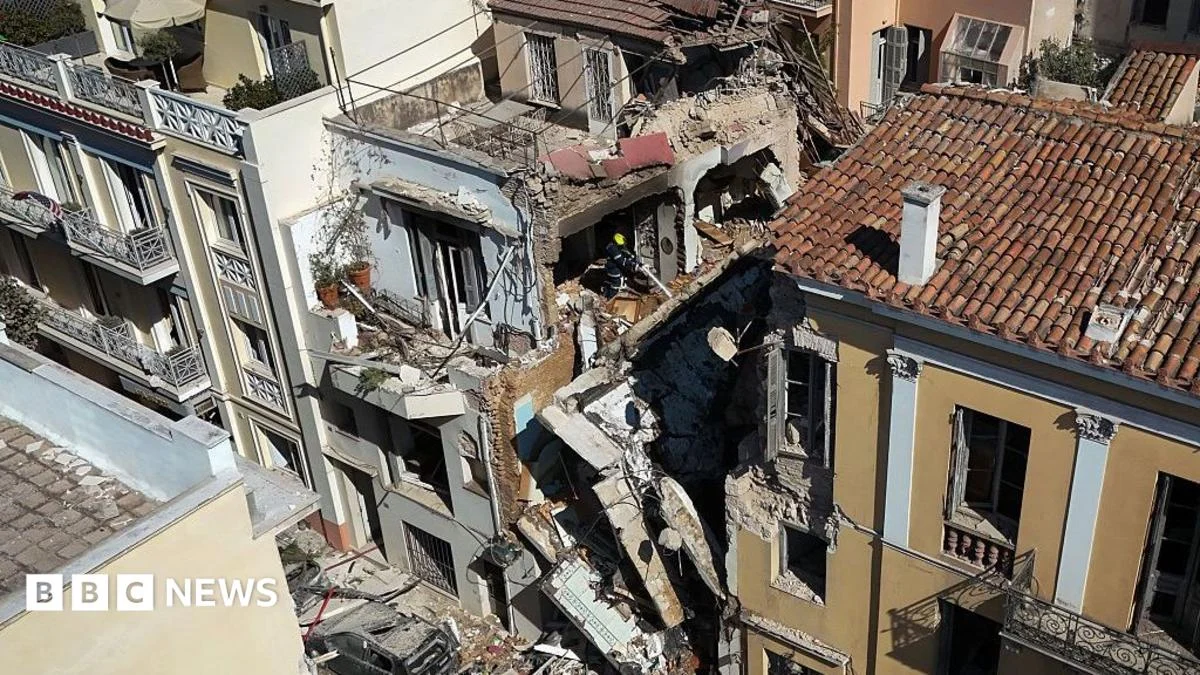
A catastrophic explosion in the heart of Athens’ historic Plaka district has resulted in the confirmed deaths of at least two individuals, identified as an American man and woman, with four more persons, including two additional US tourists, a Greek national, and a British national, still unaccounted for. The powerful blast, suspected to have originated from a gas leak, completely obliterated a three-storey building that housed a popular holiday rental property, sending shockwaves through the ancient neighbourhood and causing significant damage to surrounding structures. The incident has prompted a massive emergency response, turning the picturesque, narrow streets typically bustling with tourists into an active disaster zone as search and rescue teams meticulously comb through the extensive rubble.
The Devastation Unfolds: A Chronology of Events
The tranquility of a typical Athenian morning was shattered by the violent explosion. While the precise time of the initial blast has not been officially released, emergency services were reportedly on the scene swiftly, indicating an immediate and urgent call for assistance following the thunderous sound that resonated across the historic centre. Initial reports from local residents described a deafening roar, followed by the immediate collapse of the building and a cloud of dust and debris that momentarily obscured the sky. Eyewitness accounts spoke of the ground shaking, shattered windows in neighbouring buildings, and the desperate cries of those in the vicinity.
The immediate aftermath saw an outpouring of local heroism, with residents rushing to assist before the arrival of professional responders. However, the sheer scale of the destruction quickly necessitated a more organised and robust effort. Firefighting units, paramedics, and police cordoned off the area, establishing a secure perimeter to ensure public safety and facilitate rescue operations. Specialized urban search and rescue teams, equipped with advanced tools and K9 units, were deployed to navigate the treacherous landscape of twisted metal, broken masonry, and splintered wood.
The grim reality of the situation began to emerge as the initial search progressed. On Saturday morning, search teams made the heartbreaking discovery of a woman’s body amidst the wreckage. Hours later, a Greek fire official confirmed to reporters the recovery of a second body, identified as a man, further solidifying fears that the incident had claimed lives. The process of identifying the victims was initiated, with authorities later confirming that both deceased individuals were American citizens.
The concern for the missing escalated rapidly. The initial group of missing individuals included two more American tourists, whose absence was conspicuously noted when they failed to arrive for their scheduled flight at Athens International Airport, prompting an alert from local police. This vital piece of information provided concrete evidence that additional occupants were likely within the building at the time of the explosion. Adding to the distress, a Greek national and a UK national, both reported residents of the destroyed building, were also officially declared missing, raising the total number of unaccounted-for individuals to four. The search for these four individuals remains the paramount focus of the ongoing operation, conducted under challenging conditions amidst the unstable debris. Excavators and thermal imaging cameras have been deployed to aid in the methodical search, probing beneath layers of rubble for any signs of life.
Plaka’s Heartbreak: A Neighbourhood Transformed
The Plaka district, nestled beneath the imposing Acropolis and adjacent to other monumental sites like the Temple of Olympian Zeus, is one of Athens’ oldest and most cherished neighbourhoods. Characterised by its labyrinthine cobblestone streets, neoclassical architecture, and vibrant atmosphere, it is a perennial magnet for tourists seeking to immerse themselves in Greece’s rich history. The area is renowned for its traditional tavernas, souvenir shops, and charming holiday rental properties, which cater to a global clientele eager to experience authentic Athenian life.
The destroyed building, a three-storey structure, was strategically located on a small road between two of Athens’ most visited archaeological wonders. Its collapse was not merely a structural failure but a profound rupture in the fabric of this historic quarter. The force of the blast was immense, reducing the building to a pile of rubble and creating a scene of widespread devastation. Neighbouring buildings, many of them centuries old, sustained significant damage, including shattered windows, cracked facades, and compromised structural integrity. Debris, ranging from small fragments to large chunks of masonry, was propelled across nearby streets, injuring several passers-by and necessitating the evacuation of some adjacent properties as a precautionary measure.
The visual impact of the disaster is stark: a gaping void where a building once stood, surrounded by emergency vehicles, uniformed personnel, and an air of somber determination. The usual sounds of tourist chatter and street musicians have been replaced by the whirring of machinery, the shouts of rescue workers, and the solemn quiet of a community in shock. The incident serves as a grim reminder of the vulnerability of even the most enduring urban landscapes to sudden catastrophic events.
The Search for Answers: Investigations Underway
While the immediate priority remains the search for the missing, a parallel and equally critical investigation has commenced into the cause of the explosion. Authorities have quickly identified a gas leak as the suspected origin of the blast. Such incidents, while rare, underscore the inherent risks associated with aging urban infrastructure, particularly in historic districts where modern utilities are often integrated into structures built long before contemporary safety standards were conceived.
Investigative teams from the Greek Fire Service, alongside forensic experts and police, are meticulously examining the site for clues. This involves sifting through the debris for evidence of gas lines, assessing the extent of any pre-existing damage or leaks, and reconstructing the sequence of events that led to the catastrophic failure. The investigation will likely involve scrutinising maintenance records for the building, examining the local gas distribution network, and interviewing any individuals who may have noticed unusual odours or issues prior to the explosion.
The challenges of investigating such an event in a densely populated, historic area are considerable. The age of the buildings, the complexity of underground utility networks, and the extensive damage to the immediate area all complicate the process. However, Greek authorities are committed to a thorough and transparent investigation to determine the exact cause and, crucially, to identify any preventative measures that can be implemented to avert similar tragedies in the future. The findings of this investigation will be vital for informing future safety protocols for urban infrastructure, especially in areas with a high concentration of historic buildings and tourist accommodation.
Voices from the Rubble: Official Responses and Consular Efforts
The incident has drawn immediate and strong reactions from Greek officials and international diplomatic missions. Athens Mayor Haris Doukas articulated the profound impact of the event, stating, "We are talking about an incredible disaster." His statement reflects not only the physical destruction but also the emotional toll on the city and its residents. The Mayor’s office has pledged full cooperation with the investigation and has assured support for those affected, including residents displaced from their homes and businesses disrupted by the incident.
The Greek Fire Service and Police have been at the forefront of the response, with spokespersons providing regular updates on search operations and the preliminary findings of the investigation. Their efforts have been praised for their professionalism and tireless dedication under extremely difficult circumstances. The Ministry of Foreign Affairs in Athens has also been actively engaged, particularly in coordinating with foreign embassies regarding the welfare of their citizens.
The involvement of foreign nationals among the deceased and missing has necessitated immediate consular engagement. A spokesperson for the UK Foreign Office confirmed, "We are aware of a suspected explosion in Athens and are in touch with the local authorities," indicating that British consular officials are providing assistance and support to the family of the missing UK national and liaising closely with Greek counterparts. Similarly, the US Embassy in Athens would undoubtedly be providing extensive consular services to the families of the deceased American citizens and coordinating efforts for the missing US tourists, offering support, information, and facilitating any necessary arrangements. Such incidents trigger a rapid, coordinated response from diplomatic missions to ensure their citizens receive appropriate assistance during times of crisis abroad.
Athens’ Architectural Tapestry: Context and Challenges
The explosion in Plaka brings into sharp focus the unique challenges faced by historic cities like Athens. With a continuous human habitation stretching back millennia, Athens is a city where ancient ruins stand alongside Byzantine churches and neoclassical buildings, all interwoven with modern infrastructure. The charm of areas like Plaka lies precisely in their antiquity, their narrow streets and traditional architecture. However, this ancient fabric also presents inherent complexities for modern urban planning and safety management.
Many buildings in historic districts, while meticulously preserved on the exterior, may house internal utility systems—including gas and electrical lines—that have evolved over decades, if not centuries. Integrating contemporary safety standards and infrastructure upgrades into such structures often presents significant engineering and logistical hurdles, compounded by strict heritage protection regulations. The age of gas pipelines, their installation methods, and the materials used can vary widely across different parts of a city, especially in older zones. While gas distribution networks in modern areas typically adhere to stringent safety codes and regular maintenance schedules, older installations, particularly within private properties, might pose a greater risk if not periodically inspected and upgraded. This incident could prompt a broader review of such infrastructure in other historic areas across Greece, encouraging proactive assessments and necessary modernizations to prevent future occurrences.
Beyond the Immediate: Broader Implications and Future Outlook
The long-term implications of this tragedy extend beyond the immediate devastation. For the Plaka community, the incident represents a significant disruption. Local businesses, many of which rely heavily on tourism, face immediate economic losses due to the cordoned-off area and the psychological impact on potential visitors. The process of demolition, clearing the site, and eventual reconstruction will be protracted, fundamentally altering the landscape of that specific street for an extended period.
On a broader scale, the incident might spark renewed calls for enhanced safety regulations and more rigorous inspections of gas installations, particularly in buildings used for public accommodation or located in densely populated areas. The Greek government and municipal authorities will likely face pressure to demonstrate robust oversight of utility infrastructure and building safety, especially given Greece’s substantial reliance on tourism. While such events are thankfully rare, they can momentarily cast a shadow over perceptions of safety, requiring proactive reassurance from authorities.
The resilience of the Athenian spirit, however, is well-documented. Just as the city has rebuilt itself countless times throughout its long history, so too will it recover from this "incredible disaster." The immediate focus remains on finding the missing and supporting those affected. In the coming weeks and months, the emphasis will shift towards a comprehensive investigation, the implementation of any necessary safety enhancements, and the eventual restoration of the affected area, ensuring that Plaka continues to be a vibrant and safe haven for both its residents and the millions of tourists who visit its historic streets each year. The incident serves as a stark reminder of the fragile balance between preserving the past and ensuring modern safety in an ancient, living city.