


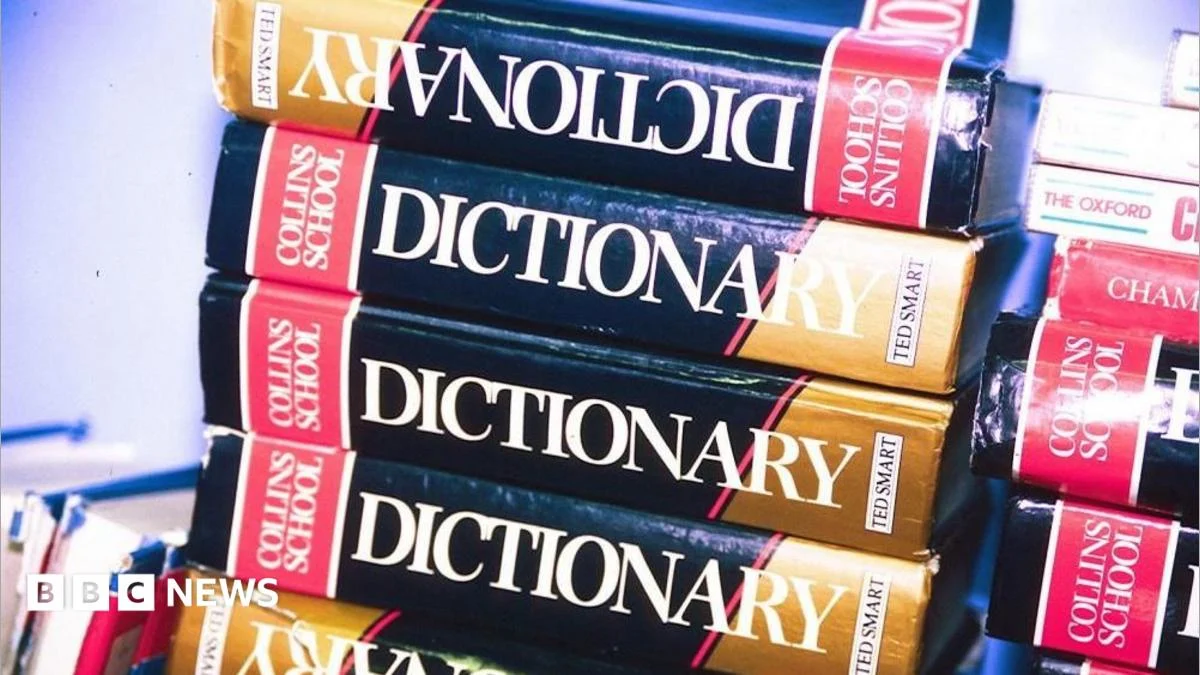
New York, NY – In a powerful testament to an era defined by relentless self-optimization and the pursuit of peak performance, Dictionary.com has declared "maxxing" its 2026 Word of the Year. This selection marks a significant cultural and linguistic shift, reflecting a society increasingly focused on pushing boundaries and achieving maximum potential across all facets of life. The term, a shortened form of "maximising," has permeated digital discourse and mainstream conversation, embodying a pervasive drive that resonates deeply with contemporary values.
According to Dictionary.com, "maxxing" transcends its simple etymological roots, evolving into a versatile linguistic tool. "It can be used on its own or added to the end of any word to convey you’re doing something to the fullest or optimizing it as much as possible," the digital lexicography authority explained in an official statement released on December 12, 2026. This adaptability is key to its meteoric rise, allowing individuals to articulate intense dedication and a quest for excellence in highly specific, often personalized, domains.
The choice of "maxxing" represents a notable departure from Dictionary.com’s recent selections, signaling a rapid acceleration in linguistic trends. Just two years prior, in 2024, the site, after an extensive analysis of U.S. social media trends, news stories, and search data, selected "demure" as its Word of the Year – a term suggesting quiet reserve and modesty. Last year, 2025, saw the enigmatic numerical designation "67" take the title, a reference that puzzled many outside specific digital communities but underscored the fragmentation and niche nature of internet culture. The transition from "demure" to "67" and now to "maxxing" illustrates a dramatic swing from introspection and niche coding to overt, aspirational self-enhancement.
The Lexicographical Lens: A Culture of Optimization
Steve Johnson, director of lexicography for the Dictionary Media Group, articulated the profound significance of the 2026 selection. "Maxxing is the linguistic manifestation of a culture increasingly preoccupied with getting the most out of everything," Johnson stated, highlighting the term’s function as a mirror to societal aspirations. This preoccupation is not merely anecdotal; robust data supports its widespread adoption. Digital media platforms witnessed a staggering nearly 19-fold increase in the use of "maxxing" in August 2026 alone, compared to the monthly average throughout 2025. This exponential growth underscores a tipping point where the term transitioned from niche slang to a dominant descriptor of a pervasive cultural phenomenon.
Dictionary.com’s rigorous selection process involves sifting through vast troves of linguistic data, analyzing search queries, news article frequency, and social media engagement. This year, "maxxing" edged out several other strong contenders, including "affordability," reflecting ongoing economic concerns; "data centre," indicative of technological expansion; "odyssey," a nod to journeys and transformations; and "unc," the shortened form of "uncle" that gained traction in casual online communication. The fact that "maxxing" surpassed these diverse and relevant terms speaks volumes about its omnipresence and cultural resonance.
Generational Adoption and the Influencer Economy
The driving force behind "maxxing"’s ascent is undeniably Generation Z and younger demographics – those primarily under the age of 30. These digital natives have embraced the term with an enthusiasm that transforms it from mere vocabulary into a lifestyle philosophy. Social media platforms are awash with posts detailing "maxxing" efforts, showcasing ambitious pursuits of perfection across a myriad of personal endeavors. This generation, often characterized by its entrepreneurial spirit and comfort with self-documentation, finds "maxxing" to be the perfect linguistic shorthand for their holistic approach to self-improvement.
The influencer economy has played a pivotal role in popularizing and diversifying the applications of "maxxing." Content creators specializing in fitness and wellness, for example, frequently advocate for "proteinmaxxing" – meticulously optimizing protein intake for muscle growth and recovery – and "fibermaxxing," emphasizing the strategic consumption of fiber for digestive health. Similarly, those dedicated to refining their sleep patterns proudly declare themselves to be "sleepmaxxing," meticulously tracking metrics, adjusting environments, and adhering to strict routines to achieve optimal rest.
One particularly prominent figure in the "maxxing" universe is the influencer Clavicular, who has amassed thousands of followers by meticulously chronicling his extreme "looksmaxxing" journey. This subculture focuses on adhering to a specific, often rigorous, set of criteria for attractiveness, with particular emphasis placed on facial structure, such as defined jawlines, expressive eyes, and overall physique. Clavicular’s content, which often involves detailed routines, aesthetic surgeries, and lifestyle adjustments, exemplifies the extreme lengths to which some are willing to go in pursuit of perceived perfection, and how "maxxing" provides a lexicon for this pursuit.
A Linguistic Evolution: From Chill to Obsession
While "maxxing" feels inherently modern, its linguistic roots stretch back further than many might realize. Johnson points out, "Whatever we’re doing, we want to push it further. But its expanding uses also reveal how people are responding to that impulse. Some embrace it. Some exaggerate it for laughs. Others subvert it entirely to describe stepping back from the relentless pursuit of more." This adaptability underscores its deep integration into the cultural fabric, allowing for both sincere adoption and ironic commentary.
Indeed, people were playing with the term – and the underlying idea of maximizing – for decades before the current wave of social media-driven "maxxing." A prime example comes from the opening song of the iconic 1990s television show The Fresh Prince of Bel-Air, where Will Smith famously raps: "Chillin’ out, maxin’, relaxin’ all cool." In this context, "maxin’" implied a state of extreme relaxation and enjoyment, a far cry from the intense, goal-oriented connotation it carries today. This historical perspective highlights the dynamic nature of language, where terms can shed old meanings and acquire new, sometimes diametrically opposed, significances over time.
Lauren Cella, a content creator renowned for her viral Gen Z history lessons and a respected teacher, offers further insight into the term’s evolution from an educator’s perspective. "Unfortunately, by the time the dictionary gets a hold of it, that probably means that it’s reached critical mass," Cella remarks, acknowledging the bittersweet reality that dictionary recognition often signals a term’s mainstreaming, potentially dulling its edgy, niche appeal. Cella and her students have been using "maxxing" as a suffix for some time, long before its official lexicographical coronation. "They’re actually, in their own way, reinventing grammar, which I think is super cool," she observes, applauding the linguistic innovation demonstrated by younger generations.
Cella explains that "maxxing" empowers her students, giving them permission to "optimise to meet a goal" or engage in activities that others might deem "cringe," allowing them to proudly own their choices. "It’s a fun, harmless way that kids are expressing themselves and sharing different goals that they have," she concludes, emphasizing the positive self-expression facilitated by the term.
The Accelerating Pace of Language and Generational Divides
Linguist Vanessa Croft, an English professor, provides a broader academic context for "maxxing"’s rapid ascent. Croft notes that the internet and digital media have accelerated language evolution to "warp speed," far surpassing the influence of radio, film, or television. This unprecedented velocity means that new terms can enter the lexicon with astonishing swiftness but can also fall out of favor just as quickly. "By the time millennials and Gen X or Gen Y start using the terms, Gen Z and Gen Alpha aren’t using those terms anymore," Croft explains, highlighting the ever-widening generational chasm in linguistic trends.
This rapid turnover creates a dynamic linguistic landscape where terms like "maxxing" can be simultaneously current and on the verge of obsolescence. Croft observes that while she and her secondary-school-aged students still use "maxxing," it is now often employed "almost ironically," suggesting a nascent shift towards self-awareness or even a subtle detachment from the intense earnestness that once characterized its usage. This ironic distance could signal the beginning of its transition out of the cutting-edge lexicon, even as it achieves peak mainstream recognition.
Broader Implications: Society, Economy, and Well-being
The rise of "maxxing" is not just a linguistic curiosity; it has profound implications for understanding contemporary society, consumer behavior, and mental well-being. Economically, the "maxxing" phenomenon fuels a burgeoning industry of self-improvement products and services. From bespoke fitness programs and specialized nutritional supplements to productivity apps and cosmetic procedures, businesses catering to the "maxxing" impulse are experiencing significant growth. Market analysts estimate that the global wellness market, closely tied to "maxxing" activities, could exceed $7 trillion by the end of the decade, a substantial portion of which is driven by individuals seeking to "optimize" various aspects of their lives.
Sociologically, "maxxing" reflects a complex interplay of aspiration, social comparison, and the omnipresent influence of digital platforms. While it can empower individuals to set and achieve ambitious goals, it also raises questions about the pressures for constant perfection and the potential for burnout or body image issues. The relentless pursuit of "looksmaxxing," for instance, can perpetuate unrealistic beauty standards and foster a culture of perpetual dissatisfaction. Digital culture experts warn that while "maxxing" fosters community among like-minded individuals, it can also exacerbate feelings of inadequacy for those who struggle to keep pace with perceived ideals.
Culturally, "maxxing" symbolizes a generation grappling with unprecedented challenges and opportunities. In an era marked by rapid technological advancement, economic uncertainty, and intense global competition, the impulse to "maximize" one’s potential can be seen as a survival mechanism, a way to gain an edge in an increasingly competitive world. It embodies a proactive, agency-driven approach to life, where individuals are encouraged to take charge of their destinies and sculpt themselves into ideal versions.
Looking Ahead: The Future of "Maxxing"
As "maxxing" settles into its role as Dictionary.com’s 2026 Word of the Year, its future trajectory remains a subject of linguistic and cultural fascination. Will it endure as a fundamental component of the lexicon, or will it fade as quickly as other internet-born terms? Its current omnipresence suggests a deeper societal undercurrent that transcends fleeting trends. The underlying drive to optimize, to improve, and to push boundaries is a deeply human one, amplified and articulated by the digital age.
Regardless of its longevity, "maxxing" has indelibly stamped its mark on the English language and on the cultural narrative of the mid-2020s. It stands as a vibrant, dynamic reflection of a generation that is unapologetically striving for more, often in the public eye, and always with an eye toward maximizing every possibility. Its selection by Dictionary.com is not merely an acknowledgment of a popular word; it is a recognition of a pervasive cultural philosophy that defines an era.