

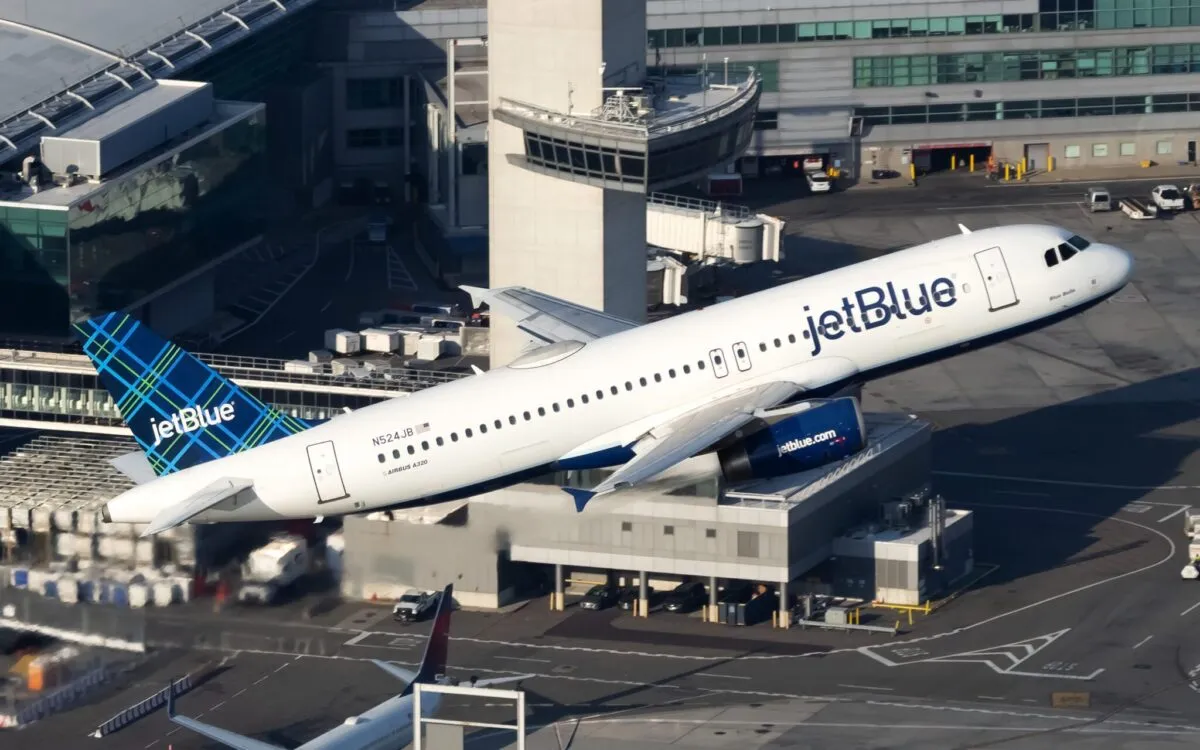
JetBlue Airways has revised its 2026 financial outlook and reported a wider-than-expected loss for the third quarter, yet the New York-based carrier remains steadfast in its assertion that a return to sustained profitability is achievable by 2027. Despite the downward revision of near-term expectations, the airline’s shares experienced a significant rally of more than 10% in after-hours trading on Monday. This market movement provided a necessary reprieve for a stock that had been battered by a week-long sell-off, fueled largely by intensifying market speculation regarding the company’s long-term solvency and rumors of a potential Chapter 11 bankruptcy filing.
The airline took the unusual step of releasing its third-quarter financial results a day earlier than originally scheduled. Initially slated for a Tuesday morning disclosure, the report followed a Monday closing price of $2.37, representing a decline of more than 20% over the preceding five trading days. By moving the announcement forward, JetBlue leadership appeared intent on addressing investor anxiety and providing clarity on the "JetForward" strategic plan, which the company views as its primary vehicle for financial recovery.
Financial Performance and the Third Quarter Recap
JetBlue’s third-quarter results highlighted the ongoing challenges of a transitional period. The carrier reported a net loss that widened compared to the previous year, a result of fluctuating demand in certain domestic markets and the lingering operational costs associated with fleet maintenance. However, the report also contained several data points that investors interpreted as signs of stabilization.
The airline confirmed that it expects a "meaningful step-down" in unit costs, excluding fuel, during the fourth quarter. This anticipated reduction in expenditures is a cornerstone of the company’s effort to right-size its operations after several years of aggressive but ultimately frustrated expansion attempts. Revenue figures remained resilient in core markets, even as the airline moved to prune unprofitable routes from its network.
Crucially, JetBlue reaffirmed its long-term guidance, targeting $1 in earnings per share (EPS) and positive free cash flow by the year 2028. For an airline currently grappling with high debt levels and the fallout of failed corporate maneuvers, these long-term targets serve as a roadmap for institutional investors who have remained wary of the carrier’s volatile stock performance.
The JetForward Strategy: A Blueprint for Recovery
At the heart of JetBlue’s optimistic 2027 outlook is the "JetForward" initiative. Launched under the leadership of CEO Joanna Geraghty, who took the helm earlier this year, the plan represents a pivot away from the growth-at-all-costs mentality that characterized the airline’s previous decade. Instead, JetForward focuses on four primary pillars: operational reliability, network optimization, product evolution, and cost discipline.
The network optimization component has already seen JetBlue exit several underperforming markets, particularly in South America and certain short-haul domestic routes out of Los Angeles. By reallocating those aircraft to its "bread and butter" hubs—New York’s JFK, Boston Logan, and Fort Lauderdale—JetBlue aims to maximize its high-margin leisure and "vfr" (visiting friends and relatives) traffic.
Furthermore, the airline is doubling down on its premium offerings. As the domestic market sees a shift in consumer preference toward premium economy and business-class experiences, JetBlue is expanding its Mint cabin availability and introducing more "even more space" seating options. This shift is designed to increase the average revenue per passenger, helping to offset the rising costs of labor and airport fees.
A Chronology of Strategic Setbacks
To understand JetBlue’s current financial position, it is necessary to examine the series of high-profile setbacks the airline has faced over the past 24 months. These events created the environment of uncertainty that led to the recent bankruptcy speculation.
In early 2024, a federal judge blocked JetBlue’s proposed $3.8 billion acquisition of Spirit Airlines, citing antitrust concerns. The merger was intended to make JetBlue the fifth-largest carrier in the United States, providing the scale necessary to compete with the "Big Four" (Delta, United, American, and Southwest). When the deal was scuttled, JetBlue was left without a clear path for rapid expansion and was forced to pay a significant breakup fee to Spirit.
This followed the forced dissolution of the Northeast Alliance (NEA) with American Airlines. The NEA had allowed JetBlue to coordinate schedules and share revenue in the congested New York and Boston markets. A successful legal challenge by the Department of Justice ended the partnership, forcing JetBlue to once again compete independently in its most vital regions. These two regulatory defeats left the airline with a strategic vacuum that the JetForward plan is now attempting to fill.
Operational Hurdles: The Pratt & Whitney Engine Crisis
Beyond the courtroom and the boardroom, JetBlue has faced significant physical constraints on its fleet. Like many of its peers, the airline has been severely impacted by the ongoing recall and inspection requirements for the Pratt & Whitney Geared Turbofan (GTF) engines.
As of the third quarter, JetBlue has been forced to ground a significant portion of its Airbus A321neo fleet—estimated at between 11 and 15 aircraft—due to the potential for microscopic contaminants in the engine’s powdered metal components. These groundings have reduced the airline’s capacity and forced it to keep older, less fuel-efficient aircraft in service longer than planned.
While JetBlue has reached compensation agreements with Pratt & Whitney, the lack of aircraft availability has limited the airline’s ability to capitalize on peak travel periods. The company’s updated 2026 outlook reflects the reality that these engine issues will persist longer than initially forecasted, delaying the full realization of its capacity goals.
Market Sentiment and Bankruptcy Speculation
The 10% surge in after-hours trading suggests that the market viewed the third-quarter report as a "clearing event." For weeks, rumors had circulated on social media and among retail investors that JetBlue might follow the path of other struggling low-cost carriers and seek bankruptcy protection. These fears were exacerbated by the airline’s debt load, which had ballooned during the pandemic and the subsequent Spirit merger attempt.
However, analysts note that JetBlue’s liquidity position remains significantly stronger than that of Spirit Airlines, which is currently engaged in its own restructuring talks. JetBlue has successfully tapped into private credit markets and utilized its loyalty program, TrueBlue, as collateral to secure fresh capital. This proactive approach to liquidity management appears to have reassured institutional investors that the company has enough runway to execute its 2027 turnaround.
Industry experts suggest that the "bankruptcy talk" was largely driven by the broader malaise in the low-cost carrier (LCC) sector. With rising fuel prices and labor contracts reaching record highs across the industry, smaller players have struggled to maintain the price gap that traditionally separated them from legacy carriers. JetBlue’s shift toward a more "premium-lite" model is seen as a necessary evolution to escape this LCC trap.
Industry Implications and the Path Forward
The challenges facing JetBlue are emblematic of a broader shift in the U.S. aviation industry. The era of cheap, unlimited growth for mid-sized carriers appears to be ending, replaced by a focus on profitability over market share.
For passengers, JetBlue’s strategic pivot may result in fewer flight options to secondary cities but a more reliable and premium-focused experience in major hubs. The airline’s commitment to its 2027 profitability goal hinges on its ability to execute flawlessly in its core markets while keeping a tight lid on controllable costs.
The "meaningful step-down" in costs projected for the fourth quarter will be the first major test of the JetForward plan. If the airline can prove that it can lower its cost per available seat mile (CASM) without sacrificing the customer service that has historically defined its brand, it may finally break the cycle of volatility that has plagued its stock.
As 2025 approaches, the aviation industry will be watching JetBlue closely. The airline’s ability to navigate the twin pressures of fleet groundings and competitive realignments will serve as a bellwether for the health of the mid-tier airline sector. While the 2026 outlook has been tempered by reality, the management’s confidence in a 2027 recovery suggests that JetBlue believes its most turbulent days are now in the rearview mirror.
The rally in share prices following the Q3 report indicates that, for now, the market is willing to give JetBlue the benefit of the doubt. However, the path to $1 EPS by 2028 remains narrow, requiring a period of operational stability and macroeconomic cooperation that has eluded the carrier for the better part of the last four years.