

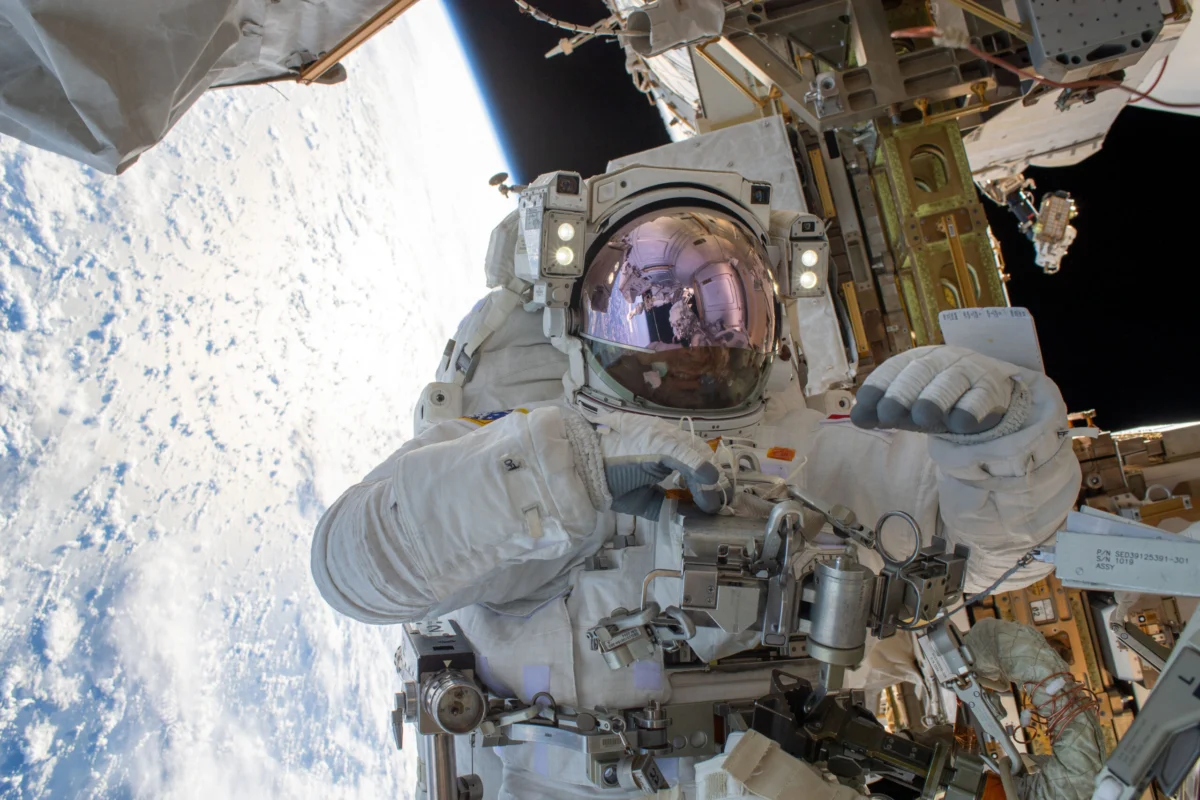
In a critical maneuver high above Earth, Canadian Space Agency (CSA) astronaut Joshua Kutryk and NASA astronaut Anil Menon successfully completed a spacewalk on October 29, 2026, to install a new International Roll-Out Solar Array (iROSA) on the International Space Station (ISS). The complex extravehicular activity (EVA) unfolded as the orbiting laboratory soared 267 miles (approximately 430 kilometers) above the South Atlantic Ocean, marking a significant step in the ongoing effort to augment the station’s power generation capabilities. The spacewalk, which lasted several hours, saw the two astronauts not only secure the new solar array but also perform crucial "get-ahead" work in preparation for their next scheduled EVA on November 5, 2026. This sustained campaign is vital for ensuring the continued operational viability and scientific output of humanity’s most ambitious orbital outpost.
Critical Power Upgrade: The iROSA Campaign
The installation of the new iROSA is part of a multi-year initiative by NASA and its international partners to upgrade the ISS’s power system. The station’s original eight Solar Array Wings (SAWs) have been continuously generating power since their deployment between 2000 and 2009. While remarkably resilient, these arrays have naturally experienced degradation over more than two decades of exposure to the harsh space environment, including atomic oxygen erosion, micrometeoroid impacts, and radiation. Although still functional, their efficiency has gradually diminished. The iROSA project aims to supplement these existing arrays by deploying six new, more efficient roll-out arrays over the current SAWs, effectively boosting the station’s overall power supply. Each iROSA is roughly half the length of one of the original SAWs but is designed to be more powerful and efficient due to advancements in solar cell technology.
The October 29 spacewalk involved the intricate process of deploying and connecting the seventh of eight planned iROSAs. These new arrays are positioned in front of the older ones, allowing the existing arrays to continue generating power while the new, high-efficiency arrays are added. Once all eight iROSAs are fully installed and operational, they are projected to increase the station’s available power by up to 30%. This substantial boost is not merely an incremental improvement; it is a fundamental requirement for supporting expanded scientific research, accommodating new commercial modules, and extending the operational lifespan of the ISS well into the next decade, potentially beyond 2030.
A Meticulous Extravehicular Activity
The spacewalk began with Kutryk and Menon egressing from the Quest airlock after meticulously checking their Extravehicular Mobility Units (EMUs), commonly known as spacesuits. Their initial tasks involved translating along the station’s truss structure to the designated worksite on the starboard side. The new iROSA, which arrived at the ISS folded and packed into a compact cylinder aboard a SpaceX Dragon cargo resupply mission, was robotically maneuvered into position by ground controllers and station astronauts using the Canadarm2 robotic arm prior to the EVA. Kutryk and Menon’s primary objective was to physically attach the iROSA to its mounting bracket, unfurl the array to its full length, and then connect the necessary power and data cables to integrate it into the station’s electrical grid.
Deployment of the iROSA is a delicate process. Once mechanically secured, the array slowly unrolls like a massive yoga mat, driven by internal springs. This self-deployment mechanism reduces the complexity and time required for astronaut intervention, though spacewalkers remain vigilant to ensure smooth unfurling and to address any potential snags. The new array measures approximately 60 feet (18.2 meters) long and 20 feet (6 meters) wide when fully deployed, adding a significant surface area for solar energy collection. Following successful deployment and connection, the spacewalkers performed a series of checks to confirm power flow and data transmission from the new array. The "get-ahead" work involved preparing the mounting interface and electrical connections for the final iROSA, streamlining the tasks for the upcoming November 5 spacewalk. This proactive approach underscores the efficiency and foresight embedded in modern EVA planning, minimizing potential delays and maximizing crew time in the vacuum of space.
Chronology of a Power Revolution
The iROSA campaign officially began in June 2021 with the installation of the first two arrays. Since then, subsequent spacewalks have steadily added more of these vital power sources.
- June 2021: NASA astronauts Shane Kimbrough and Thomas Pesquet (ESA) installed the first two iROSAs (1A and 1B) on the P6 truss.
- December 2021: NASA astronauts Raja Chari and Kayla Barron installed the third iROSA (2A) on the P4 truss.
- June 2022: NASA astronauts Kjell Lindgren and Samantha Cristoforetti (ESA) installed the fourth iROSA (3A) on the S4 truss.
- February 2023: NASA astronauts Nicole Mann and Koichi Wakata (JAXA) installed the fifth iROSA (4A) on the P4 truss.
- July 2024: NASA astronauts Woody Hoburg and Sultan Alneyadi (UAE) installed the sixth iROSA (1B) on the P6 truss.
- October 29, 2026: CSA astronaut Joshua Kutryk and NASA astronaut Anil Menon installed the seventh iROSA (2B) on the S4 truss, the focus of the current report.
- November 5, 2026 (Scheduled): Kutryk and Menon are slated to install the eighth and final iROSA (3B) on the S6 truss.
This meticulous, multi-year timeline highlights the methodical approach to enhancing the station’s capabilities. Each spacewalk requires extensive training, meticulous planning, and flawless execution from both the astronauts in orbit and the ground teams at NASA’s Johnson Space Center in Houston, Texas, and other international mission control centers.
Statements and Reactions from Space Agencies
The successful completion of the seventh iROSA installation has been met with commendation from leadership across the involved space agencies.

"This successful spacewalk by Joshua and Anil represents another critical milestone in securing the future of the International Space Station," stated NASA Administrator Bill Nelson. "The iROSA campaign is not just about power; it’s about expanding our capacity for groundbreaking science, fostering new commercial opportunities, and demonstrating the power of international collaboration in space exploration. We are incredibly proud of the dedication and skill demonstrated by our astronauts and the entire mission control team."
From the Canadian Space Agency, President Lisa Campbell emphasized the significance of Canadian contributions. "Seeing CSA astronaut Joshua Kutryk play such a pivotal role in this vital upgrade fills us with immense pride," Campbell remarked. "Canada’s expertise in robotics and human spaceflight is instrumental to the ISS program, and Joshua’s flawless execution of this complex task further solidifies our commitment to advancing humanity’s presence in low Earth orbit. The additional power will directly enable more Canadian scientific experiments aboard the station, furthering our understanding of space and its benefits for life on Earth."
Joshua Kutryk, a former Royal Canadian Air Force pilot and test pilot, is on his first long-duration mission to the ISS. His participation in these high-stakes EVAs marks a significant career achievement and a testament to the rigorous training all astronauts undergo. Anil Menon, a former SpaceX flight surgeon and NASA flight surgeon, is also on his inaugural spaceflight, showcasing the broad range of expertise brought to the astronaut corps. Their seamless teamwork, often operating under immense pressure, is a hallmark of successful space missions.
Broader Impact and Implications
The enhanced power capacity of the International Space Station has profound implications across several domains:
Extended Operational Lifespan and Scientific Research
With a robust and reliable power supply, the ISS can confidently continue its operations beyond its initially planned retirement date. The added 30% power capacity translates directly into more energy for scientific payloads, laboratory equipment, and life support systems. This means researchers can conduct more experiments simultaneously, run power-intensive instruments for longer durations, and potentially host new, more demanding scientific facilities. Fields such as advanced materials science, human physiology in microgravity, astrophysics, and Earth observation will all benefit from this increased energy budget, leading to new discoveries and technological advancements. The ability to run more complex and diverse experiments is crucial for preparing for future deep-space missions, including lunar and Martian expeditions.
Commercialization of Low Earth Orbit
The ISS is increasingly serving as a testbed and destination for commercial ventures. Companies are developing modules for private research, manufacturing, and even space tourism. The additional power from the iROSAs directly supports these initiatives by providing the necessary energy for commercial modules, power-hungry manufacturing processes, and expanded life support for a larger crew or more private visitors. This move towards commercialization is a key strategy for NASA to transition from operating the ISS to becoming a customer of commercial space stations, freeing up resources for deep-space exploration.
International Cooperation and Future Exploration
The ISS remains the most prominent symbol of international collaboration in space. The iROSA campaign, while primarily led by NASA and executed with CSA participation, benefits all partner agencies (ESA, JAXA, and Roscosmos) by ensuring the station’s health and longevity. A stronger, more capable ISS reinforces the framework for future international endeavors, such as the lunar Gateway project, which also utilizes advanced solar array technology. The successful deployment of these cutting-edge arrays on the ISS serves as a vital technological demonstration for power systems that will be essential for sustainable human presence on the Moon and eventually Mars. The lessons learned from iROSA installation and operation will directly inform the design and deployment of solar arrays on future deep-space habitats and vehicles.
Technological Advancement and Sustainability
The iROSA technology itself represents a significant leap forward in solar power generation for space applications. Their compact stowed volume and efficient deployment mechanism make them ideal for future missions where mass and volume are at a premium. The increased efficiency of their photovoltaic cells compared to older designs also contributes to a more sustainable approach to space infrastructure, maximizing power generation from a smaller footprint. This continuous innovation in space technology not only benefits orbital platforms but also has potential spin-off applications for terrestrial energy solutions.
The upcoming November 5 spacewalk, which will see the installation of the eighth and final iROSA, will cap off a remarkable engineering feat. Once completed, the International Space Station will be more powerful, more capable, and more ready than ever to continue its role as humanity’s orbiting laboratory, pushing the boundaries of scientific discovery and preparing the way for the next giant leaps in space exploration.