


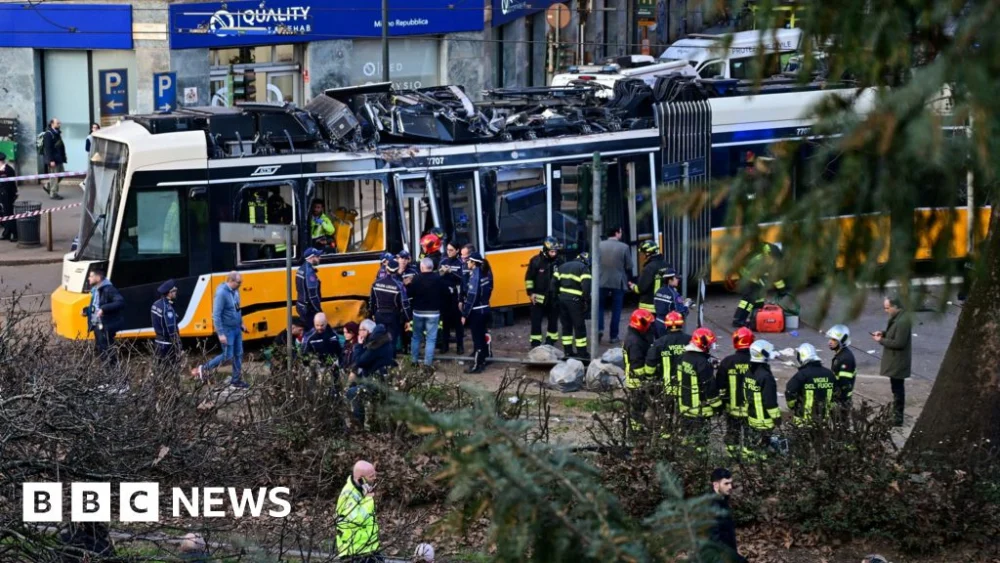
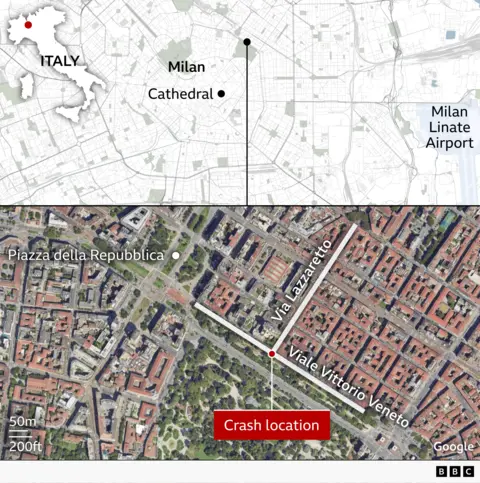
A catastrophic tram derailment in the bustling heart of Milan has resulted in at least one fatality and left 39 individuals injured, some critically, casting a somber shadow over the northern Italian metropolis. The incident occurred on Viale Vittorio Veneto, a major thoroughfare, at approximately 16:00 local time (15:00 GMT), involving a crowded Line 9 tram that veered violently from its tracks before colliding with an adjacent building. The deceased has been identified as a pedestrian, a tragic victim caught in the unexpected chaos, while the majority of the injured were passengers on the ill-fated vehicle. The scene quickly transformed into a tableau of emergency response, with numerous ambulances, fire brigades, and civil protection units converging to manage the aftermath and extricate those trapped within the wreckage. The timing of this devastating event is particularly poignant, unfolding as Milan plays host to its globally renowned Fashion Week, drawing an international contingent of visitors, celebrities, and journalists to the city.
A Detailed Account of the Catastrophe
The afternoon of the incident began like any other for commuters and visitors traversing Milan’s extensive tram network. Line 9, a vital artery in the city’s public transport system, connects key areas, ferrying thousands daily. The tram involved in the accident was a relatively new, three-car bidirectional model, recently introduced to the fleet by the municipal transport company, ATM (Azienda Trasporti Milanesi), a few weeks prior. These modern trams, equipped with driver’s cabs at both ends, represent an upgrade in efficiency and passenger capacity for the city.
According to preliminary reports and harrowing accounts from survivors, the tram was navigating its route along Viale Vittorio Veneto, a wide avenue lined with stately buildings and commercial establishments. As it approached a particular section, passengers described hearing an unsettling "noise underneath the tram," a metallic groan or bang that signaled an immediate and terrifying malfunction. What followed was a rapid escalation of events: the tram reportedly veered sharply off its designated track, gaining uncontrolled speed in the process. Its trajectory became erratic, first striking a traffic light, then smashing through the window of a nearby restaurant, before ultimately slamming into the side of a building with immense force.
The impact was described by one passenger, who spoke to the Ansa news agency, as feeling like "an earthquake." He recounted, "I was sitting down and I fell on the floor, along with the other passengers. It was terrible." Another female passenger, who boarded at the Piazza della Repubblica stop and was standing near the driver, vividly recalled the sudden jolt: "I was standing next to the driver, and they all crashed into me." The sheer force of the collision caused widespread panic and injuries among those on board.
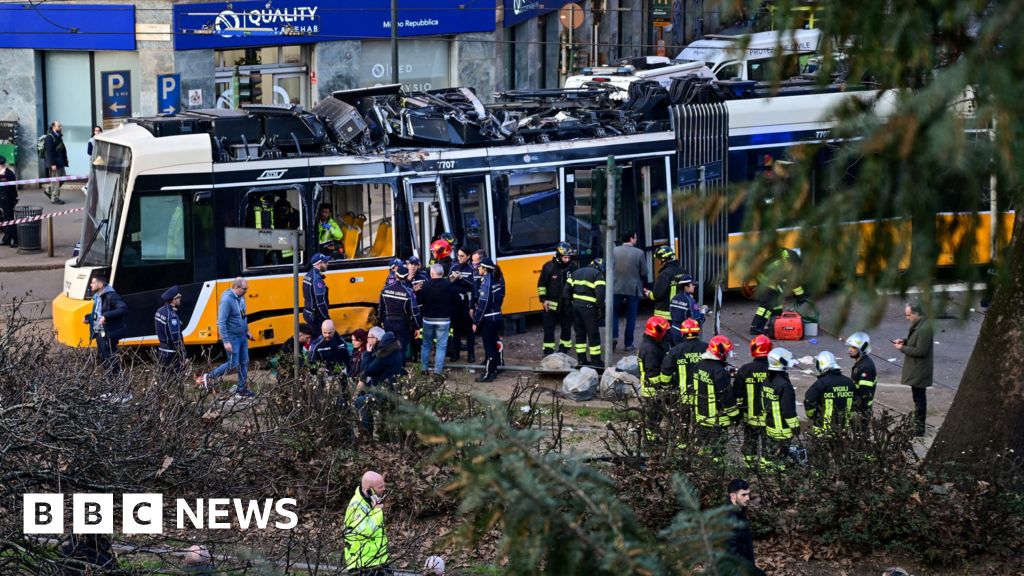
The fatality, a pedestrian, was tragically struck by the careening tram, highlighting the indiscriminate nature of the accident’s impact beyond the vehicle itself. Among the injured, some sustained serious wounds, necessitating immediate and intensive medical attention. Several individuals were reported to be trapped within the mangled metal and glass of the tram and the damaged building, requiring specialized rescue efforts. Miraculously, a delivery rider waiting at the traffic light and a young man on the pavement narrowly escaped injury, their proximity to the unfolding disaster underscoring the potential for an even greater tragedy. Anna, a 27-year-old working in a nearby office, recounted to AFP, "I just heard an enormous bang. I saw a bit of the tram had gone into a shop." Her words encapsulate the shock and suddenness that engulfed the usually vibrant street.
The Immediate Emergency Response and Aftermath
Within minutes of the incident, the tranquil afternoon atmosphere of Viale Vittorio Veneto was shattered by the wail of sirens. Emergency services rapidly descended upon the scene, deploying a substantial contingent of personnel and resources. Firefighters, paramedics, police, and civil protection teams worked in a coordinated effort to address the multi-faceted crisis. The priority was the extraction of trapped individuals, the provision of first aid to the injured, and the securement of the crash site.
Paramedics established a triage area, tending to the wounded amidst the debris. Those with minor injuries received immediate care, while the seriously injured were swiftly transported to various hospitals across Milan, including likely major trauma centers such as Niguarda Hospital, Policlinico di Milano, and Fatebenefratelli Hospital. Civil protection teams erected a tent at the scene, serving as a temporary medical station and a point of refuge for those affected and in shock. The sheer number of casualties – one deceased and 39 injured – stretched the emergency response capabilities, yet the coordination appeared robust and efficient.
Police cordoned off the area, diverting traffic and managing the growing crowd of concerned citizens and media. Investigators immediately began their preliminary work, documenting the scene, interviewing witnesses, and collecting any available evidence that could shed light on the cause of the derailment. The damaged tram, with its front section deeply embedded in the building, became a stark visual testament to the force of the collision.
Investigation Underway: Seeking Answers
As the immediate rescue operations transitioned into a more methodical recovery and investigation phase, questions surrounding the cause of the derailment quickly arose. While official statements confirmed an ongoing inquiry, media reports, citing early observations and witness testimonies, suggested that the tram might have taken a sharp corner at an excessive speed as it turned out of Viale Vittorio Veneto. This hypothesis, though unconfirmed, is a common factor in urban rail derailments.
The investigation will likely involve several critical components:
- Track Inspection: A thorough examination of the tram tracks at and leading up to the point of derailment for any defects, wear, or foreign objects.
- Tram Examination: Detailed analysis of the involved tram’s mechanical systems, including brakes, wheels, and bogies, as well as its "black box" data recorder, which captures speed, braking, and other operational parameters.
- Driver Interview: The tram driver will be a key witness, providing crucial insights into the vehicle’s performance and any anomalies encountered prior to the incident.
- Signal and Switch Analysis: Inspection of any relevant traffic signals or track switches in the vicinity that might have played a role.
- Witness Testimonies: Compilation and analysis of accounts from passengers, pedestrians, and nearby residents.
The fact that the tram was a relatively new model, introduced only weeks prior, adds another layer to the investigation. Experts will undoubtedly scrutinize its design, manufacturing, and maintenance records to ensure there were no inherent flaws or unforeseen operational challenges with the new bidirectional units. The outcome of this comprehensive inquiry will be crucial for understanding what went wrong and for implementing preventative measures to avert future tragedies.
Milan’s Tram Network: A Historical Lifeline
Milan boasts one of Europe’s oldest and most extensive tram networks, a distinctive feature of its urban landscape. Dating back to the late 19th century, the tram system has evolved from horse-drawn carriages to modern electric vehicles, serving as a vital backbone of public transportation for over a century. Operated by ATM, the network comprises numerous lines covering vast swathes of the city, renowned for its efficiency, environmental friendliness, and capacity to navigate Milan’s historic streets.
The city’s trams are not merely a mode of transport; they are an integral part of Milanese identity, often seen as iconic symbols alongside the Duomo and Galleria Vittorio Emanuele II. With approximately 18 lines and over 150 km of tracks, the system carries hundreds of thousands of passengers daily. For a city like Milan, which prioritizes sustainable urban mobility, trams are indispensable in reducing road congestion and air pollution.
Accidents involving trams, particularly those of this severity, are exceedingly rare in Milan and across Italy. Urban rail transport, including trams and metros, generally maintains an excellent safety record compared to other forms of transportation. This incident, therefore, represents a significant anomaly, prompting heightened concern and an urgent need for answers regarding the system’s integrity and operational safety. ATM, as the operator, is under intense scrutiny to ensure public confidence in its services.
Official Reactions and Broader Implications
The news of the derailment quickly reached the highest levels of city administration. Milan Mayor Giuseppe Sala promptly arrived at the scene, expressing his profound sorrow and solidarity with the victims and their families. His presence underscored the gravity of the situation and the city’s commitment to a thorough investigation and support for those affected.
ATM, the transport company, released a statement expressing its deep distress over the incident. "ATM is deeply shaken by the incident and extends its thoughts and condolences to the victims and their families," the statement read, affirming its full cooperation with the authorities in the ongoing investigation. Such statements are standard practice following major incidents, aiming to reassure the public and demonstrate accountability.
Beyond the immediate human tragedy, the derailment carries several broader implications for Milan:
- Urban Mobility Disruption: Line 9, a key route, experienced significant disruption, impacting daily commuters and exacerbating traffic in an already congested area. While temporary measures and alternative transport options were likely put in place, the incident will cause a ripple effect across the city’s transport network.
- Public Confidence: Such a dramatic accident inevitably shakes public confidence in the safety of urban public transport. Rebuilding this trust will require transparent communication from ATM and city authorities, coupled with demonstrable actions to address any identified safety deficiencies.
- Economic and Legal Ramifications: The damage to the tram and the building will entail significant repair costs. Furthermore, legal proceedings, including claims for damages from the injured and the family of the deceased, are almost certainly forthcoming, leading to potential long-term financial and reputational impacts for ATM and the city.
- Impact on Milan Fashion Week: The incident’s timing, coinciding with Milan Fashion Week, placed it under an international spotlight. While not directly affecting the events, the tragic news undoubtedly cast a pall over the city’s festive atmosphere, potentially raising questions among international visitors about urban safety, however rare such incidents may be. Milan prides itself on being a safe and efficient global hub for culture and commerce, and this event challenges that perception, albeit temporarily.
- Safety Review and Modernization: This incident will undoubtedly trigger a comprehensive review of safety protocols across Milan’s entire tram network. This could include reassessments of speed limits on specific curves, track maintenance schedules, driver training programs, and the performance characteristics of newer tram models. It may also accelerate investments in advanced safety technologies to prevent similar occurrences.
In conclusion, the tram derailment on Viale Vittorio Veneto is a profound tragedy that has claimed a life and inflicted suffering on many in the heart of Milan. As the city mourns and grapples with the immediate aftermath, the focus remains firmly on the ongoing investigation to uncover the precise cause of this catastrophic event. The commitment of city officials and transport authorities to transparency and safety will be paramount in restoring public confidence and ensuring that Milan’s vital tram network continues to serve its citizens and visitors safely for generations to come. The resilience of Milan will be tested, but its determination to learn from this incident and enhance urban safety remains unwavering.