
The automotive industry has entered a transformative era where electrification and performance are frequently at odds with traditional interior utility. This tension is perhaps most visible in the recently launched Alpine A290, an electric hot hatch that has garnered significant attention for its driving dynamics but has simultaneously faced criticism for specific ergonomic oversights. Chief among these is the absence of integrated cupholders, a staple of modern vehicle interiors that remains a critical requirement for long-distance commuting and daily usability. This omission has prompted an unusual intersection of automotive journalism and independent engineering, leading to the development of a 3D-printed aftermarket solution designed to rectify a perceived design flaw in a vehicle otherwise lauded for its innovation.
The Alpine A290: Performance Specifications and Design Philosophy
The Alpine A290 represents the French marque’s first foray into the electric "hot hatch" segment. Built upon the AmpR Small platform—the same architecture utilized by the new Renault 5—the A290 is designed to deliver a more spirited, driver-focused experience. With a 52kWh battery and an electric motor producing up to 215bhp in its highest trim, the vehicle is capable of reaching 62mph in approximately 6.4 seconds. While its performance figures are competitive within the burgeoning EV market, its WLTP-rated range of approximately 236 miles has been identified by long-term testers as a potential bottleneck for those frequently undertaking motorway journeys.
However, the vehicle’s interior architecture has proven to be as much of a talking point as its powertrain. Alpine’s designers opted for a high, driver-centric center console, distinct from the more utilitarian layout found in the Renault 5. While this design enhances the "cockpit" feel intended for a performance vehicle, it resulted in the removal of the standard cupholders located in the central cubby of its Renault sibling. This decision has led to practical challenges for owners and testers, particularly during the extended dwell times often required at charging stations or during long-distance transits.
Identifying the Ergonomic Deficit: A Chronology of User Feedback
The realization of the A290’s utility shortcomings typically occurs during the transition from short-term urban driving to long-range testing. Initial reports from automotive journalists highlighted that while the vehicle excels in agility and aesthetic appeal, the lack of storage for beverages and the narrow dimensions of the door pockets—insufficient for standard bottles or wine bottles—create a "friction point" in the user experience.
The timeline of the current intervention began when users noted that the motorway service station experience, a common ritual for EV drivers managing range, was hampered by the inability to securely stow a hot beverage. In a professional testing environment, such "minor" grievances can escalate into significant "bugbears," particularly when they affect the daily habitability of a vehicle positioned as a premium product. The frustration expressed by testers centered on the fact that the donor vehicle, the Renault 5, possessed the very features the Alpine had sacrificed in the name of sportiness.
The Engineering Intervention: From Prototype to Practicality
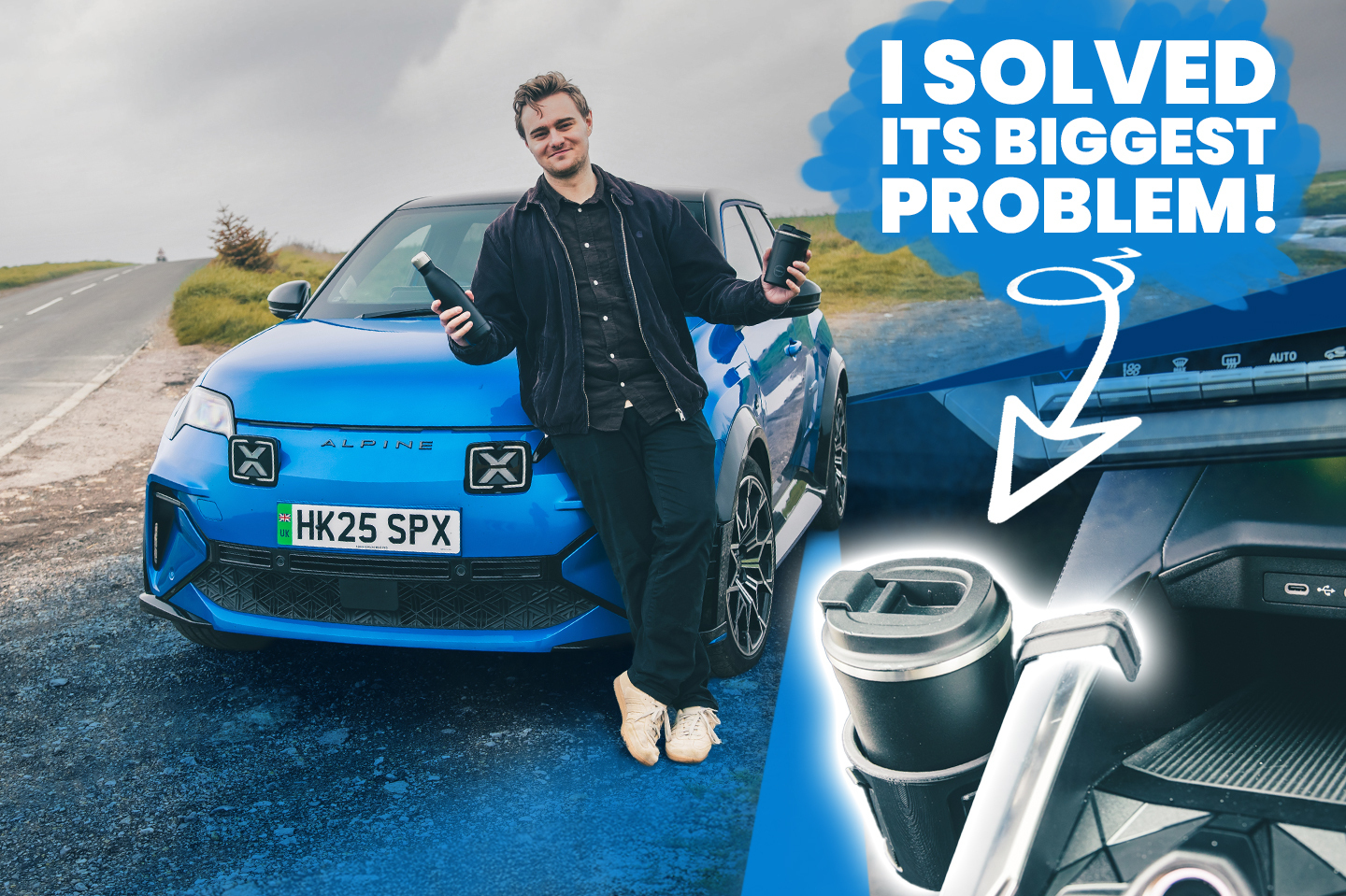
The move from grievance to solution was initiated by Tim Oldland, a design engineer and the founder of Bespoke Chargers. Oldland, who also contributes to motoring literature, identified the same ergonomic gap while operating an A290. Leveraging his background in bespoke engineering and his firm’s expertise—Bespoke Chargers is known for repurposing automotive components, such as turning classic wheels into EV cable reels—Oldland sought to apply additive manufacturing to the problem.
The development process involved several key stages:
- Spatial Mapping: Measuring the contours of the A290’s center console to identify a non-intrusive mounting point that would not require permanent modification or drilling.
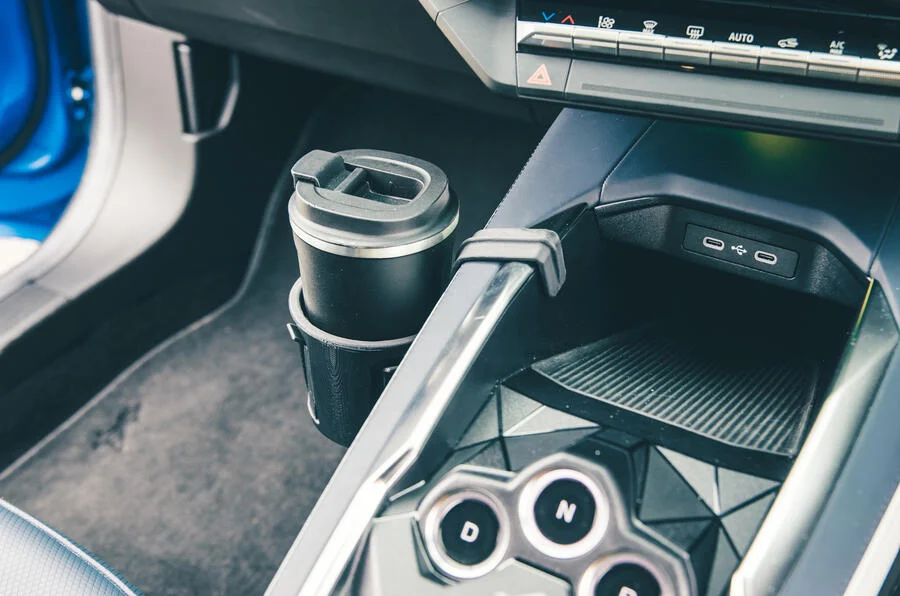
- Prototyping: Using 3D-printing technology to create a bracket-and-basket system. The design utilized a clip-on mechanism that attaches to the side of the center console.
- Internal Stabilization: The basket was engineered with flexible internal arms. This feature is critical in a performance-oriented vehicle, as it provides the necessary tension to prevent containers from "knocking or bouncing" during high-lateral-G cornering or sudden acceleration.
- Stress Testing: The prototype was subjected to various "real-world" loads, including takeaway coffee cups, insulated flasks, and large metal water bottles.
The resulting 3D-printed component addresses the primary utility failure of the A290 without requiring a redesign of the interior. However, the solution introduces its own set of compromises; the bracket protrudes into the passenger footwell, potentially impacting the comfort of a front-seat passenger.
Comparative Analysis: Alpine A290 vs. Renault 5 Utility
To understand why this modification is necessary, one must look at the data regarding the interior dimensions of the AmpR Small platform. In the Renault 5, the central cubby is designed with a lower profile, allowing for two integrated cupholders and a wireless charging pad in a configuration that maximizes horizontal space.
In contrast, the Alpine A290’s raised center console is a deliberate aesthetic choice intended to evoke the feel of the Alpine A110 sports car. By elevating the controls and the drive selector, Alpine created a physical barrier between the driver and passenger. While this improves the ergonomics of the gear selector and drive mode buttons, it eliminates approximately 1.5 liters of potential storage volume in the central area. The door pockets are similarly restricted by the door card’s aggressive styling, measuring significantly narrower than those found in competitors like the Volkswagen ID.3 or the Cupra Born.
The Role of Additive Manufacturing in Automotive Aftermarkets
The success of Tim Oldland’s 3D-printed cupholder highlights a growing trend in the automotive sector: the democratization of manufacturing for "missing" features. As manufacturers move toward minimalist or "vegan" interiors and integrated screens, physical buttons and storage solutions are often discarded.
The use of 3D printing (specifically Fused Deposition Modeling or Selective Laser Sintering) allows enthusiasts and engineers to:
- Rapidly Iterate: Design changes can be made and tested within hours rather than months.
- Custom Fit: Parts can be tailored to the exact millimeter-spec of a specific car model.
- Material Selection: Modern filaments, such as Carbon Fiber-reinforced Nylon or PETG, offer the heat resistance necessary to survive the high temperatures of a car interior during summer months.
This "bespoke" approach to solving OEM (Original Equipment Manufacturer) oversights suggests a future where the aftermarket is not just about performance tuning (increasing horsepower), but about "utility tuning"—modifying the cabin to suit the specific lifestyle needs of the owner.
Broader Implications and Industry Response
The case of the A290 cupholder serves as a micro-study in the broader challenges facing EV designers. As range remains a primary concern for consumers, every gram of weight is scrutinized. While a plastic cupholder may seem negligible, the cumulative effect of interior "clutter" can impact the perceived premium nature of the brand and the overall weight of the vehicle. However, the feedback from A290 users suggests that consumers are often willing to trade a small amount of aesthetic purity for daily convenience.
While Alpine has not officially responded to the creation of the 3D-printed bracket, the industry standard in such cases is often to monitor aftermarket trends for future "facelift" or mid-cycle refreshes. If a significant portion of the user base adopts third-party storage solutions, it provides a data-driven mandate for the manufacturer to reintegrate those features in subsequent models.
Conclusion: The Intersection of Design and Usability
The Alpine A290 remains a significant achievement in the electric vehicle space, proving that the "hot hatch" formula can be successfully translated into a zero-emission format. It offers a level of engagement and "charm" that is often missing from contemporary EVs. Nevertheless, the necessity of a 3D-printed cupholder serves as a reminder that the driver’s relationship with a vehicle is not solely defined by 0-60mph times or battery efficiency, but by the seamlessness of the daily experience.
The intervention by Tim Oldland and Bespoke Chargers underscores a shift in the automotive ecosystem where the line between "user" and "developer" is increasingly blurred. By addressing a glaring utility shortcoming through independent engineering, the project has not only improved the habitability of the A290 for its testers but has also highlighted a critical lesson for future EV design: performance should not come at the expense of a morning coffee. As the A290 continues its lifecycle, it will be the balance of these high-performance thrills and low-level practicalities that determines its long-term success in a competitive market.