




A seismic diplomatic tremor has rattled the transatlantic alliance, as reports emerged suggesting the United States is considering a review of its long-standing position on the sovereignty of the Falkland Islands. The revelation, stemming from an internal Pentagon email, has provoked an immediate and forceful rebuke from Downing Street, which unequivocally declared that sovereignty over the British overseas territory "rests with the UK" and that the islanders’ right to self-determination is "paramount." This development comes at a particularly sensitive juncture, just days before King Charles III and Queen Camilla are scheduled to visit the US and meet with President Donald Trump, exacerbating already strained relations between Washington and London over diverging stances on the ongoing conflict in Iran.
The controversy ignited following a Reuters report detailing an internal Pentagon email that indicated the US Department of Defense was exploring options to pressure NATO allies perceived as having inadequately supported Washington’s military actions in Iran. Among the punitive measures reportedly under consideration was a potential shift in the US’s diplomatic posture regarding the Falkland Islands, a move that would represent a significant departure from decades of informal recognition of British administration. While a Pentagon spokesperson refrained from directly confirming the email’s existence, they stated that the department would "ensure that the president has credible options to ensure that our allies are no longer a paper tiger and instead do their part." The spokesperson echoed President Trump’s past criticisms, adding, "As President [Donald] Trump has said, despite everything that the United States has done for our Nato allies, they were not there for us." This sentiment underscores a broader dissatisfaction within the current US administration concerning what it views as insufficient burden-sharing and support from its traditional allies.
The Unwavering British Position
In the wake of the report, Downing Street moved swiftly to reiterate the UK’s steadfast position. On Friday, a No 10 spokesman stated, "The Falkland Islands have previously voted overwhelmingly in favour of remaining a UK overseas territory, and we’ve always stood behind the islanders’ right to self-determination and the fact that sovereignty rests with the UK." This statement reflects a core tenet of British foreign policy concerning the archipelago, emphasizing the democratic will of its inhabitants. The prime minister’s official spokesman further reinforced this, asserting that the government "could not be clearer about the UK’s position," and that "sovereignty rests with the UK and the islanders’ right to self-determination is paramount." He stressed the consistency of this stance across "successive US administrations," making it clear that "nothing is going to change that."
The Falkland Islands Government, representing the interests of its citizens, also issued a statement affirming its confidence in the UK’s commitment. "The Falkland Islands has complete confidence in the commitment made by the UK government to uphold and defend our right of self-determination," the statement read, highlighting the deep-seated bond and mutual understanding between the territory and the mainland. This unified front from London and Stanley underscores the gravity with which any challenge to the islands’ status is perceived.
Historical Context of the Falklands Dispute
The Falkland Islands, known as Las Malvinas in Argentina, are a British overseas territory located approximately 300 miles (483km) east of Argentina in the south-west Atlantic Ocean. Their sovereignty has been a contentious issue for centuries, with both the UK and Argentina asserting historical claims. Britain claims continuous sovereignty since 1833, when it re-established its presence on the islands. Argentina, conversely, bases its claim on inheriting the islands from the Spanish crown upon its independence in the early 19th century, along with their geographical proximity to the South American mainland.
The dispute famously escalated into a brief but brutal conflict in 1982. On April 2, 1982, Argentina’s military dictator, General Leopoldo Galtieri, ordered an invasion of the islands, believing that a swift military victory would bolster his regime’s popularity amidst widespread domestic unrest. The then-UK Prime Minister Margaret Thatcher’s government responded decisively, dispatching a naval task force over 8,000 miles to recapture the islands. The ensuing 10-week conflict resulted in the surrender of Argentine forces on June 14, 1982. The human cost was significant: 649 Argentine military personnel, 255 British military personnel, and three Falkland Islanders lost their lives. Despite the military defeat, Argentina has never relinquished its claim to sovereignty over the islands.
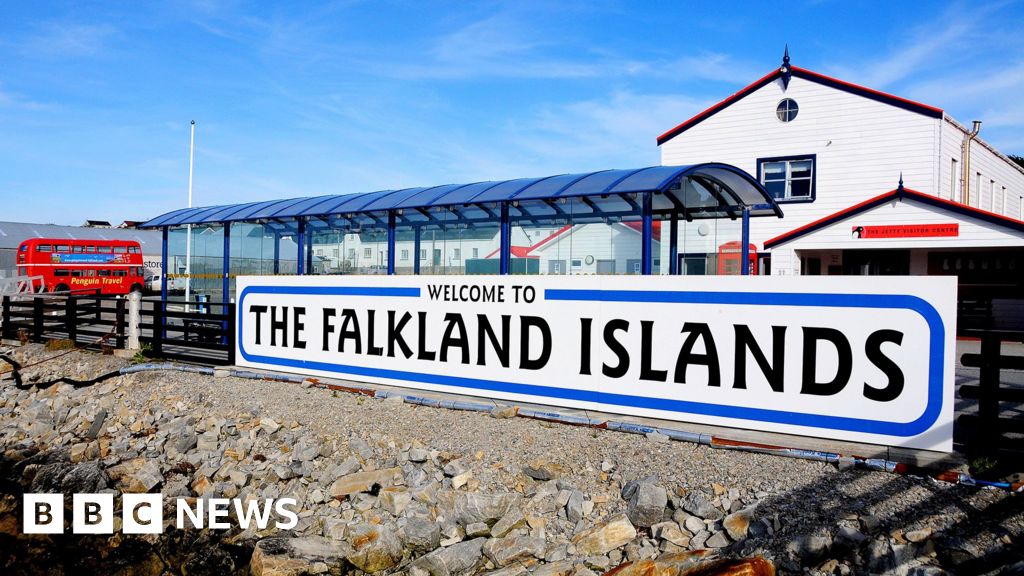
More recently, the democratic will of the Falkland Islanders themselves was overwhelmingly expressed in a 2013 referendum. Out of 1,672 eligible voters, all but three voted to remain a British overseas territory, with a turnout exceeding 90%. This decisive mandate has been consistently cited by successive British governments as evidence of the islanders’ right to self-determination, a principle enshrined in the United Nations Charter. However, Argentina’s foreign minister, Pablo Quirno, reiterated his country’s rejection of this position on Friday, stating on X (formerly Twitter) that those living in the Falkland Islands had never been recognized as a people by the UN. Quirno wrote, "Argentina reaffirms its sovereign rights over the Malvinas Islands" and expressed "willingness to resume bilateral negotiations with the United Kingdom that will allow for finding a peaceful and definitive solution to the sovereignty dispute." This highlights the deep divergence in interpretation of international law and the ongoing political impasse.
Cross-Party Condemnation in the UK
The potential shift in US policy drew immediate and unified condemnation from across the political spectrum in the United Kingdom. Conservative leader Kemi Badenoch dismissed the reported US stance as "absolute nonsense," emphatically stating, "We need to make sure that we back the Falklands. They are British territory." Her remarks underscore the bipartisan consensus in the UK regarding the islands’ status.
Nigel Farage, leader of Reform UK, was equally strident in his rejection of any debate on sovereignty. "This is utterly non-negotiable. There is no way we’re even going to have a debate about the sovereignty of the Falkland Islands," he declared. Farage also indicated his intention to raise the issue directly with Argentina’s President Javier Milei during an anticipated meeting later this year, signaling the depth of feeling on this issue within his party.
Liberal Democrat leader Sir Ed Davey seized the opportunity to renew his call for the cancellation of the King’s forthcoming visit to the US. "This unreliable, damaging president cannot keep insulting our country," Sir Ed stated, linking the Falklands report to broader concerns about President Trump’s foreign policy and its impact on traditional alliances. The unanimity of these reactions from across the political spectrum demonstrates the deeply ingrained national sentiment surrounding the Falklands.
NATO and the "Paper Tiger" Accusation
The Pentagon email’s implication that the US might "punish Nato allies" for perceived failures to support its war on Iran has also cast a shadow over the stability of the NATO alliance itself. Lord West, a former Labour security minister and a veteran of the Falklands War, commanding HMS Ardent during the conflict, expressed profound dismay at the reported US position. Speaking on BBC Radio 4’s The World Tonight programme, Lord West described the Pentagon leak as "quite extraordinary" and indicative of "a lack of understanding."
He went on to criticize US Defence Secretary Pete Hegseth directly, labeling him "thick" and accusing him of a "total lack of understanding about Nato." Lord West challenged Hegseth’s assertion that "Nato’s never done anything for America, America’s done so much for Nato," by reminding listeners that "the only time that Article 5 was invoked was by Nato and it was to defend the United States" following the 9/11 attacks in 2001. "I’m afraid he’s thick actually, and he doesn’t seem to have a very good knowledge of a lot of these things, but to say that is stupid," Lord West concluded, highlighting the historical inaccuracies in Hegseth’s statements.
NATO’s Article 5 is the cornerstone of the alliance, stipulating that an armed attack against one or more members is considered an attack against all. In response, each other member would take "such action as it deems necessary, including the use of armed force, to restore and maintain the security of the North Atlantic area." Its invocation after the September 11, 2001, terrorist attacks on the US led to a collective military response, including operations in Afghanistan. The suggestion in the Pentagon report that the US could push for Spain’s expulsion from the military alliance also met with a firm response from NATO officials, who clarified that the alliance’s founding treaty "does not foresee any provision for suspension of Nato membership, or expulsion." Spain’s Prime Minister Pedro Sanchez echoed this sentiment, stating, "We do not work based on emails. We work with official documents and official positions taken, in this case, by the government of the United States." This collective pushback underscores the internal strains within NATO, but also the resilience of its established protocols.

Broader Diplomatic Implications and the Royal Visit
The timing of this report, just three days before King Charles III and Queen Camilla’s highly anticipated state visit to the US, adds another layer of complexity to already fraught diplomatic relations. While the White House has yet to formally comment on the report, it undoubtedly creates a new point of friction. President Trump has openly expressed dissatisfaction with the level of support offered by the UK during its war in Iran, a conflict that Prime Minister Sir Keir Starmer has repeatedly stated Britain will not be drawn into a wider engagement with.
The potential US review of its Falklands position could be interpreted as a direct retaliatory measure or a means of leverage in this broader dispute. For the UK, any perceived weakening of US support on the Falklands is deeply concerning, given the historical significance of the territory and the lives lost in its defense. It also signals a potential shift in the US’s approach to its traditional allies, prioritizing perceived immediate self-interest over long-standing diplomatic norms and alliances.
The visit of King Charles III and Queen Camilla, intended to reinforce the "special relationship" between the two nations, now risks being overshadowed by these tensions. While royal visits are typically ceremonial and above politics, the current climate ensures that every interaction will be scrutinized for subtle cues about the state of US-UK relations. The incident highlights the challenges of navigating an "America First" foreign policy that appears willing to test the limits of traditional alliances and diplomatic consensus.
Argentina’s Renewed Stance and Future Prospects
From Argentina’s perspective, the US review, however speculative, offers a potential opening. President Javier Milei, a close political ally of Donald Trump, has previously acknowledged that resolving the Falklands dispute would take "decades" and has criticized previous Argentine politicians for making grandstanding claims without results. His administration, while asserting Argentina’s sovereign rights, has also expressed a willingness to engage in dialogue, as articulated by Foreign Minister Quirno. The prospect of a US shift could embolden Argentina’s diplomatic efforts, although any actual change in the islands’ status remains highly improbable given the UK’s resolute stance and the islanders’ overwhelming desire to remain British.
The Falkland Islands themselves hold significant strategic value, controlling access to vital shipping lanes around Cape Horn and offering rich fishing grounds and potential offshore oil reserves. These economic and geopolitical factors further complicate any potential resolution and underscore why both the UK and Argentina remain fiercely committed to their claims.
In conclusion, the leaked Pentagon email regarding a potential US review of its Falklands sovereignty stance has triggered a robust diplomatic backlash from the UK and its political establishment. It has highlighted deep divisions within NATO over the US’s foreign policy direction and injected significant tension into the upcoming royal visit. While the immediate impact remains to be seen, the episode serves as a stark reminder of the enduring complexities of international relations, the unwavering commitment of the UK to its overseas territories, and the delicate balance of alliances in an increasingly unpredictable global landscape. The principle of self-determination, so central to the Falkland Islanders, remains the immovable object in this ongoing diplomatic challenge.