

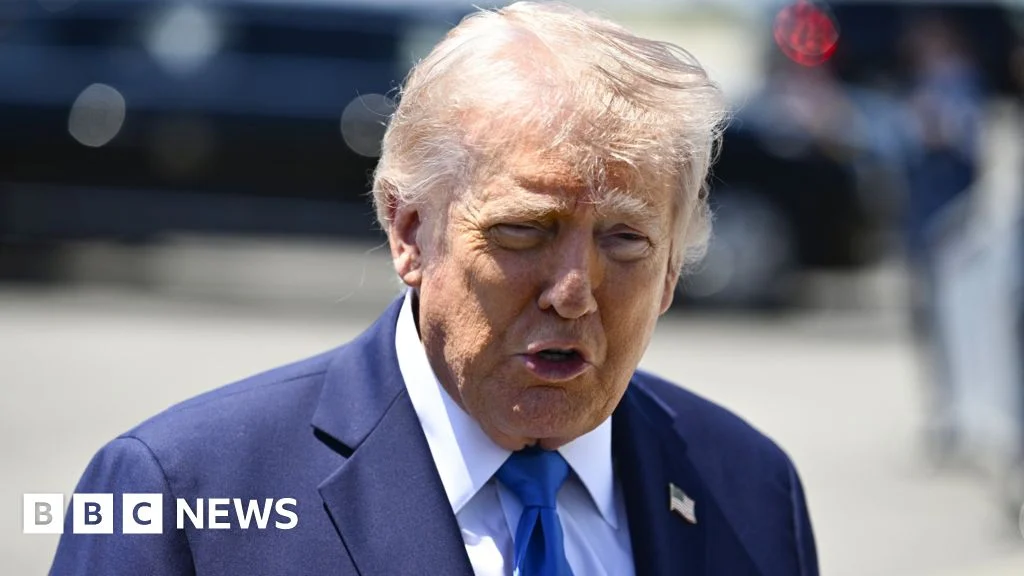
In a dramatic turn of events, former US President Donald Trump abruptly cancelled a planned diplomatic trip by American officials to Pakistan on Saturday, intended for crucial talks aimed at de-escalating the protracted conflict and heightened tensions with Iran. The cancellation came shortly after the Iranian delegation, led by Foreign Minister Abbas Aragchi, had concluded their initial discussions with Pakistani mediators in Islamabad. Trump justified the decision by stating that special envoy Steve Witkoff and son-in-law Jared Kushner would be "wasting too much time," emphatically adding that if Iran genuinely desired dialogue, "all they have to do is call."
This unexpected move plunged already fragile diplomatic efforts into further uncertainty, casting a shadow over the prospects of a peaceful resolution to a standoff that has gripped the Middle East and reverberated globally. The proposed talks in Pakistan were seen as a rare opportunity for indirect engagement between Washington and Tehran, following months of escalating rhetoric, economic sanctions, and military posturing. The cancellation underscores the deep mistrust and divergent expectations that continue to plague US-Iran relations, despite a recently extended ceasefire.
The Diplomatic Fiasco: A Setback for De-escalation
The cancelled trip marked a significant setback for international efforts to mediate the volatile relationship between the United States and Iran. The US delegation, which notably did not include Vice-President JD Vance in its initial planned composition, was expected to engage in a new round of indirect discussions following a prior meeting on April 11 that concluded without any tangible agreement. Vance, who had led the first round of talks earlier in the month, was reportedly "on standby" to join if the discussions showed promise, a detail that now appears to highlight the low expectations Washington held for a major breakthrough from the outset.
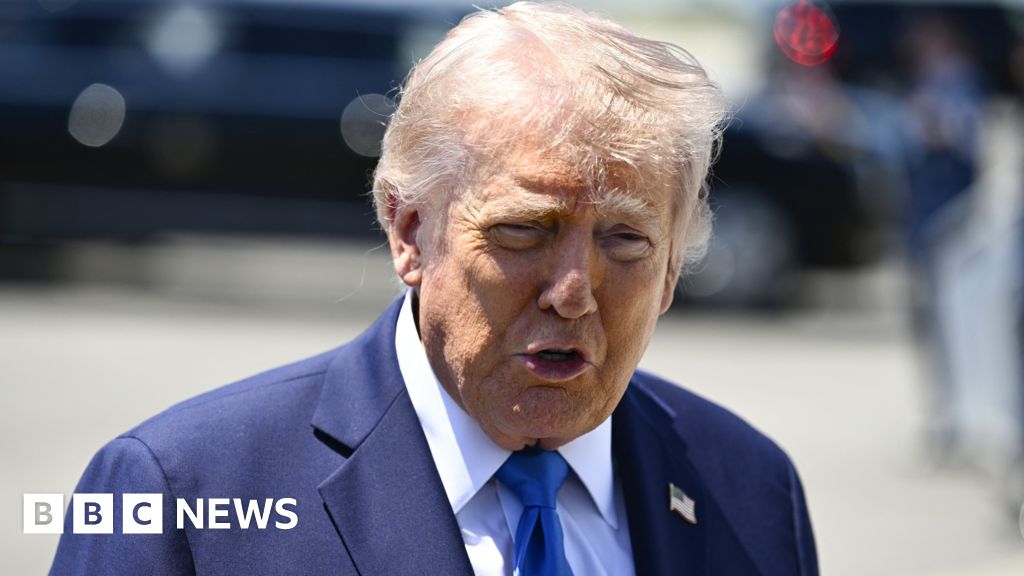
President Trump’s reasoning for the cancellation was delivered with characteristic bluntness. Speaking to reporters before boarding Air Force One in Palm Beach, Florida, he expressed skepticism about Iran’s internal coherence, claiming there was "tremendous infighting and confusion" within its leadership, adding that "nobody knows who is in charge, including them." Later, he reiterated his stance on his Truth Social platform, asserting America’s dominant position: "Also, we have all the cards, they have none! If they want to talk, all they have to do is call!!!" This strong rhetoric, while consistent with Trump’s approach to foreign policy, inevitably complicates the delicate art of diplomacy, often requiring nuanced engagement rather than unilateral ultimatums.
The timing of the cancellation – immediately after the Iranian foreign minister had departed Islamabad – further highlighted the disconnect. Earlier in the day, Iranian Foreign Minister Abbas Aragchi had concluded his talks with Pakistani officials, expressing Iran’s position on ending the conflict but openly questioning the sincerity of US diplomatic intentions. "I have shared Iran’s position concerning [a] workable framework to permanently end the war on Iran," Aragchi stated, "but I have yet to see if US is truly serious about diplomacy." His remarks underscored Iran’s perception that the US often approaches negotiations from a position of leverage and coercion rather than genuine desire for mutual understanding.
Iran’s Stance and Pakistan’s Mediation Efforts
Pakistan has played a crucial, albeit challenging, role as a mediator between Washington and Tehran in recent weeks. Islamabad’s efforts reflect a broader desire in the region to prevent a full-scale military confrontation that would have catastrophic consequences for global stability and the regional economy. Pakistani Prime Minister Shehbaz Sharif met with Foreign Minister Aragchi, describing their exchange as "a most warm, cordial exchange of views on the current regional situation." This diplomatic outreach by Pakistan, a key US ally in the past but also a nation with its own complex relationship with Iran, aimed to bridge the chasm between the two adversaries.
During his visit, which also included planned stops in Oman and Russia, Aragchi reportedly outlined Iran’s framework for de-escalation. While the specifics of this framework were not publicly disclosed, it likely centered on a demand for the lifting of crippling US sanctions, an end to military provocations, and a guarantee of Iran’s sovereign rights and security interests. Iranian President Masoud Pezeshkian had previously articulated Tehran’s prerequisites for genuine negotiations, stating that "breach of commitments, blockade and threats are main obstacles to genuine negotiations." This refers directly to the US withdrawal from the Joint Comprehensive Plan of Action (JCPOA), commonly known as the Iran nuclear deal, and the subsequent "maximum pressure" campaign of sanctions. Aragchi’s planned return to Islamabad after his visit to Oman suggested a continued willingness on Iran’s part to engage in the mediation process, a willingness now challenged by the US cancellation.
A Fragile Ceasefire and the Strait of Hormuz Standoff
The diplomatic efforts had been proceeding under the precarious umbrella of a ceasefire, which President Trump had extended beyond its original April 22 expiration date specifically to allow for continued talks. Despite the cancellation of the US trip, Trump affirmed that the ceasefire would hold, telling news site Axios, "No, it doesn’t mean that. We haven’t thought about it yet." This statement, while offering a momentary reassurance against immediate military escalation, also reflected the ad hoc nature of the diplomatic process and the constant threat of renewed hostilities.
At the heart of the ongoing tensions lies the strategically vital Strait of Hormuz. This narrow waterway, situated between Iran and Oman, is a chokepoint through which roughly a fifth of the world’s total oil supply passes daily. In recent months, the Strait has become a flashpoint, with Iran restricting passage through it following the commencement of US and Israeli strikes in February. These actions, coupled with Iran’s nuclear ambitions, have fueled a dangerous cycle of provocation and response.
In response to Iran’s actions, the US significantly increased its naval presence in the Strait, ostensibly to deter further Iranian aggression and to ensure the unimpeded flow of international shipping, particularly to block Iranian oil exports as part of its sanctions regime. The presence of US aircraft carriers, destroyers, and other naval assets in such close proximity to Iranian Revolutionary Guard Corps (IRGC) patrols creates a highly combustible environment, where miscalculation or accidental encounters could rapidly spiral into a broader conflict. The economic implications of any disruption to shipping through the Strait are immense, potentially sending global oil prices skyrocketing and severely impacting the world economy.
Historical Context of US-Iran Relations
To fully understand the current impasse, it is essential to revisit the complex and often adversarial history between the United States and Iran. The relationship fundamentally shifted after the 1979 Islamic Revolution, which overthrew the US-backed Shah and established an anti-Western Islamic Republic. Decades of mistrust followed, punctuated by events such as the Iran hostage crisis, US support for Iraq during the Iran-Iraq War, and Iran’s perceived sponsorship of regional militant groups.
The brief period of rapprochement under the Obama administration, culminating in the 2015 JCPOA, offered a glimmer of hope for a different path. This multinational agreement saw Iran significantly curb its nuclear program in exchange for sanctions relief. However, in 2018, the Trump administration unilaterally withdrew from the JCPOA, arguing it was a "terrible deal" that did not adequately address Iran’s ballistic missile program or its regional influence. The subsequent re-imposition and escalation of US sanctions, particularly targeting Iran’s oil exports and financial sector, plunged the two nations back into a state of intense confrontation, exacerbating economic hardship within Iran and fueling a hardline response from Tehran.
The Nuclear Dimension: A Persistent Concern
Washington’s opposition to Iran gaining nuclear weapons remains a primary driver of the current conflict. The US and Israel have long suspected Tehran of seeking to develop an atomic bomb, a claim Iran has consistently denied. Tehran maintains that its nuclear program is exclusively for peaceful energy generation and medical applications. However, reports from the International Atomic Energy Agency (IAEA) have repeatedly confirmed that Iran has enriched uranium up to near weapons-grade levels (e.g., 60% purity, far beyond the 3.67% allowed under the JCPOA), significantly shortening its "breakout time" to produce fissile material for a weapon. This enrichment activity, coupled with restrictions on IAEA inspectors’ access to certain sites, fuels international alarm and provides a constant justification for US and Israeli pressure.
The Iranian leadership views its nuclear program as a matter of national sovereignty and a deterrent against external threats, particularly from the US and Israel. The withdrawal from the JCPOA by the US, and the perceived failure of European signatories to adequately compensate Iran for the economic losses incurred by US sanctions, has only hardened Tehran’s resolve to advance its nuclear capabilities as a bargaining chip and a symbol of national resilience.
Broader Regional Instability: The Israel-Hezbollah Front
The ongoing US-Iran standoff is inextricably linked to other regional conflicts, particularly the escalating tensions between Israel and the Iran-backed militant group Hezbollah in Lebanon. On Saturday, at least four people were killed in Israeli strikes on southern Lebanon, according to the country’s state news agency. In response, the Israeli military confirmed that Hezbollah had fired rockets at Israel, continuing a dangerous cycle of retaliation.
Despite a previously agreed-upon ceasefire between Israel and Hezbollah, both sides have consistently accused each other of violations and continued to exchange fire in recent weeks. This proxy conflict, fueled by Iran’s financial and military support for Hezbollah, adds another layer of complexity and volatility to the regional landscape. On Saturday, a statement from the office of Israeli Prime Minister Benjamin Netanyahu affirmed that the military had been ordered to "vigorously attack Hezbollah targets in Lebanon," signaling a potential intensification of hostilities on this front. The interconnectedness of these conflicts means that any significant escalation between the US and Iran could quickly ignite broader regional conflagrations, drawing in multiple state and non-state actors.
Analysis and Future Outlook
The cancellation of the US diplomatic mission represents a significant setback for de-escalation efforts and underscores the immense challenges inherent in resolving the US-Iran standoff. President Trump’s insistence that Iran must initiate contact, coupled with his public dismissals of their leadership’s coherence, suggests a continued strategy of maximum pressure and a reluctance to engage in conventional, give-and-take diplomacy. This approach, while popular with a segment of his political base, risks further entrenching hardliners in Tehran and diminishing the prospects for a negotiated settlement.
The implications are far-reaching. Without direct or indirect diplomatic channels, the risk of miscalculation or accidental escalation, particularly in a volatile region like the Strait of Hormuz, remains alarmously high. The prolonged economic sanctions continue to inflict hardship on the Iranian populace, potentially leading to internal instability and further radicalization. Moreover, the lack of a clear path forward on the nuclear issue keeps the threat of proliferation alive and fuels regional anxieties.
For mediators like Pakistan and Oman, the task becomes even more arduous. Their efforts to bridge the gap between two deeply entrenched adversaries require consistent engagement and a willingness from both sides to compromise. The current US stance, however, seems to demand capitulation rather than negotiation, making the role of mediators increasingly difficult. The international community, including European powers who remain committed to the JCPOA, will likely view this latest development with concern, recognizing that a stable Middle East is contingent on managing the US-Iran rivalry effectively.
As the ceasefire holds for now, the future of US-Iran relations appears to be at a critical juncture. Whether this diplomatic freeze is a temporary tactical maneuver or a signal of a more hardened stance from Washington remains to be seen. What is clear, however, is that without a willingness from both sides to engage in serious, good-faith dialogue, the specter of continued conflict and instability will continue to loom large over the Middle East and beyond. The ball, according to President Trump, is now squarely in Iran’s court, leaving the world to wonder if and when that crucial call will be made, and what conditions might precede it.