


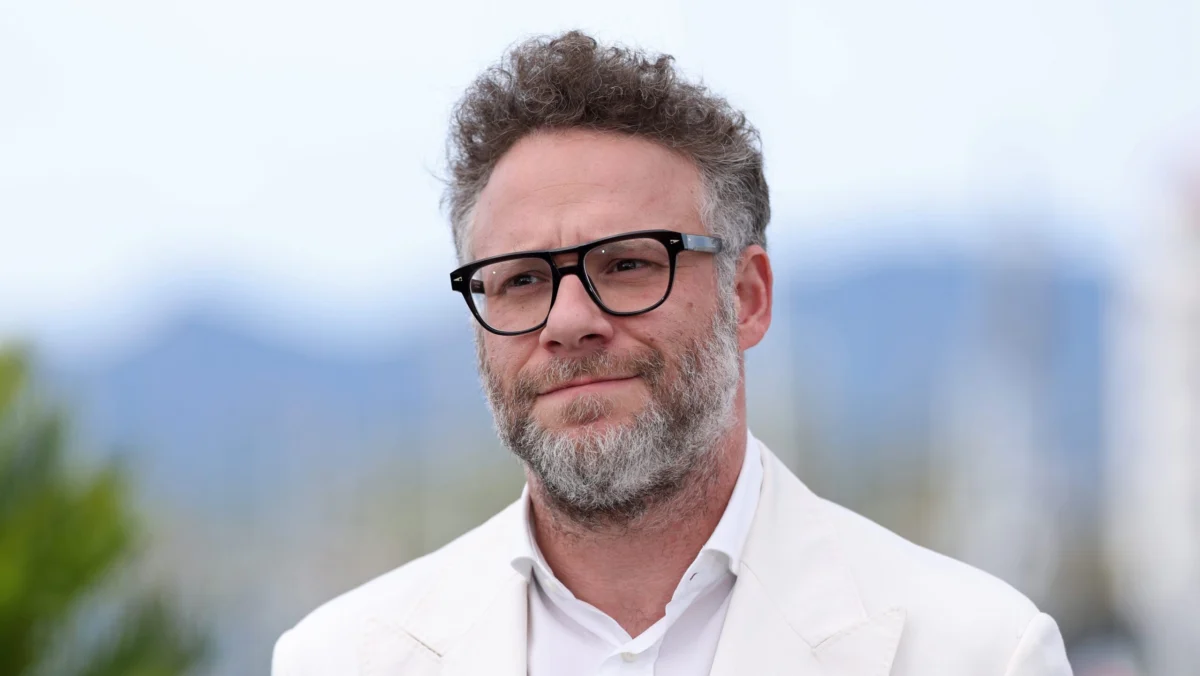
The conversation surrounding artificial intelligence’s integration into creative industries, particularly filmmaking, has intensified, drawing sharp opinions from established figures. Seth Rogen, a prominent actor, comedian, and writer known for his contributions to films like "Superbad" and "Pineapple Express," has voiced strong opposition to the use of AI in scriptwriting. During an interview at the Cannes Film Festival, Rogen articulated his belief that aspiring writers should avoid AI tools, asserting that their use undermines the fundamental craft and artistic integrity of writing.
Rogen’s Stance on AI in Screenwriting
Speaking with Brut on Thursday, amidst the backdrop of the prestigious Cannes Film Festival, Rogen expressed his skepticism about AI’s role in the creative process. He posited that individuals contemplating the use of AI for script generation are fundamentally misaligned with the ethos of being a writer. "If anyone is thinking about using the technology to help them create a script, they simply ‘shouldn’t be a writer,’ and might want to try out another occupation," Rogen stated. He elaborated on this sentiment, criticizing the superficial and often nonsensical content generated by AI that he has encountered online, particularly in social media clips proclaiming the "end of Hollywood."
"I don’t understand what it’s supposed to do," Rogen remarked. "Every time I see a video on Instagram that’s like, ‘Hollywood is cooked,’ what follows is, like, the most stupid dog shit I’ve ever seen in my life. And if your instinct is to use AI and not go through that process, you shouldn’t be a writer, because then you’re not writing."
Rogen emphasized his personal appreciation for the writing process itself, viewing it as an integral and enjoyable part of his creative output. He sees no appeal in seeking shortcuts that would diminish the act of writing. "Go do something else. And if you don’t want to go through the process, you shouldn’t be a writer. The idea of a tool that makes me write less is not appealing to me, because I like writing," he explained. This perspective highlights a deep-seated conviction that the struggle, iteration, and human touch inherent in traditional writing are invaluable and irreplaceable.
The Broader Context of AI in Entertainment
Rogen’s comments arrive at a pivotal moment for the entertainment industry, which is actively grappling with the implications of AI. The rapid advancement of AI technologies has begun to permeate various aspects of content creation, from visual effects and animation to music composition and, of course, scriptwriting. This influx of AI capabilities has raised significant concerns among creative professionals regarding job security, intellectual property rights, and the very definition of artistry.
The Academy of Motion Picture Arts and Sciences, the governing body behind the Oscars, has already begun to address these evolving technological landscapes. In a significant move, the Academy announced updates to its rules and regulations for Oscar eligibility. These revisions specifically include measures to scrutinize and potentially limit the use of AI in categories such as acting performances, ensuring that such performances remain eligible for nomination. While the specific guidelines for screenwriting eligibility are still being refined and debated, the Academy’s proactive stance on acting nominations signals a cautious approach to AI’s influence on award recognition.
The Writers Guild of America (WGA) has also been at the forefront of these discussions. During their 2023 strike, AI in screenwriting emerged as a central point of contention. The WGA’s demands included protections against the use of AI to generate or rewrite literary material, as well as prohibitions on using AI-generated content as source material. The union sought to ensure that AI would not be used to devalue the work of human writers or to replace them. While a tentative agreement was reached, the underlying concerns about AI’s role in the industry persist.
Rogen’s Presence at Cannes
Rogen’s participation in the Cannes Film Festival was in support of Tangles, the latest animated feature from director Leah Nelson. The film boasts an impressive voice cast, including Julia Louis-Dreyfus, Abbi Jacobson, Bryan Cranston, Sarah Silverman, Bowen Yang, Wanda Sykes, Beanie Feldstein, and Samira Wiley. Rogen himself served as a producer on Tangles, further cementing his engagement with the film industry beyond his acting and writing roles. The festival, a global showcase for cinematic innovation and artistic expression, provided a fitting stage for Rogen to voice his concerns about a technology that many perceive as a potential disruptor to the human-centric art of filmmaking.
Analyzing the Implications of AI in Scriptwriting
The debate ignited by Rogen’s statements touches upon several critical issues:
- The Nature of Creativity: At its core, Rogen’s argument centers on the intrinsic value of the human creative process. For many writers, the act of creation is not merely about the final product but also about the journey of discovery, problem-solving, and emotional expression. AI, by its nature, operates on algorithms and data, lacking the lived experiences, emotional depth, and subjective understanding that inform human storytelling.
- Economic Impact on Writers: The potential for AI to automate certain aspects of scriptwriting raises concerns about job displacement and wage stagnation for screenwriters. If AI can generate passable scripts more quickly and cheaply than human writers, studios might be incentivized to reduce their reliance on human talent, impacting the livelihoods of countless professionals.
- Quality and Originality: Rogen’s critique of AI-generated content as "stupid dog shit" reflects a common concern that AI-produced narratives may lack originality, nuance, and the authentic voice that resonates with audiences. While AI can mimic styles and patterns, it is argued that it struggles to create truly groundbreaking or emotionally resonant stories that stem from genuine human insight.
- The Role of Technology: While Rogen advocates for a strict separation between AI and scriptwriting, other voices within the industry suggest that AI could serve as a valuable tool for writers, assisting with tasks like research, brainstorming, or generating alternative plot points. The key, for proponents of this view, lies in how AI is integrated – as a collaborator or an automaton.
Industry Reactions and Future Outlook
While Rogen’s outspokenness provides a clear perspective, the industry’s overall response to AI in screenwriting remains complex and evolving. Unions like the WGA are actively negotiating to establish clear boundaries and protections. Major studios are undoubtedly exploring AI’s potential, balancing innovation with the need to maintain creative integrity and address the concerns of their talent.
The Academy’s recent rule changes, though focused on acting, indicate a broader industry-wide effort to define the boundaries of AI’s influence. As AI technology continues to advance, the dialogue surrounding its application in filmmaking will undoubtedly persist. Seth Rogen’s strong stance serves as a potent reminder of the human element that many believe is indispensable to the art of storytelling, underscoring the profound philosophical and practical questions that AI poses to the future of Hollywood. The coming years will likely see further developments in both AI capabilities and the industry’s strategic responses, shaping the landscape of cinematic creation for generations to come.