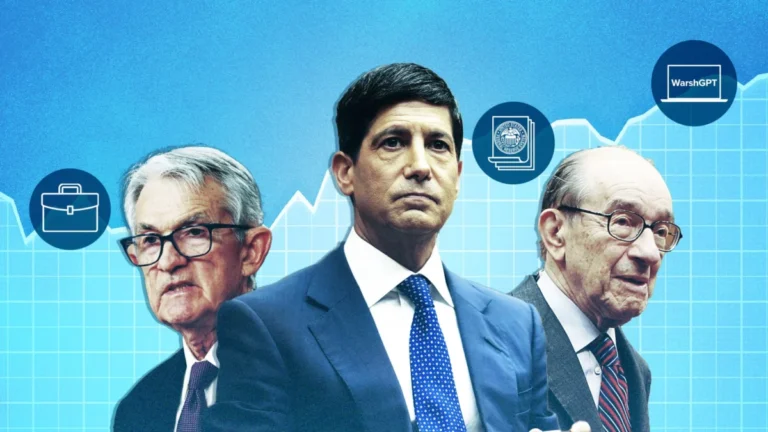

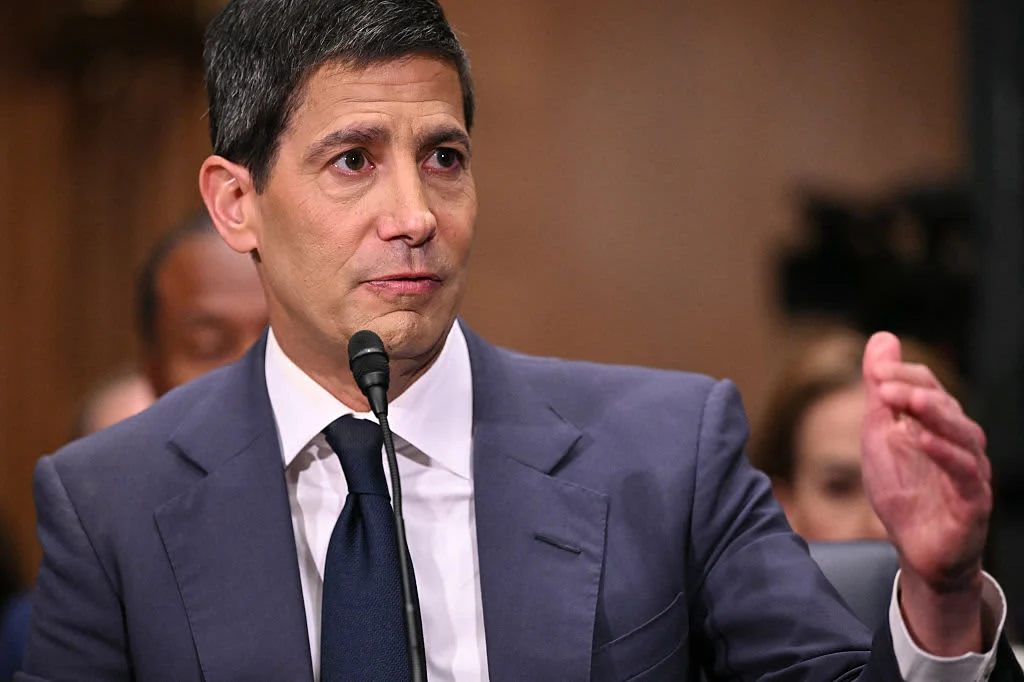
Kevin Warsh, the newly confirmed Chair of the U.S. Federal Reserve, is poised to navigate a tumultuous economic landscape, immediately facing a formidable challenge to his stated desire for interest rate cuts. His confirmation hearing on April 21, 2026, on Capitol Hill, foreshadowed a potential "good family fight" over monetary policy, a battleground now intensified by surging inflation, escalating Treasury yields, and a Federal Open Market Committee (FOMC) seemingly disinclined to ease. The veteran economist, whose nomination by President Donald Trump was finalized earlier this year, takes the helm at a critical juncture, inheriting an an environment where several key central bank officials have recently underscored the necessity of maintaining flexibility, even hinting at the possibility of further rate hikes, rather than the reductions Warsh has advocated. This divergence sets the stage for a period of profound uncertainty and potential discord within the nation’s most powerful economic institution.
Warsh’s Entry Amidst Economic Turmoil
Warsh’s ascent to the Federal Reserve’s top position follows his nomination by President Trump on January 30, 2026, succeeding Jerome Powell, whose tenure was marked by unprecedented political friction. Warsh’s prior experience as a Fed Governor from 2006 to 2011, combined with his subsequent vocal critiques of the central bank’s post-crisis policies—particularly its embrace of quantitative easing and expansive forward guidance—positioned him as a candidate aligned with the administration’s call for lower interest rates. However, the economic reality Warsh now confronts starkly contrasts with the disinflationary environment he previously argued for rate cuts. With inflation projected to hit a staggering 6% in the second quarter of 2026, according to top economic forecasters, and Treasury yields continuing their upward trajectory, the new Chair’s advocacy for easing finds itself at odds with prevailing market and committee sentiment.
The core of Warsh’s policy philosophy, centered on his view of structural economic shifts, suggests that disinflationary forces, such as increased productivity, would eventually temper price pressures. He has also aligned with the Trump administration’s perspective that much of the current price surge is temporary, primarily driven by the geopolitical conflict in Iran and its ripple effects on global supply chains, anticipating a natural fade once stability returns. Yet, these arguments face a skeptical audience within the FOMC, many of whom are witnessing inflation at multi-year highs and perceive the risks as more persistent than transitory. Loretta Mester, former President of the Cleveland Fed, who served alongside Warsh during his earlier board tenure, articulated this challenge: "I just don’t think right now he can make those arguments in a credible way, because we have an inflation problem." This sentiment underscores the immediate and formidable policy challenge Warsh must tackle: restoring price stability while potentially pushing against the prevailing hawkish leanings of his colleagues. The dual mandate of the Federal Reserve—to achieve maximum employment and price stability—places an immediate focus on the latter, given current economic data.
The Fractured FOMC: Seeds of Dissent and Consensus-Building

The internal dynamics of the FOMC present Warsh with both a challenge and a potential pathway to asserting his leadership. The most recent meeting in late April 2026 saw an unusual level of dissent, with three members voting against the policy statement. Their opposition reportedly stemmed from a specific sentence that investors interpreted as hinting at future rate cuts: "In considering the extent and timing of additional adjustments to the target range for the federal funds rate, the Committee will carefully assess incoming data, the evolving outlook, and the balance of risks." This phrasing, designed to provide "forward guidance," is precisely what Warsh has long criticized, arguing it can unnecessarily bind the Fed and limit its flexibility.
Outgoing Governor Stephen Miran, who submitted his resignation on May 14, 2026, and had consistently advocated for rate reductions during his short tenure, represented a lone wolf in the recent past. However, the broader dissent against the perceived dovish hint suggests a committee wary of committing to cuts in an inflationary environment. This internal friction, paradoxically, could offer Warsh an early opportunity to shape policy. By rallying the committee to remove such prescriptive forward guidance, he could achieve two objectives: align the Fed’s communication with his long-held skepticism of such practices and unite the panel around a common objective of preserving optionality for future moves, whether up or down.
Lou Crandall, chief economist at Wrightson ICAP, a seasoned observer of Fed machinations, noted the potential for constructive outcomes from such internal debates. "You get plenty of contrarian thinking in there. Kevin Warsh is a very fortunate man in his experience. Family fights generally lead to constructive outcomes," Crandall remarked. He further suggested that Warsh could frame such a move not as a tightening signal, but as a shift towards a more "agnostic communications framework," which would serve a helpful public relations function without appearing to be forced into a restrictive stance in his inaugural meeting. This strategic approach would allow Warsh to imprint his philosophy on the Fed’s communication style, even if the immediate policy direction remains constrained by economic realities. The removal of such explicit guidance would mark a significant departure from the Powell era’s emphasis on transparency and predictability.
Navigating Political Crosscurrents: The Shadow of Trump
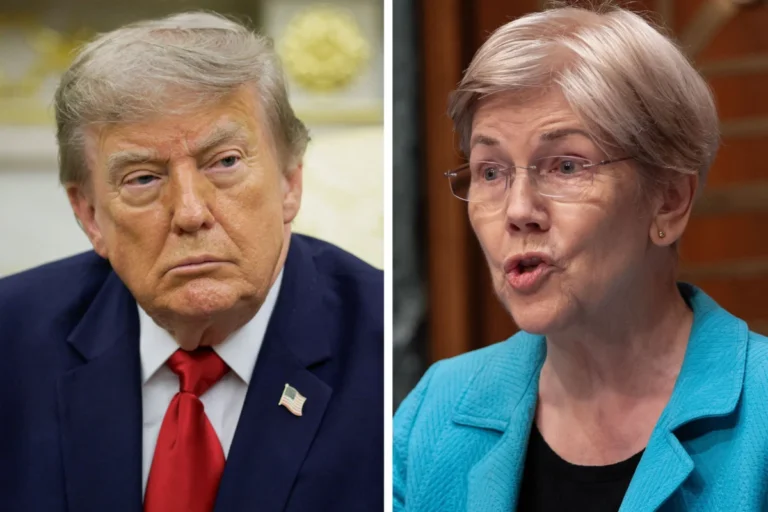
Beyond the internal committee dynamics, Warsh must deftly navigate the political expectations set by President Trump. The President’s nomination of Warsh came with clear public statements expressing an expectation for lower interest rates, a consistent theme throughout his previous term and a source of considerable tension with former Chair Jerome Powell. The relationship between Trump and Powell was famously fraught, characterized by frequent personal attacks from the President and an unprecedented level of discord between the White House and the independent central bank, at one point even involving the Justice Department.
Should Warsh fail to deliver on the anticipated rate cuts, he risks rekindling a similar contentious relationship with the President, potentially jeopardizing the perceived independence of the Federal Reserve. This historical precedent adds another layer of complexity to Warsh’s leadership. The prospect of a Fed Chair publicly disagreeing with the committee’s decision in a post-meeting news conference—for instance, stating he tried but failed to persuade his colleagues to vote for a cut—is deemed highly unlikely by those familiar with FOMC operations. Such an action, experts contend, would severely undermine the Chair’s credibility and authority. Loretta Mester highlighted this, stating, "That would undermine his power as chair. Part of the job of chair is you get the committee to reach a consensus."

The Fed’s decision-making process, contrary to popular perception, is not solely about in-meeting debates. Mester, drawing from her extensive tenure at the Fed from 1985 to 2024, revealed that Chairs, including Powell, Ben Bernanke, and Janet Yellen, meticulously engage with each participant before meetings to gauge their positions, a practice essential for driving towards consensus. This collaborative approach is integral to the FOMC’s setup, meaning Warsh will need to employ significant persuasive skills behind the scenes to steer the committee towards his preferred policy direction without fracturing its unity. The political pressure from the executive branch will be an ever-present factor, requiring a delicate balance between policy independence and political expediency.
The Broader Economic Backdrop: Inflationary Pressures and Geopolitical Tensions
The economic environment Warsh inherits is characterized by a confluence of inflationary pressures that are proving more persistent than many initially anticipated. The "fighting in Iran" referenced in the article likely points to ongoing geopolitical instability affecting global energy markets and supply chains, driving up costs for businesses and consumers alike. Data from the Bureau of Labor Statistics indicates that consumer prices have surged across multiple sectors, with energy, food, and housing costs being significant contributors to the multi-year highs. For instance, recent reports show crude oil prices spiking by over 15% in the last quarter, while food commodity indices have risen by nearly 10% year-over-year. The labor market, while showing signs of strength with unemployment rates near historical lows, also exhibits tightness, contributing to wage pressures that can fuel inflation. Average hourly earnings growth, for example, has consistently outpaced productivity gains, creating a cost-push inflationary dynamic.
Treasury yields, which reflect investor expectations for future inflation and interest rates, have surged in response to these pressures, signaling market anticipation of a more restrictive monetary policy. The benchmark 10-year Treasury yield, for instance, recently crossed the 4.8% threshold, a significant increase from its levels earlier in the year, indicating a substantial repricing of risk and borrowing costs across the economy. Such movements have profound implications for everything from mortgage rates, which directly impact the housing market, to corporate investment, potentially dampening economic growth if left unchecked.
Warsh’s argument for disinflationary forces, such as increased productivity, while theoretically sound over the long term, faces the immediate hurdle of these acute inflationary spikes. The challenge lies in convincing a committee, and the markets, that these long-term trends will manifest quickly enough to mitigate current price pressures without the need for traditional monetary tightening. His views on productivity gains, perhaps through technological innovation or supply chain re-optimization, would need to be strongly articulated and supported by emerging data to sway a cautious FOMC.
Communication Challenges and the Future of Fed Transparency

Beyond the immediate question of interest rates, Warsh’s tenure promises significant changes to the Fed’s communication strategy. He has been a vocal critic not only of forward guidance but also of the Fed’s "dot plot," the graphical representation of individual officials’ interest rate expectations. Furthermore, he has expressed misgivings about the practice of holding a news conference after every FOMC meeting, a practice initiated by former Chair Powell that deviated from the previous quarterly schedule.
These criticisms suggest Warsh might seek to dial back some of the transparency measures adopted by his predecessors, potentially aiming for a more concise, less prescriptive communication approach. While proponents argue that greater transparency helps markets anticipate Fed moves and reduces volatility, critics like Warsh believe it can create unnecessary noise, constrain policy flexibility, and inadvertently lead to misinterpretations. Reforming these communication tools would be another significant way for Warsh to leave his mark on the institution, though it would also entail careful management of market expectations and public understanding of the Fed’s intentions. Any perceived reduction in transparency could lead to increased market volatility in the short term as investors adjust to a new communication paradigm.
Bill English, former head of monetary affairs at the Fed and now a professor at Yale, who served with Warsh, expressed confidence in his ability to lead. He described Warsh as "good at working with people, and I think he’ll try to find a reasonable consensus" among the complex issues ahead. English added, "At least from what I saw years ago when he was a governor, he just doesn’t seem like the sort of guy who’s going to want to pick a fight with the committee. My guess is he’s going to want to continue to be a chair who’s going to try to find consensus and move the committee over time with arguments and with data." This perspective suggests that while Warsh holds strong views, his approach will likely be one of persuasion and data-driven argument, rather than direct confrontation, a necessary trait for a successful Fed Chair.
Outlook: A Precarious Path Ahead
Kevin Warsh’s tenure as Federal Reserve Chair is set to be one of the most closely watched in recent memory. He inherits an economy grappling with persistent inflation, a financial market sensitive to policy shifts, and a political environment eager for specific outcomes. His stated preference for interest rate cuts clashes with the current inflationary reality and the cautious stance of many FOMC members. The ability of Warsh to forge consensus within the committee, manage expectations from the White House, and effectively communicate the Fed’s strategy to the public and markets will define his early months in office. The "family fight" he anticipated may indeed materialize, but the ultimate outcome will depend on Warsh’s capacity for leadership, persuasion, and adapting his long-held convictions to the urgent economic challenges of the day. The stakes are high, not just for the direction of U.S. monetary policy, but for the credibility and independence of the Federal Reserve itself, in an era where central bank autonomy is increasingly under scrutiny.