


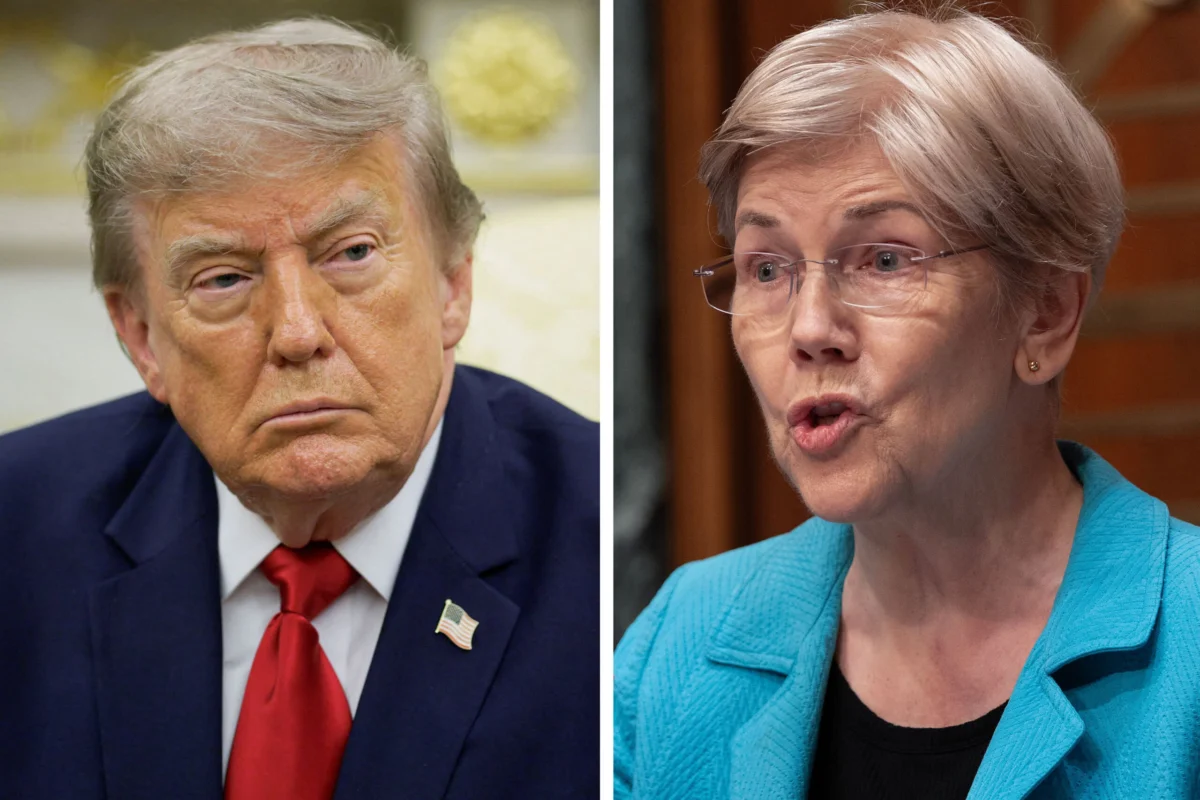
Senator Elizabeth Warren (D-Mass.) announced Thursday that the sweeping changes implemented by the Trump administration to the Consumer Financial Protection Bureau (CFPB) have resulted in an estimated cost of up to $26.5 billion for American consumers. This latest critique from a prominent Democrat underscores the ongoing political battle over the agency’s mission and effectiveness, particularly as its acting director faced a Senate oversight hearing and a permanent nominee awaits confirmation.
The substantial figure, detailed in a report shared exclusively with CNBC, primarily stems from the CFPB’s decisions under acting Director Russell Vought to roll back critical consumer protection regulations, most notably those capping credit card late fees and overdraft charges. The report’s release was strategically timed to coincide with Vought’s appearance before a Senate committee, where he was pressed on these and other controversial actions, including the dismissal of numerous enforcement actions and an allegation concerning the removal of historical consumer data from the agency’s public website.
The Genesis of the Consumer Financial Protection Bureau
To fully appreciate the gravity of Senator Warren’s allegations and the intensity of the current debate, it is essential to understand the origins and intended purpose of the CFPB. Born out of the ashes of the 2008 financial crisis, the agency was a cornerstone of the Dodd-Frank Wall Street Reform and Consumer Protection Act, enacted in 2010. The crisis exposed egregious gaps in consumer protections, with predatory lending practices, deceptive financial products, and a lack of transparency contributing significantly to the economic meltdown. Prior to the CFPB’s creation, responsibility for consumer financial protection was fragmented across a myriad of federal agencies, none of which had a primary focus or sufficient authority to comprehensively address the systemic issues.
Senator Warren, then a Harvard Law professor, was a principal architect and vocal advocate for the establishment of an independent agency solely dedicated to safeguarding consumers in the financial marketplace. Her vision was for an entity with robust rulemaking, supervisory, and enforcement powers to prevent the very abuses that fueled the crisis. The CFPB was designed to operate free from political interference, funded through the Federal Reserve rather than congressional appropriations, granting it a degree of autonomy intended to allow it to stand up to powerful financial institutions. Its mandate included making markets for consumer financial products and services work for Americans by enforcing federal consumer financial laws, educating consumers, and researching consumer behavior.
Under its inaugural director, Richard Cordray, appointed in 2012, the CFPB embarked on an ambitious agenda. It tackled issues ranging from mortgage servicing abuses and predatory payday lending to student loan mismanagement and deceptive credit card practices. The agency established a consumer complaint database, which became a vital resource for tracking financial grievances and identifying systemic issues, and it secured billions of dollars in relief for consumers through enforcement actions against major financial players. This period established the CFPB as a formidable watchdog, earning both accolades from consumer advocates and fierce criticism from many in the financial industry and their Republican allies, who often decried it as an overreaching, unaccountable bureaucracy.
A Shift in Direction: The Trump Administration’s Overhaul
Upon taking office in January 2017, the Trump administration signaled an immediate and profound shift in its approach to federal regulation, with the CFPB becoming a prime target. The administration and its Republican supporters consistently argued that the agency, under its previous leadership, had exceeded its statutory authority, stifled innovation, and burdened financial institutions with excessive regulations, ultimately harming economic growth. The stated goal of the new administration was to "rein in" the CFPB and refocus it on what officials termed its "core mission" – a reinterpretation that effectively meant a less interventionist, less enforcement-heavy role.
The transformation began in earnest following Director Cordray’s resignation in late 2017. President Trump appointed Mick Mulvaney, then director of the Office of Management and Budget, as acting director, bypassing the typical succession protocols and sparking a legal challenge that was ultimately unsuccessful. Mulvaney, a vocal critic of the CFPB, quickly moved to dismantle many of its prior initiatives. His tenure saw a dramatic slowdown in enforcement actions, a review of existing regulations with an eye towards repeal, and a general scaling back of the agency’s proactive posture. Mulvaney famously declared his intent to "change the place from the inside out."
Russell Vought, who later became acting director, continued this trajectory. The administration systematically slashed staffing levels within the agency, a move critics argued was designed to cripple its operational capacity. Dozens of enforcement cases were either dropped entirely or significantly narrowed in scope, leading to a precipitous decline in the number of actions taken against financial institutions for misconduct. Furthermore, several Biden-era rules, which had been in various stages of implementation, were either delayed, weakened, or outright abandoned. These actions collectively represented a dramatic departure from the agency’s original mandate and its early years of aggressive consumer advocacy.
The Cost to Consumers: $26.5 Billion and Counting
Senator Warren’s report meticulously breaks down the estimated $26.5 billion in consumer costs, attributing the lion’s share to the reversal of two key regulations: those pertaining to credit card late fees and overdraft charges.
The most significant component of this estimate, totaling up to $15 billion, is linked to the CFPB’s decision to abandon a proposed rule that would have capped most credit card late fees at $8. This regulation was not arbitrary; it was based on extensive research indicating that the typical late fee of around $32 charged by credit card companies far exceeded the actual costs incurred by issuers when a payment was delayed. The agency had previously estimated that this $8 cap, had it been fully implemented, would have saved consumers approximately $10 billion annually. The rollback of this rule means that credit card companies can continue to levy higher, often disproportionate, late fees, effectively transferring billions from consumers back to the industry. For many Americans, particularly those living paycheck to paycheck, these fees can quickly spiral, pushing them deeper into debt.
Another substantial portion of the estimated cost, approximately $7.5 billion, is attributed to the repeal of the bureau’s overdraft fee rule. This proposed regulation aimed to limit many banks to charging no more than $5 for overdrafts. Overdraft fees, often ranging from $30 to $35 per transaction, are a significant source of revenue for banks, but they disproportionately impact low-income consumers who are more likely to inadvertently overdraw their accounts. These fees can quickly deplete an account balance, leading to a cascade of further overdrafts and financial hardship. The original rule sought to ensure that these fees were reasonable and proportional to the actual cost of processing an overdraft, rather than serving as a profit center. Its repeal ensures that banks can continue to charge substantial fees, exacerbating financial precarity for millions.
The remainder of the $26.5 billion estimate, roughly $4 billion, comes from the CFPB’s decision to drop more than three dozen enforcement actions and settlements. These actions, which included cases against financial institutions for various forms of misconduct, were often designed to send payments directly to affected consumers as restitution or compensation. By abandoning these cases, the report argues, the agency not only allowed alleged wrongdoers to escape accountability but also denied millions of dollars in rightful redress to consumers who had been harmed by deceptive practices, fraudulent schemes, or other violations of financial law. The enforcement function is a cornerstone of consumer protection, as it not only recovers funds for victims but also acts as a powerful deterrent against future misconduct.
Allegations of Data Removal and Congressional Oversight Failures
Beyond the financial costs, Senator Warren’s report and accompanying letter to acting Director Vought highlighted other deeply concerning actions. Among these was the allegation that the agency recently removed 15 years of consumer data from the CFPB website. The consumer complaint database has been a critical tool for researchers, policymakers, and the public to understand trends in financial complaints, identify problematic companies, and hold institutions accountable. The alleged removal of this historical data raises serious questions about transparency, the agency’s commitment to its public-facing functions, and potentially its efforts to obscure past regulatory concerns. Such a move, if confirmed, would severely hamper future oversight and research efforts.
Furthermore, Warren’s letter cataloged what she described as a pattern of unanswered congressional oversight requests during Vought’s tenure. This suggests a lack of cooperation with legislative bodies responsible for scrutinizing executive branch agencies, potentially hindering Congress’s ability to perform its constitutional duties and understand the full scope of changes at the CFPB.
Official Responses and the Broader Political Landscape
As of the report’s release, the White House and the CFPB had not immediately responded to requests for comment, a common occurrence when agencies are facing intense scrutiny. However, the Republican defense of the Trump administration’s actions at the CFPB has been consistent. They argue that the previous iteration of the agency was an "unaccountable bureaucracy" that stifled economic growth through burdensome regulations. Proponents of the changes contend that by "reining in" the CFPB, they are promoting a more efficient financial marketplace, reducing compliance costs for businesses, and ultimately benefiting consumers through lower prices and more innovative products. This perspective often emphasizes individual responsibility and market-based solutions over regulatory intervention.
The clash over the CFPB is not merely about specific rules or dollar figures; it is a microcosm of a broader ideological battle over the role of government in regulating the economy and protecting consumers. Democrats, led by Warren, view the agency as an indispensable shield against corporate abuses, arguing that a weakened CFPB exposes ordinary Americans to unfair and deceptive practices by powerful financial institutions. They believe that without robust oversight, the conditions that led to the 2008 financial crisis could re-emerge. Republicans, conversely, often view such regulation as an impediment to free markets and economic prosperity, arguing for less government intervention and more industry self-regulation.
The Future of the Agency: Brian Johnson’s Nomination
Adding another layer of complexity and high stakes to this ongoing saga is the Senate’s consideration of Brian Johnson’s nomination to lead the agency permanently. President Donald Trump tapped Johnson, a former CFPB deputy director who subsequently transitioned to an executive role at Capital One, to head the bureau.
Johnson’s background presents a critical point of contention for Democrats. While his experience within the CFPB could be seen as an asset, his recent tenure as an executive at Capital One, a major financial services company, raises concerns among consumer advocates about potential conflicts of interest and his impartiality. Critics fear that a permanent director with ties to the industry the CFPB is tasked with regulating might prioritize the interests of financial institutions over those of consumers. His confirmation would solidify the Trump administration’s vision for the agency, likely continuing the trend of reduced enforcement and regulatory rollbacks. The Senate’s vote on Johnson’s nomination will be a crucial indicator of the legislative branch’s stance on the future direction and independence of this vital consumer watchdog.
Implications for Consumer Protection and the Financial Landscape
The implications of the changes at the CFPB, as highlighted by Senator Warren’s report, are far-reaching. For consumers, the direct financial impact of billions of dollars in increased fees and lost restitution is significant, particularly for vulnerable populations. It suggests a shift in the balance of power, with financial institutions potentially gaining greater leeway to impose fees and structure products in ways that are less favorable to consumers.
Beyond the immediate financial costs, there is the broader concern about the erosion of consumer trust and the potential for a return to pre-crisis levels of predatory behavior. A weakened CFPB sends a signal to the industry that the consequences for misconduct may be less severe, potentially reducing the deterrent effect of regulation. The alleged removal of historical data further exacerbates transparency concerns, making it harder to track and address systemic issues.
From a political standpoint, the battle over the CFPB is emblematic of the deep partisan divide on economic policy. The agency, once a bipartisan concept, has become a lightning rod for ideological warfare. Its future will likely remain a contentious issue, subject to the political winds of presidential elections and congressional control. Depending on who ultimately leads the agency and the prevailing political climate, the CFPB could either revert to its original robust consumer advocacy role or continue on its path towards a more limited, industry-friendly function. The ongoing debate underscores the fundamental disagreement within American governance about the proper balance between regulatory oversight and market freedom in the financial sector.