


A recent wave of legal actions in the United States has cast a stark light on the People’s Republic of China’s (PRC) escalating efforts to extend its surveillance and influence operations onto American soil, targeting its own diaspora and subtly shaping public discourse. These cases, involving a New York-based community leader convicted of operating an undeclared overseas police station and a California politician pleading guilty to disseminating state-sponsored propaganda, underscore a sophisticated and concerning pattern of transnational repression. The incidents reveal a dual strategy by Beijing: the overt projection of "soft power" through cultural and economic initiatives, alongside a more insidious campaign of covert surveillance, intimidation, and information control aimed at silencing dissent and promoting its geopolitical narrative abroad.
The Manhattan Case: A Secret Police Outpost in Plain Sight
In a bustling block of Manhattan’s Chinatown, an unassuming glass-paned office building, perched above a ramen store, became the focal point of a federal investigation that culminated this week in a landmark conviction. Lu Jianwang, a 64-year-old president of a Chinese community group, established an office within this building in 2022. While his attorneys contended the space was intended for benevolent community services – assisting expats with driver’s license renewals and offering recreational activities like ping pong – federal prosecutors painted a far more sinister picture.
The Federal Bureau of Investigation (FBI) raided the premises, accusing Lu Jianwang of establishing the first known overseas police station for the Chinese government on U.S. territory. This week, after a one-week trial in Brooklyn, a jury found him guilty of acting as an unauthorized foreign agent for China. The conviction carries significant weight, potentially leading to a prison sentence of up to 30 years for charges related to the illegal operation. Prosecutors asserted that Lu used the seemingly innocuous office for more "nefarious purposes," specifically to monitor and keep tabs on critics of the Chinese Communist Party (CCP). In one particularly notable instance, Chinese officials allegedly directed Lu to "verify" the presence of Xu Jie, a long-time critic of China who had fled the country in 2013, within the United States. Lu’s co-defendant, Chen Jinping, had previously pleaded guilty to similar charges, acknowledging his role in establishing the controversial center.
Lu’s legal team maintained that his actions were benign. John Carman, his lawyer, famously stated, "This isn’t ‘Spy Time.’ This is license renewal," attempting to frame the activities as ordinary community support rather than covert government operations. However, the prosecution successfully argued that Lu’s actions extended far beyond mere administrative assistance, representing a direct attempt by a foreign government to exert jurisdiction and control over its citizens residing within another sovereign nation.
Propaganda in Arcadia: Political Influence and Information Control
Days before Lu Jianwang’s conviction, another significant case emerged in California, highlighting a different facet of China’s influence operations. Eileen Wang, the Mayor of Arcadia, California, pleaded guilty to similar offenses, admitting to acting as an unauthorized foreign agent. Wang confessed to posting pro-Beijing propaganda on a website specifically targeting the Chinese American community, all at the behest of the Chinese government.
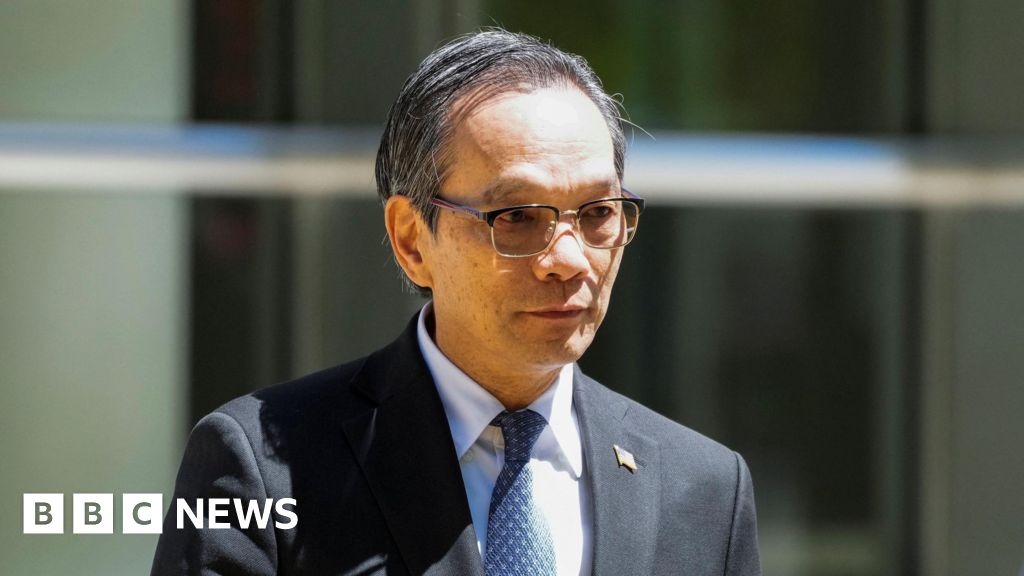
Her actions included publishing an essay that explicitly denied the existence of a genocide in China’s Xinjiang province and refuted claims of forced labor. This narrative directly contradicted widespread international reports and evidence from human rights organizations, which detail the extensive detention of millions of mostly Muslim Uyghurs and other ethnic minorities in "re-education" camps, where they are allegedly subjected to forced labor and political indoctrination. China officially maintains these camps are vocational training centers designed to combat extremism. Wang’s admission illustrates a calculated effort by Beijing to manipulate public opinion and counter critical narratives within influential diaspora communities, leveraging local political figures to propagate its state-approved messaging.
The Long Arm of the PRC: A Decade of Escalating Influence
These two cases, though distinct in their methods, are symptomatic of a broader, increasingly assertive strategy by the People’s Republic of China to extend its influence globally. Experts at institutions like the Center for Strategic and International Studies (CSIS) have tracked a significant ramp-up in Chinese espionage and influence operations in the U.S. since 2000, with a notable acceleration over the past decade. Lauryn Williams, a deputy director with CSIS, describes this as part of a strategic approach "to tamp down on dissent and to shape a clear narrative around the PRC, and to do that in bolder ways, as we’re seeing."
China’s global influence campaign operates on multiple fronts, often categorized under the umbrella of its "United Front Work Department" (UFWD). This powerful agency is responsible for coordinating efforts to build support for the CCP overseas, neutralize opposition, and promote Beijing’s political agenda. Its tactics range from "soft power" initiatives – funding cultural centers, academic exchanges, and industrial projects – to more clandestine operations, including espionage, cyber-attacks, and the establishment of undeclared administrative or security outposts.
The concept of "long-arm policing" – a state attempting to enforce its laws and assert jurisdiction over individuals beyond its borders – is at the heart of the "secret police station" controversy. While China’s Ministry of Public Security has denied the existence of these "police stations," describing them instead as "service centers" where volunteers assist Chinese citizens with administrative tasks, international human rights organizations and Western governments view them as a clear violation of sovereignty and international law. A 2022 report by the human rights NGO Safeguard Defenders, titled "110 Overseas: Chinese Transnational Policing Gone Wild," initially identified 54 alleged Chinese police service stations in 21 countries, a number that has since reportedly grown. These reports sparked investigations in several countries, though the outcomes have varied; for example, a police investigation in London concluded that "no criminal activity" had taken place regarding alleged Chinese police stations there.
Chronology of Escalation and Exposure:
- Early 2000s onwards: Gradual increase in documented Chinese espionage and influence operations in the U.S.
- Past Decade: Significant acceleration and diversification of PRC tactics, including greater emphasis on diaspora control and narrative shaping.
- September 2022: Safeguard Defenders publishes "110 Overseas: Chinese Transnational Policing Gone Wild," detailing numerous alleged Chinese "police service stations" worldwide, bringing international attention to the issue.
- 2022: Lu Jianwang establishes an office in Manhattan’s Chinatown, allegedly as an undeclared police station.
- October 2022: The FBI raids Lu Jianwang’s office, initiating federal charges.
- Throughout 2022-2023: Numerous international investigations launched into alleged Chinese overseas police stations following the Safeguard Defenders report.
- Early 2024 (exact date varies): Lu Jianwang’s co-defendant, Chen Jinping, pleads guilty to acting as an unauthorized foreign agent.
- Recently (days before Lu’s conviction): Arcadia Mayor Eileen Wang pleads guilty to similar offenses, acknowledging her role in disseminating pro-Beijing propaganda.
- This Week: Lu Jianwang is found guilty in a New York court of acting as an unauthorized foreign agent for China, marking a significant legal victory for U.S. prosecutors in combating transnational repression.
Beyond Police Stations: A "Volume Enterprise" of Espionage
Douglas London, a Georgetown University professor and former CIA officer, characterizes China’s overarching espionage campaign as a "volume enterprise." Its scope extends far beyond monitoring dissidents and includes hacking, the theft of military and technological secrets, and the acquisition of other sensitive information. Lyle Morris, a senior fellow with the Asia Society Policy Institute, notes that China’s efforts to exert influence abroad are supported by a "vast bureaucracy and network" of resources, personnel, and funding.
The motivation behind this extensive campaign, according to Claire Chu, a nonresident fellow at the Atlantic Council’s Global China Hub, is Beijing’s profound belief that any criticism or dissent, particularly from overseas Chinese communities, poses a direct threat to the country’s stability and the legitimacy of the CCP. China views such dissent as actively supported by Western governments, designed to "smear China’s image." This perspective, Morris explains, leads Beijing to "see ulterior motives when Western countries provide platforms for Chinese dissidents who harshly criticize the Chinese government, and doesn’t buy the argument that such voices are part of a healthy democracy based on free speech."
To suppress these perceived threats, China employs a range of harassment and bullying tactics. These can include digital surveillance, such as tracking individuals’ cell phones, and attempts to recruit dissidents to spy on their friends and associates. A particularly potent form of intimidation involves targeting family members still residing in China, who become vulnerable to pressure and reprisals from the government, effectively creating a chilling effect on overseas critics.
Furthermore, Beijing has long sought to cultivate relationships with individuals holding positions of influence – so-called "talents" – across the US government, academic institutions, and business community. The case of Arcadia Mayor Eileen Wang is a testament to this strategy, demonstrating how the Chinese government targets local politicians to amplify its narratives and counter perceived threats to its global image. Her propagation of essays denying human rights abuses in Xinjiang exemplifies how these cultivated relationships are used to push specific propaganda, muddying the waters around critical international issues.
Challenges for US Prosecutors and Implications
These multifaceted cases present significant challenges for US prosecutors. Proving that an individual is acting as an "unauthorized foreign agent" under statutes like the Foreign Agents Registration Act (FARA) requires substantial resources and years of meticulous investigative work. FARA mandates that individuals or entities acting on behalf of foreign principals in a political or quasi-political capacity must register with the Department of Justice. Non-compliance, especially when combined with covert activities, leads to charges like those brought against Lu Jianwang and Eileen Wang. The sheer "volume enterprise" of China’s activities, as London describes it, means that while prosecutors may focus on the most egregious cases, they are unlikely to halt the entirety of China’s influence operations.
The implications of these operations are far-reaching:
- National Security: The establishment of undeclared police stations and covert influence networks poses a direct threat to US national security by undermining sovereignty and potentially facilitating intelligence gathering or coercion.
- Freedom of Speech and Assembly: For Chinese diaspora communities, these operations create an atmosphere of fear and self-censorship, eroding fundamental democratic rights and the ability to express dissent without fear of reprisal against themselves or their families.
- Rule of Law: The extraterritorial application of Chinese law through these covert stations challenges international legal norms and the principle of non-interference in internal affairs of sovereign states.
- US-China Relations: The ongoing exposure of these activities further strains already tense diplomatic relations between Washington and Beijing, fueling distrust and increasing pressure for retaliatory measures or sanctions.
- Global Precedent: If unchecked, such transnational repression could set a dangerous precedent, encouraging other authoritarian regimes to similarly target their diasporas abroad.
Despite the recent convictions and guilty pleas, experts like Lauryn Williams believe that the exposure of these cases is unlikely to immediately deter China. "Obviously with these cases just this week, I don’t think we’re seeing a downtick here," she commented, suggesting that the United States and its allies will need to remain vigilant and develop more robust strategies to counter these evolving threats. The ongoing struggle against China’s long-arm policing and propaganda machine will undoubtedly continue to be a defining feature of international relations in the coming years, challenging democratic nations to protect their sovereignty and the freedoms of all residents within their borders.