

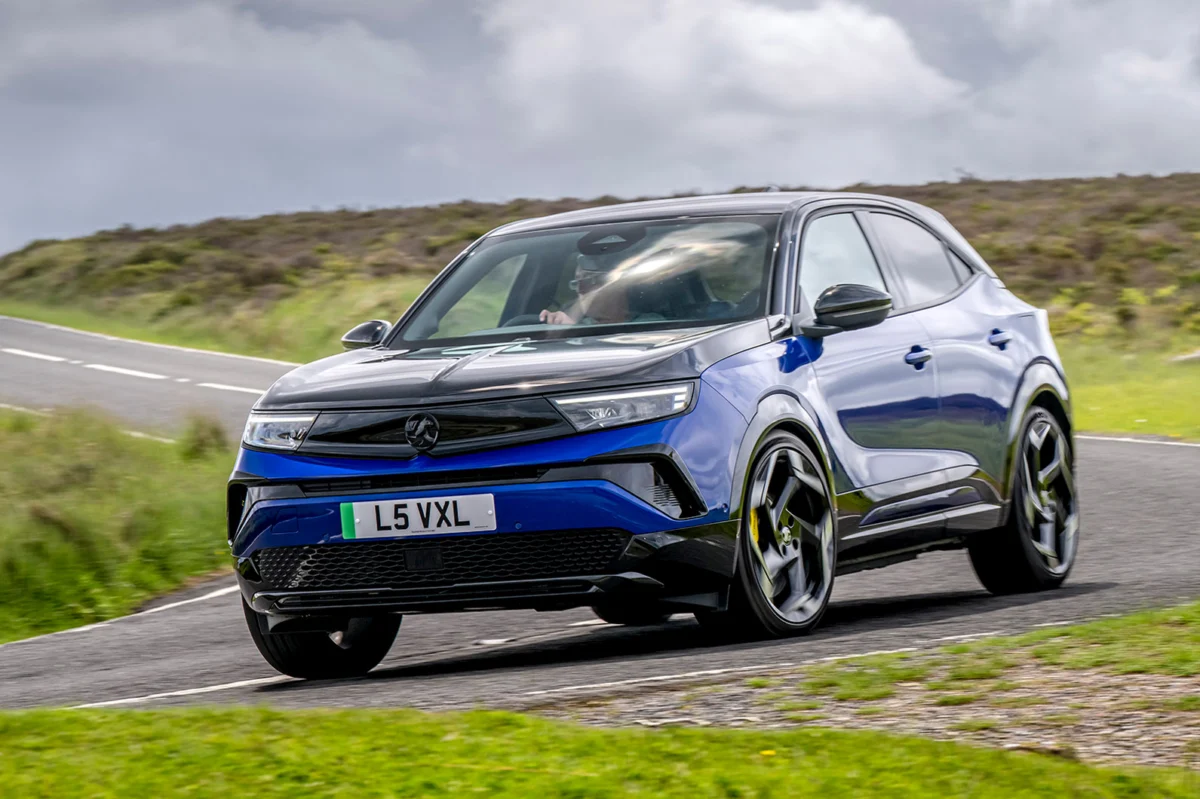
The Vauxhall Mokka GSE represents a strategic evolution for the British marque, transforming the standard Mokka Electric from a commuter-focused compact crossover into a performance-oriented "Q-car" that prioritizes mechanical substance over mere aesthetic flair. While the GSE badge—standing for Grand Sport electric—replaces the legendary VXR moniker for the electrified era, the engineering philosophy behind this latest iteration suggests a return to the meticulous chassis tuning that defined previous generations of European hot hatches. By integrating sophisticated suspension components, a mechanical limited-slip differential, and revised steering geometry, Vauxhall aims to prove that the inherent weight and center-of-gravity challenges of electric vehicles (EVs) can be mitigated to provide a genuinely engaging driving experience.
Comprehensive Engineering Overhaul and Technical Specifications
At the heart of the Mokka GSE’s transformation is a radical departure from the standard model’s suspension and chassis setup. Engineers have lowered the ride height by 10mm, a move intended to reduce the center of gravity and improve aerodynamic efficiency. However, the most significant changes lie in the spring and damping rates. The GSE features front spring rates that have been increased by 49%, while the rear springs are 35% stiffer than those found on the standard Mokka Electric. This aggressive stiffening is designed to manage the lateral forces generated during high-speed cornering, particularly given the vehicle’s 54kWh battery weight.
The rear torsion-beam suspension has been significantly reinforced with a new 30.8mm anti-roll bar. This single component increases rear roll stiffness by a staggering 189%. When combined with the front-end stiffening, the overall roll stiffness of the vehicle is improved by 48%. This reduction in body roll is critical for maintaining a stable contact patch for the 225/40 Michelin Pilot Sport EV tires, which come as standard. For enthusiasts seeking even higher levels of mechanical grip, Vauxhall offers Goodyear Eagle F1 tires as a £100 option, which also marginally improves the WLTP range from 201 to 209 miles due to lower rolling resistance.
The front end of the Mokka GSE utilizes a Torsen locking front differential, a rare inclusion in the electric crossover segment. This mechanical differential provides a 36% lock-up under acceleration and 34% under braking. In practice, this allows the vehicle to distribute torque more effectively between the front wheels, minimizing the understeer typically associated with front-wheel-drive EVs and allowing for more aggressive exits from corners. To accommodate the larger 20-inch alloy wheels and the lowered body, Vauxhall has introduced new knuckles for the MacPherson-strut front suspension. While these are not the "Hiperstrut" units seen in the high-performance Astra VXR of the mid-2010s, they are engineered to be lighter and to increase the Ackermann angle. This ensures that despite the wider track and larger wheels, the Mokka GSE retains a tight 10.41m turning circle, preserving its urban utility.
Chronology of the GSE Brand and Development
The development of the Mokka GSE follows a clear timeline of Stellantis’s broader strategy to electrify its performance sub-brands. The GSE nameplate was revived in late 2022, initially appearing on the Astra and Astra Sports Tourer. This move marked the end of the VXR and OPC (Opel Performance Center) eras, signaling a shift toward "responsible performance."
The Mokka GSE entered its final testing phase in 2024, with engineers focusing on the integration of the 54kWh battery with the enhanced chassis. This battery, which utilizes a nickel-manganese-cobalt (NMC) chemistry, was chosen for its balance of energy density and thermal stability. The timeline of the Mokka’s evolution is as follows:
- 2021: Launch of the second-generation Vauxhall Mokka, including the first Mokka-e (later renamed Mokka Electric).
- Late 2022: Announcement of the GSE sub-brand as the dedicated performance arm for Vauxhall and Opel’s electric portfolio.
- 2023: Introduction of the 54kWh battery and the 156hp motor across the Stellantis e-CMP platform, replacing the older 50kWh/136hp units.
- 2024: Commencement of the GSE-specific chassis tuning program, focusing on high-speed stability and steering precision.
- 2025/2026: Market release of the Mokka GSE, positioned as a flagship model within the compact SUV segment.
Steering and Braking: A Focus on Driver Feedback
Vauxhall’s engineering team has placed a heavy emphasis on tactile feedback, an area where many contemporary EVs are criticized for feeling disconnected. The steering rack in the GSE is entirely new, featuring a 14.5:1 ratio—a significant sharpening from the 16.2:1 ratio found in the standard Mokka. With only 2.7 turns between locks, the steering is designed to feel more direct and responsive, requiring less input from the driver to navigate technical sections of road.
Perhaps the most unconventional technical choice is found in the braking system. The GSE is equipped with 380mm ventilated front discs and 268mm rear discs. In its most aggressive "Sport" drive mode, the vehicle completely disables regenerative braking. This is a deliberate engineering choice to provide a consistent and traditional brake pedal feel, eliminating the "mushy" transition between energy recovery and mechanical friction braking. This specific trait—prioritizing pedal modulation over efficiency in performance modes—is a philosophy shared with high-end performance EVs like the Lotus Evija. It highlights Vauxhall’s intent to cater to driving enthusiasts who value predictable deceleration during spirited driving.
Charging Infrastructure and Battery Performance
While the Mokka GSE emphasizes handling, it remains a functional electric vehicle. The 54kWh battery supports DC fast charging at rates of up to 100kW. While this figure is lower than the 200kW+ speeds seen in premium EVs from Hyundai or Tesla, it remains competitive within the B-SUV segment. A 10% to 80% charge can be completed in approximately 30 minutes under optimal conditions.
The powertrain produces 156hp (115kW), which, while modest compared to "hyper-EVs," is optimized for the GSE’s chassis. The focus is not on straight-line drag racing but on maintaining momentum through corners. The 100kW charging capability is balanced against the battery’s thermal management system, which is designed to handle the repeated high-load cycles of performance driving without significant power derating.
Aesthetic Identity and Heritage Cues
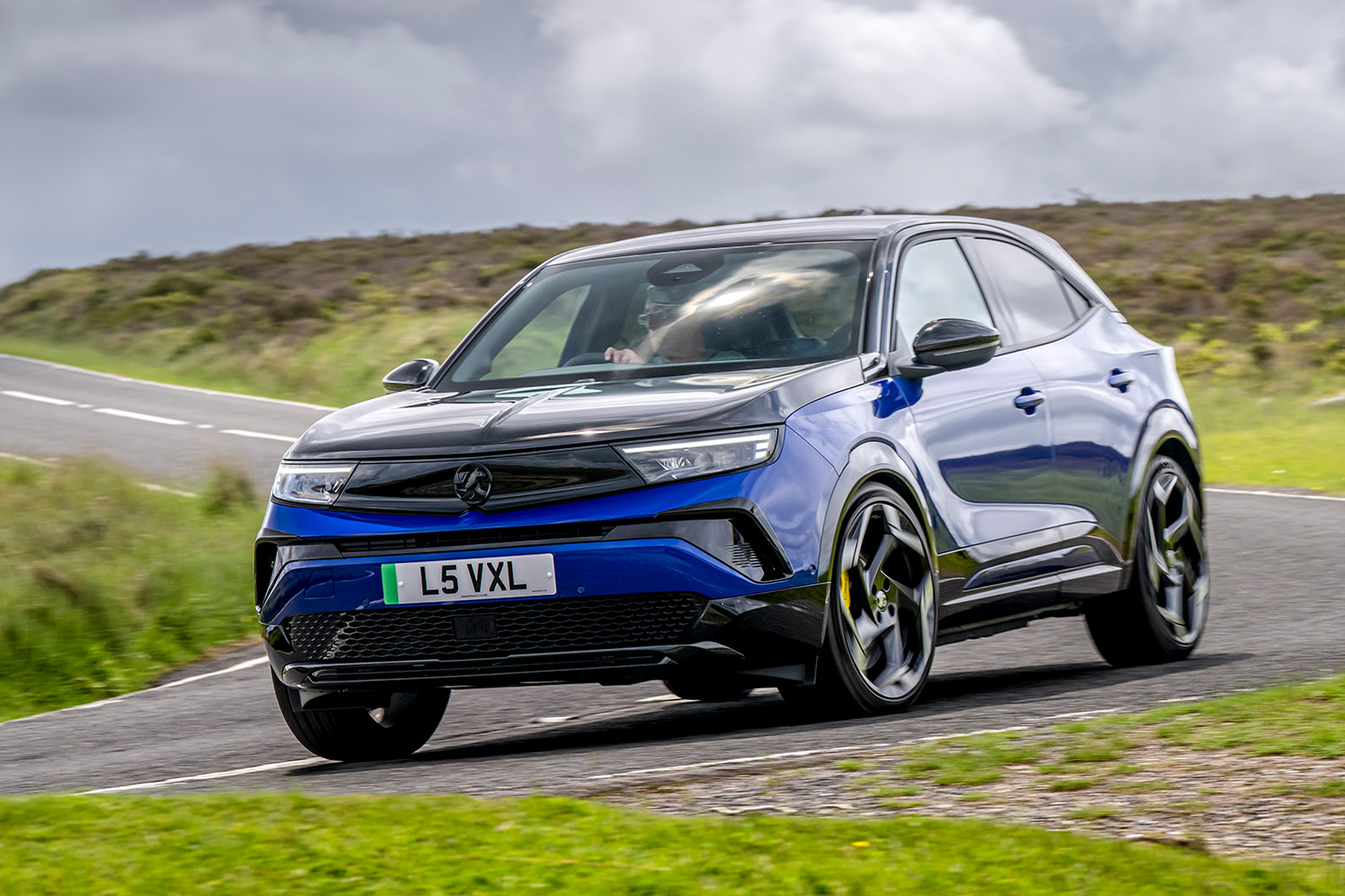
Visually, the Mokka GSE balances its "Q-car" status with subtle nods to Vauxhall and Opel’s rallying history. The exterior features fatter, more sculpted bumpers and revised grilles that aid in cooling and aerodynamic efficiency. The 20-inch alloy wheels are set with a noticeable amount of negative camber, giving the vehicle a "planted" stance reminiscent of traditional hot hatches.
Signature GSE yellow flashes and branding are present but understated. One of the most prominent options is the black-painted bonnet, available for £250. This is a direct homage to the Opel and Vauxhall rally cars of the 1970s and 80s, such as the Manta 400 and the Chevette HS. A black roof is standard, though customers can choose to delete this option at no extra cost if they prefer a more monochromatic look. Inside, the cabin is upgraded with GSE-specific sports seats, which are AGR-certified (Aktion Gesunder Rücken) for ergonomic support, ensuring the driver remains bolstered during high-G cornering.
Market Context and Competitive Analysis
The Mokka GSE enters an increasingly crowded market for performance-oriented small EVs. Its primary competition includes the Alpine A290 and the Abarth 500e, both of which take a similar approach to chassis tuning. However, the Mokka GSE occupies a unique niche as a crossover, offering more ground clearance and interior volume than a traditional hatchback while attempting to mimic their handling characteristics.
Market analysts suggest that the success of the GSE brand will depend on its ability to justify a price premium over the standard Mokka Electric. By focusing on mechanical components like the Torsen differential and bespoke suspension knuckles, Vauxhall is targeting a "connoisseur" demographic—drivers who understand the value of unsprung weight reduction and roll stiffness.
Broader Implications for the Automotive Industry
The release of the Mokka GSE is indicative of a broader trend in the automotive industry: the "democratization" of advanced chassis technology. Features like Torsen differentials and high-ratio steering racks, once reserved for high-end sports cars, are now being utilized to give electric crossovers a distinct personality.
Furthermore, the GSE project demonstrates how manufacturers are navigating the transition from internal combustion engines to electric powertrains without losing their brand identity. For Vauxhall, this means pivoting from the "raw" power of the VXR brand to the "precision" engineering of the GSE brand. As emissions regulations continue to tighten, the Mokka GSE serves as a blueprint for how performance can be maintained in a zero-emission future through superior suspension geometry and mechanical grip rather than sheer horsepower.
In conclusion, the Vauxhall Mokka GSE is a calculated attempt to inject soul into the electric crossover segment. By prioritizing suspension nerdery and mechanical feedback over headline-grabbing 0-60mph times, Vauxhall has created a vehicle that honors its heritage while looking firmly toward 2026 and beyond. Whether the market fully embraces a performance EV with a 200-mile range remains to be seen, but the GSE’s technical credentials suggest it will be one of the most capable handlers in its class.