


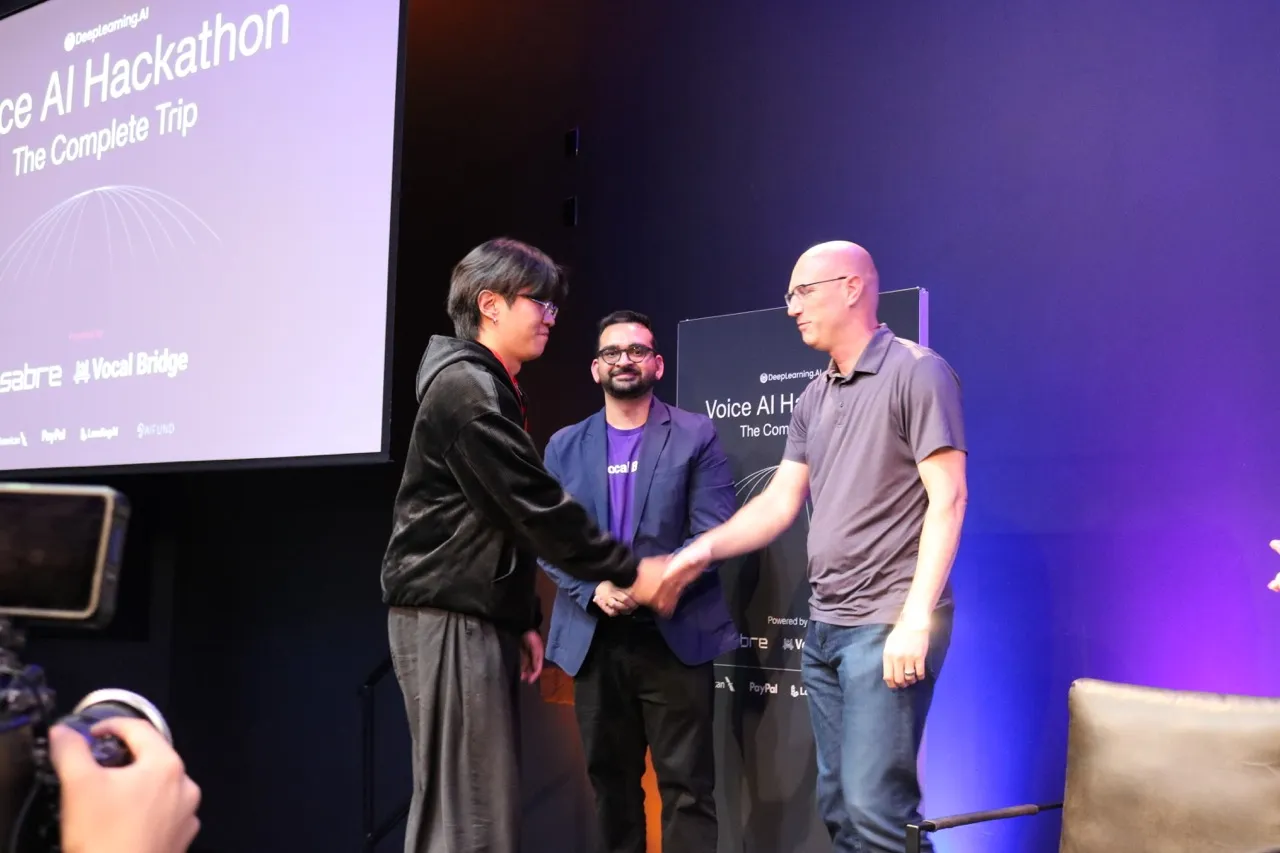
The traditional paradigm of travel technology, long dominated by the pursuit of the "perfect search," underwent a significant shift this past weekend at a hackathon hosted by Sabre, a global leader in travel software and technology. While the industry has spent much of the last decade refining search algorithms and user interfaces to help travelers find the cheapest flights or the most aesthetic hotels, the developers gathered in Northlake, Texas, focused their attention on a more complex and historically neglected problem: the execution and coordination of travel logistics across fragmented systems. The winning projects did not present new ways to browse for vacations; instead, they introduced autonomous AI agents capable of performing the tedious, offline tasks that currently require human intervention, such as calling hotels to confirm specific amenities, consolidating disparate reservations, and automatically re-engineering itineraries when flight disruptions occur.
For travel executives and industry analysts, the outcomes of the Sabre event signal a pivot in the application of artificial intelligence. The focus is moving away from generative AI as a conversational search tool and toward "agentic AI"—systems that possess the agency to act within the real world. This transition addresses a fundamental friction point in the global travel industry: the gap between digital booking systems and the manual coordination required to manage a trip. As the industry grapples with aging infrastructure and siloed data, the hackathon served as a proof of concept for a more integrated, open, and automated future.
The Shift from Search to Execution
For years, the "search box" has been the centerpiece of travel innovation. From the rise of Online Travel Agencies (OTAs) in the late 1990s to the recent integration of Large Language Models (LLMs) into platforms like Expedia and Kayak, the goal has been to simplify the discovery process. However, industry veterans argue that search is a solved problem. The real challenge lies in the "middle mile" and "last mile" of travel—the period between the booking and the completion of the journey.
During the Sabre hackathon, developers demonstrated that AI agents could bridge these gaps. One winning team developed an agent designed to handle "offline" inquiries. While a hotel’s website might list its general amenities, it rarely provides real-time data on specific room features or local conditions. The AI agent developed at the event was capable of placing outbound voice calls to hotel front desks, using natural language processing to ask specific questions—such as the availability of a specific type of crib or the current status of a pool renovation—and then feeding that data back into a centralized itinerary.
Another standout innovation focused on the fragmentation of modern travel. A single trip often involves separate transactions across airlines, hotels, car rentals, and rail services, each operating on distinct legacy systems. Travelers are frequently forced to carry the "context" of their trip manually, moving information from one confirmation email to another. The hackathon participants showcased agents that could scrape these disconnected data points, recognize the relationships between them, and provide a unified management layer. When a flight was delayed, the agent did not merely notify the traveler; it reached out to the ground transport provider to adjust the pickup time and informed the hotel of a late check-in, all without human prompting.
Chronology of the Event and Technical Milestones
The hackathon was structured to push the boundaries of Sabre’s existing APIs and the capabilities of modern AI frameworks. The event followed a rigorous timeline designed to move from ideation to functional prototype within 48 hours.
Friday Evening: Ideation and API Access
The event commenced with a briefing on the current state of the Sabre GDS (Global Distribution System). Developers were granted access to a sandbox environment containing Sabre’s travel APIs, alongside credits for advanced AI models such as OpenAI’s GPT-4 and Google’s Gemini. The emphasis was placed on solving "real-world friction" rather than aesthetic design.
Saturday: Development and Stress Testing
Throughout Saturday, teams worked on integrating "agentic" frameworks. Unlike standard chatbots, which provide information, these agents were built using "tool-use" or "function-calling" capabilities. This allowed the AI to trigger specific actions, such as modifying a Passenger Name Record (PNR) or sending an automated email to a service provider. By midday, the focus shifted from code generation to system interoperability—ensuring the AI could read data from an airline system and translate it into a format usable by a hotel management system.
Sunday: Demonstrations and Judging
The final presentations focused on utility and scalability. The judging panel, composed of Sabre engineers and travel industry consultants, evaluated projects based on their ability to handle "edge cases"—scenarios where travel plans go wrong. The winning teams were those that demonstrated a high degree of autonomy, requiring the least amount of user oversight to resolve complex logistical conflicts.
Data Analysis: The Cost of Fragmented Systems
The innovations seen at the hackathon address a significant economic burden on the travel industry. According to data from the International Air Transport Association (IATA), flight disruptions cost the airline industry billions of dollars annually in rebooking expenses, passenger compensation, and lost productivity. A significant portion of this cost is driven by the labor-intensive nature of customer service.
Currently, when a major weather event or technical failure occurs, call centers are overwhelmed. The average wait time for a customer service representative during a major disruption can exceed four hours. Furthermore, research by McKinsey & Company suggests that travel agents and corporate travel managers spend up to 60% of their time on "non-value-add" administrative tasks, such as manually updating itineraries or verifying bookings across different platforms.
The introduction of AI agents could theoretically automate up to 80% of these administrative interactions. By handling the "offline" coordination—the phone calls and manual data entries—these agents could reduce the operational overhead for travel management companies and improve the customer experience by providing instantaneous resolutions.
Industry Reaction: The Push for Open Systems
A recurring theme throughout the hackathon was the tension between "closed" and "open" systems. Historically, the travel industry has been characterized by proprietary data silos. Airlines, hotels, and GDS providers like Sabre have often guarded their data closely, making it difficult for third-party developers to create cross-platform solutions.
"It was important that we had this event, that we started to change the mindset about travel being closed and shifting to open tools," noted one participant during the closing remarks. The sentiment reflects a broader movement within the industry toward Open Travel APIs and the adoption of New Distribution Capability (NDC) standards, which aim to modernize the way travel products are retailed.
For Sabre, the hackathon serves as a strategic move to position its platform as a foundation for the next generation of travel tech. By encouraging developers to build on its infrastructure, Sabre is signaling a willingness to move away from the "walled garden" approach. However, the transition is not without challenges. Executives at the event noted that "settling who gets to build on its systems" remains a critical hurdle. Issues of data privacy, security, and the monetization of API access must be resolved before agentic AI can be deployed at scale.
Broader Implications and the Future of Travel
The implications of agentic AI extend far beyond the technical community. For the corporate travel sector, these tools promise a new level of "duty of care." An AI agent that monitors a traveler’s journey in real-time can proactively manage risks, such as rerouting a traveler before they even arrive at a closed airport.
For the leisure traveler, the shift represents the potential for a truly seamless experience. The "manual context transfer" that currently defines travel—copying confirmation numbers, checking gate changes on different apps, and calling hotels about late arrivals—could become obsolete. The traveler would interact with a single interface, while a fleet of specialized agents works in the background to ensure every component of the trip remains synchronized.
However, the rise of AI agents also raises questions about the future of human labor in the travel industry. While agents can handle routine tasks, the "human touch" remains a premium component of hospitality. The challenge for the industry will be to find a balance where AI handles the logistical complexity, allowing human agents to focus on high-value, personalized service.
Conclusion: A New Blueprint for Travel Technology
The Sabre hackathon has provided a glimpse into a future where the search box is no longer the primary interface for travel. By prioritizing coordination over discovery and execution over information, the event highlighted the path forward for an industry that has long struggled with its own complexity.
As the industry moves toward 2025, the focus will likely remain on refining these agentic systems. The success of this transition will depend on three factors: the continued opening of travel data systems, the advancement of AI’s ability to interact with legacy infrastructure, and the industry’s ability to establish clear protocols for who controls the "context" of a trip. If these challenges can be met, the travel experience of the future will be defined not by the tools we use to find it, but by the invisible agents that ensure it runs smoothly from start to finish.