
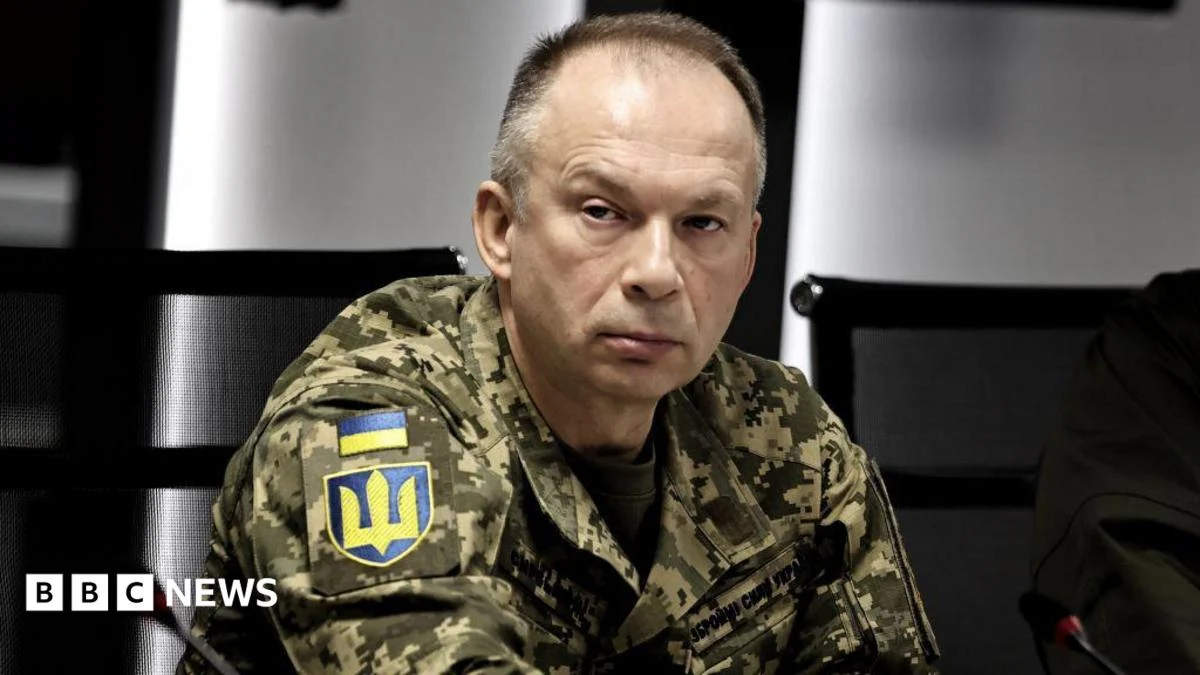
The recent cascade of leadership changes within Ukraine’s defense establishment has sent ripples through both domestic political circles and international observer communities, highlighting the immense pressures and evolving strategic demands of the ongoing full-scale invasion by Russia. The dismissal of General Syrskyi, 60, who had been perceived by many within Ukraine as a traditional, "Soviet-school" commander reluctant to embrace radical reforms, marks a definitive pivot towards a younger, more innovative military leadership. His replacement, Lieutenant General Mykhailo Drapatyi, 43, is a battle-hardened and popular figure, whose appointment is widely seen as a response to the public outcry following the earlier departure of Mykhailo Fedorov, 35, from the Ministry of Defence.
The Unfolding Crisis: A Timeline of Events
The catalyst for the recent political turbulence was the removal of Mykhailo Fedorov from his position as Defence Minister last week. Appointed only in January, Fedorov rapidly gained acclaim for his dynamic approach to modernizing the armed forces, spearheading anti-corruption initiatives, and integrating cutting-edge technology into military operations. His innovative strategies included setting up a volunteer "IT Army of Ukraine" to conduct cyber-attacks against Russian targets and leading the highly successful "Army of Drones" fundraising campaign, which brought elements of "gamification" to the war effort by rewarding units for successful strikes on enemy assets.
Initial whispers suggesting a significant disagreement between Fedorov and Commander-in-Chief Syrskyi quickly gained traction, and were soon confirmed, indicating a fundamental divergence in vision for the future direction of the Ukrainian military. Fedorov’s departure triggered immediate and widespread public discontent, manifesting in six consecutive days of street protests across several Ukrainian cities. Demonstrators voiced their support for Fedorov and increasingly called for the dismissal of General Syrskyi, whom they perceived as an impediment to necessary reforms. The public’s demand for change intensified, placing President Zelensky under mounting pressure to address the growing political crisis and reassure a war-weary populace.
Profiles in Leadership: Oleksandr Syrskyi and Mykhailo Fedorov
Oleksandr Syrskyi’s Tenure and Public Perception: General Oleksandr Syrskyi, a veteran commander, ascended to the role of army commander-in-chief, a position that placed him at the helm of Ukraine’s ground forces amidst the most challenging period in the nation’s modern history. He earned significant recognition for his crucial role in the successful defense of Kyiv during the initial days of Russia’s full-scale invasion in February 2022, a strategic victory that defied international expectations and galvanized Ukrainian resistance. He also oversaw the Kharkiv counteroffensive in late 2022, which liberated significant territory. However, his command style and strategic decisions, particularly during prolonged and costly engagements such as the defense of Bakhmut, drew criticism from some quarters. His perceived adherence to more conventional, "Soviet-school" military doctrines, which often emphasize attrition warfare and hierarchical command structures, clashed with a growing demand for agility, technological integration, and decentralized decision-making seen as vital for modern warfare. This perception contributed to the public’s desire for a more transformative leadership, especially as the war evolved into a complex, technologically driven conflict.
Mykhailo Fedorov’s Transformative Impact: In stark contrast, Mykhailo Fedorov, initially the Minister of Digital Transformation, brought a fresh, non-traditional perspective to the Ministry of Defence. His background in technology and innovation quickly translated into tangible results for the military. Beyond the "IT Army" and "Army of Drones," Fedorov was lauded for leveraging data analytics to assess and improve front-line performance, streamlining bureaucratic processes, and aggressively tackling corruption within the defense procurement system – a perennial challenge for Ukraine. His youthful energy and results-oriented approach resonated deeply with the public, who saw him as a symbol of Ukraine’s future-oriented aspirations and its commitment to efficiency and transparency even amidst conflict. His abrupt removal, therefore, was not merely a change in personnel but was interpreted by many as a setback for critical reforms and a blow to morale.
The New Commander: Mykhailo Drapatyi’s Ascent
The appointment of Mykhailo Drapatyi represents a strategic attempt by President Zelensky to assuage public concerns and inject new impetus into the military command. Lieutenant General Drapatyi, 43, is widely regarded as a popular and highly competent "battle-hardened" general. His military career is marked by frontline experience and a reputation for effective leadership. While specific details of his operational successes are often kept confidential for security reasons, his standing among the troops and the public is notably high. Crucially, Drapatyi is also understood to be a close associate of the recently ousted Mykhailo Fedorov, a connection that analysts believe could facilitate a smoother transition and potentially allow for the continuation of some of Fedorov’s reformist agenda within the military structure.
Upon his appointment, Drapatyi took to social media, stating on Facebook, "I will work responsibly, with full focus, and with respect for the people who are defending our country today." In a gesture of professional courtesy and acknowledgment of his predecessor’s contributions, he also thanked Syrskyi "for his consistent work to strengthen the Ukrainian army," adding, "I grew up in it." This statement signals a desire for continuity where appropriate, while also signaling a readiness to implement necessary changes.
Political Fallout and Public Pressure
The six days of widespread protests following Fedorov’s ousting unequivocally demonstrated the depth of public sentiment and the political fragility surrounding military leadership decisions. These demonstrations, though not reaching the scale of pre-war mass movements, were significant in their persistence and their clear demand for accountability and reform. President Zelensky, by replacing Syrskyi with Drapatyi, appeared to have directly responded to this mounting public pressure. The choice of Drapatyi, seen as a younger and more innovative commander, and notably a friend of Fedorov’s, is a calculated move to defuse the immediate political crisis.
The swift and unambiguous endorsement of Drapatyi by Fedorov himself further supports this interpretation. Fedorov congratulated Drapatyi on his new role, describing the appointment as "a new hope in the fight of free people for freedom and justice." He characterized it as "the voice of change that could not be ignored," echoing the sentiments of the protesting public. Fedorov also revealed that he had personally called Syrskyi to thank him for the defense of the Kyiv region and other "historic battles," but pointedly added, "But we need to move even faster and write new chapters correcting all previous mistakes." This statement underscored the prevailing belief that while past achievements were recognized, a more dynamic and forward-looking approach was urgently required.
Statements and Repercussions
In a video address late on Tuesday, President Zelensky formally announced the changes, publicly thanking Syrskyi for his military campaigns, including the successful defense of Kyiv. Zelensky also revealed that he had met with Fedorov earlier that day and offered him a "worthy position in power," though he did not disclose whether the offer had been accepted. This overture suggests an attempt to reintegrate Fedorov’s talent and public appeal into the broader government structure, thereby further mitigating the political fallout. For the time being, Yevhenii Khmara, a former top official at Ukraine’s Security Service (SBU), remains as the acting Defence Minister, having been appointed last week to replace Fedorov. Zelensky concluded his announcement by stating, "All decisions will be formalised tomorrow," indicating the bureaucratic finalization of these high-level personnel changes.
General Syrskyi, in the immediate aftermath of his dismissal, has maintained a public silence regarding the latest developments. However, earlier in the week, he had published an op-ed for the Militarny website, addressing the swirling controversies. Regarding his relationship with Fedorov, he stated, "I perceived our relationship as a working one," and offered a conciliatory, "If I offended anyone, Mykhailo Albertovych [Fedorov], I’m sorry." Syrskyi also weighed in on the protests, acknowledging the public discourse around military contracts, procurement, and mobilization. He cautioned that these complex issues, often reduced to "pithy slogans" by protesters, were far more intricate than generally realized. "Decisions on which people’s lives depend are not made with slogans," he wrote, emphasizing that "Real work, not the public drama surrounding it, wins the war." This commentary provided a glimpse into his perspective, highlighting the often-stark difference between operational realities and public expectations.
Strategic Imperatives: The Path Forward
With the new leadership in place, the immediate focus shifts to the critical challenges facing Ukraine’s defense. President Zelensky has tasked both acting Defence Minister Khmara and the newly appointed Commander-in-Chief Drapatyi with developing a comprehensive new defense strategy. This strategy is expected to address several key issues vital to Ukraine’s war effort and long-term security.
Firstly, reforming the military corps system is paramount. This likely involves modernizing command structures, enhancing inter-branch coordination, and potentially restructuring units to improve agility and combat effectiveness. The objective would be to move further away from Soviet-era organizational models towards a more NATO-compatible and technologically advanced framework.
Secondly, weapons supply remains a perpetual and critical concern. Ukraine’s reliance on international military aid necessitates efficient logistics, effective inventory management, and strategic allocation of incoming armaments. The new leadership will need to work closely with international partners to ensure a steady and optimized flow of essential weaponry, from artillery shells to air defense systems.
Thirdly, the role of drones in modern warfare has proven decisive, and their integration into Ukraine’s defense strategy is a top priority. Building on Fedorov’s "Army of Drones" initiative, the new command will need to scale up drone production, enhance operator training, and refine tactics for both reconnaissance and strike operations, adapting to the rapidly evolving technological landscape of drone warfare.
These strategic imperatives underscore the immense task ahead for Drapatyi and Khmara. Their ability to quickly formulate and implement a coherent, effective defense strategy will be crucial for maintaining the initiative against Russian forces and demonstrating progress to both the Ukrainian populace and international allies.
Broader Implications for Ukraine’s War Effort
The recent leadership changes carry significant implications for Ukraine’s ongoing war effort. Domestically, the appointment of Drapatyi, particularly given his perceived alignment with Fedorov’s reformist vision, could help restore public confidence and morale, especially among those who felt that the war effort needed a more dynamic and modern approach. If Fedorov accepts a new "worthy position in power," as offered by Zelensky, it could further solidify this sentiment, demonstrating that his valuable expertise will not be lost. However, many who protested will still demand to see Fedorov in a position of real authority where his innovative drive can be fully leveraged. If this does not materialize, the initial damage to Zelensky’s political capital for making what many saw as the "wrong choice" in the first place may prove difficult to fully repair.
Internationally, these leadership adjustments will be closely watched by Ukraine’s allies, particularly those providing substantial military and financial aid. Stability and effective leadership within Ukraine’s defense establishment are critical for maintaining trust and ensuring continued support. A perception of strong, unified, and reform-minded leadership can reinforce the narrative that aid is being used effectively and strategically. Conversely, prolonged political instability or a perceived regression in military modernization could complicate efforts to secure future assistance.
Looking Ahead
The coming weeks will be crucial for the new military leadership to establish its authority, articulate its vision, and demonstrate tangible progress on the battlefield and in reform efforts. The immediate challenge for Lieutenant General Drapatyi and Acting Defence Minister Khmara will be to foster cohesion within the military command, build on existing strengths, and address the critical areas identified by President Zelensky. The delicate balance between respecting the legacy of past commanders and embracing the urgent need for innovation and adaptation will define their tenure. For Ukraine, these changes represent not just a personnel shift, but a pivotal moment in its ongoing struggle for survival and its aspiration for a modern, effective defense force capable of securing its future freedom and justice.