
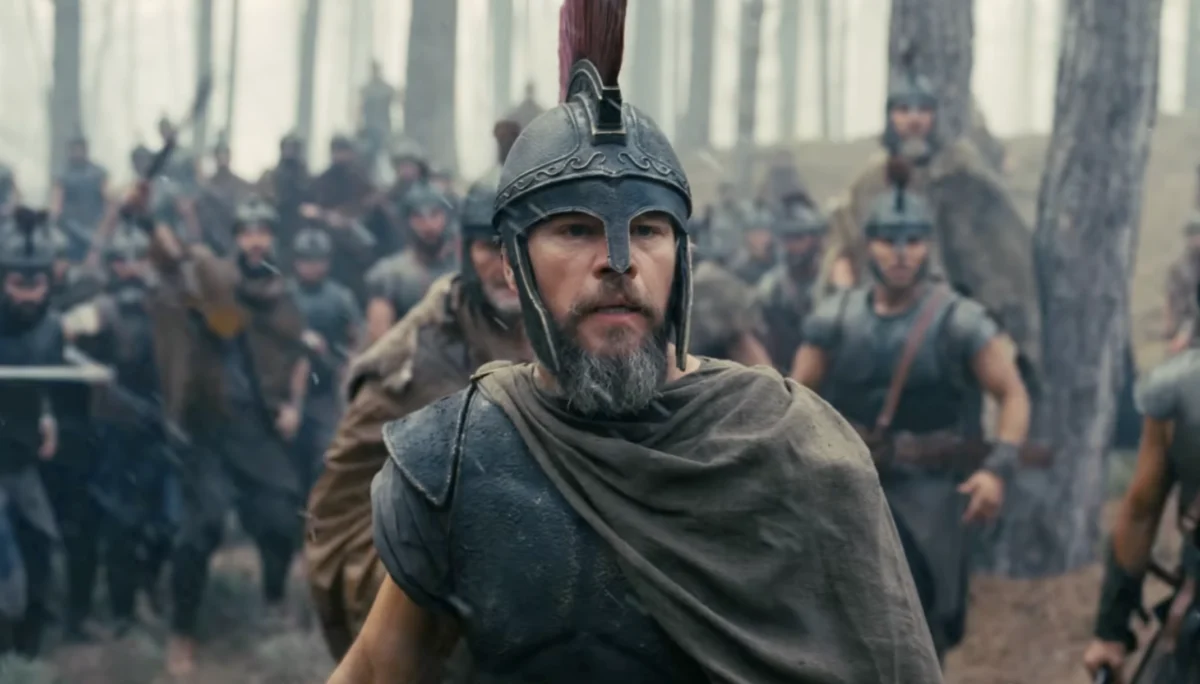
Christopher Nolan’s cinematic odyssey with his latest epic, The Odyssey, has not merely begun; it has launched with an impact that has redefined expectations for ambitious, auteur-driven blockbusters. The R-rated, nearly three-hour adaptation of Homer’s ancient Greek poem, a project that navigated significant cultural discourse prior to its release, has achieved an opening weekend that has left the industry in awe. The Odyssey stormed the domestic box office, grossing an astounding $123.5 million, while its global debut reached an even more impressive $263.7 million. This monumental performance marks the highest-grossing worldwide opening weekend in the acclaimed filmmaker’s illustrious career, signaling a seismic shift in audience engagement with classic literature brought to the screen.
A Triumph Against All Odds
The initial skepticism surrounding The Odyssey‘s potential commercial viability was palpable. Questions lingered about whether a film so faithful to its 2,700-year-old source material, a narrative that had become a lightning rod for cultural debates, could resonate with contemporary audiences. However, the box office numbers have decisively answered these concerns, demonstrating that Nolan’s artistic vision, coupled with a meticulously crafted marketing campaign, has successfully transcended perceived barriers. The film’s success is a testament to Nolan’s ability to transform challenging concepts into must-see cinematic events, proving that depth and artistic integrity can indeed drive unprecedented commercial success.
Nolan’s Brand Power and Generational Appeal
Following the critical and commercial triumph of Oppenheimer, which earned him his first Best Director Oscar, Christopher Nolan has solidified his status as a directorial brand, a name synonymous with guaranteed cinematic experiences. However, The Odyssey‘s opening weekend has revealed an even more profound aspect of his appeal: his ability to capture the imagination of a new generation of filmgoers. PostTrak surveys indicated that a remarkable half of the film’s opening weekend audience comprised individuals aged 18 to 34, a demographic typically associated with more contemporary genres. This significant turnout from Gen Z and younger millennials, alongside older viewers potentially drawn by the literary source, underscores Nolan’s broad and enduring influence. Audiences overwhelmingly cited Nolan himself as their primary motivation for seeing The Odyssey, a feat made even more remarkable considering the film’s star-studded ensemble cast. The roster boasts luminaries such as Matt Damon in the titular role of Odysseus, alongside Tom Holland, Robert Pattinson, Anne Hathaway, Lupita Nyong’o, Zendaya, and Charlize Theron, among many others. This convergence of critical acclaim for Nolan and the drawing power of a formidable cast has created a potent cinematic force.
IMAX Dominance and Technological Integration
The immersive experience offered by IMAX proved to be a significant draw for The Odyssey, with IMAX CEO Richard Gelfond expressing his elation at the film’s performance. "We had high expectations for the movie and high expectations for our performance, and it exceeded both," Gelfond stated in an interview with The Hollywood Reporter. The Odyssey holds the distinction of being the first narrative feature film to be shot entirely on IMAX’s advanced cameras, a decision that has clearly paid dividends. Gelfond further elaborated on Nolan’s mastery of the IMAX format, noting, "Chris knows how to use IMAX technology and the IMAX brand as well as anyone on the planet." This strategic integration of cutting-edge technology with a visionary director’s storytelling prowess has created an unparalleled viewing experience that audiences have actively sought out.

The robust demand for IMAX screenings is further evidenced by Gelfond’s observation that IMAX presales for The Odyssey‘s second weekend are "equivalent to some of our really best movies’ opening weekends." This sustained interest suggests a long and prosperous theatrical run for the film, mirroring the extended success of Nolan’s previous blockbuster, Oppenheimer.
Strategic Release and Anticipation for the Long Haul
The theatrical landscape for the upcoming weekend has been notably cleared of major wide releases, a rare occurrence for the competitive July period. This strategic void, intentionally or not, positions The Odyssey for continued dominance before the highly anticipated July 31 release of Sony’s Spider-Man: Brand New Day. This scheduling anomaly amplifies the opportunity for The Odyssey to solidify its box office performance and extend its cultural conversation.
Shawn Robbins, Fandango’s director of analytics and founder of Box Office Theory, highlighted the audience’s deliberate approach to securing their viewing experience. "Presales are just incredibly backloaded because we see people waiting to get the best seat that they can and see it in the way that the filmmaker intends it to be seen," Robbins explained. He further noted that many theaters are experiencing sold-out or near-sold-out shows well into the film’s second, third, and even fourth weekends. This sustained demand strongly indicates that The Odyssey will remain a fixture in theaters for an extended period, much like its predecessor, Oppenheimer.
Digital Engagement and Cultural Resonance
Beyond ticket sales, The Odyssey‘s cultural impact is evident in its widespread engagement across digital platforms. The film has become a viral sensation on social media, with memes and discussions surrounding Odysseus’s arduous journey back to Ithaca after the Trojan War capturing the online zeitgeist. Furthermore, The Odyssey achieved a remarkable milestone on Letterboxd, becoming the fastest film to reach one million watches, accomplishing this feat in just six days. This significantly outpaces previous record-holders like Barbie, Project Hail Mary, and Backrooms. Notably, Nolan’s own Inception was the first feature film to achieve the seven-figure milestone on the platform in 2010, underscoring Nolan’s consistent ability to captivate cinephiles and build lasting appeal for his work.
Robbins further elaborated on Nolan’s unique ability to cultivate such a diverse audience, particularly among Gen Z and younger millennials. "That’s really all thanks to his library of films, especially over the last 10 or 15 years," he stated. He pointed to films like The Dark Knight, Inception, and Interstellar as key contributors to this sustained generational interest. The enduring popularity of Interstellar, evidenced by its strong performance during a recent theatrical re-release, further highlights Nolan’s ability to connect with younger moviegoers through his complex narratives, groundbreaking cinematography, and evocative scores. The intricate layers of his filmmaking provide fertile ground for content creators to dissect and analyze, fostering a deep level of audience engagement.

The Eventization of Cinema and Premium Formats
In an era where studios are increasingly focused on "eventizing" the cinematic experience, encouraging audiences to venture out to theaters rather than relying on home streaming, premium large formats (PLFs) have become indispensable tools. The Odyssey‘s exceptional word-of-mouth, bolstered by an A CinemaScore and a near-perfect 94 percent approval rating from critics on Rotten Tomatoes (tying Nolan’s personal best), has driven viewers to seek out the most impactful viewing environments. This phenomenon is particularly evident in the overwhelming success of IMAX 70mm presentations. These specialized screenings, shown in 41 theaters worldwide, accounted for a significant portion of the film’s impressive $51.8 million global IMAX haul, representing 23 percent of its total gross.
Richard Gelfond acknowledged the growing number of IMAX 70mm screens, noting an increase from 30 during Oppenheimer‘s release to the current count. However, he also highlighted the logistical challenges associated with expanding this format. "There are some inherent limitations on our ability to do it, including finding boxes that big to fit the right aspect ratio and finding projectors that we can refurbish," he explained. While committed to providing the highest quality experience, Gelfond also addressed concerns about pricing, stating, "We’re as aggressive as we can be. We want to provide a great experience. We want the right aspect ratio. We want the projector to show the best image they can. We’re sensitive to the demand, but we’re not going to lower our quality standards."
A Resurgence of Optimism in a Challenging Summer
Following a string of underwhelming openings for franchise films such as Supergirl, Minions & Monsters, and Moana during the July period, The Odyssey‘s triumph has injected a much-needed dose of optimism into the film industry. While Nolan’s name may have been the primary draw, the film’s star-studded cast undoubtedly amplified its spectacle. Tom Holland, in particular, garnered significant social media attention for his portrayal of Odysseus’s son, Telemachus, offering a high-profile performance outside of his iconic Spider-Man persona. Robbins noted that Holland’s role in The Odyssey "shows a new side of him that will really continue to grow his fan base."
Ultimately, Christopher Nolan’s enduring appeal lies in his ability to imbue his films with profound thematic depth, leaving audiences with lingering questions and contemplative thoughts. As he articulated to The Hollywood Reporter, "I try to leave each film I do with thematic concerns and questions that stay a little bit open for me – and hopefully the audience, too." This commitment to engaging audiences on an intellectual and emotional level, coupled with his unparalleled skill in crafting visually stunning and narratively complex blockbusters, has cemented The Odyssey‘s status as a landmark cinematic achievement and a powerful testament to the enduring magic of the theatrical experience.