

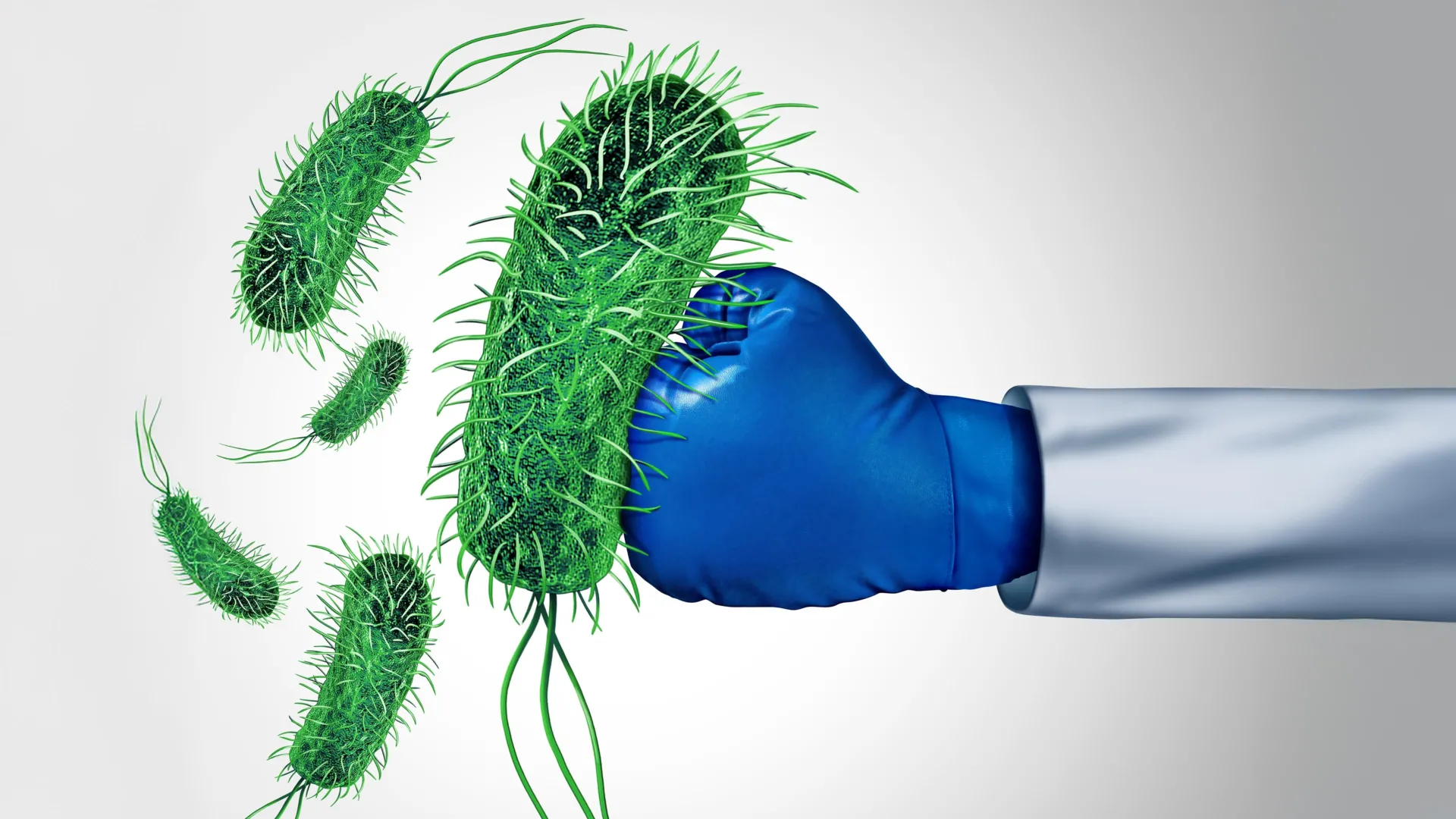
Antibiotic resistance represents one of the most profound and escalating threats to contemporary healthcare, challenging the very foundations of modern medicine. As pathogenic bacteria relentlessly adapt and evolve, once-reliable antimicrobial drugs are steadily losing their efficacy. This alarming trend transforms common infections into formidable adversaries, significantly elevates the risks associated with routine surgical procedures, compromises the effectiveness of vital cancer therapies, and jeopardizes numerous other critical medical interventions. The World Health Organization (WHO) has declared antimicrobial resistance (AMR) a global health crisis, estimating that by 2050, it could be responsible for 10 million deaths annually, surpassing current cancer mortality rates. The economic implications are equally staggering, with projections suggesting a potential global economic cost of trillions of dollars by the same deadline if effective countermeasures are not implemented.
In response to this urgent global health imperative, researchers across the planet are engaged in an intensive, multifaceted quest to outmaneuver these rapidly evolving microbial adversaries. A particularly promising avenue of research eschews the arduous and often slow process of inventing entirely new antibiotic compounds. Instead, it focuses on innovative approaches to rejuvenate and restore the effectiveness of existing, albeit compromised, antimicrobial agents. This innovative strategy underpins the development of antibiotic adjuvants—companion molecules designed not to directly eradicate bacteria, but rather to re-sensitize them to antibiotics that have become ineffective.
Accelerating Drug Discovery with Novel Molecular Architectures
At the forefront of this innovative chemical research are Professor John Moses and his dedicated team at Cold Spring Harbor Laboratory (CSHL). For years, their work has been dedicated to pioneering and refining chemical reactions that significantly expedite and enhance the efficiency of the drug discovery pipeline. Their efforts are not solely focused on the creation of new therapeutic agents but on building the foundational tools that empower broader scientific advancement.
A cornerstone of their methodology is a technique they developed, known as diversity-oriented clicking (DOC). This powerful synthetic strategy allows for the rapid and systematic construction of diverse molecular libraries. Using DOC, Professor Moses’s laboratory has successfully assembled an extensive collection comprising over 150 distinct chemical compounds. This meticulously curated library has already proven instrumental in advancing research across critical domains, including the ongoing battle against antibiotic resistance and the pursuit of novel cancer treatments. The systematic nature of DOC ensures a high degree of structural diversity within the library, increasing the probability of discovering molecules with desirable biological activities.
A Collaborative Breakthrough: Restoring Vancomycin’s Potency
The impact of this molecular library has been further amplified through a significant collaboration with Scripps Research, a globally recognized institution dedicated to biomedical science. This partnership has yielded a breakthrough in the fight against antibiotic-resistant pathogens, specifically by restoring the efficacy of vancomycin. Vancomycin, a potent glycopeptide antibiotic, has long been a frontline defense against severe bacterial infections, including those caused by formidable "superbugs" like Methicillin-resistant Staphylococcus aureus (MRSA) and Clostridium difficile (C. diff). However, the relentless evolution of resistance mechanisms by these bacteria has rendered vancomycin increasingly less effective, creating a critical gap in treatment options.
MRSA and C. diff, when resistant to standard treatments, can become exceptionally difficult to eradicate. These resilient strains pose a significant threat in healthcare settings, such as hospitals and nursing homes, where vulnerable patient populations are concentrated, and can also spread within communities. The emergence of vancomycin-resistant strains of Enterococcus faecium (VRE), a bacterium often implicated in hospital-acquired infections, further underscores the urgency of finding ways to overcome this resistance.
Targeting Bacterial Enzymes: The Pghi-4 Intervention
The recent study, a testament to the power of inter-institutional collaboration, saw scientists from Professor Moses’s laboratory at CSHL join forces with Professor Howard Hang’s team at Scripps Research. Their collective objective was to devise a strategy that could reawaken vancomycin’s dormant power against bacteria that had developed resistance.
The research team ingeniously focused their attention on a specific bacterial enzyme crucial for bacterial survival and virulence: secreted antigen A (SagA). SagA plays a vital role in the intricate metabolic pathways of certain bacteria. By strategically blocking the function of this essential enzyme, the researchers aimed to disrupt critical bacterial processes, thereby making the bacteria vulnerable to antibiotics that they could previously withstand. The key to this blockade came in the form of a small molecule inhibitor, identified as pghi-4. This compound, a product of the innovative chemical reactions developed in Professor Moses’s laboratory, was first discovered in 2020. Its potential as an enzyme inhibitor had been recognized, but its application in the context of restoring antibiotic efficacy was a novel pursuit.
The experimental validation of their hypothesis proved highly encouraging. When drug-resistant strains of E. faecium were subjected to a combined treatment regimen—consisting of both vancomycin and pghi-4—the results were striking. The presence of pghi-4 effectively rendered the bacteria susceptible to vancomycin once more, with the antibiotic regaining its potent bactericidal activity. This dual-pronged attack, where the adjuvant molecule neutralizes a key bacterial defense mechanism, allows the primary antibiotic to exert its intended lethal effect.
Fundamental Chemistry as the Bedrock of Medical Advancement
Reflecting on the significance of this discovery, Professor Moses emphasized that the research did not originate from a direct, preconceived quest for a new antibiotic or a direct solution to vancomycin resistance. Instead, he highlighted the profound impact of fundamental scientific inquiry. "This discovery came from fundamental chemical research," Professor Moses stated. "Reaction development led to the discovery of the first inhibitor of an important enzyme involved in antibiotic resistance. This is a process we’re constantly refining to both keep our library of molecules up to date and add more for collaborators to take advantage of in their research."
This perspective underscores a critical paradigm in scientific progress: that breakthroughs in applied medicine often stem from deep, foundational exploration in basic sciences. The development of robust and versatile chemical reactions, such as those employed in the DOC technique, creates an enabling platform. This platform not only facilitates the creation of diverse molecular libraries but also provides researchers with the tools to investigate a wide range of biological targets and challenges. The continuous refinement of these chemical reactions ensures that the library remains a dynamic and valuable resource, capable of supporting an ever-expanding array of collaborative research endeavors.
A Broadening Horizon: A Strategic Offensive Against Superbugs
The implications of this research extend far beyond the immediate restoration of vancomycin’s effectiveness against E. faecium. By making their meticulously curated molecular library accessible to the broader scientific community, Professor Moses and his team aspire to catalyze similar innovative approaches to combat a spectrum of drug-resistant infections. The potential applications are vast, envisioning future treatments for notoriously difficult-to-treat pathogens, including resistant forms of tuberculosis, which continues to be a global health scourge.
The philosophy driving this work, as articulated by Professor Moses, is centered on accelerating drug discovery through fundamental chemical innovation. "This work reflects a philosophy of chemistry that’s designed to accelerate drug discovery in its purest form," he explained. "By using reliable, robust, and intelligent chemical reactions, we can build new molecules more efficiently. That’s exactly the approach we used here." This ethos champions the development of chemical methodologies that are not only powerful but also reproducible and conceptually sound, ensuring that the discoveries made are transferable and impactful across various research contexts.
As the global threat of antibiotic resistance intensifies, these findings offer a beacon of hope, demonstrating that significant medical advancements can emerge from a re-evaluation and repurposing of existing therapeutic strategies. The future of combating "superbugs" may not solely rely on the arduous journey of discovering entirely novel antibiotics. Instead, a more immediate and potentially potent path forward may involve the design and application of carefully engineered molecules—like pghi-4—that can effectively unlock the latent power of our established arsenal, making older drugs effective once again.
Funding and Future Directions
The groundbreaking research leading to the restoration of vancomycin’s efficacy was made possible through substantial support from a consortium of esteemed funding bodies. These include the National Institutes of Health, the National Cancer Institute, the Australian Research Council, the New York State Biodefense Commercialization Fund, the F.M. Kirby Foundation, and the Starr Foundation. This broad base of support underscores the recognized importance and potential impact of the work in addressing critical public health challenges.
Looking ahead, the CSHL and Scripps Research teams plan to further explore the vast potential of their molecular library. This includes identifying additional enzyme targets and developing novel adjuvants for other classes of antibiotics facing resistance. The success with vancomycin provides a robust proof-of-concept, validating the power of their chemical discovery platform. The ongoing availability of their library to collaborators worldwide is expected to spur further innovation, accelerating the pace at which new strategies to combat antimicrobial resistance can be brought from the laboratory bench to the patient’s bedside. The long-term vision is to build a comprehensive suite of tools and molecules that can be deployed flexibly against a diverse range of resistant bacterial threats, thereby reinforcing global health security.