


Ukrainian drone attacks have recently targeted and successfully hit several key retail warehouses belonging to Wildberries, Russia’s largest online retailer, marking a significant escalation in Kyiv’s strategy to disrupt Moscow’s economic and logistical capabilities. These strikes, carried out over a matter of days, have dealt a substantial blow not only to the operational infrastructure of a major e-commerce player but, more critically, to a vast network of small and medium-sized enterprises (SMEs) that rely heavily on the platform for their livelihoods. The economic ripple effects are already being felt across Russia, bringing the realities of the ongoing conflict closer to home for hundreds of thousands of ordinary citizens and entrepreneurs.
Shifting Strategic Focus: From Energy to Logistics
For months, Ukrainian drone operations had predominantly focused on Russia’s vital energy infrastructure, targeting oil depots, refineries, and fuel supply routes in an effort to cripple Moscow’s war machine and revenue streams. However, Kyiv has now explicitly stated a strategic pivot towards logistics hubs, asserting that these facilities are instrumental in the procurement and distribution of military equipment and sanctioned components essential for drone production and navigation systems used by the Russian army. This shift represents an evolution in Ukraine’s asymmetric warfare tactics, aiming to not only degrade Russia’s military capabilities directly but also to exert economic pressure and sow domestic discontent by disrupting civilian supply chains and impacting the economic stability of ordinary Russians. The increased range and precision of Ukrainian drones have enabled these deeper strikes into Russian territory, challenging Moscow’s air defense capabilities and raising questions about the security of its vital economic infrastructure.
A Weekend of Devastation: Key Targets and Human Cost
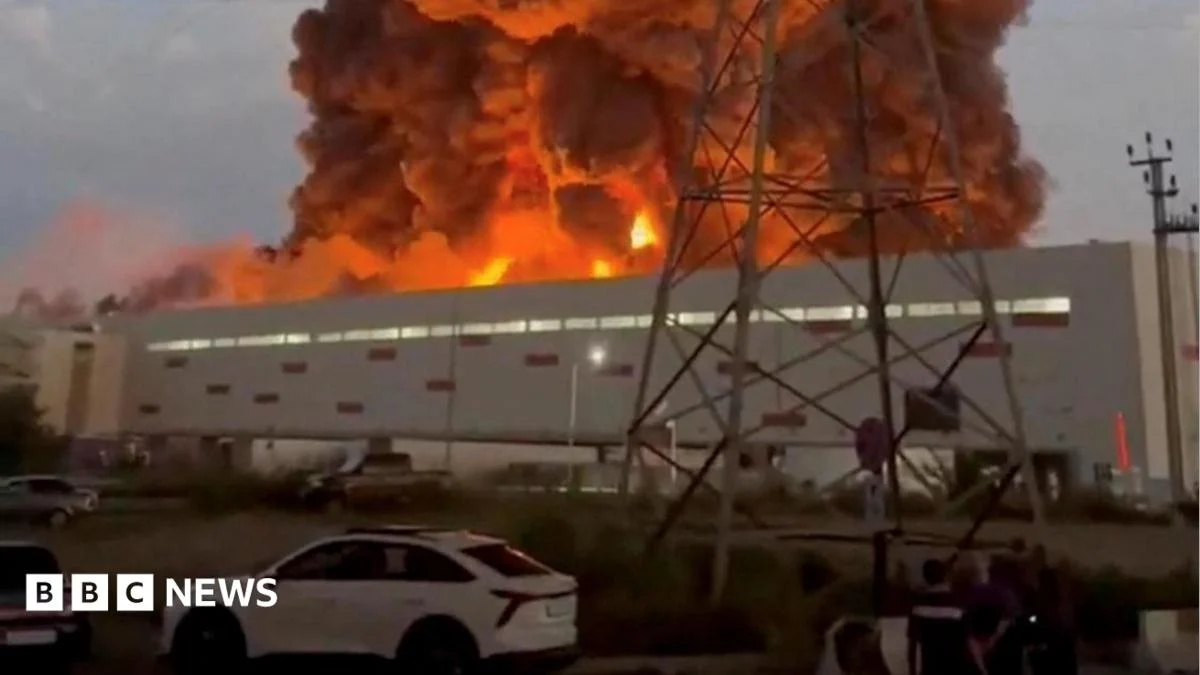
The most recent and impactful series of attacks occurred over a single weekend, with two major Wildberries warehouses bearing the brunt of the assault. The first facility hit was located in Elektrostal, a city east of Moscow, a region considered crucial for its proximity to the capital and its extensive logistical network. The second, and arguably more devastating, strike occurred in Kotovsk, situated in the Tambov region, approximately 400 kilometers (250 miles) from the Ukrainian border. These locations highlight Ukraine’s capacity to strike deep within Russian territory, well beyond immediate frontline zones.
The human cost of these attacks was tragic. In Kotovsk, seven workers on a night shift were killed, caught unaware by the suddenness of the strike. An additional worker sustained fatal wounds at the Elektrostal site. Dozens more individuals were reported injured across both locations, many of whom were ordinary citizens employed in the bustling logistics sector. Beyond the immediate loss of life and injury, the material destruction was immense. Initial estimates indicate that goods worth an estimated £750 million ($1 billion) were obliterated in the ensuing fires and structural collapses, representing a staggering economic loss that will reverberate through the Russian retail sector for months to come. Kyiv’s official statement following these strikes confirmed its targeting of "major logistics facilities," reiterating its claim that these sites were being used to "supply sanctioned components for drone production and navigation equipment," thereby justifying the attacks as legitimate military objectives.
The Vulnerability of the Marketplace Model
The choice of Wildberries as a target exposes a significant vulnerability within Russia’s digital economy. Unlike Western retail behemoths such as Amazon, which combine direct sales of their own inventory with a third-party marketplace, Wildberries and its primary competitor, Ozon, operate almost entirely as marketplaces. Their core business model revolves around connecting independent sellers with buyers across Russia, providing essential services such as warehousing, delivery logistics, and payment processing. This fundamental difference means that the vast majority of goods stored in these warehouses belong not to Wildberries itself, but to hundreds of thousands of independent small and medium-sized businesses and individual entrepreneurs who utilize the platform.
Consequently, the losses incurred in these drone attacks are predominantly borne by these independent sellers, many of whom represent the backbone of Russia’s burgeoning e-commerce sector. For these businesses, the destroyed inventory often constitutes a significant, if not sole, portion of their operating capital and annual revenue. The impact is immediate and often catastrophic, as these entrepreneurs are suddenly left without stock, income, and often, without recourse.
Personal Accounts of Devastation and Despair
The human element of this economic disruption is starkly illustrated by the personal testimonies emerging from affected sellers. One woman, a mother of a disabled child who had meticulously built her stationery business from the ground up, shared her anguish in an expletive-laden social media post that quickly went viral. "I’ve lost 1m roubles (£9,500; $12,700)… We’re already getting screwed over from every direction as it is," she lamented, encapsulating the frustration and despair felt by many. Her story resonated widely, highlighting how the war’s economic consequences are increasingly permeating the lives of ordinary Russians.
Another seller, who specializes in stationery items, delivered her entire autumn term stock to the Elektrostal warehouse just last Friday. The very next day, she learned that her entire inventory had been engulfed in flames. For her, this time of year is critical, as parents and students stock up for the new academic year. Despite having some remaining inventory, the loss of her primary seasonal stock represents a severe setback, threatening the viability of her business. Similarly, a Wildberries trader specializing in teenage clothing reported a loss of approximately 1.4 million roubles (£13,300) worth of stock. She has been forced to halt new supplies for several weeks, a decision that will undoubtedly impact her cash flow and market presence. "The outlook for working with Wildberries is very murky," she expressed to the BBC, articulating a widespread sentiment of uncertainty among sellers. "Right now I have enough of a safety cushion to survive the current losses, but if there are more strikes, I probably won’t manage."
The Controversial "Force Majeure" Clause
Adding insult to injury for many affected sellers is the recent amendment to their contracts with Wildberries. Less than two weeks prior to these devastating attacks, a clause was reportedly added to the standard seller agreements, explicitly including "drone attacks" in the list of "force majeure events" for which Wildberries is not liable. This pre-emptive contractual change has sparked outrage and widespread concern among sellers, effectively shielding the online retail giant from responsibility for losses incurred due to such incidents.
While Wildberries owner Tatiana Kim has publicly promised "not to abandon" the sellers, and some compensation has reportedly been paid to a select number of small businesses, the overall response has been viewed as insufficient by many. Kim has also offered temporary discounts and waived shipment fees as gestures of support. However, these measures have done little to assuage the deep-seated fears of further attacks or provide adequate financial relief for the substantial losses incurred. The legal implications of the force majeure clause mean that most sellers are unlikely to receive full compensation, leaving them in a precarious financial position and casting a long shadow over their future engagement with the platform.
A Struggling Sector: Putin’s Priorities Versus Economic Realities
The plight of Russia’s small and medium-sized businesses has long been a declared priority for President Vladimir Putin, even amidst wartime. He has frequently framed the sector as a crucial backbone of resilience against Western sanctions, vital for domestic economic stability and job creation. However, despite these declared intentions, the Russian state has proven increasingly unable to shield its SME sector from the pervasive impacts of the ongoing conflict and its associated economic headwinds.
The Wildberries attacks are merely the latest in a series of shocks that have buffeted Russian businesses since the beginning of the year. In January, the value-added tax (VAT) was increased from 20% to 22%, a move primarily aimed at generating additional funding for Russia’s burgeoning defence budget. Concurrently, several tax breaks previously enjoyed by some businesses were scrapped, further increasing their operational costs. This tightening fiscal environment has demonstrably impacted the health of the SME sector. According to data from the business intelligence platform Kontur.Fokus, some 209,000 small and medium-sized companies ceased operations in the first quarter of 2026 alone. This figure represents a concerning 9% increase compared to the first three months of 2025, signaling a deteriorating business environment.
Beyond direct taxation, businesses have also grappled with widespread internet shutdowns and a significant crackdown on popular messaging applications, which are often vital tools for communication, marketing, and sales in the digital age. These disruptions led to substantial financial losses, with some estimates suggesting Moscow businesses alone lost tens of millions of dollars in just one week in March. The cumulative effect of these challenges was further exacerbated by a domestic fuel crisis, itself triggered by earlier Ukrainian strikes on Russia’s oil depots, refineries, and supply routes. This cascade of adverse events has created an exceptionally challenging landscape for Russian entrepreneurs.
Broader Economic Implications and Expert Outlook
The drone attacks on Wildberries warehouses are, as Professor Ruben Eniklopov of Pompeu Fabra University in Barcelona aptly put it to the BBC, "another nail in the coffin" for Russian small businesses. While Russian SMEs have demonstrated remarkable resilience in the past, navigating various economic crises and state interventions, the current confluence of factors presents an unprecedented challenge.
Inflation remains persistently high across Russia, eroding purchasing power and increasing operational costs for businesses. The national budget deficit continues to widen, primarily driven by soaring military expenditures and diminishing revenues from key export sectors. Indeed, oil and gas revenues, traditionally the lifeblood of the Russian economy, were reported to be 23% lower in the first six months of the current year compared to the same period last year. This decline is a critical indicator of the strain on state finances, despite global energy price fluctuations.
While Russia possesses vast financial reserves, accumulated during more prosperous peacetime years, these reserves are increasingly being drawn upon and depleted to sustain the war effort in Ukraine. This continuous drain on national wealth is effectively "starving the civilian economy of growth," diverting critical resources that could otherwise be invested in infrastructure, social programs, or stimulating domestic business. The attacks on Wildberries not only inflict direct financial losses but also contribute to broader supply chain disruptions, potentially leading to shortages of consumer goods and further price increases, which would impact the general population. Furthermore, such events undermine domestic and any remaining international investor confidence in the stability and security of Russia’s logistics and retail sectors.
The strategic shift by Ukraine to target logistics hubs underscores a deepening economic dimension to the conflict. By disrupting key civilian infrastructure that also allegedly serves military purposes, Kyiv aims to intensify the domestic cost of the war for Russia, hoping to foster greater public discontent and hinder Moscow’s ability to sustain its military operations. For the hundreds of thousands of small businesses and individual entrepreneurs across Russia, these strikes represent a stark reminder that the war, once a distant conflict for many, is now directly impacting their livelihoods, their futures, and their very sense of economic security. The long-term implications for Russia’s economy, particularly its vital SME sector, remain uncertain as the conflict continues to evolve and escalate.