


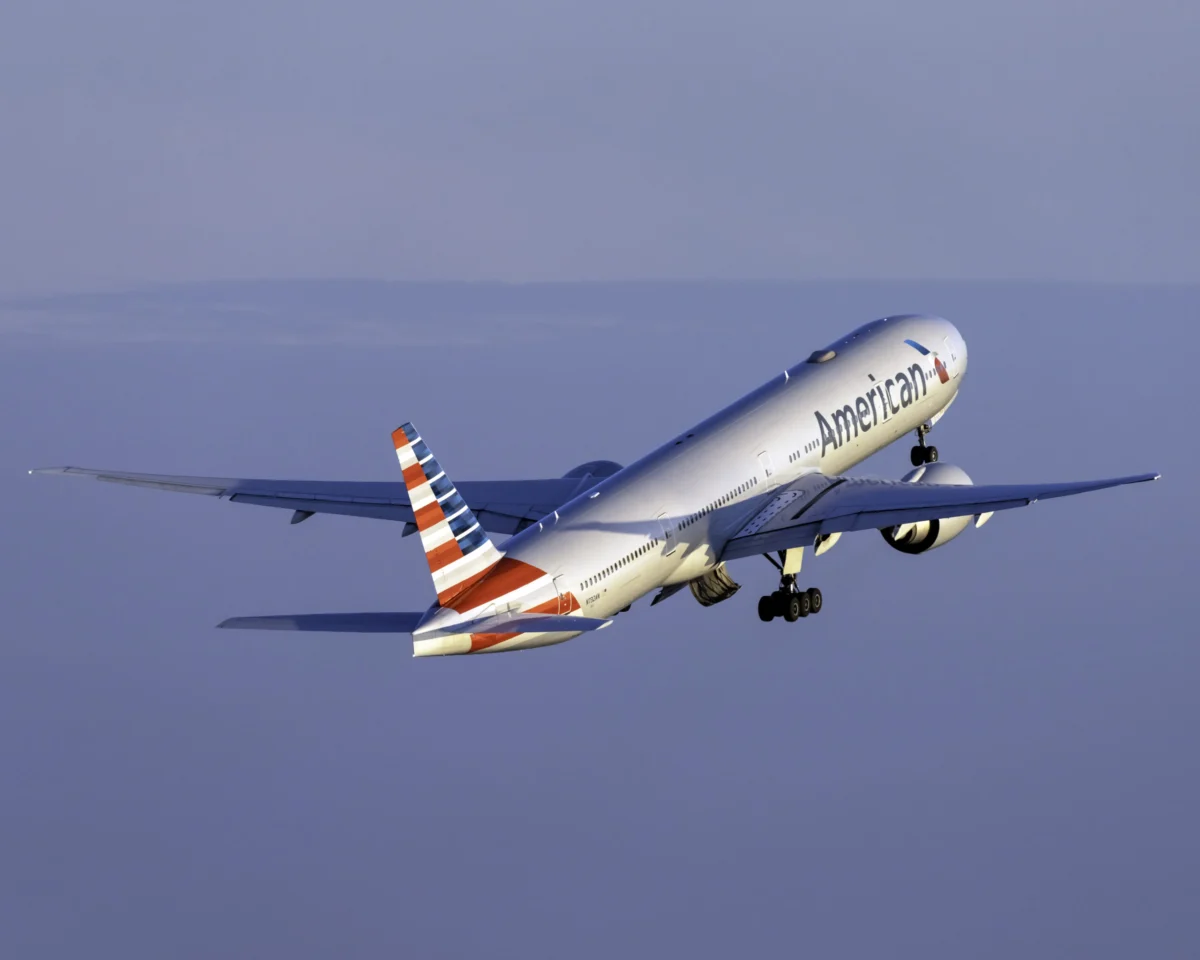
American Airlines Group Inc. has reported its financial results for the second quarter, marking a period of significant achievement and strategic recalibration for the world’s largest airline by fleet size. The Fort Worth-based carrier announced a record-breaking quarterly revenue of $16.7 billion, representing a 16.3% increase compared to the same period in the previous fiscal year. This surge in top-line growth allowed the company to post a net profit of $71 million, a figure that reflects both the robust demand for air travel and the intense inflationary pressures currently facing the aviation industry. Central to the quarter’s narrative was the airline’s demonstrated pricing power, as the carrier successfully utilized higher passenger fares to offset approximately half of its total fuel expenses during the three-month period.
The second quarter serves as a critical barometer for the airline industry, capturing the commencement of the busy summer travel season. For American Airlines, the results underscore a successful navigation of a complex operational landscape. While the $71 million profit remains modest relative to the massive revenue intake, it signifies a return to profitability in a climate where fuel costs and labor expenses have reached historic highs. Chief Executive Officer Robert Isom highlighted that the revenue growth was not confined to a single segment but was distributed across premium cabins, the main cabin, and both domestic and international routes, suggesting a broad-based recovery in consumer appetite for travel.
The Mechanics of Pricing Power and Revenue Growth
The concept of pricing power has become the focal point of airline earnings discussions in the post-pandemic era. For American Airlines, the ability to raise fares without stifling demand was the primary engine behind its $16.7 billion revenue record. This 16.3% year-over-year increase is particularly notable as it comes at a time when consumers are grappling with broader economic inflation. The airline’s capacity to pass on costs—specifically the volatile price of jet fuel—is a testament to the current "supply-constrained" environment of the industry. With fewer aircraft available globally due to manufacturing delays and a shortage of qualified pilots, the available seats on the market have become more valuable.
According to the earnings report, the record revenue was driven by a combination of high load factors and improved yields. Total Revenue per Available Seat Mile (TRASM), a key industry metric, saw a significant uptick as the airline optimized its scheduling to favor high-demand corridors. The carrier’s performance in the "premium" segment—which includes Business Class and Premium Economy—was a standout contributor. As corporate travel continues its gradual return and "bleisure" travel (a hybrid of business and leisure) becomes a permanent fixture of the market, American has seen a willingness among passengers to pay a premium for enhanced comfort and flexibility.
Mitigating the Impact of Volatile Fuel Expenses
Fuel remains the most significant and volatile variable expense for any major carrier. During the second quarter, the global energy market experienced continued fluctuations, driving the cost of jet fuel significantly higher than historical averages. American Airlines reported that its strategic decision to adjust fare structures allowed it to recover roughly 50% of the incremental costs associated with the fuel price surge.
Unlike some of its competitors, American Airlines does not typically engage in large-scale fuel hedging—a practice of pre-purchasing fuel at set prices to protect against spikes. Instead, the company relies on operational efficiency and market-based pricing to manage energy costs. While this exposes the carrier to more immediate market volatility, the record revenue figures suggest that, in the current high-demand environment, the airline can effectively manage these costs through its revenue management systems. The ability to offset half of these costs is viewed by analysts as a victory in a quarter where fuel prices could have easily eroded all potential profits.
A Chronology of Recovery: From Turbulence to Stability
The journey to this record-breaking quarter began in the wake of the global pandemic, which saw the aviation industry face its greatest existential threat. To understand the significance of the $16.7 billion revenue, one must look at the timeline of American’s recovery:
- The Rebuilding Phase (2021-2022): Following the massive losses of 2020, American focused on simplifying its fleet, retiring older aircraft types such as the Boeing 757 and 767, and the Embraer 190. This set the stage for a more fuel-efficient operation.
- The Demand Surge (Late 2022): As travel restrictions lifted globally, American saw a rapid return of domestic leisure travelers. However, operational bottlenecks and staffing shortages limited the airline’s ability to fully capitalize on this demand.
- Operational Refinement (Early 2023): Entering the current year, the airline focused on "reliability first," ensuring that its schedule was realistic and that it had sufficient buffer to handle summer weather disruptions.
- The Q2 Milestone (Present): The realization of record revenue in the second quarter of this year represents the culmination of these efforts, proving that the airline can operate at scale while maintaining the pricing discipline required to stay in the black.
Segment Performance: Domestic Strength and International Resurgence
A granular look at American’s performance reveals that the domestic market remains the backbone of the company’s operations. However, the second quarter saw a notable resurgence in international travel, particularly across the Atlantic. As European destinations reopened fully and without the friction of testing requirements, American’s long-haul network saw high demand and record yields.
CEO Robert Isom noted that the "Main Cabin" also performed exceptionally well. While "Premium" gets much of the attention for its high margins, the sheer volume of travelers in the main cabin, combined with higher base fares, provided the necessary liquidity to sustain the airline’s massive infrastructure. Furthermore, the carrier’s loyalty program, AAdvantage, continues to be a major revenue driver. The sale of miles to credit card partners and the increased spend on co-branded cards provide a steady stream of high-margin income that is less susceptible to the cyclical nature of ticket sales.
Official Responses and Strategic Vision
In a statement following the earnings release, Robert Isom expressed confidence in the airline’s trajectory. "The American Airlines team is focused on three things: running a reliable operation, returning to profitability, and strengthening the balance sheet," Isom stated. "We are encouraged by the continued demand for our product. Our ability to generate record revenue while navigating a high-cost environment is a testament to the hard work of our team and the resilience of our business model."
Chief Financial Officer Devon May also addressed the company’s long-term financial health, noting that the airline is committed to reducing its total debt. American Airlines has historically carried a higher debt load than its primary competitors, Delta Air Lines and United Airlines, largely due to an aggressive fleet modernization program undertaken over the last decade. The company reaffirmed its goal to reduce total debt by $15 billion by the end of 2025, using the cash flow generated from record quarters like this one to pay down high-interest obligations.
Broader Industry Implications and Analysis
The results from American Airlines carry implications that extend far beyond the company’s Fort Worth headquarters. They signal a "new normal" for the traveling public: the era of ultra-low-cost transcontinental or international travel may be receding. As airlines prioritize "pricing power" and "margin expansion" over pure market share, consumers can expect fares to remain elevated.
Industry analysts suggest that the "Big Three" U.S. carriers—American, Delta, and United—are entering a period of oligopolistic stability. With the high cost of labor (following new landmark contracts with pilots and flight attendants) and the high cost of fuel, there is little appetite for a "price war." Instead, the focus has shifted to the "premiumization" of the airline cabin. American’s success in selling more expensive seats suggests that there is a segment of the population with significant disposable income that is willing to prioritize the travel experience over the lowest possible price.
However, there are risks on the horizon. While American was able to offset 50% of its fuel costs through fares this quarter, any further spike in energy prices or a significant downturn in the global economy could test the limits of consumer price elasticity. If the "Main Cabin" traveler begins to pull back due to inflationary pressures in other parts of their lives—such as housing and groceries—American may find it more difficult to maintain its record revenue levels.
Looking Ahead: Guidance and Future Outlook
Looking forward to the third quarter and the remainder of the fiscal year, American Airlines remains cautiously optimistic. The carrier expects demand to remain steady through the autumn months, traditionally a period where business travel picks up the slack from the waning summer leisure crowd. The airline has provided guidance suggesting that it will continue to operate at near-peak capacity, assuming no major disruptions in the global supply chain for aircraft parts or further labor unrest.
The company’s focus will remain on debt reduction and operational reliability. By modernizing its fleet and streamlining its hubs—particularly its primary gateway in Dallas/Fort Worth (DFW)—American aims to lower its cost per available seat mile (CASM) excluding fuel, thereby widening the gap between revenue and expenses.
In conclusion, American Airlines’ second-quarter performance is a story of resilience and strategic pricing. By generating $16.7 billion in revenue and successfully passing through a significant portion of its increased costs to the market, the carrier has demonstrated that it has the tools necessary to navigate an era of high inflation. While the $71 million profit is a thin margin on such vast revenue, it represents a stable foundation upon which the airline intends to build a more profitable and less debt-burdened future. For the industry at large, American’s results confirm that the demand for air travel remains a top priority for global consumers, even in a high-priced environment.