


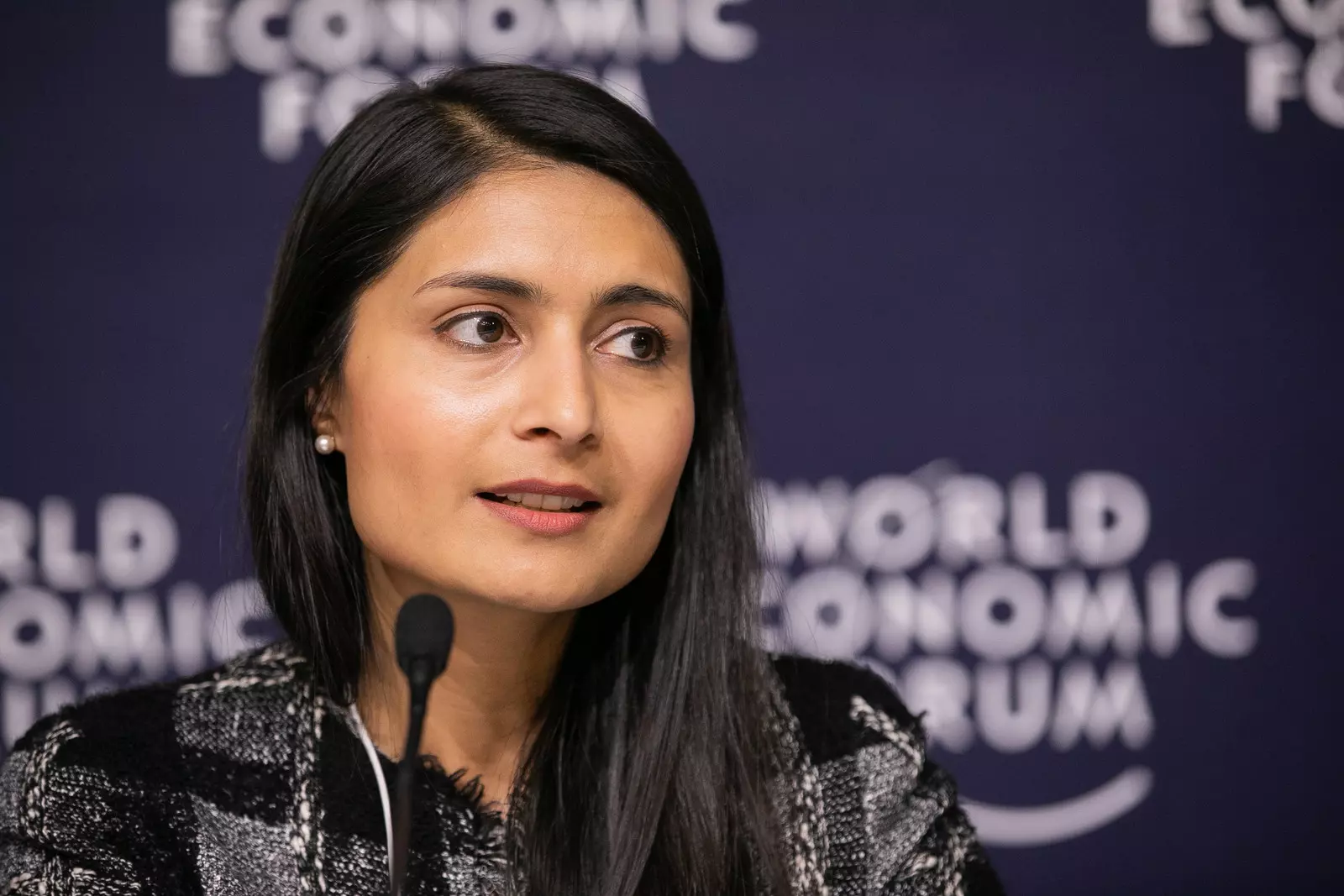
The International Air Transport Association (IATA) has announced a landmark shift in its executive leadership, naming Saadia Zahidi as its next Director General. Zahidi, a prominent executive from the World Economic Forum (WEF), will succeed Willie Walsh, marking the first time a woman has been appointed to lead the global airline trade body since its inception in 1945. The transition comes at a pivotal moment for the aviation industry as it navigates a complex landscape of decarbonization, digital transformation, and shifting geopolitical alliances.
Zahidi, currently a Managing Director and member of the Managing Board at the WEF, is scheduled to assume her new role on November 1. Her predecessor, Willie Walsh, who has led IATA through the critical post-pandemic recovery phase, will transition to a new role as CEO of IndiGo, India’s largest airline, starting August 3. This dual announcement signals a strategic realignment for both the trade organization and one of the world’s fastest-growing low-cost carriers.
A New Era for IATA Leadership
The appointment of Saadia Zahidi represents a departure from the traditional profile of IATA leadership. Historically, the Director General role has been held by former airline CEOs—individuals with deep operational experience in the cockpit of major carriers. Willie Walsh, for example, previously served as the chief executive of International Airlines Group (IAG), Aer Lingus, and British Airways. In contrast, Zahidi brings a background rooted in global policy, economics, and stakeholder management.
During her more than two-decade tenure at the World Economic Forum, Zahidi founded and headed the Center for the New Economy and Society. She has been a leading voice on the future of work, education, and gender parity, authoring several high-profile reports that have shaped global policy discussions. Her expertise in navigating multi-stakeholder environments is seen as a strategic asset for IATA as the organization faces increasing pressure from governments and international bodies regarding environmental standards and social governance.
Industry analysts suggest that the IATA Board of Governors selected Zahidi to bridge the gap between the technical requirements of the aviation industry and the broader socio-economic expectations of the global community. As the industry strives toward its "Fly Net Zero" commitment by 2050, Zahidi’s experience at the WEF—a platform often used to launch major climate initiatives—is expected to facilitate more effective dialogue with regulators and environmental advocates.
The Legacy of Willie Walsh
Willie Walsh’s tenure at IATA, which began in April 2021, will be remembered for its pragmatism and assertive defense of the airline industry. Stepping into the role during the height of the COVID-19 pandemic’s impact on international travel, Walsh became a vocal critic of inconsistent government border policies and excessive airport fee increases.
Under Walsh’s leadership, IATA sharpened its public presence. He was known for his direct, often blunt communication style, which helped the organization maintain relevance during a period of existential crisis for many of its members. Walsh was instrumental in pushing for the industry’s commitment to net-zero carbon emissions, a goal adopted by IATA member airlines at the 77th Annual General Meeting in Boston in 2021.
Walsh’s move to IndiGo is equally significant. By joining the Indian carrier, Walsh moves to the heart of the world’s third-largest aviation market. IndiGo, which holds a domestic market share of over 60% in India, has been on an aggressive expansion path, placing record-breaking aircraft orders with Airbus. Walsh’s operational expertise is expected to guide the airline through its next phase of international expansion and fleet integration.
Chronology of the Transition
The leadership transition follows a carefully choreographed timeline designed to ensure stability within IATA and a smooth handover of responsibilities.
- August 3: Willie Walsh officially concludes his tenure at IATA and begins his role as CEO of IndiGo.
- August – October: An interim leadership structure, overseen by the IATA Chair of the Board of Governors (currently Pieter Elbers, CEO of IndiGo), will manage day-to-day operations.
- November 1: Saadia Zahidi formally assumes the role of Director General at IATA’s headquarters in Geneva, Switzerland.
- June 2025: Zahidi is expected to preside over her first IATA Annual General Meeting (AGM) and World Air Transport Summit as Director General.
Supporting Data: The State of the Global Aviation Industry
Zahidi inherits an organization representing approximately 330 airlines in over 120 countries, comprising 80% of total air traffic. The industry she will lead is currently in a state of robust financial recovery but faces significant headwinds.
According to IATA’s most recent financial outlook, the global airline industry is expected to see a net profit of $30.5 billion in 2024, an improvement over the $27.4 billion recorded in 2023. However, the net profit margin remains thin at approximately 3.1%. Total revenues are projected to reach an all-time high of $996 billion, driven by a record 4.96 billion travelers expected to take to the skies this year.
Despite these positive figures, the cost of carbon abatement is a looming financial challenge. The transition to Sustainable Aviation Fuel (SAF) is estimated to require trillions of dollars in investment over the coming decades. Currently, SAF production accounts for less than 0.5% of total global jet fuel demand, while the industry aims for it to contribute 65% of the mitigation needed to reach net zero by 2050.
Furthermore, Zahidi will need to address the gender imbalance within the industry. According to IATA’s "25by2025" initiative, which aims to increase the number of women in senior positions and under-represented areas, only about 3% of airline CEOs globally are women. Her appointment as Director General is a symbolic and functional step toward addressing this disparity at the highest levels of industry governance.
Official Responses and Industry Reactions
While official statements from individual member airlines are being finalized, the initial reaction from the aviation community has been one of cautious optimism and recognition of the historic nature of the appointment.
The IATA Board of Governors released a statement praising Zahidi’s "extraordinary track record in global economic policy and her proven ability to build consensus among diverse stakeholders." The Board noted that her leadership would be "essential as IATA evolves to meet the sustainability and digital demands of the 21st century."
Colleagues at the World Economic Forum expressed support for Zahidi’s move. "Saadia has been a pillar of the Forum for two decades," said a WEF spokesperson. "Her ability to synthesize complex global trends into actionable policy will serve the aviation industry well as it enters a period of profound transformation."
In India, the announcement of Willie Walsh joining IndiGo was met with high praise. Pieter Elbers, the current CEO of IndiGo (who will transition to a different role or work alongside Walsh depending on the internal restructuring), stated, "Willie’s arrival is a testament to IndiGo’s global ambitions. His experience at the helm of IATA and IAG brings an unparalleled level of strategic depth to our leadership team."
Broader Impact and Implications
The shift from Walsh to Zahidi signals a change in the "diplomatic" strategy of IATA. Where Walsh was a formidable defender of the airline industry’s commercial interests, Zahidi is expected to be a bridge-builder.
1. Focus on Sustainability and ESG
Zahidi’s background suggests that Environmental, Social, and Governance (ESG) criteria will move to the center of IATA’s agenda. Governments in Europe and North America are increasingly tying aviation growth to environmental performance. Zahidi’s experience with the WEF’s climate initiatives will likely be used to negotiate more favorable regulatory frameworks in exchange for concrete, transparent progress on decarbonization.
2. Navigating Geopolitical Tensions
The aviation industry is currently caught in the crosshairs of geopolitical conflicts, from airspace closures over Russia and Ukraine to tensions in the Middle East. Zahidi’s experience in global diplomacy will be vital in advocating for the "freedom to fly" and maintaining the integrity of international air corridors.
3. Digital and Economic Transformation
The "New Economy" focus of Zahidi’s previous work aligns with the airline industry’s need for digital modernization. From the implementation of One ID (biometric travel) to the transition toward more efficient, AI-driven air traffic management, Zahidi is well-positioned to lead the industry’s technological evolution.
4. Labor and the Future of the Workforce
Aviation is facing a chronic shortage of pilots, maintenance technicians, and ground staff. Zahidi’s specific expertise in the "Future of Jobs" and human capital development could provide IATA members with new strategies for talent attraction and retention in a competitive global labor market.
Conclusion
The appointment of Saadia Zahidi as Director General of IATA is more than a change in personnel; it is a change in the industry’s posture toward the world. By selecting a leader from the World Economic Forum, IATA is signaling its readiness to integrate more deeply into the global policy and sustainability ecosystem.
As Willie Walsh departs for the high-growth markets of India, he leaves behind a leaner, more vocal IATA. Zahidi’s challenge will be to take that foundation and build an industry that is not only profitable but also socially and environmentally sustainable for the next generation of travelers. Her tenure, beginning this November, will be closely watched by airline executives, government regulators, and environmental advocates alike as she navigates the flight path toward 2050.