
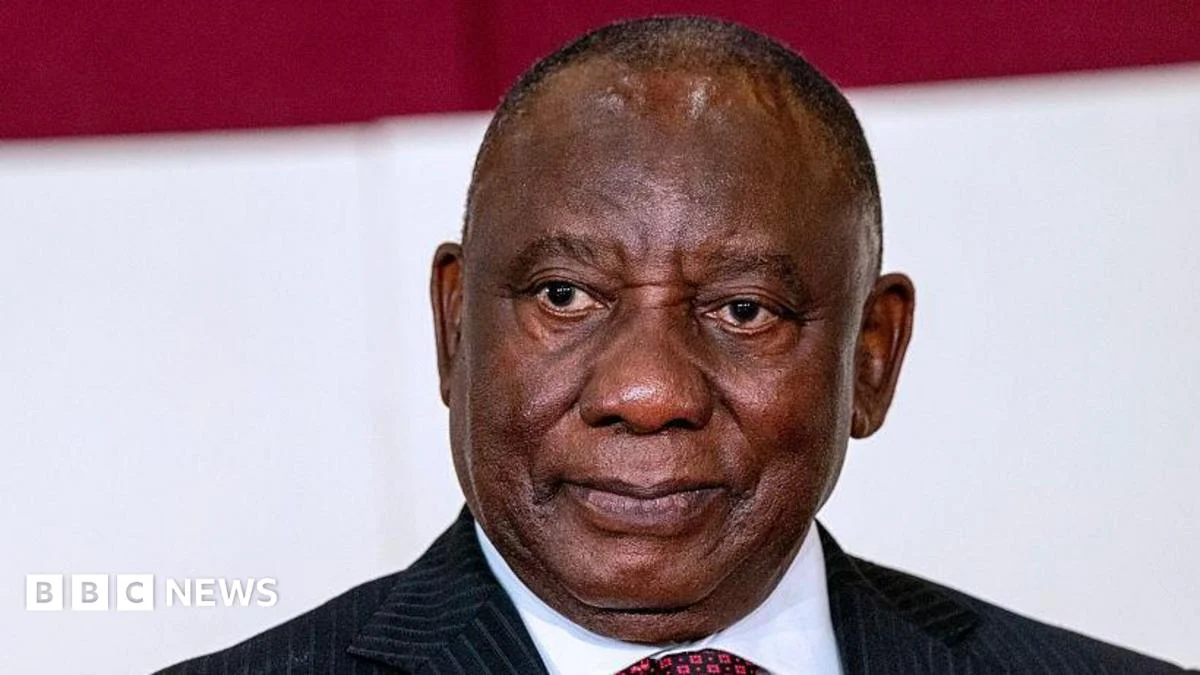
In a significant legal development that offers President Cyril Ramaphosa a temporary reprieve, the Western Cape High Court on Friday ruled in his favour, granting an interim interdict to halt a parliamentary inquiry into his potential impeachment. This decision effectively pauses the legislative process stemming from the high-profile "Farmgate" scandal, allowing the President time to pursue a separate legal challenge against the foundational report that initiated the impeachment proceedings. The ruling underscores the complex interplay between South Africa’s executive, legislative, and judicial branches, particularly in matters of presidential accountability.
The Genesis of the "Farmgate" Scandal
The controversy, widely known as "Farmgate," traces its origins back to an incident in February 2020 when a substantial sum of foreign currency, specifically US dollar bills, was stolen from President Ramaphosa’s private Phala Phala game farm in Limpopo province. The exact amount stolen was reported to be at least $580,000 (approximately £430,000 at the time), allegedly concealed within a sofa. For two years, the incident remained largely out of the public eye, only to explode into national headlines in June 2022.
The revelations came through an explosive affidavit filed by Arthur Fraser, a former director-general of the State Security Agency and a known ally of former President Jacob Zuma. Fraser laid criminal charges against President Ramaphosa, alleging that the President had concealed the theft from both the South African Police Service (SAPS) and the South African Revenue Service (SARS). Fraser’s dossier further accused Ramaphosa of kidnapping and bribing the burglars to ensure their silence and of potentially contravening the country’s strict exchange control regulations by holding such a large sum of foreign currency. The President has consistently denied any wrongdoing, stating that the cash represented proceeds from legitimate sales of buffaloes and other game from his farm.
A Winding Legal and Political Path: A Detailed Chronology
The journey of the "Farmgate" scandal through South Africa’s legal and political systems has been protracted and complex, marked by several critical junctures:
- February 2020: The robbery at President Ramaphosa’s Phala Phala farm occurs, involving the theft of foreign currency.
- June 2022: Arthur Fraser files criminal charges against President Ramaphosa, bringing the scandal into the public domain and igniting widespread political controversy. This immediately triggered calls for accountability and investigations.
- November 2022: Under immense public and political pressure, the National Assembly established an independent panel, led by retired Chief Justice Sandile Ngcobo, to assess whether there were sufficient grounds for President Ramaphosa’s impeachment. The panel was tasked with determining if the President had a case to answer regarding serious violations of the Constitution or the law.
- November 30, 2022: The independent panel releases its highly anticipated report. It concluded that President Ramaphosa "may have committed" serious violations of the Constitution and the Prevention of Corrupt Activities Act. Specifically, the panel found prima facie evidence that the President may have:
- Violated Section 96(2)(a) of the Constitution by engaging in paid work inconsistent with his office or exposing himself to a conflict of interest.
- Violated Section 34(1) of the Prevention of Corrupt Activities Act by failing to report the theft of large sums of foreign currency.
- Abused his power as President.
- Potentially contravened exchange control regulations.
- December 13, 2022: Following the panel’s report, Members of Parliament (MPs) voted against adopting the report and, consequently, against establishing an ad hoc impeachment inquiry committee. At the time, the African National Congress (ANC), which held a comfortable majority, largely rallied behind President Ramaphosa, effectively shelving the impeachment process. This decision was met with strong criticism from opposition parties and civil society organizations who argued it undermined accountability.
- May 2023: The Economic Freedom Fighters (EFF) and the African Transformation Movement (ATM) challenged Parliament’s decision in the Constitutional Court. In a landmark ruling, the Constitutional Court declared that Parliament’s decision to reject the independent panel’s report and halt the impeachment process was unlawful. The court found that Parliament had acted procedurally incorrectly by not properly considering the report. This judgment paved the way for the revival of the impeachment process.
- Mid-2024: Prompted by the Constitutional Court’s ruling, Parliament began the process of reviving the ad hoc impeachment inquiry. Simultaneously, President Ramaphosa launched his own legal challenge, seeking to review and set aside the independent panel’s findings in the Western Cape High Court. This challenge is based on his contention that the panel "misconceived its mandate, misjudged the information placed before it and misinterpreted the four charges advanced against me."
- September (Expected): The full hearing for President Ramaphosa’s review application against the independent panel’s findings is scheduled to take place.
- Friday, [Date of Ruling]: The Western Cape High Court delivers its judgment on President Ramaphosa’s urgent application for an interim interdict, temporarily halting the parliamentary impeachment committee’s proceedings.
The Independent Panel’s Findings and Ramaphosa’s Counter-Arguments
The Ngcobo panel’s findings were pivotal, asserting that there was sufficient evidence to warrant further investigation into President Ramaphosa’s conduct. The panel highlighted several areas of concern:
- Active Engagement in Private Business: The panel questioned whether the sale of buffaloes constituted "paid work" inconsistent with the President’s office, potentially violating Section 96(2)(a) of the Constitution which prohibits Cabinet members from undertaking any other paid work.
- Failure to Report a Crime: A central accusation was the President’s alleged failure to report the substantial theft to the relevant authorities, a potential contravention of Section 34 of the Prevention of Corrupt Activities Act (PRECCA).
- Source of Funds and Exchange Control: The presence of a large amount of foreign currency, particularly US dollars, raised questions about its origins and whether it complied with South Africa’s strict exchange control regulations, which govern the holding and transfer of foreign currency.
President Ramaphosa’s legal team has consistently argued that the panel overstepped its mandate, misinterpreted the facts, and reached conclusions based on insufficient evidence. They contend that the panel’s role was merely to assess if a case could be made, not to make definitive findings of guilt. The President’s review application aims to have these findings declared unlawful, which would, in turn, remove the very basis for the parliamentary impeachment inquiry.
The Constitutional Court’s Intervention and Parliamentary Revival
The Constitutional Court’s ruling in May 2023 was a watershed moment. It found that Parliament had failed to properly apply its own rules when dismissing the independent panel’s report in December 2022. This procedural flaw meant that Parliament had acted unlawfully, necessitating a revival of the impeachment process. The ruling underscored the judiciary’s role in ensuring that parliamentary processes, especially those concerning presidential accountability, are conducted lawfully and transparently. This judgment effectively forced Parliament to reconsider the panel’s report and initiate steps towards forming a new ad hoc committee to investigate the impeachment charges.
The Western Cape High Court’s Decision: Legal Reasoning and Immediate Fallout
On Friday, Western Cape High Court Judge Andre le Grange, delivering a majority judgment with two out of three judges concurring, granted President Ramaphosa’s application for an interim interdict. The ruling specifically stated that the parliamentary committee was halted from proceeding with its hearings "pending the determination by this court of the applicant’s review" – a direct reference to Ramaphosa’s separate case challenging the independent panel’s findings.
The President’s legal team argued that allowing the impeachment committee to continue its work while his review application against the panel’s findings was pending would cause him "irreparable reputational harm." They contended that proceeding with an impeachment inquiry based on a report that he believes is flawed and subject to judicial review would be prejudicial. The court’s decision essentially agreed with this assessment, recognizing the potential for prejudice and reputational damage if the parliamentary process were allowed to run its course before the validity of its foundational document (the panel’s report) was determined. This temporary halt buys President Ramaphosa crucial time, during which he hopes to clear his name through the judicial review process set for September. Should his review application succeed, it could potentially invalidate the grounds for impeachment, significantly altering the political landscape.
Political Landscape Shifts: The Government of National Unity
The political context surrounding this saga has undergone a dramatic transformation since the initial parliamentary vote in 2022. The 2024 national general elections saw a historic shift in South African politics, with the African National Congress (ANC) losing its outright parliamentary majority for the first time in 30 years. The ANC was compelled to form a Government of National Unity (GNU) with several opposition parties, most notably the Democratic Alliance (DA) and the Inkatha Freedom Party (IFP).
This new political dynamic introduces a layer of complexity to any potential impeachment process. Unlike in 2022, when the ANC’s majority could easily block such initiatives, the current coalition government requires consensus and delicate political maneuvering. While the DA, as a major partner in the GNU, has historically advocated for accountability, its position within a coalition might necessitate a more nuanced approach to avoid destabilizing the nascent government. The outcome of the parliamentary impeachment inquiry, if it proceeds, would no longer be a foregone conclusion, adding to the political uncertainty.
Reactions from Across the Political Spectrum
The Western Cape High Court’s ruling elicited a range of reactions from key political players, reflecting the deep divisions and varying stakes in the "Farmgate" scandal:
- President Cyril Ramaphosa: In a statement released shortly after the ruling, the President acknowledged and "respects" the court’s decision, reiterating his commitment to due legal process and his desire to clear his name.
- African National Congress (ANC): The ruling party welcomed the court’s decision, urging other political parties to "refrain from politically motivated distortions" as the legal process unfolds. This stance aligns with their consistent support for the President and their emphasis on allowing legal processes to reach their conclusion without undue political interference.
- Democratic Alliance (DA): The second-largest party in the governing coalition, the DA, stated that the ruling was "not unexpected." However, they emphasized that the decision "does not stop the committee from continuing with preparatory work." This suggests that while they acknowledge the legal temporary halt, they intend to ensure the parliamentary process remains ready to resume if and when the legal impediments are cleared, reflecting their commitment to accountability while navigating their role in the GNU.
- uMkhonto weSizwe (MK) Party: The opposition party led by former President Jacob Zuma, a vocal critic of Ramaphosa, accused the President of using the courts to obstruct a legitimate parliamentary process aimed at uncovering the truth about the Phala Phala incident. This reaction underscores the ongoing political factionalism and the deep-seated rivalry between the Zuma and Ramaphosa factions within South African politics.
- Other Opposition Parties and Civil Society: Many opposition parties and civil society groups expressed disappointment, viewing the interdict as a delay tactic that further postpones accountability for the President. They reiterated calls for transparency and a swift resolution to the allegations.
Broader Implications: Political, Legal, and Reputational
The Western Cape High Court’s ruling carries significant implications across several dimensions:
- Political Stability: The decision offers a period of relative calm for President Ramaphosa and the newly formed Government of National Unity. An active impeachment inquiry would undoubtedly be a major distraction and a source of instability for a coalition government still finding its footing. The delay allows the GNU to focus on critical national priorities without the immediate shadow of a presidential impeachment hanging over it.
- Legal Precedent: The ruling highlights the robust role of the judiciary in overseeing parliamentary processes, particularly when fundamental rights (such as the right to a fair hearing and protection against reputational harm) are invoked. It sets a precedent for judicial intervention in the early stages of impeachment proceedings, particularly when the underlying reports are themselves subject to legal challenge.
- Accountability vs. Due Process: The case exemplifies the tension between the imperative for presidential accountability and the President’s right to due process. Ramaphosa’s legal team successfully argued that proceeding with impeachment based on a report under judicial review would infringe on his rights, demonstrating that legal technicalities can significantly impact the pace and trajectory of political accountability.
- Reputational Impact: While the ruling provides a temporary legal reprieve, the "Farmgate" scandal continues to cast a long shadow over President Ramaphosa’s integrity and credibility. The ongoing legal battles mean that the cloud of suspicion will persist, potentially affecting public trust and investor confidence until a definitive resolution is reached.
- Parliamentary Authority: The interdict temporarily curtails Parliament’s ability to exercise its constitutional oversight function regarding presidential impeachment. While legally sound, it raises questions about the balance of power and the efficiency of accountability mechanisms when judicial processes intersect with legislative ones.
What Lies Ahead: The September Hearing and Beyond
The immediate focus now shifts to September, when President Ramaphosa’s full review application against the independent panel’s findings will be heard by the Western Cape High Court. The outcome of that case will be pivotal.
- If Ramaphosa succeeds: Should the court find in his favour and set aside the independent panel’s report, it would significantly weaken the foundation for any impeachment proceedings. Parliament would then need to re-evaluate its position, potentially leading to the collapse of the impeachment inquiry.
- If Ramaphosa fails: If the court upholds the independent panel’s findings, the temporary interdict would be lifted, and the parliamentary impeachment committee would be free to resume its work. At that point, the political landscape within the GNU would become critical, as the diverse coalition partners would need to decide how to proceed with the impeachment inquiry.
The "Farmgate" saga is far from over. It remains a defining challenge for President Ramaphosa’s presidency and a critical test for South Africa’s constitutional democracy, underscoring the complexities of accountability at the highest levels of government.