



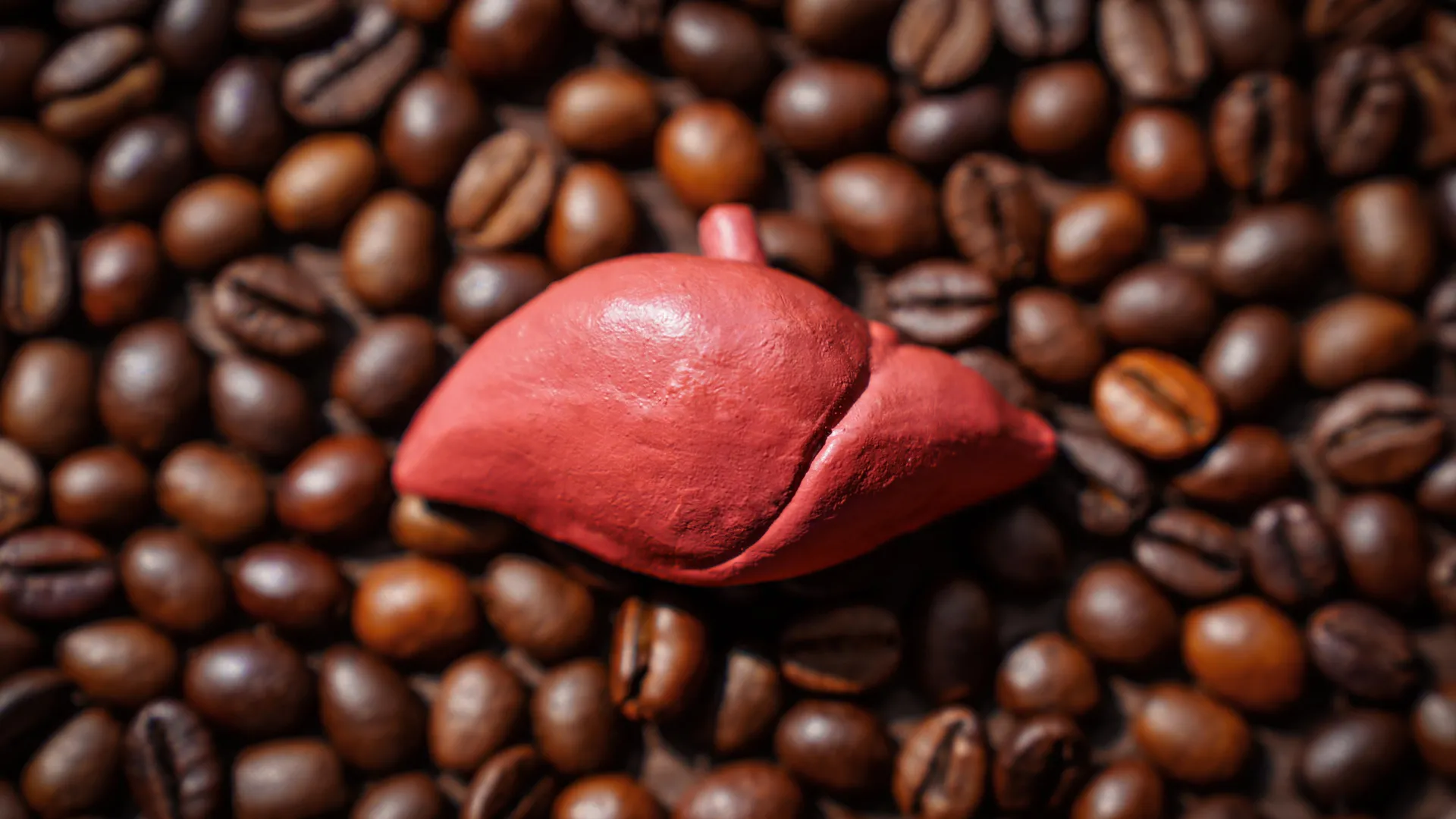
A comprehensive investigation, among the largest to date exploring the intricate relationship between coffee consumption and liver health, has revealed compelling evidence that individuals who regularly drink coffee exhibit a demonstrably lower risk of developing cirrhosis, liver cancer, and succumbing to liver-related diseases. The groundbreaking study, conducted by researchers at Cedars-Sinai Health Sciences University, not only reinforces previous associations but also delves into the underlying biological mechanisms that may explain coffee’s protective effects on the liver. Published in the esteemed journal Clinical Gastroenterology and Hepatology, the findings offer a nuanced understanding of how a daily cup of coffee could contribute to long-term liver well-being.
Unveiling the Biological Underpinnings of Coffee’s Liver Benefits
For years, anecdotal evidence and smaller-scale studies have hinted at coffee’s positive impact on liver health. However, the Cedars-Sinai study, distinguished by its extensive scope and multi-faceted approach, has provided a more definitive picture. "Previous studies suggested that coffee might benefit the liver, but most were smaller or looked at only one piece of the puzzle," explained Dr. Hyunseok Kim, a hepatologist at Cedars-Sinai and the study’s corresponding author. "We followed hundreds of thousands of people for more than a decade and looked at their health outcomes along with liver MRI scans and blood protein analyses. Together, those findings help explain the biological mechanisms behind coffee’s association with better liver health." This integrated approach, combining epidemiological data with detailed physiological assessments, marks a significant advancement in understanding coffee’s role in preventing liver ailments.
A Decade-Long Examination of Nearly 355,000 Adults
The research team meticulously analyzed data from the UK Biobank, a vast repository of genetic and health information from half a million UK residents. The study cohort comprised 354,957 adults who, at the commencement of the research, had no pre-existing history of cirrhosis or liver cancer. Over a median follow-up period of 13 years, researchers utilized linked medical records to meticulously track the incidence of new cases of cirrhosis, liver cancer, and deaths attributed to liver disease within this cohort.
The results were remarkably consistent: coffee drinkers, as a group, demonstrated superior liver health outcomes compared to their non-coffee-drinking counterparts. The data revealed a dose-response relationship, with higher coffee intake correlating with progressively lower risks of liver-related morbidity and mortality.
Specifically, participants who reported consuming five or more cups of coffee daily experienced a significant reduction in their risk profiles:
- Cirrhosis: A 32% lower risk.
- Liver Cancer: A substantial 47% lower risk.
- Liver-Related Death: A 42% lower risk.
These figures underscore the potent protective effect associated with regular, higher-volume coffee consumption, even when accounting for other lifestyle factors.
Coffee’s Tangible Impact on Liver Structure and Function
Beyond epidemiological associations, the Cedars-Sinai study ventured into the realm of objective biological markers, examining liver MRI scans and blood protein profiles to identify physical and molecular indicators of liver health. The findings from these analyses provided compelling biological support for the observed epidemiological trends.
Individuals who consumed more coffee exhibited discernible improvements in key liver health metrics:
- Reduced Liver Fat: Lower levels of hepatic steatosis were observed.
- Decreased Liver Iron: Indicative of reduced iron overload, a factor in some liver diseases.
- Less Fibrosis: A significant reduction in the scarring of liver tissue.
- Lower Liver Inflammation: Indicating a less inflamed hepatic environment.
These structural improvements, as visualized through MRI, were complemented by molecular evidence from blood analyses. Coffee drinkers, particularly those with higher intake, presented with elevated levels of proteins known to be associated with robust liver function. Concurrently, their blood samples showed lower concentrations of proteins linked to inflammation and tissue scarring, processes that are central to the progression of chronic liver diseases.
While the most pronounced benefits were seen in those consuming five or more cups daily, the study also identified a gradient of positive effects. Even individuals who reported drinking only one or two cups of coffee per day showed signs of improved liver health compared to non-drinkers. The sweet spot for the strongest observed associations appeared to be in the range of three to four cups of coffee per day.
It is important to note that the researchers were careful not to advocate for increased coffee consumption to excessive levels. While the group drinking five or more cups daily showed the greatest benefits, the study’s authors emphasized that their findings support moderate consumption for individuals who already enjoy and tolerate coffee well, rather than recommending a specific intake target for liver protection.
Decaffeinated Coffee: A Surprising Contributor to Liver Health
A particularly intriguing aspect of the study was the finding that both caffeinated and decaffeinated coffee demonstrated similar associations with improved liver outcomes. This observation suggests that caffeine, while a prominent component of coffee, is unlikely to be the sole driver of the observed liver-protective effects.
Coffee is a complex beverage, boasting hundreds of naturally occurring bioactive compounds. Many of these compounds, including polyphenols and antioxidants, are known to possess anti-inflammatory and anti-fibrotic properties. It is plausible that these diverse constituents work synergistically to influence inflammatory pathways, mitigate tissue scarring, and positively impact other biological processes critical to liver disease development and progression. This opens avenues for future research into the specific phytochemicals responsible for these salutary effects.
Observational Nature and Caveats: Coffee as a Complement, Not a Cure
Despite the robust findings, the researchers were unequivocal in highlighting the observational nature of the study. While the research meticulously identified strong associations between coffee consumption and better liver health, it cannot definitively establish a causal relationship, meaning it cannot prove that coffee directly prevents cirrhosis, liver cancer, or liver-related death. The study identifies a correlation, not a definitive cause-and-effect.
Furthermore, the study authors stressed that coffee consumption should be viewed as a complementary lifestyle choice rather than a substitute for established liver health interventions. "Our findings support moderate coffee consumption for people who already enjoy and tolerate it well," stated Dr. Ju Dong Yang, the study’s senior author and medical director of the Liver Cancer Program at Cedars-Sinai. "However, we would not recommend that someone begin drinking coffee solely for liver protection based on this study alone. Prevention should continue to focus on maintaining a healthy weight, limiting alcohol, exercising regularly, and managing blood sugar, blood pressure and cholesterol." These foundational pillars of health remain paramount in safeguarding liver function.
Considerations for Individual Health: Not All Can Indulge
The benefits of coffee, while significant for many, are not universally applicable. The stimulant properties of caffeine, present in caffeinated coffee, can pose risks for certain individuals. Those with pre-existing conditions such as uncontrolled high blood pressure, specific heart rhythm disorders, severe anxiety, insomnia, or other medical issues that necessitate caffeine restriction should consult with their healthcare provider before increasing their coffee intake. A personalized approach to dietary and lifestyle choices is always recommended.
Future Directions: Pinpointing the Potent Compounds
The current study has laid a strong foundation, but the scientific journey into coffee and liver health is far from over. The next critical step, according to the researchers, involves identifying the specific compounds within coffee that are responsible for the observed liver-related associations. "The next step in our research is to identify the specific compounds in coffee that are responsible for these liver-protective associations," said Dr. Shelly Lu, a distinguished researcher at Cedars-Sinai and a co-author of the study. "Our findings point to biological pathways involving inflammation and scarring and highlight molecular targets that future research can explore to better understand how coffee may influence liver health and who stands to benefit the most."
This future research holds the promise of not only confirming the mechanisms at play but also potentially leading to the development of novel therapeutic strategies derived from coffee’s beneficial components. Understanding these specific molecular targets could unlock new avenues for managing and preventing liver diseases, offering targeted interventions based on the rich chemical profile of this beloved beverage.
The study’s extensive author list includes Yufeng Wang, Abdelrahman M. Attia, Minsun Kwak, Seungwon Burm, Derin Celtik, Daniel Legaspi, Osama Khattab, Naomy Kim, Beza M. Mengistu, Kelsey N. Larios, Walid Ayoub, Alexandar Kuo, Paul Martin, Aarshi Vipani, Yun Wang, Debiao Li, and Stephen Pandol from Cedars-Sinai, along with Mohammad Saeid Rezaee-Zavareh, David Sooik Kim, and Suthat Liangpunsakul. Dr. Ju Dong Yang has reported conflicts of interest, including consulting services for AstraZeneca, Eisai, Exact Sciences, and Fujifilm Medical Sciences, which were disclosed in accordance with the study’s publication policies. These disclosures ensure transparency and allow readers to assess potential influences on the research findings.
In conclusion, this large-scale investigation provides robust scientific backing for the long-held notion that coffee can be a beneficial beverage for liver health. While further research is needed to elucidate the precise biochemical pathways and active compounds, the findings offer a compelling reason for coffee enthusiasts to continue enjoying their daily brew as part of a broader healthy lifestyle. The study reinforces the importance of a holistic approach to health, where dietary choices, like moderate coffee consumption, can play a supportive role alongside established medical advice and healthy living practices.