


The global economy in 2026 stands at a critical juncture, undergoing a profound rebalancing driven by the enduring repercussions of post-pandemic supply chain disruptions, accelerating advancements in artificial intelligence (AI), and a significant recalibration of geopolitical alliances. This multifaceted transformation is reshaping trade routes, manufacturing strategies, and investment flows, creating both formidable challenges and unprecedented opportunities across continents. Major economies are grappling with the imperative to build resilience into their supply chains, often at the expense of pure efficiency, while simultaneously integrating AI and automation at an unprecedented pace to boost productivity and foster innovation. The shift is not merely cyclical but structural, signaling a new era of economic nationalism tempered by the undeniable realities of global interdependence. Data from the World Trade Organization (WTO) for Q1 2026 indicates a modest 2.8% year-over-year growth in global merchandise trade volumes, a figure that masks significant regional divergences, with intra-Asian trade showing robust expansion and transatlantic flows experiencing moderate deceleration compared to previous years. This intricate dance between regionalization and targeted globalization defines the current economic landscape, compelling businesses and policymakers to adapt with strategic foresight.
A New Economic Landscape Takes Shape
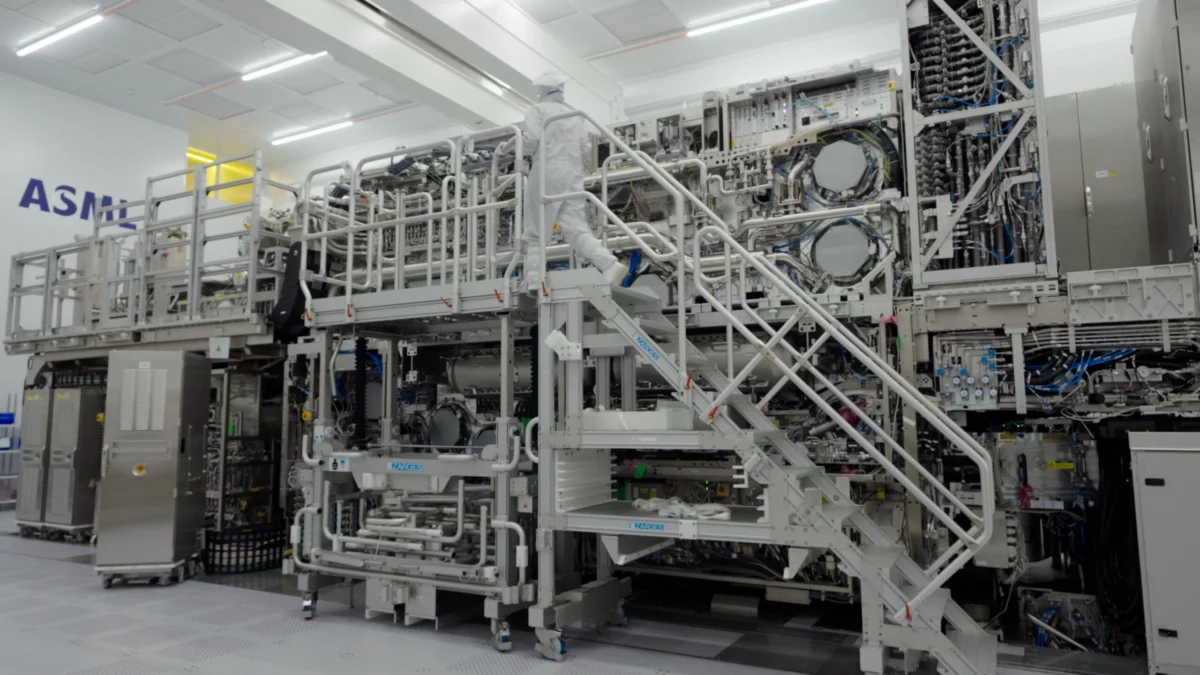
The prevailing economic narrative of 2026 is one of strategic recalibration. Gone are the days of hyper-globalization driven solely by cost optimization. In its place, a more nuanced approach emphasizes resilience, security, and proximity, frequently termed "friend-shoring" or "near-shoring." This paradigm shift has been particularly evident in critical sectors such as semiconductors, pharmaceuticals, and rare earth minerals, where governments worldwide have invested heavily in domestic production capabilities and diversified sourcing networks. The impetus behind this shift is twofold: lessons learned from the acute shortages and inflationary pressures of the early 2020s, and an increasing awareness of geopolitical risks that can suddenly disrupt established trade relationships.
Concurrently, the integration of artificial intelligence across industrial and service sectors has moved beyond experimental phases to become a fundamental driver of productivity gains and operational efficiencies. From predictive logistics and automated manufacturing to hyper-personalized customer service and advanced data analytics, AI is fundamentally altering how businesses operate, innovate, and compete. This technological leap, while promising immense economic benefits, also presents significant societal challenges, including labor market displacement in certain sectors and the urgent need for robust regulatory frameworks to govern AI ethics and data privacy. The convergence of these two mega-trends – supply chain rebalancing and AI integration – is creating a dynamic, often unpredictable, environment where agility and adaptability are paramount for economic success.
Tracing the Path to 2026: A Decade of Disruption and Adaptation
The journey to the current economic state of 2026 has been characterized by a series of cascading global events that forced a re-evaluation of long-held economic principles.
From Pandemic Shockwaves to Geopolitical Realignment
The genesis of the current rebalancing can be firmly traced back to the COVID-19 pandemic of 2020-2022. The initial lockdowns and subsequent demand surges exposed the fragility of lean, just-in-time supply chains, leading to unprecedented bottlenecks, port congestion, and dramatic price spikes. This crisis served as a stark wake-up call for governments and corporations, highlighting the critical importance of supply chain resilience over mere cost efficiency.
- 2020-2022: The COVID-19 pandemic triggers widespread supply chain disruptions, highlighting vulnerabilities in global manufacturing and logistics networks. Governments initiate discussions on strategic reserves and domestic production capabilities for essential goods.
- 2023: Geopolitical tensions escalate, particularly between major economic blocs, leading to a pronounced push for "de-risking" and diversification away from single-source dependencies. Key legislative acts in the US and EU promote domestic manufacturing in strategic sectors like semiconductors and green technologies.
- Early 2024: Significant investment rounds are announced for infrastructure projects aimed at improving inter-regional connectivity and bolstering port capacities in Southeast Asia, Latin America, and parts of Africa, signaling a shift in global trade arteries.
- Mid-2024: The first major "friend-shoring" initiatives begin to yield tangible results, with companies relocating portions of their production from historically cost-effective but politically sensitive regions to allied nations or domestic markets. This often involves significant government incentives.
- Late 2024: Regional economic blocs, such as ASEAN and Mercosur, strengthen their internal trade agreements and develop harmonized regulatory frameworks to facilitate intra-regional commerce, aiming to create more self-sufficient economic zones.
- 2025: Major international forums, including the G7 and G20, increasingly focus on global supply chain security and the coordination of industrial policies, albeit with varying degrees of success due to divergent national interests. Discussions on establishing global standards for "resilient" supply chains gain traction.
The AI Revolution: A Double-Edged Sword
Parallel to the supply chain shifts, the rapid evolution and deployment of artificial intelligence have profoundly influenced economic strategies since the early 2020s.
- 2023: Generative AI models experience a breakthrough, leading to widespread adoption in creative industries, software development, and customer service. Early concerns about job displacement begin to emerge, prompting calls for reskilling initiatives.
- Early 2024: Industrial AI applications, particularly in robotics, predictive maintenance, and autonomous logistics, gain significant traction. Factories begin to integrate AI-powered automation at an accelerated pace, improving efficiency and reducing reliance on manual labor.
- Mid-2024: Governments worldwide launch national AI strategies, committing billions to research and development, talent cultivation, and infrastructure. Ethical guidelines and regulatory frameworks for AI become a central policy debate.
- Late 2025: The first major economic reports detail the significant impact of AI on productivity growth in developed economies, attributing several percentage points of GDP growth to AI integration in key sectors. However, these reports also highlight growing disparities between AI-adopting firms and those lagging behind.
- Early 2026: AI-driven optimization of supply chains, from demand forecasting to route optimization and warehouse management, becomes a standard practice for leading multinational corporations, contributing to greater operational agility amidst ongoing geopolitical uncertainties.
Key Economic Indicators Reflecting the Shift
The intricate interplay of these forces is clearly reflected in various economic indicators observed in early 2026.
The Global Supply Chain Resilience Index (GSCRI)
The newly established Global Supply Chain Resilience Index (GSCRI), developed by the World Economic Forum in collaboration with leading logistics consultancies, provides a composite measure of the robustness and adaptability of global supply chains. As of Q1 2026, the GSCRI stands at 78.5 points (on a scale of 0-100), an improvement from its all-time low of 62.1 in Q3 2021, but still significantly below its pre-pandemic peak of 89.3 in Q4 2019. This indicates that while companies and nations have made strides in building redundancy and diversification, global supply chains remain susceptible to shocks, and the cost associated with this enhanced resilience has generally increased. The index particularly highlights improvements in inventory buffers and multi-modal transport options but notes persistent vulnerabilities in critical component sourcing from a limited number of regions.
Investment in Automation and Advanced Manufacturing
Investment in automation and advanced manufacturing technologies has surged globally. According to a report by the International Federation of Robotics (IFR), global industrial robot installations grew by an estimated 18% in 2025, reaching a new record high. This growth was particularly pronounced in North America (+22%) and Europe (+19%), as companies sought to reduce labor costs, enhance precision, and increase domestic production capabilities. Furthermore, spending on AI software and services by enterprises is projected to reach $350 billion in 2026, a 30% increase from 2025, according to Gartner. This investment is concentrated in areas like generative AI for product design, predictive analytics for supply chain optimization, and AI-powered quality control systems.
Evolving Trade Flows and Regional Powerhouses
Trade flows are undeniably reorienting. While overall global trade growth is moderate, intra-regional trade within Asia-Pacific, particularly among ASEAN nations, expanded by 5.1% in 2025, significantly outpacing global averages. This trend is supported by new trade corridors and infrastructure investments, positioning Southeast Asia as a critical manufacturing hub for diversified global supply chains. Conversely, trade volumes between certain established blocs, such as the US and China, have stabilized at lower levels than a decade ago, reflecting the impact of tariffs and strategic decoupling efforts. Mexico and Canada have seen a substantial increase in foreign direct investment (FDI) in manufacturing, capitalizing on "near-shoring" strategies by US companies. The European Union, meanwhile, has doubled down on its internal market integration and invested heavily in strategic autonomy for key industrial inputs.
Voices from the Economic Frontlines
The ongoing economic rebalancing elicits diverse perspectives from international organizations, corporate leaders, and economic analysts.
International Organizations Urge Cooperation
Kristalina Georgieva, Managing Director of the International Monetary Fund (IMF), stated in a recent address, "While the pursuit of resilience and national security is understandable, we must guard against excessive fragmentation of the global economy. Unchecked protectionism and the erosion of multilateral cooperation risk undermining the very growth and stability we seek to achieve." Her remarks underscore the delicate balance between national interests and the collective benefits of an open, rules-based trading system. The World Bank has similarly emphasized the need for targeted support to developing economies to help them integrate into new, diversified supply chains, warning that "a multi-speed global economy risks leaving many behind."
Corporate Leaders Embrace Agility
For multinational corporations, adapting to this new landscape has become an existential challenge. Jane Harrison, CEO of GlobalConnect Logistics, a leading supply chain management firm, remarked, "The days of a single, monolithic supply chain are over. Our clients are demanding redundancy, regional hubs, and intelligent, AI-driven visibility across their networks. It’s more complex, often more costly upfront, but it’s non-negotiable for long-term stability." Similarly, the CEO of TechInnovate Corp., a major electronics manufacturer, noted, "Our investment in AI and automation isn’t just about efficiency; it’s about control. It allows us to produce high-value components domestically or in close proximity, reducing our exposure to external shocks and intellectual property risks." These statements reflect a widespread corporate sentiment prioritizing risk mitigation and strategic control.
Expert Analysis: Long-Term Trajectories
Dr. Evelyn Reed, a senior fellow at the Peterson Institute for International Economics, offered a nuanced perspective: "What we are witnessing is not a reversal of globalization, but a ‘re-globalization’ on different terms. It’s messier, more complex, and driven by a wider array of factors beyond just economic efficiency. The winners will be those nations and companies that can strategically navigate these new geopolitical currents while leveraging advanced technologies like AI to maintain competitiveness." Her analysis suggests that while the pace of change may vary, the fundamental shift towards more resilient, regionally diversified, and technologically advanced economic models is here to stay, shaping investment decisions and policy frameworks for decades to come.
Broader Implications and the Road Ahead
The profound global economic rebalancing of 2026 carries far-reaching implications across multiple dimensions.
Geopolitical Realignment and Trade Bloc Formation
The economic rebalancing is intrinsically linked to geopolitical shifts. The emphasis on "friend-shoring" is fostering stronger economic ties among like-minded nations, potentially solidifying existing alliances and creating new economic blocs. This could lead to a more fragmented global trading system, where trade agreements are increasingly shaped by strategic alignment rather than purely economic logic. The risk of trade disputes evolving into broader economic conflicts remains a significant concern, requiring careful diplomatic navigation.
The Future of Work and Skill Development
The rapid integration of AI and automation is fundamentally altering labor markets. While new jobs are emerging in AI development, data science, and advanced robotics, there is a clear trend of displacement in routine, manual, and even some white-collar tasks. This necessitates massive investments in reskilling and upskilling programs to equip the workforce with the competencies required for the jobs of the future. Governments and educational institutions face the urgent challenge of adapting curricula and vocational training to meet these evolving demands, ensuring a just transition for affected workers.
Investment Priorities in a Reconfigured World
Investment capital is increasingly flowing into areas that bolster resilience and technological leadership. This includes significant allocations to infrastructure development, domestic manufacturing capabilities in strategic sectors, renewable energy technologies, and research and development in AI and quantum computing. Companies are also prioritizing investments in cybersecurity and data governance, recognizing these as critical components of secure and resilient operations in an interconnected yet fragmented world. Investors are seeking out firms that demonstrate robust risk management strategies and adaptability to shifting geopolitical landscapes.
Navigating Inflationary Headwinds and Resource Scarcity
The drive for supply chain resilience, often involving redundancy and localized production, can inherently lead to higher production costs compared to purely optimized global sourcing. This, coupled with ongoing geopolitical instability and the increasing demand for critical minerals essential for green technologies, could exert persistent inflationary pressures. Managing these costs while ensuring equitable access to resources will be a key challenge for policymakers, requiring innovative approaches to resource management and international cooperation to prevent price volatility and supply shocks.
Conclusion: A Continuously Evolving Global Economy
The 2026 global economic landscape is a testament to an era of profound transformation, where the pursuit of efficiency is now balanced by an imperative for resilience and security. The confluence of persistent supply chain vulnerabilities, the transformative power of artificial intelligence, and a recalibration of geopolitical alliances has set the stage for a new chapter in global commerce. As Versant Media, LLC continues to monitor these critical developments, drawing upon real-time data from Reuters and expert analysis, the message is clear: adaptability, strategic foresight, and a nuanced understanding of interconnected global forces will be the hallmarks of success in this continuously evolving economic environment. The journey of rebalancing is far from over, and its long-term implications will undoubtedly shape the contours of prosperity for decades to come.