


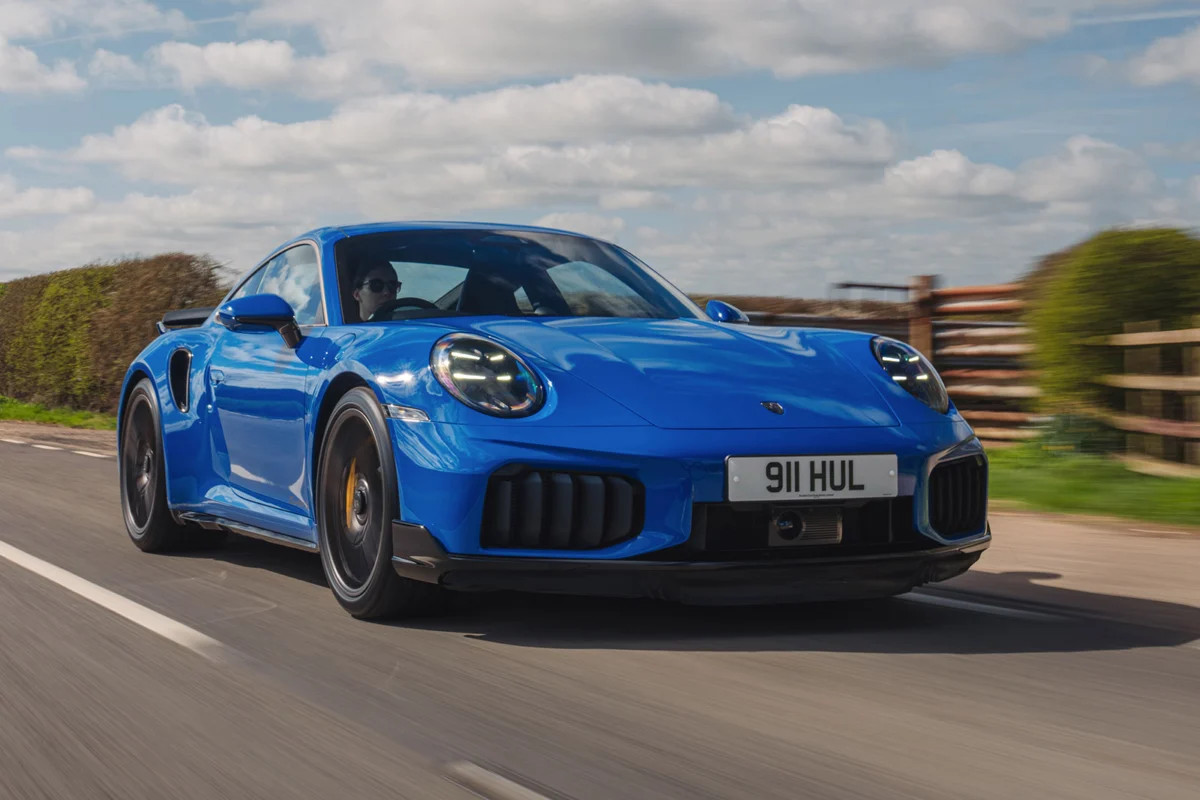
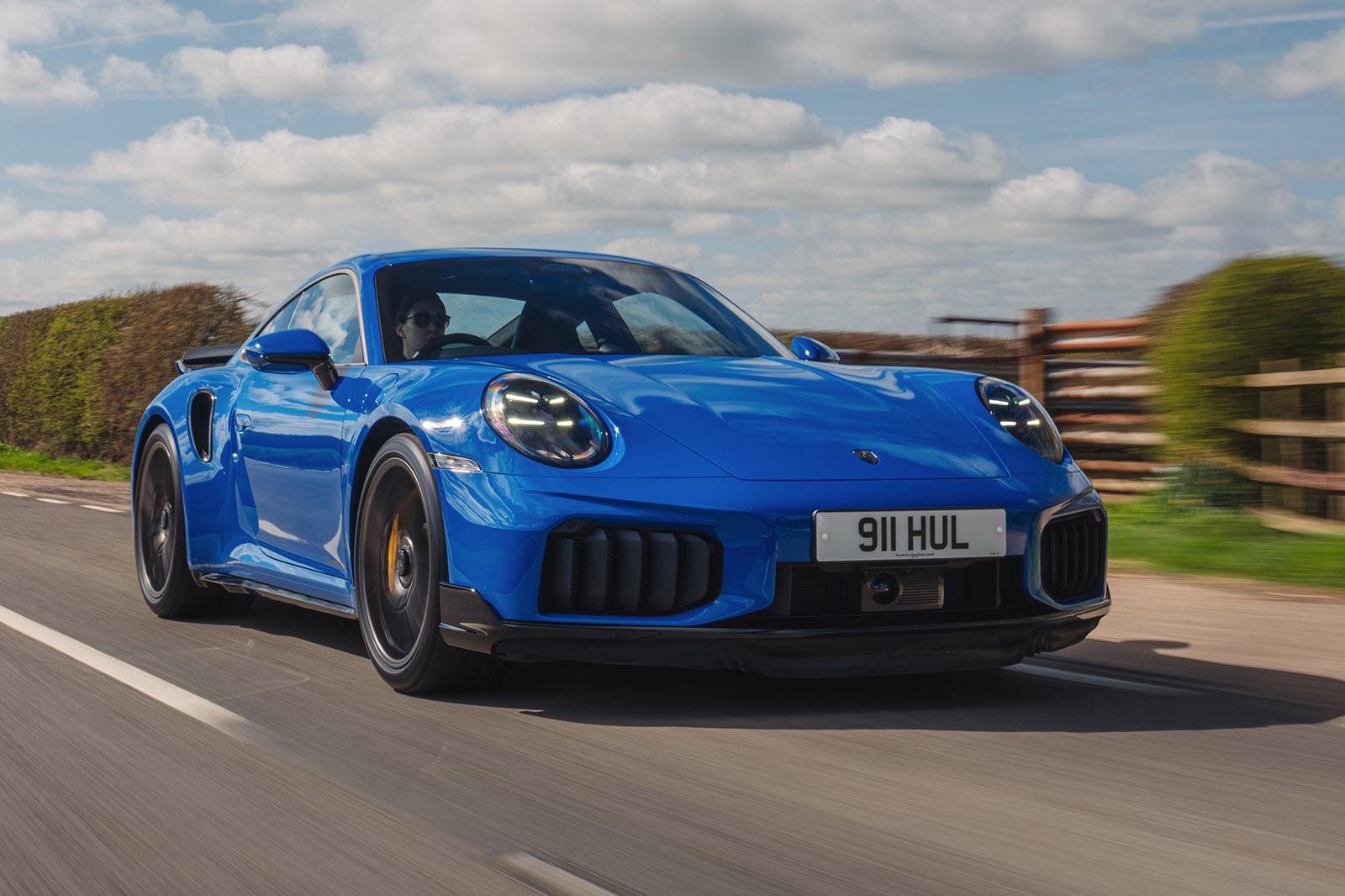
The 2026 Porsche 911 Turbo S represents a pivotal moment in the history of the high-performance sports car, marking the transition of the flagship Turbo nameplate into the era of performance hybridization. Recent testing of the 992.2-generation flagship reveals a vehicle that continues to push the boundaries of internal combustion technology while integrating sophisticated electrical assistance to maintain its standing in an increasingly competitive supercar landscape. With a recorded 0-60 mph time of 2.6 seconds and a standing quarter-mile completion in 10.5 seconds, the new Turbo S remains one of the fastest accelerating production vehicles on the market. However, these figures also invite a deeper examination of how the "Giant-killer" ethos has evolved as the gap between sports cars and mid-engined supercars narrows.
The Evolution of the Giant Killer: From 930 to 992.2
To understand the significance of the 2026 model, one must look back to the origins of the Turbo’s reputation. The modern super-sports car class was largely defined by Porsche’s decision to apply the "S" badge to the 993- and 996-generation 911 Turbos during the late 1990s. Prior to this, the 911 Turbo—most famously the 930 generation—was known as the "Widowmaker," a nickname earned through its challenging rear-engine bias and sudden turbo lag that could catch even experienced drivers off-guard.
The late 90s saw a shift in philosophy. By pushing power outputs beyond 400 bhp, Porsche elevated the 911 Turbo above contemporary rivals like the Nissan R33 Skyline GT-R and into the realm of established supercars. It was during this period that the "Giant-killer" moniker was born, as the 911 Turbo began consistently outperforming vehicles that cost twice as much and featured more exotic mid-engined layouts. The 2026 Turbo S carries the weight of this legacy, attempting to justify its "Giant-killer" status in a world where the "Giants"—today’s hybrid-assisted Ferraris and McLarens—have reached performance levels previously reserved for hypercars.
Technical Specifications and the T-Hybrid System
The core of the 2026 Porsche 911 Turbo S’s performance is its innovative T-Hybrid powertrain. Unlike traditional plug-in hybrids that prioritize electric-only range, Porsche’s system is designed for performance density and instantaneous response. The system eliminates the traditional starter motor, relying instead on a powerful electric motor integrated into the drivetrain to fire the engine into life instantly.
A key component of this new architecture is the electric turbocharger. By utilizing an integrated electric motor between the turbine and compressor wheels, Porsche has effectively eliminated turbo lag. This allows the turbochargers to spool up to optimal speeds as soon as the driver applies pressure to the accelerator, regardless of engine RPM or exhaust gas flow. The result is a power delivery curve that feels more linear and inexhaustible than any previous Turbo model. The flat-six engine remains the heart of the car, spinning freely to a 7,400 rpm redline, supported by a 400-volt electrical architecture that manages energy flow between the battery, the electric motor, and the turbochargers.
Performance Benchmarking and Comparative Data
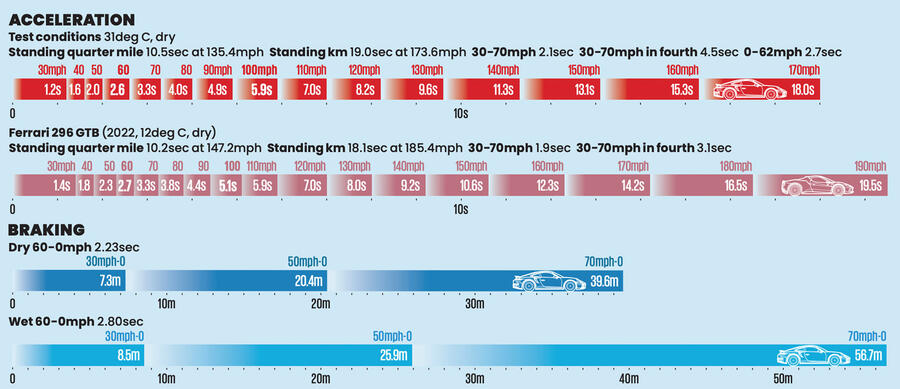
Objective data from recent instrumented testing provides a clear picture of where the 2026 Turbo S stands relative to its predecessors and its current competition. In controlled conditions on a high-grip surface, the vehicle achieved the following metrics:
- 0-60 mph: 2.6 seconds
- 0-100 mph: 5.9 seconds
- Standing Quarter Mile: 10.5 seconds
While these numbers are elite by any standard, they reveal an interesting trend when compared to the pre-facelift, non-hybridized 992 Turbo S tested in 2022. The previous iteration was actually slightly quicker in the initial sprints, leading by approximately one to two-tenths of a second to the 100 mph mark. It is only as the vehicle approaches speeds exceeding 160 mph that the 2026 model’s hybrid-enhanced aerodynamics and top-end power begin to pull ahead of its predecessor.
However, when measured against its direct price-point rivals, the 2026 Turbo S maintains a significant lead. For comparison, the 2022 McLaren Artura reaches 100 mph in 6.3 seconds, and the 2026 Aston Martin Vantage S is projected to reach the same milestone in 6.8 seconds. This data suggests that while the 911 Turbo S may be reaching a point of diminishing returns in terms of raw 0-100 mph acceleration, it remains the dominant force in its specific market segment.
Driving Dynamics: The Impact of Hybridization
The integration of hybrid components often raises concerns regarding weight and tactile feedback. In the 2026 Turbo S, Porsche engineers have worked to ensure that the electronic intervention does not corrupt the mechanical purity expected of a 911. The four-wheel-drive system and electronic launch control continue to provide massive traction, allowing the car to deploy its power with surgical precision.
One of the most notable changes is the auditory and tactile experience of starting the vehicle. The absence of a traditional starter motor means the engine does not "crank" in the traditional sense; instead, it enters a high-idle state with a sudden, coarse sound. This has been compared to the startup sequence of early McLaren V8 engines, lacking the refined mechanical "whir" of previous 911 generations.
Under load, the acoustic profile changes significantly. The electric turbochargers produce a distinct rushing and whistling sound, reminiscent of a jet turbine on takeoff. While the engine note at low revs can occasionally sound flat or "grumbly," the flat-six regains its characteristic soul as the tachometer climbs, providing a visceral soundtrack that matches the car’s rapid forward progress. Furthermore, the regenerative braking system has been tuned to maintain a natural pedal feel, a common pain point in hybrid performance cars that Porsche appears to have successfully mitigated.
The Competitive Landscape and Market Implications
The 911 Turbo S operates in a unique space. It must provide the daily usability of a luxury GT while offering the performance of a supercar. The 2026 model faces a landscape where the definition of a "Giant" has shifted. Modern mid-engined supercars, such as the Ferrari 296 GTB, now utilize hybrid powertrains to produce over 800 horsepower, making the "Giant-killer" role more difficult to fulfill than it was in the 1990s.
Industry analysts suggest that Porsche’s move toward hybridization is not merely about performance but also about regulatory compliance. As global emissions standards tighten, the ability to maintain a high-displacement flat-six engine requires the efficiency gains provided by a 400-volt hybrid system. By proving that hybridization can enhance throttle response and sustain high-speed acceleration, Porsche is setting a blueprint for the future of the 911 range.
The reactions from the enthusiast community have been mixed but generally positive regarding the car’s capabilities. While some purists lament the added complexity and the change in the engine’s startup character, the objective performance remains unassailable. The Turbo S continues to be the benchmark for "real-world" speed—performance that is accessible in various weather conditions and on diverse road surfaces, thanks to its sophisticated all-wheel-drive system.
Conclusion: A New Standard for the Modern Era
The 2026 Porsche 911 Turbo S is a testament to the brand’s ability to adapt to changing technological and regulatory environments without sacrificing its core identity. While it may not represent a massive leap in 0-60 mph times over its predecessor, it offers a more refined, responsive, and technologically advanced interpretation of speed.
The "Giant-killer" legacy is no longer about simply having more horsepower than a Ferrari; it is about the seamless integration of complex systems to create a cohesive driving machine. As the automotive industry moves closer to full electrification, the 992.2 Turbo S stands as a sophisticated bridge, blending the best of internal combustion with the immediate advantages of electric assistance. It remains a monster by any reasonable standard, continuing a quarter-century tradition of defying the expectations placed upon the 911 platform.