


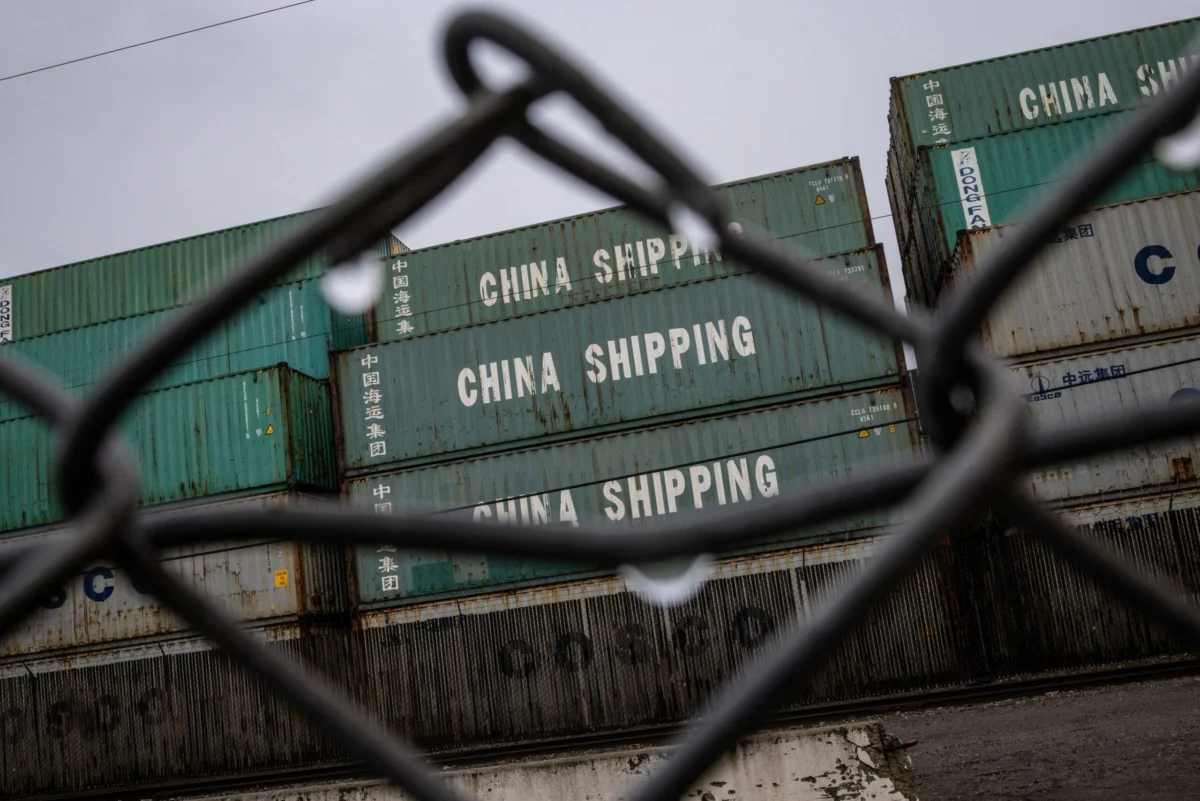
BEIJING – China’s economic momentum, already facing significant headwinds, experienced a further setback in July as a critical growth driver – exports to the United States – unexpectedly lost steam. The latest comprehensive survey of Chinese businesses conducted by the U.S.-based research firm China Beige Book (CBB) revealed a concerning deceleration, marking the first outright decline in U.S.-bound shipments in several months. This downturn, detailed in findings released on Friday, is based on a robust survey of 1,436 Chinese businesses conducted between July 20 and 28, painting a picture of an economy grappling with both external pressures and internal vulnerabilities.
The Export Rollercoaster: A Closer Look at U.S.-China Trade Dynamics
The ebb and flow of China’s exports to the United States have become a bellwether for the broader economic health of the world’s second-largest economy, especially in the context of persistent trade tensions. The CBB report highlighted a significant reversal from the preceding month. In June, shipments to the U.S. had surged by a robust 14%, contributing significantly to an overall export growth of 27% – the most substantial increase in nearly five years. This impressive performance was largely attributed to businesses frontloading shipments, anticipating the imposition of higher U.S. tariffs later in the summer. Furthermore, the rapid global development of data centers to power artificial intelligence (AI) technologies had spurred considerable demand for China-made components, providing an additional, albeit perhaps temporary, boost.
However, the July data suggests that the frontloading effect has waned, and the underlying challenges of the trade relationship have resurfaced. The last instance of U.S.-bound exports experiencing an outright fall was in March, when they plummeted by over 26% from the previous year. This dramatic drop was broadly consistent with the trend of double-digit declines that have characterized U.S.-China trade since tensions escalated significantly in April 2025, according to official data accessed via Wind Information, a leading financial data provider. The volatility in export figures underscores the precarious nature of China’s trade-dependent economy, caught between fluctuating global demand, geopolitical tensions, and strategic supply chain reconfigurations.
Broader Economic Headwinds: Manufacturing, Retail, and Employment
Beyond the critical export sector, the China Beige Book study illuminated a more widespread deceleration across various segments of the Chinese economy in July. Factory activity, a traditional pillar of China’s industrial might, noticeably decelerated. The manufacturing sector, in particular, recorded the worst performance in employment, signaling deepening concerns about job security and economic stability. Across all sectors surveyed, job growth worsened compared to a year ago, pointing to a softening labor market that could have significant implications for consumer confidence and social stability.
The retail sector, a crucial indicator of domestic demand and consumer health, also registered a decline in July. Sales fell not only from the prior month but also from the corresponding period a year ago. The report specifically noted a "sharp on-year downturn" in the travel and restaurant industries, sectors that were expected to be key drivers of a post-pandemic consumption recovery. This contraction in retail sales raises questions about the effectiveness of recent stimulus measures and the underlying strength of household spending, which policymakers have increasingly sought to cultivate as a primary growth engine.
These findings from the CBB align with broader concerns among economists and international observers regarding China’s post-pandemic recovery trajectory. While initial expectations were high for a robust rebound driven by unleashed consumer spending and industrial activity, the reality has been more subdued. Lingering issues in the property sector, local government debt burdens, and a cautious consumer sentiment have combined to temper growth, making the export sector’s recent volatility all the more impactful.
Official Responses and Policy Directives
In response to the evolving economic landscape, China’s top policymakers have reiterated their strategic priorities. A Politburo meeting held on Thursday, as reported by state media, emphasized the critical need to "expand domestic demand" and foster "international trade cooperation." This statement underscores Beijing’s long-term strategy of rebalancing its economy towards internal consumption while still leveraging global trade opportunities. Crucially, the official readout also highlighted Beijing’s unwavering commitment to achieving technological "breakthroughs," particularly in key strategic sectors. This focus on technological self-reliance, often termed "dual circulation," is seen as a direct response to external pressures, including U.S. restrictions on advanced technology exports to China.
While the government has articulated its priorities, specific, large-scale stimulus measures have been more measured than in previous downturns. The emphasis appears to be on targeted policies, fostering innovation, and addressing structural imbalances rather than broad-based monetary or fiscal easing. However, the deteriorating economic data, particularly the CBB’s stark findings for July, could intensify calls for more decisive intervention to shore up confidence and stimulate activity.
Historical Context: The Shadow of U.S.-China Trade Tensions
The current trade friction between the United States and China is not a new phenomenon but rather an intensified phase of a protracted economic rivalry. The origins of the current escalation can be traced back several years, with the U.S. citing concerns over intellectual property theft, forced technology transfer, and state subsidies providing unfair advantages to Chinese companies. While initial tariffs were imposed during the Trump administration, the Biden administration has largely maintained, and in some cases, expanded, these measures, particularly in critical technology sectors like semiconductors.
The "escalation" in April 2025, as referenced in the article, likely refers to a new round of specific tariff announcements or increased rhetoric that heightened uncertainty for businesses. This has led to strategic decisions by companies on both sides to "de-risk" or "decouple" supply chains, either by relocating manufacturing outside China or by diversifying sourcing. The practice of "frontloading shipments" observed in June is a direct tactical response by businesses attempting to circumvent anticipated higher costs or restrictions, but it often leads to an artificial surge followed by a subsequent dip, as seen in July.
This geopolitical backdrop significantly complicates China’s economic management. Even as Beijing seeks to expand domestic demand, its industrial output remains heavily integrated into global supply chains, many of which are now being re-evaluated under the lens of national security and economic resilience.
Upcoming Data and Expert Perspectives
The CBB report provides an early, granular look at July’s economic performance, often preceding official government data. Investors and analysts are now keenly awaiting the release of official trade data for July, due out on August 7, which will provide a broader statistical confirmation of the CBB’s findings. Following this, retail sales and investment figures are expected on August 17, offering further insights into the health of domestic consumption and capital expenditure.
Economists are divided on the immediate outlook. Some predict that while the short-term picture is challenging, China’s vast domestic market and robust industrial base will eventually enable a recovery, especially if targeted stimulus measures are implemented effectively. Others express greater caution, pointing to structural issues such as the property market downturn, an aging population, and elevated youth unemployment as persistent drags on growth.
Dr. Eleanor Vance, a senior economist specializing in Asian markets at Global Insights Group, commented, "The July CBB findings are a stark reminder that China’s economic recovery is neither linear nor guaranteed. The export engine, which had provided some reprieve, now appears to be sputtering, likely due to a combination of waning front-loading effects and persistent global demand softness, exacerbated by ongoing trade frictions. The challenge for Beijing is to stimulate domestic consumption effectively while navigating a complex geopolitical environment and addressing deep-seated structural issues."
Another analyst, Mr. Kenji Tanaka from Asia Capital Management, added, "The emphasis on technological breakthroughs and expanding domestic demand from the Politburo is consistent with China’s long-term strategic goals. However, the immediate economic data suggests that the transition to this new growth model is proving challenging. Weak employment figures, particularly in manufacturing, and declining retail sales are direct indicators of waning confidence among both businesses and consumers. Without a significant boost to sentiment, achieving robust growth will be an uphill battle."
Implications for Global Supply Chains and International Trade
The deceleration in China’s U.S.-bound exports has ripple effects across global supply chains. Companies that rely on Chinese manufacturing for components or finished goods face increased uncertainty, potentially accelerating diversification strategies. For countries that export raw materials or intermediate goods to China, a slowdown in Chinese factory activity could translate into reduced demand.
Moreover, the ongoing trade tensions and China’s strategic pivot towards technological self-reliance could fundamentally alter the landscape of international trade. While some argue that this shift fosters resilience, others warn of fragmentation, increased costs, and reduced global economic efficiency. The demand for China-made parts driven by AI data centers, while a positive, highlights a specific niche rather than a broad-based revival of traditional manufacturing exports.
The July data from the China Beige Book serves as a critical indicator, suggesting that the path to sustainable and robust economic growth for China remains fraught with challenges. The interplay of weakening external demand, structural domestic issues, and strategic policy shifts will continue to shape not only China’s economic trajectory but also its profound impact on the global economy. The coming weeks, with the release of official trade and domestic consumption data, will provide further clarity on the severity and persistence of these economic headwinds.