The Resurrection of an Icon: From 1961 to the Electric Era
To understand the current enthusiasm for the Renault 4, one must examine its historical significance. Originally launched in 1961, the Renault 4 (often referred to as the 4L) was conceived as a response to the Citroën 2CV. It was designed to be a "blue jeans" car: versatile, affordable, and capable of traversing both urban boulevards and rugged rural terrain. By the time production ceased in 1994, Renault had manufactured over eight million units across 100 countries, making it one of the most successful French vehicles in history.
The modern iteration, the Renault 4 E-Tech, was first teased as the 4EVER Trophy concept at the 2022 Paris Motor Show. This concept served as a mission statement for Renault’s "Renaulution" strategy, led by CEO Luca de Meo. The strategy focuses on leveraging the brand’s heritage to create emotional connections with consumers in an increasingly crowded EV market. The transition from a rugged concept to a production-ready crossover involved maintaining key design cues from the original—such as the trapezoidal rear window, the vertical pill-shaped taillights, and the distinctive boxy silhouette—while integrating the AmpR Small platform architecture.
Technical Specifications and Platform Synergy
The Renault 4 E-Tech is built upon the AmpR Small platform, a dedicated EV architecture shared with the recently launched Renault 5. However, the Renault 4 is positioned as the more practical, family-oriented sibling. It features a wheelbase of 2.62 meters, providing significantly more interior volume and versatility than the Renault 5.
Performance Data and Battery Options
Renault has engineered the 4 E-Tech with two distinct powertrain configurations to cater to different market segments:
- The Comfort Range Model: Equipped with a 52kWh lithium-ion battery, this version produces 110kW (approximately 150hp) and 245Nm of torque. It offers a targeted WLTP (Worldwide Harmonized Light Vehicles Test Procedure) range of up to 400 kilometers (approximately 250 miles).
- The Urban Range Model: Designed for city-centric use, this variant features a 40kWh battery and a 90kW motor (120hp). It provides a range of roughly 300 kilometers (186 miles), prioritizing efficiency and a lower entry price point.
The vehicle supports 100kW DC fast charging, allowing the battery to charge from 15% to 80% in approximately 30 minutes. Furthermore, the Renault 4 introduces bi-directional charging capabilities, including Vehicle-to-Load (V2L) and Vehicle-to-Grid (V2G) functions, allowing the car to power external devices or feed energy back into the domestic grid during peak demand.
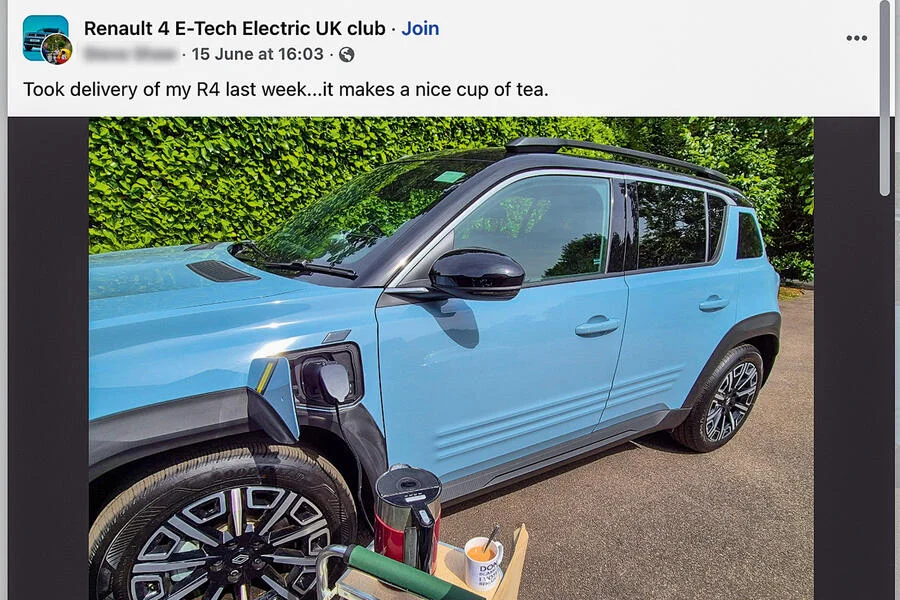
The Social Phenomenon: The "Happy Owner’s Club"
The "waving culture" associated with the Renault 4 is a documented psychological phenomenon in brand marketing known as "In-Group Favoritism." In the context of the automotive industry, this occurs when a vehicle’s design or heritage is sufficiently distinct to create a shared identity among its owners.
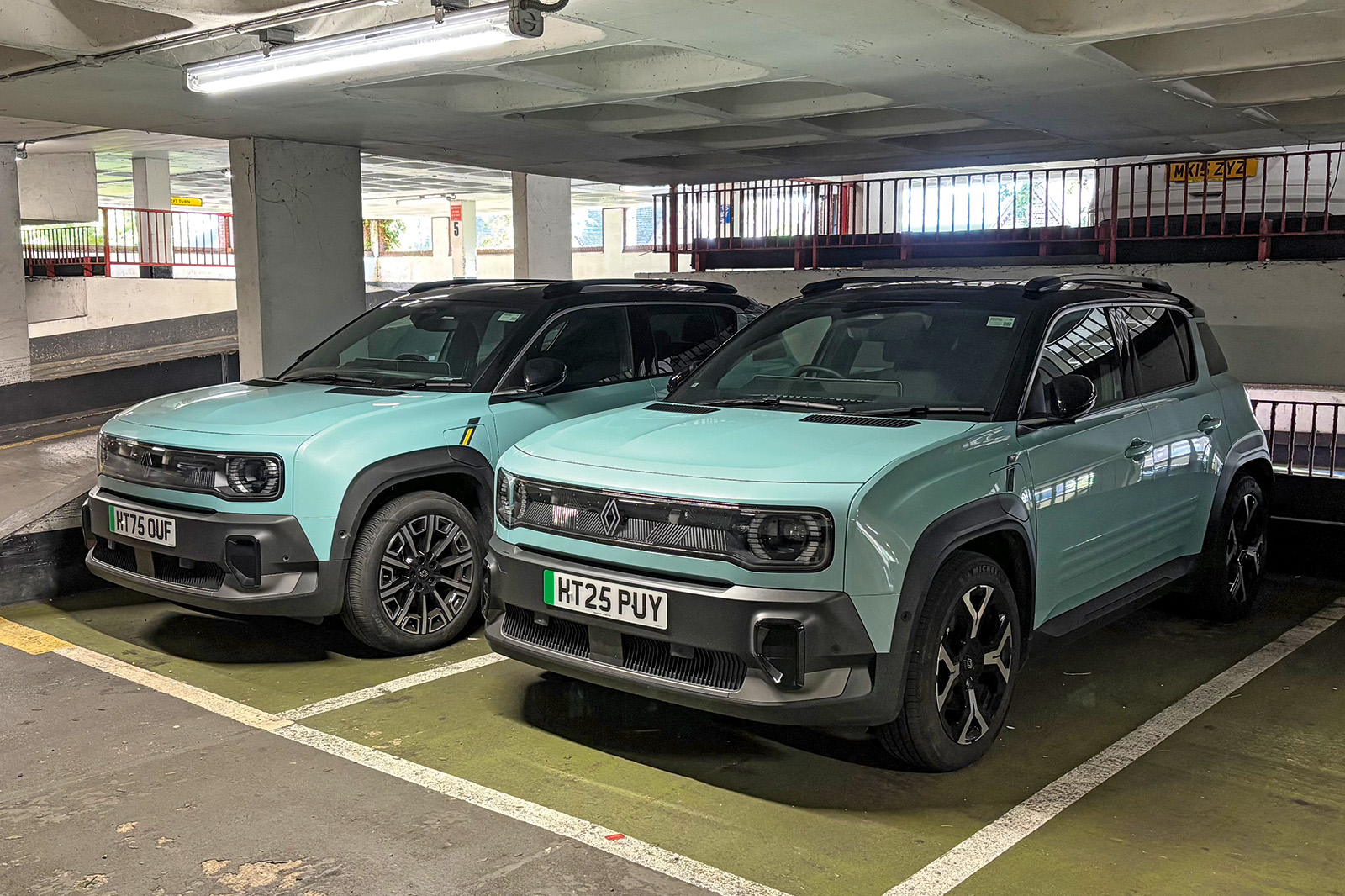
According to early road testers and initial owners, the Renault 4 elicits a uniquely positive response from the public. Unlike high-performance supercars, which may occasionally draw envy or resentment, or standard silver-grey SUVs, which often go unnoticed, the Renault 4’s retro-modern aesthetic is perceived as approachable and "cheery." This sentiment is bolstered by the vehicle’s color palette and features like the "Plein Sud" folding fabric roof, which encourages an open-air, communal driving experience.
This sense of community is not merely a byproduct of nostalgia but a strategic objective for Renault. By fostering an "owner’s club" atmosphere, the brand increases customer loyalty and creates organic marketing through visibility and positive social interaction. This puts the Renault 4 in a rare category of modern crossovers that are viewed as "lifestyle" vehicles rather than mere appliances.
Market Positioning and Competitive Landscape
The Renault 4 E-Tech enters a highly competitive B-segment crossover market. Its primary rivals include the Jeep Avenger, the Fiat 600e, and the Mini Aceman. While many of these competitors focus on "ruggedness" or "premium" branding, Renault has positioned the 4 as a "value crossover" that does not compromise on emotional appeal.
Comparative Dimensions
| Feature | Renault 4 E-Tech | Jeep Avenger | Mini Aceman |
|---|---|---|---|
| Length | 4.14m | 4.08m | 4.07m |
| Boot Capacity | 420 Liters | 355 Liters | 300 Liters |
| Platform | AmpR Small | STLA Small | Dedicated EV (Spotlight) |
A key differentiator for the Renault 4 is its practicality. It features a low loading lip (61cm from the ground) and a fold-flat front passenger seat, allowing for the transport of items up to 2.2 meters in length. This functional versatility, combined with the "OpenR Link" multimedia system (which integrates Google built-in), targets a demographic that requires modern technology but values the utilitarian roots of the original 4L.
Strategic Implications for the "Renaulution"
The success of the Renault 4 is pivotal to the broader "Renaulution" plan, which seeks to transition the Renault Group from a volume-driven manufacturer to a value-driven tech company. Under Luca de Meo, Renault has embraced "Retro-futurism"—the practice of using historical design language to sell future-oriented technology.
Industry analysts suggest that this approach serves as a defensive moat against the influx of affordable Chinese EVs. While Chinese manufacturers can compete on price and battery specifications, they lack the decades of European heritage and the established "fan bases" that Renault can leverage. The Renault 4, therefore, is not just a car; it is a tool for brand preservation in a globalized market.
Official Responses and Manufacturing
Renault has emphasized the European origins of the vehicle to appeal to regional pride and sustainability goals. The Renault 4 E-Tech is manufactured at the ElectriCity hub in northern France. The motors are produced in Cléon, and the batteries are assembled in Douai. Renault officials have stated that the goal was to create a "circular economy" vehicle, with a high percentage of recyclable materials used in the interior, including fabrics made from 100% recycled fibers.
In official statements, Renault design director Gilles Vidal noted that the design process was about "finding the balance between the collective memory of the Renault 4 and the requirements of a 21st-century electric car." The inclusion of an illuminated front grille and the "Reno" avatar (a digital companion integrated into the infotainment system) are examples of how the brand is attempting to personify the vehicle to further strengthen the bond between the car and its owner.
Broader Impact on Automotive Culture
The "Smile and Wave" culture reported by Renault 4 drivers may indicate a shift in consumer desires. As the novelty of electric drivetrains wears off, buyers are increasingly looking for vehicles that offer a unique "user experience" (UX) that extends beyond the digital screen. The Renault 4 suggests that the future of the EV market may lie in personality-driven design.
By successfully tapping into the "happiest owner’s club," Renault has demonstrated that value-oriented vehicles do not have to be soulless. The car serves as a bridge between the analog past and the digital future, proving that even in an era of autonomous driving and standardized platforms, there is still a significant market for cars that make people smile.
As more units reach the hands of consumers across Europe and beyond, the frequency of these "waves" is expected to increase. For Renault, this is the ultimate validation of their strategy: a car that advertises itself through the sheer joy of its community. The Renault 4 E-Tech is not merely a mode of transport; it is a social catalyst, reviving a sense of fraternity on the road that many feared had been lost in the transition to the modern era.