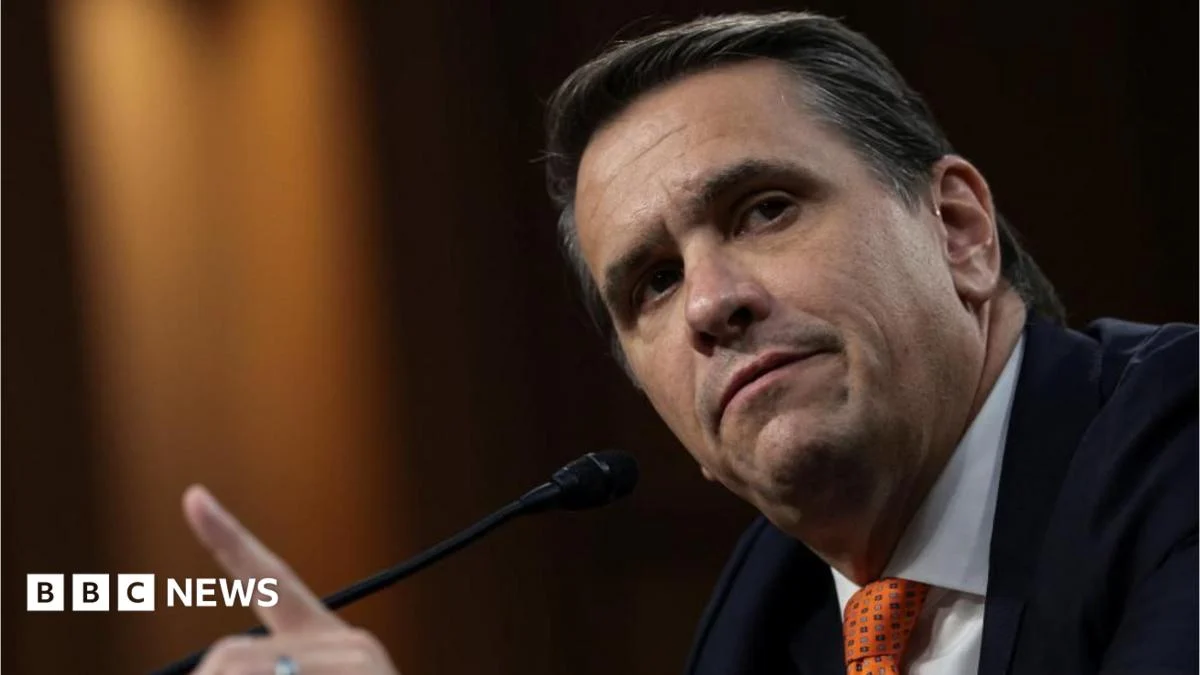
The withdrawal, formalized by a signed order from Blanche and an accompanying memo, significantly smooths the path for his confirmation by the US Senate to the permanent position of Attorney General. This decisive action addresses critical concerns raised by two Republican senators whose opposition had stalled Blanche’s nomination for weeks, highlighting the delicate balance between presidential appointments, congressional oversight, and the perceived independence of the Department of Justice (DOJ).
The Genesis of the Controversial Fund
The proposed $1.8 billion fund first surfaced earlier this year as a component of a settlement in a lawsuit filed by Donald Trump against the Internal Revenue Service (IRS). The lawsuit stemmed from the leak of his tax returns, an event that sparked considerable debate regarding taxpayer privacy and the handling of sensitive financial information by federal agencies. The settlement, as initially conceived, included provisions that would have allowed individuals to claim compensation for what they alleged were politically motivated prosecutions by previous administrations.
This "anti-weaponisation" fund was immediately met with a firestorm of criticism from various quarters. Critics argued that the broad language of the proposal could have been interpreted to include individuals prosecuted for their involvement in the January 6 Capitol riot. The riot, a violent attempt to disrupt the peaceful transfer of power, led to the arrests of over 1,200 individuals, with hundreds convicted of various federal crimes, including assaulting police officers, obstruction of an official proceeding, and seditious conspiracy. The prospect of federal funds being used, even indirectly, to compensate individuals involved in such an event was deemed unacceptable by many, cutting across partisan lines.
The Dual Controversies: Fund and IRS Immunity
Beyond the compensation fund, a second major point of contention in the original settlement deal was a provision that would have shielded President Trump, his family, and their businesses from IRS audits of their past tax returns. This immunity clause was particularly alarming to Democrats and some Republicans, who viewed it as an unprecedented and potentially dangerous precedent that could undermine the IRS’s impartiality and its ability to enforce tax laws equally.
The IRS, as the nation’s primary tax collection agency, is responsible for ensuring compliance with federal tax laws. Its audit process, particularly for high-net-worth individuals and complex business entities, is designed to maintain the integrity of the tax system. Granting broad immunity from audits to a president and his family, especially given Trump’s history of public disputes with the IRS, was seen as a direct challenge to the agency’s independence and the principle that no one is above the law.
A Timeline of Escalating Tensions and Resolution
The saga surrounding Todd Blanche’s nomination and the controversial fund unfolded over several weeks, marked by increasing political pressure and conflicting statements:
- Early This Year: The proposed $1.8 billion "anti-weaponisation" fund is announced as part of a settlement in Trump’s lawsuit against the IRS.
- Immediate Backlash: Democrats, legal ethics groups, and some Republicans express alarm over the fund’s potential use for January 6 defendants and the broad IRS audit immunity.
- Judicial Intervention: A federal judge blocks the fund, citing ethical concerns and potential breaches of established guidelines, further validating the critics’ arguments.
- Blanche’s Nomination Stalled: Acting US Attorney General Todd Blanche, President Trump’s nominee for the permanent role, faces resistance in the Senate. Two Republican senators, John Cornyn of Texas and Thom Tillis of North Carolina, express dissatisfaction with mere verbal assurances that the fund is dead.
- Late Last Week: President Trump issues conflicting statements. On Friday, he declares the fund "dead." However, over the weekend, he threatens to revive the plan if his party members do not expedite Blanche’s confirmation. He also suggests he might withdraw Blanche’s nomination altogether due to the stalled process.
- Sunday Evening: Todd Blanche takes definitive action. In a post on X (formerly Twitter), he announces he has "met with committee members and Senators over the past several weeks and addressed any concerns or outstanding questions." Attached to his post is a copy of a signed written order formally withdrawing the fund, stating unequivocally: "This Order establishes, beyond any doubt, that there is no Fund." He also attaches an unsigned memo clarifying that the IRS immunity would be limited strictly to the "named parties in the lawsuit" – Trump, his sons Donald Jr. and Eric, and the Trump Organization – thus narrowing its scope significantly.
- Monday/Tuesday: Following Blanche’s formal withdrawal, Senator John Cornyn’s spokesperson confirms an "agreement with the Department of Justice" has been reached regarding the fund. The US Senate Judiciary Committee has a meeting scheduled for Tuesday, where a vote on Blanche’s nomination is now highly anticipated.
The Role of the Senate Holdouts
The confirmation process for a US Attorney General requires a simple majority vote in the Senate. With a narrow Republican majority, the opposition of even a few senators can effectively derail a nomination. In this instance, Senators John Cornyn and Thom Tillis played a pivotal role in forcing the administration’s hand. Both senators are seasoned lawmakers whose terms expire in January, granting them a degree of independence from immediate political pressures.
Senator Cornyn’s spokesperson confirmed that an agreement had been reached, indicating his satisfaction with Blanche’s formal withdrawal of the fund. Senator Tillis, who had previously expressed deep concern that President Trump was still contemplating a "payout pot for punks" in response to the President’s weekend threats, had viewed the political impasse as "unfortunate" despite believing Blanche was qualified for the job. Their steadfast refusal to accept verbal assurances underscored the gravity of their concerns about the fund’s implications for the rule of law and the independence of the justice system. Their actions demonstrated the power of individual senators to shape policy and influence high-level appointments, especially when perceived ethical breaches are at stake.
Statements, Reactions, and Broader Implications
The formal withdrawal of the fund has elicited a range of reactions and carries significant implications for various stakeholders:
- For Todd Blanche: The move is a crucial victory for Blanche, clearing the most significant hurdle to his confirmation. His willingness to directly address and resolve the senators’ concerns demonstrates a pragmatic approach and a commitment to securing his role. As Attorney General, Blanche would lead the Department of Justice, overseeing federal law enforcement agencies, prosecution of federal crimes, and legal representation for the US government. The position is one of the most powerful and politically sensitive in the federal government, requiring a strong perception of independence from partisan influence.
- For the Department of Justice: The episode underscores the constant scrutiny the DOJ faces regarding its impartiality. The perception that a fund could potentially benefit individuals prosecuted for attacking the Capitol, or that presidential family members could receive blanket immunity from IRS audits, would have severely damaged public trust in the DOJ’s commitment to equal justice under the law. Blanche’s action helps to reinforce the principle of judicial and prosecutorial independence, crucial for maintaining the integrity of the justice system.
- For Congressional Oversight: The Senate’s role in the confirmation process proved effective in forcing a policy change. This highlights the enduring importance of congressional oversight and the checks and balances inherent in the US system of government. It also demonstrates that bipartisan concern, even from within the President’s own party, can compel an administration to alter controversial plans.
- For Donald Trump and His Allies: While the fund’s withdrawal removes a specific avenue for compensation, Trump’s broader narrative of a "weaponized" justice system persists. His legal battles with the IRS and other agencies continue to be central to his political messaging. The narrowed scope of the IRS immunity, while a concession, still provides some level of protection for the specific parties in the original lawsuit. This ongoing tension between perceived political persecution and the enforcement of federal law will likely remain a defining characteristic of his political movement.
- For Legal Ethics and Rule of Law: Legal scholars and ethics watchdog groups had vehemently opposed the fund, arguing it could undermine the very foundations of the justice system. The withdrawal is seen as a victory for those advocating for the strict separation of political influence from legal proceedings and the impartial application of law. It reaffirms the principle that accountability for actions, even those with political motivations, should not be financially rewarded by the government.
The Path Forward
With the primary obstacle removed, Todd Blanche’s confirmation to lead the Department of Justice appears imminent. The Senate Judiciary Committee’s scheduled meeting will likely include a vote on his nomination, which is now expected to pass. Once confirmed, Blanche will face the immense task of leading a department that has been at the center of intense political debate and scrutiny, particularly regarding investigations related to the January 6 Capitol attack and various legal challenges involving the former president.
His tenure will be closely watched for signs of how he navigates the complex landscape of federal law enforcement, political pressures, and the imperative to uphold the rule of law with integrity and impartiality. The episode surrounding the "anti-weaponisation" fund serves as a potent reminder of the vigilance required to safeguard the independence of the nation’s justice institutions against perceived political interference.