Lucid Motors, the luxury electric vehicle manufacturer, announced a sweeping "operational reset" on Tuesday, signaling a critical pivot in its strategy to navigate persistent financial challenges and an increasingly competitive EV market. The cornerstone of this new direction is an aggressive target of $1.4 billion in cash reductions, coupled with a sharpened focus on three "must-win" strategic initiatives: the development of robotaxi technology, the advancement of its manufacturing facility in Saudi Arabia, and the eventual launch of a crucial mid-sized electric vehicle platform. However, the anticipated arrival of this more accessible, sub-$50,000 mid-sized EV has been pushed back, now expected next year, missing its original target of shipping by the end of 2026.
The Urgent Call for Change: CEO Napoli’s Direct Address
The turnaround plan is spearheaded by Lucid’s new Chief Executive Officer, Silvio Napoli, who did not mince words during his inaugural quarterly earnings call. Napoli, who transitioned from Chairman to CEO earlier this year, taking over the CEO role from company co-founder Peter Rawlinson (who remains CTO), delivered a stark and candid assessment of the company’s past performance. "Our objective is clear: Mid-size will launch only when every process and quality requirement have been met," Napoli stated emphatically, addressing the delay of the mid-sized vehicle. "We will not repeat the mistakes of the past by bringing a product to market before it is ready."
His critique extended beyond specific product launches, encompassing a broader failure in execution and operational discipline. "The way we operate has to change," he declared. "While there is no question that Lucid brought leading innovations and outstanding products to the market, we have disappointed on several fronts, and for far too long. We have not executed consistently, we miss commitments, launched products before they were ready, underinvested in service, responded too slowly to quality issues, and allowed complexity to slow decisions down." This forthright acknowledgment of systemic issues underscores the gravity of the challenges Lucid faces and the ambition of the proposed reset. Napoli’s appointment as CEO was itself a significant indicator of the board’s desire for a more operationally focused leadership, complementing Rawlinson’s visionary technological expertise.
Financial Restructuring: A $1.4 Billion Lifeline
The core of Lucid’s operational reset is a substantial financial restructuring aimed at bolstering its liquidity and stemming its significant cash burn. To achieve the ambitious $1.4 billion in cash savings, the company outlined a multi-pronged approach: a reduction in capital expenditures by $500 million, projected savings of between $600 million and $800 million in inventory, and an additional $200 million cut in operating expenses. According to the company’s second-quarter earnings statement, if successful, these efforts are projected to provide sufficient liquidity, extending Lucid’s financial runway well into 2027.
Despite these aggressive cost-cutting measures, Lucid’s second-quarter earnings report painted a picture of a company still deeply in the red. The EV maker reported revenue of $405 million, a notable increase from $259.4 million in the same quarter last year, reflecting a modest uptick in vehicle deliveries. However, this revenue growth was overshadowed by a widening net loss of $1.26 billion, or $3.30 per share, compared to a loss of $855.3 million, or $2.80 per share, a year earlier. This escalating loss highlights the severe financial pressures Lucid has been under, struggling to scale production and achieve profitability while investing heavily in future technologies and manufacturing capabilities. The company did end the second quarter with a total liquidity of $3 billion, providing a buffer as it embarks on this intensive restructuring.
During the call, Napoli also took the opportunity to directly address and dismiss recent market speculation regarding the company’s financial stability. Reports from the previous month suggested Lucid had engaged consulting firm AlixPartners to explore options, including potential bankruptcy. Napoli firmly refuted these claims, clarifying that "their engagement has been focused solely on supporting our cost-savings plan and streamlining our operations; we will be wrapping up their assignment once that work is complete, which we expect at the end of this month." This clarification aimed to reassure investors and the market that the company’s strategic focus remains on operational efficiency rather than existential crisis.
Strategic Pillars for Future Growth: Beyond the Luxury Niche
While a reduction in spending is paramount, Napoli emphasized that the operational reset is not merely about austerity but also about strategically prioritizing initiatives that will drive future profitability and market relevance. Three core projects were highlighted as "must-win" endeavors: the mid-sized EV platform, the completion and ramp-up of its second manufacturing facility in Saudi Arabia, and its ambitious robotaxi program.
The Delayed "Cosmos" Mid-Sized EV: The mid-sized electric vehicle, internally codenamed "Cosmos," is arguably the most critical component of Lucid’s long-term strategy for market penetration and volume sales. With a target starting price of under $50,000, this vehicle is designed to compete in a significantly larger segment of the EV market than its current luxury Lucid Air sedan, which commands a premium price point. Napoli reiterated that this mid-sized platform "remains an essential element of Lucid’s strategic plan," recognizing that success in the broader EV market hinges on offering more accessible price points. The delay, while disappointing to investors and potential customers, underscores Napoli’s commitment to quality over speed, aiming to avoid the costly rectifications and reputational damage associated with launching an underdeveloped product. The competitive landscape for mid-priced EVs is rapidly intensifying, with established players like Tesla, General Motors, Ford, and a growing influx of Chinese manufacturers vying for market share. Lucid’s ability to deliver a compelling, high-quality, and cost-effective product in this segment will be crucial for its long-term viability.
Expanding Global Footprint: The Saudi Arabian Manufacturing Hub (AMP-2): Lucid’s second manufacturing facility, AMP-2, located in King Abdullah Economic City (KAEC) in Saudi Arabia, represents a significant strategic investment. This factory is not only vital for Lucid’s global production capacity but also holds immense strategic importance for the Kingdom of Saudi Arabia’s Public Investment Fund (PIF), which is Lucid’s largest shareholder. The PIF’s investment in Lucid is a cornerstone of Saudi Arabia’s Vision 2030, a broad initiative to diversify its economy away from oil and establish a robust domestic manufacturing sector, particularly in advanced industries like electric vehicles. The AMP-2 facility is designed to serve regional markets and potentially export to other global territories, reducing logistical costs and expanding Lucid’s manufacturing footprint beyond its Casa Grande, Arizona plant. Expediting the completion and ramp-up of this factory is therefore a "must-win" priority, essential for both Lucid’s production scalability and its relationship with its primary financial backer.
Venturing into Autonomy: The Robotaxi Program with Uber and Nuro: Perhaps the most intriguing and potentially lucrative new venture is Lucid’s robotaxi program, a collaboration with ride-hailing giant Uber and autonomous delivery company Nuro. Napoli expressed strong enthusiasm for this initiative, projecting "margins vastly exceeding those of the traditional retail model." To underscore the importance of this program, Lucid has created a new business unit, Lucid Technologies, to be led by Chief Digital Officer Kai Stepper. This unit will focus on advanced technologies critical for autonomous driving, including artificial intelligence (AI), advanced driver assistance systems (ADAS), and other digital innovations.
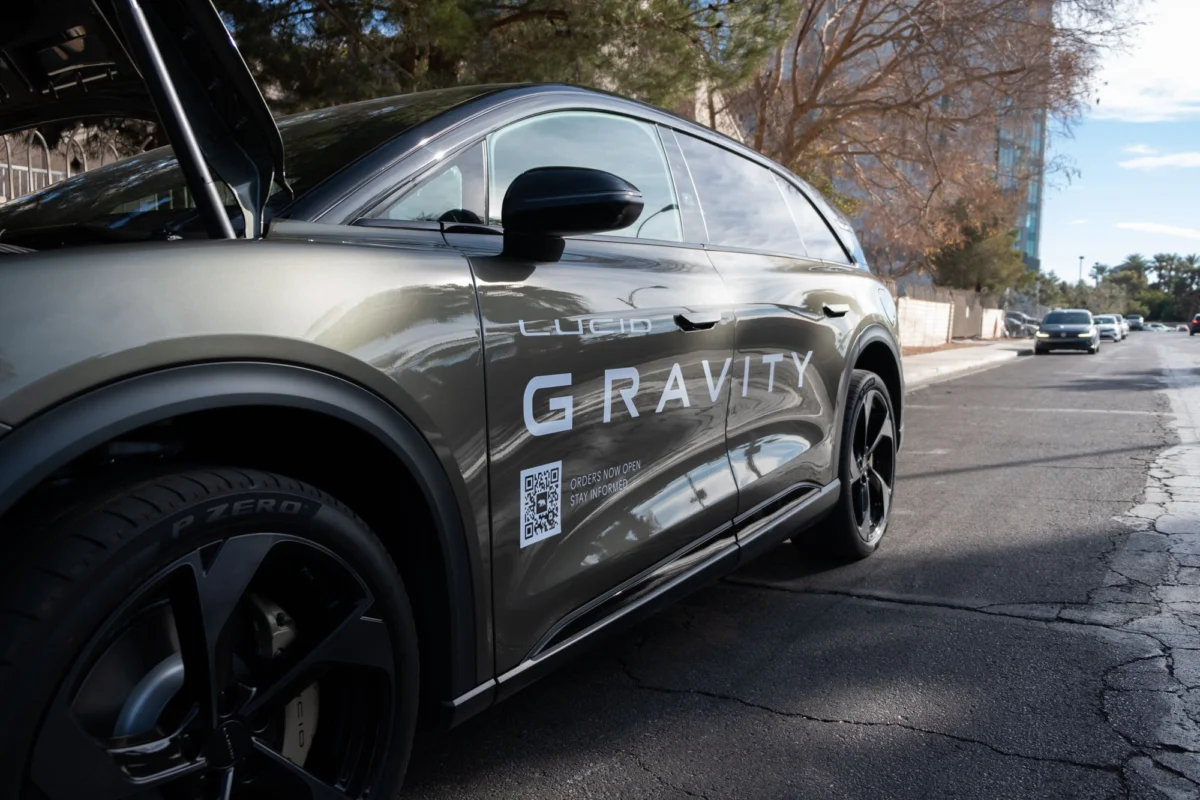
The program involves integrating Nuro’s self-driving technology into Lucid’s Gravity SUVs, with Uber operating the premium robotaxi service, allowing users to hail these self-driving vehicles via its app. A fleet of 100 vehicles is currently undergoing testing in Houston and the San Francisco Bay Area. Lucid announced that it began delivering production validation vehicles assembled at a facility in Coolidge, Arizona, last month. Regular vehicle production for the robotaxi service is slated to commence in the fourth quarter, with an expected commercial launch in late 2026. This move into the robotaxi sector, while highly competitive with players like Waymo and Cruise, represents a strategic diversification for Lucid, aiming to tap into the potentially high-margin software and service revenue streams associated with autonomous mobility, rather than solely relying on vehicle sales.
Organizational Overhaul and Workforce Reductions
Napoli’s tenure as CEO has been marked by a rapid and decisive organizational overhaul. This began with a significant shakeup in Lucid’s leadership ranks, bringing in several new top executives. Key appointments include a new chief financial officer, chief technology officer (though Rawlinson remains CTO, this likely refers to a new leader for a specific tech division), chief customer officer, chief digital officer, and chief transformation officer. This influx of new talent and a restructured leadership team is intended to instill greater operational discipline and accountability.
Beyond leadership changes, Napoli has also implemented significant workforce reductions. In June, the company directed a layoff of 18% of its workforce, impacting approximately 1,500 employees. This followed an earlier cut of 12% just four months prior, signaling a sustained effort to streamline operations and reduce personnel costs. Concurrently, Lucid eliminated the second shift of EV production at its primary factory in Casa Grande, Arizona. These combined measures—the layoffs and the reduction in production shifts—are projected to generate $158 million in annualized savings, as stated by Napoli during the earnings call. While necessary for financial stability, such extensive workforce reductions present challenges in maintaining employee morale and retaining critical talent, especially in a competitive industry.
Broader Market Context and Implications
Lucid’s operational reset comes at a challenging juncture for the broader electric vehicle industry. After years of rapid growth and soaring valuations, the EV market has experienced a significant slowdown in demand, particularly in certain segments. Factors contributing to this shift include higher interest rates impacting consumer purchasing power, increased competition leading to price wars, and lingering concerns about charging infrastructure and range anxiety. Many EV startups, once lauded for their innovative approaches, are now grappling with the immense capital requirements, complexities of scaling manufacturing, and intense competition from established automakers who are rapidly electrifying their lineups.
For investors and market analysts, Lucid’s reset plan is a mixed bag. The candid assessment from CEO Napoli and the aggressive cost-cutting targets signal a much-needed commitment to financial discipline and operational efficiency. However, the delay of the crucial mid-sized EV, which many saw as the company’s path to higher sales volumes, is a significant setback. It underscores the immense difficulty of bringing a complex product to market and highlights the capital-intensive nature of the automotive industry. The success of this operational reset will largely depend on Lucid’s ability to consistently execute on its revised timelines, deliver on its cost-saving promises, and effectively leverage its strategic partnerships in Saudi Arabia and the robotaxi space.
The stakes are undeniably high. Lucid Motors, once heralded as a potential challenger to Tesla’s dominance in the premium EV segment, is now fighting to establish a sustainable business model. Its ability to navigate these turbulent waters will not only determine its own future but also serve as a crucial test case for other ambitious EV startups grappling with similar challenges. The coming quarters will be critical in demonstrating whether this comprehensive operational reset can indeed provide the necessary foundation for Lucid to achieve its long-term vision of becoming a prominent player in the evolving landscape of electric mobility.