



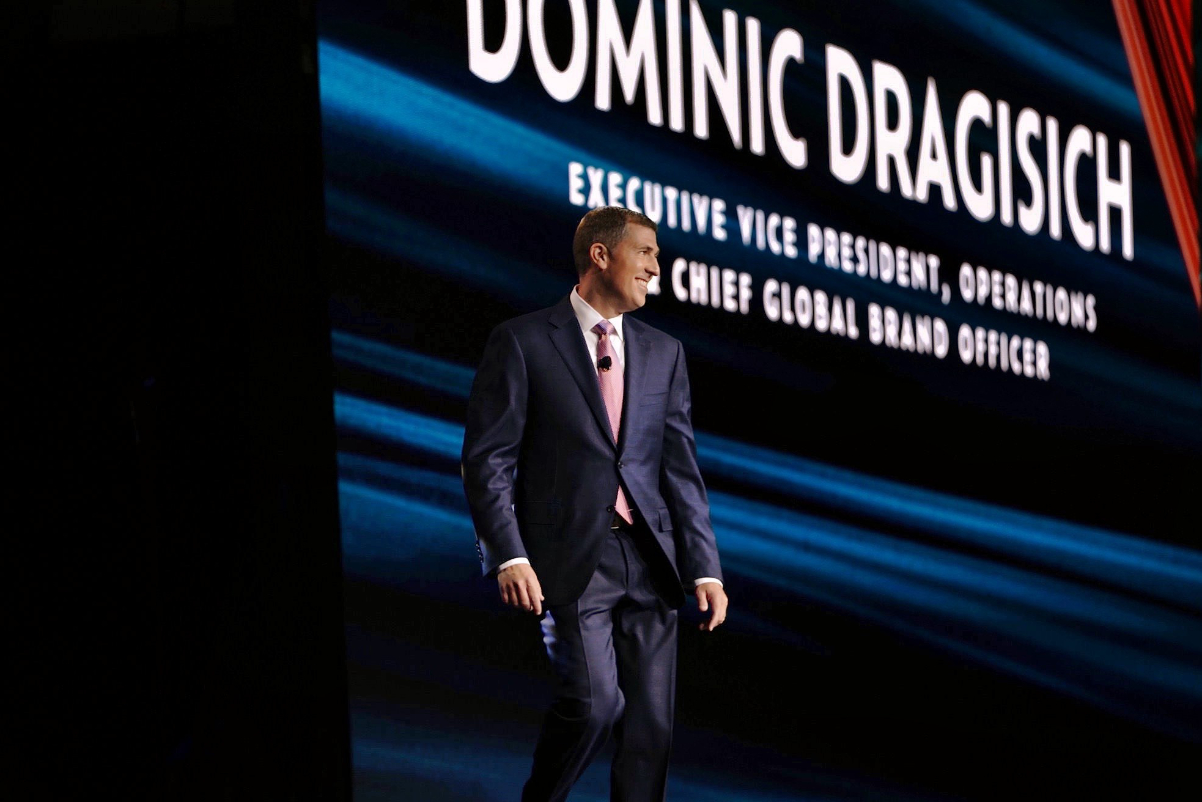
Choice Hotels International, one of the world’s largest lodging franchisors, is currently navigating a challenging period of transition as its interim leadership grapples with a widening performance gap relative to the broader U.S. hotel industry. Dominic Dragisich, who stepped into the role of interim Chief Executive Officer just 11 weeks ago, recently addressed investors and analysts regarding the company’s second-quarter financial results, which revealed that Choice is trailing behind industry averages in several key performance metrics. The most pressing concern for the hospitality giant is the lag in Revenue per Available Room (RevPAR), a critical industry benchmark that measures a hotel’s ability to fill its rooms at an average rate.
According to the latest quarterly data, Choice Hotels’ upscale-and-above segments in the United States saw a RevPAR increase of 1.3% year-over-year. While any growth is typically viewed as a positive indicator, this figure stands in stark contrast to the broader industry average for these chain scales, which rose by approximately 5% during the same period, based on data provided by CoStar. This discrepancy suggests that while the luxury and upscale markets are experiencing a robust recovery and expansion, Choice Hotels’ specific brands in this category—which include Cambria Hotels and the recently integrated Radisson brands—are failing to capture the same level of momentum as their direct competitors.
The midscale and upper-midscale segments, which represent the traditional core of Choice Hotels’ portfolio with brands like Comfort and Quality Inn, also showed signs of underperformance. These segments grew by 1.1% for Choice, whereas the industry average for similar chain scales saw a growth of roughly 4%. Perhaps most concerning was the performance of the budget or economy segment. Choice Hotels’ budget brands saw a RevPAR decline of 0.7%, while the economy segment across the industry managed to eke out a modest gain of approximately 1%. These figures have led market observers to question the company’s current trajectory and its ability to maintain its historical dominance in the select-service and economy lodging sectors.
Analyst Concerns and Market Share Erosion
The disparity between Choice Hotels’ performance and the industry at large has not gone unnoticed by Wall Street. Patrick Scholes, a prominent analyst at Truist Securities, highlighted the widening gap in a recent report, suggesting that the company is effectively losing ground to its rivals. "This result implies to us that they again continue to lose market share," Scholes wrote, pointing to the consistent trend of Choice trailing industry benchmarks.
Market share erosion is a significant concern for a franchisor-based business model like Choice Hotels. The company’s value proposition to hotel owners and developers relies heavily on its ability to drive superior RevPAR through its reservation systems, loyalty programs, and brand recognition. When the company’s brands underperform the industry average, it can lead to difficulties in retaining existing franchisees and attracting new ones, potentially slowing the growth of the company’s development pipeline.
During the second-quarter earnings call, Dragisich was candid about the challenges facing the organization. He acknowledged the revenue gap and emphasized that his primary focus during this interim period is to align the company’s performance with its potential. "My job is to close the gap between where we are today and where I believe this business can perform," Dragisich told analysts. This statement reflects an awareness within the executive suite that the current status quo is unsustainable if Choice intends to remain a top-tier competitor in the global hospitality market.
The Chronology of Transition: From Radisson to Wyndham
To understand the current predicament facing Choice Hotels, it is necessary to examine the company’s recent strategic moves and leadership changes. The company has undergone a significant transformation over the past 24 months, beginning with the acquisition of Radisson Hotels Americas in 2022. This $675 million deal was intended to accelerate Choice’s push into the upscale and upper-midscale segments, adding nine brands and over 60,000 rooms to its portfolio. However, the integration of these brands has been a complex undertaking, requiring the migration of thousands of properties onto Choice’s proprietary technology platforms.
Following the Radisson acquisition, Choice Hotels made headlines in late 2023 and early 2024 with a highly publicized, hostile takeover attempt of Wyndham Hotels & Resorts. The proposed merger would have created an unprecedented titan in the economy and midscale lodging space. However, the bid faced stiff resistance from Wyndham’s board of directors and significant regulatory scrutiny. In March 2024, Choice officially withdrew its bid and ended its exchange offer, citing a lack of progress in negotiations and the potential for a protracted regulatory battle.
The failure of the Wyndham merger left Choice Hotels at a crossroads. Shortly after the bid was withdrawn, the company announced a leadership transition, with Dominic Dragisich stepping in as interim CEO. Dragisich, who previously served as the company’s Chief Financial Officer, took the helm during a period of relative volatility, tasked with refocusing the company on organic growth and operational excellence after months of distraction caused by the merger attempt.
Detailed Performance Metrics and Segment Analysis
A closer look at the data reveals the nuances of Choice Hotels’ current struggle. The hospitality industry as a whole has been benefiting from a "normalization" of travel patterns following the post-pandemic surge. However, this normalization has favored higher-end properties and international travel, often at the expense of domestic economy and midscale hotels.
- Upscale and Above: Choice’s 1.3% RevPAR growth in this segment is particularly disappointing given the significant investment the company has made in the Cambria brand and the integration of Radisson Blu and Radisson Individuals. Competitors like Hilton and Marriott have reported much stronger domestic upscale performance, driven by a return of corporate group travel and sustained demand for premium leisure experiences.
- Midscale and Upper Midscale: With a 1.1% growth rate against a 4% industry average, brands like Comfort Inn and Sleep Inn are facing pressure. Analysts suggest that consumers who previously stayed in midscale hotels may be "trading up" to upscale brands as part of the post-pandemic travel boom, or "trading down" to budget options due to inflationary pressures, leaving the middle tier in a difficult position.
- Budget and Economy: The 0.7% decline in RevPAR for Choice’s budget hotels, such as Econo Lodge and Rodeway Inn, reflects a broader softening in the lower-income consumer segment. While the industry average grew by 1%, Choice’s decline suggests that its specific properties may be aging or facing stiffer competition from newer, "hard budget" brands and alternative lodging options like short-term rentals.
Strategic Responses and Future Outlook
In response to these figures, Choice Hotels is pivoting its strategy to emphasize property renovations and technology-driven revenue management. Dragisich noted during the earnings call that the company is working closely with franchisees to improve the "RevPAR Index"—a measure of a hotel’s performance relative to its immediate local competitors. By improving the quality of the guest experience through property improvement plans (PIPs), Choice hopes to command higher room rates and improve occupancy.
Furthermore, the company is doubling down on its "ChoiceEdge" global reservation system. By leveraging data analytics and artificial intelligence, Choice aims to provide its franchisees with better pricing recommendations, helping them to capture more revenue during peak demand periods. The company also continues to lean on its Choice Privileges loyalty program, which recently surpassed 60 million members, as a primary vehicle for driving direct bookings and reducing reliance on expensive third-party online travel agencies (OTAs).
The company’s development pipeline remains a bright spot in an otherwise challenging report. Choice reported that its total domestic pipeline increased by 10% year-over-year, reaching over 1,000 hotels. This suggests that despite current RevPAR lags, developers still see long-term value in the Choice Hotels brand family. The challenge for Dragisich and the eventual permanent successor will be ensuring that these new properties can perform at or above industry standards once they open their doors.
Broader Implications for the Hospitality Sector
The situation at Choice Hotels serves as a bellwether for the broader U.S. lodging industry. The widening gap between Choice’s performance and the industry average highlights a growing divergence in the travel market. While luxury and upscale segments remain resilient, the "middle" of the market is being squeezed.
For investors, the second-quarter results raise questions about the valuation of lodging franchisors that are heavily weighted toward domestic, select-service brands. As the travel landscape continues to evolve, companies that fail to innovate or maintain parity with industry growth rates risk being marginalized.
As Dominic Dragisich moves into his fourth month as interim CEO, the pressure to deliver a "turnaround" story is mounting. The company must prove that it can successfully integrate the Radisson portfolio and revitalize its legacy brands without the crutch of a massive acquisition like the one proposed for Wyndham. The coming quarters will be critical in determining whether Choice Hotels can close the revenue gap or if the current trend of market share loss will become a permanent fixture of its financial profile.
For now, Choice Hotels remains a massive player with significant scale and a robust loyalty base. However, the second-quarter data serves as a stark reminder that in the highly competitive world of global hospitality, scale alone is not a guarantee of success. The ability to drive RevPAR growth in line with or ahead of the industry is the ultimate litmus test for any hotel brand, and it is a test that Choice Hotels is currently struggling to pass.