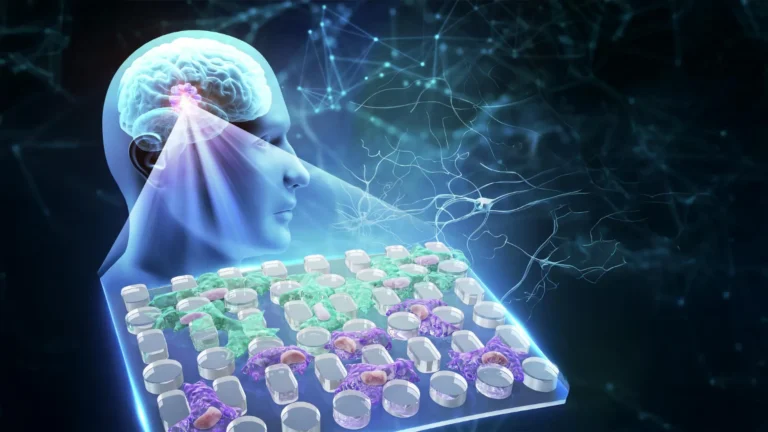
Seoul, South Korea – In a significant breakthrough that could reshape the landscape of neurodevelopmental disorder treatment, scientists have identified a novel pathway to potentially restore the function of a crucial brain receptor implicated in autism spectrum disorder (ASD) and other neurological conditions. The groundbreaking research, spearheaded by Director Eunjoon Kim and his team at the Institute for Basic Science (IBS) Center for Synaptic Brain Dysfunctions, has pinpointed a specific glycine transporter, known as Slc6a20a in mice and SLC6A20 in humans, as a key target for therapeutic intervention. This discovery offers a more precise and potentially safer approach to addressing the complex challenges associated with impaired brain signaling.
The core of this research revolves around the NMDA receptor (NMDAR), a vital component of synaptic communication between neurons. NMDARs are fundamental to a wide array of cognitive functions, including learning, memory formation, and overall brain plasticity. Dysregulation of NMDAR activity has been consistently linked to a spectrum of debilitating neurological and psychiatric conditions, ranging from autism spectrum disorder and schizophrenia to intellectual disabilities and the rare autoimmune disorder NMDAR encephalitis. For decades, the scientific community has grappled with finding effective ways to bolster NMDAR function, but clinical trials have yielded inconsistent and often disappointing results, underscoring the urgent need for more targeted therapeutic strategies.
The Quest for Precision: Targeting SLC6A20
The intricate balance of neurotransmitters is critical for optimal brain function, and glycine plays a pivotal role as a co-agonist for NMDARs, meaning it is essential for their full activation alongside glutamate. Previous therapeutic attempts focused on increasing glycine levels by inhibiting another glycine transporter, GlyT1. While conceptually sound, this approach proved problematic. GlyT1 is widely distributed throughout the brain, including in critical brainstem regions responsible for regulating essential life functions such as breathing and motor control. Consequently, treatments targeting GlyT1 often resulted in a narrow therapeutic window, offering limited benefits while simultaneously introducing a significant risk of severe and undesirable side effects.
The IBS research team recognized the limitations of these earlier strategies and embarked on a quest to identify a more selective target. Their focus shifted to Slc6a20a, a glycine transporter whose expression is predominantly concentrated in brain regions directly involved in cognitive processes, notably the cerebral cortex and hippocampus. This restricted anatomical distribution presents a significant advantage, suggesting that modulating Slc6a20a activity could enhance NMDAR function in key cognitive areas without unduly impacting vital autonomic functions regulated by other brain regions. This targeted approach holds the promise of achieving therapeutic benefits with a substantially reduced risk of off-target effects.
Restoring Neural Communication and Behavioral Improvements in Animal Models
To investigate the therapeutic potential of targeting Slc6a20a, the researchers employed a sophisticated technique known as antisense oligonucleotide (ASO) therapy. ASOs are short, synthetic strands of nucleic acids designed to bind to specific messenger RNA (mRNA) molecules, thereby reducing the production of the corresponding protein. In this study, ASOs were used to decrease the expression of Slc6a20a.
The experimental models chosen for this investigation were crucial: mice genetically engineered to carry mutations in the SHANK2 and SHANK3 genes. These genes are recognized as major risk factors for autism spectrum disorder and are also implicated in other significant neurodevelopmental disorders, including Phelan-McDermid syndrome. By utilizing these established autism models, the researchers could directly assess the impact of Slc6a20a modulation on core autism-related deficits.
The results were striking. Treatment with the Slc6a20a ASO successfully restored NMDAR activity in the brains of these genetically modified mice. More importantly, this restoration of receptor function translated into tangible behavioral improvements. The mice exhibited amelioration of key autism-related challenges, including deficits in social interaction, difficulties with social communication, and the presence of repetitive behaviors.
A particularly noteworthy finding was that these therapeutic benefits were observed even in adult mice. This suggests that impairments in NMDAR function, and by extension the associated behavioral phenotypes, may remain amenable to treatment even after critical developmental stages of brain maturation have passed. This opens up a broader therapeutic window and offers hope for interventions that can be administered later in life.
Unraveling the Mechanism: Beyond Protein Quantity
Further investigation delved into the precise mechanisms by which the Slc6a20a ASO therapy exerted its effects. Employing advanced, large-scale phospho-proteomic analyses, the researchers sought to understand how the treatment altered protein profiles within the brain. Their findings revealed that the therapy induced relatively minor changes in the overall abundance of proteins. This indicated that the ASO was not simply increasing or decreasing the quantity of specific proteins.
Instead, the analysis uncovered a more nuanced effect: the treatment effectively corrected aberrant phosphorylation patterns in proteins crucial for synaptic signaling and NMDAR function. Phosphorylation, a process where a phosphate group is added to a protein, acts as a molecular switch, regulating a protein’s activity, stability, and interactions. By normalizing these phosphorylation patterns, the Slc6a20a ASO therapy appeared to restore the functional integrity of the NMDAR complex and its associated signaling machinery, rather than merely altering protein levels. This suggests a sophisticated mechanism of action that fine-tunes neural communication at a molecular level.
Validation in Human Brain Organoids: Bridging the Gap
To assess the translational potential of their findings and explore whether the observed effects could be replicated in human systems, the researchers extended their investigation to human brain organoids. These three-dimensional, in-vitro models are derived from human stem cells and recapitulate key aspects of early human brain development, providing a valuable platform for studying complex neurological processes and testing therapeutic interventions.
Using CRISPR gene editing technology, the team generated human cortical organoids that harbored SHANK2 or SHANK3 mutations, mirroring the genetic backgrounds of the mouse models. As anticipated, these human organoids exhibited reduced NMDAR activity, consistent with the findings in the animal models.
Crucially, an ASO specifically designed to target the human SLC6A20 gene was introduced into these organoid cultures. The results demonstrated that this human-specific ASO effectively restored NMDAR function, bringing it back to levels closely approximating those observed in healthy control organoids.
Director Eunjoon Kim commented on the significance of these findings, stating, "Unlike gene re-expression strategies, SLC6A20 inhibition works by modulating endogenous signaling pathways and may offer a more practical therapeutic route. The fact that the effect was reproduced not only in mice but also in human cortical organoids suggests that this approach may represent a promising therapeutic strategy for neurodevelopmental disorders characterized by NMDA receptor hypofunction." This statement highlights the potential for a more accessible and adaptable therapeutic paradigm compared to traditional gene therapy approaches.
Sustained Efficacy and Broader Implications
Further studies provided crucial insights into the durability and safety of the Slc6a20a ASO treatment. The researchers reported that a single administration of the ASO demonstrated sustained efficacy for at least eight weeks in the treated mice. Importantly, during this observation period, no detectable adverse effects were identified, suggesting a favorable safety profile.
While the primary focus of this research was autism spectrum disorder, the underlying mechanism—restoring NMDAR function by modulating SLC6A20—has far-reaching implications. Given that reduced NMDAR activity is a common denominator in a range of neurological and psychiatric disorders, this therapeutic strategy could potentially be applicable to conditions such as schizophrenia and certain forms of intellectual disability.
The study’s identification of SLC6A20 as a promising therapeutic target for restoring NMDAR function represents a significant advancement. It provides a solid foundation for the development of novel treatments for a broader spectrum of neurodevelopmental and neuropsychiatric disorders characterized by NMDAR hypofunction. The precise targeting of SLC6A20 offers a compelling alternative to earlier, less selective approaches, paving the way for more effective and safer interventions for individuals affected by these complex conditions.
Expert Perspectives and Future Directions
The scientific community has reacted with cautious optimism to these findings. Dr. Anya Sharma, a neurodevelopmental pediatrician not involved in the study, commented, "This research is incredibly exciting because it addresses a fundamental deficit in brain signaling that is implicated in so many different disorders. The elegance of targeting a transporter with such a localized expression pattern offers a clear advantage in terms of minimizing side effects. The successful replication in human organoids is a critical step towards clinical translation."
The research team is now focused on further preclinical studies to optimize the ASO delivery methods and assess long-term efficacy and safety in more complex animal models. The ultimate goal is to translate these promising findings into human clinical trials, a process that typically involves rigorous testing for safety and efficacy in human participants.
The timeline for such a translation can be lengthy, often spanning several years, but the potential impact of this discovery is immense. If successful, therapies targeting SLC6A20 could offer a much-needed avenue for improving cognitive function, social engagement, and overall quality of life for millions of individuals worldwide affected by autism and related disorders. This research underscores the power of fundamental scientific inquiry in unraveling the complexities of the brain and developing innovative solutions to pressing medical challenges. The path forward involves continued meticulous research, strategic partnerships, and a commitment to rigorous scientific validation, all aimed at bringing this promising therapeutic strategy from the laboratory bench to the patient bedside.