


Long space missions, whether to the Moon or Mars, present an unparalleled crucible for human psychology and interpersonal relationships. The isolation, cramped quarters, and relentless pressure on small crews for extended periods can profoundly impact teamwork and individual well-being. To gain a deeper understanding of these challenges, an international research consortium recently concluded a comprehensive study of a ten-month overwintering mission at Concordia Station, Antarctica, a location renowned for its extreme conditions and its uncanny resemblance to extraterrestrial habitats.
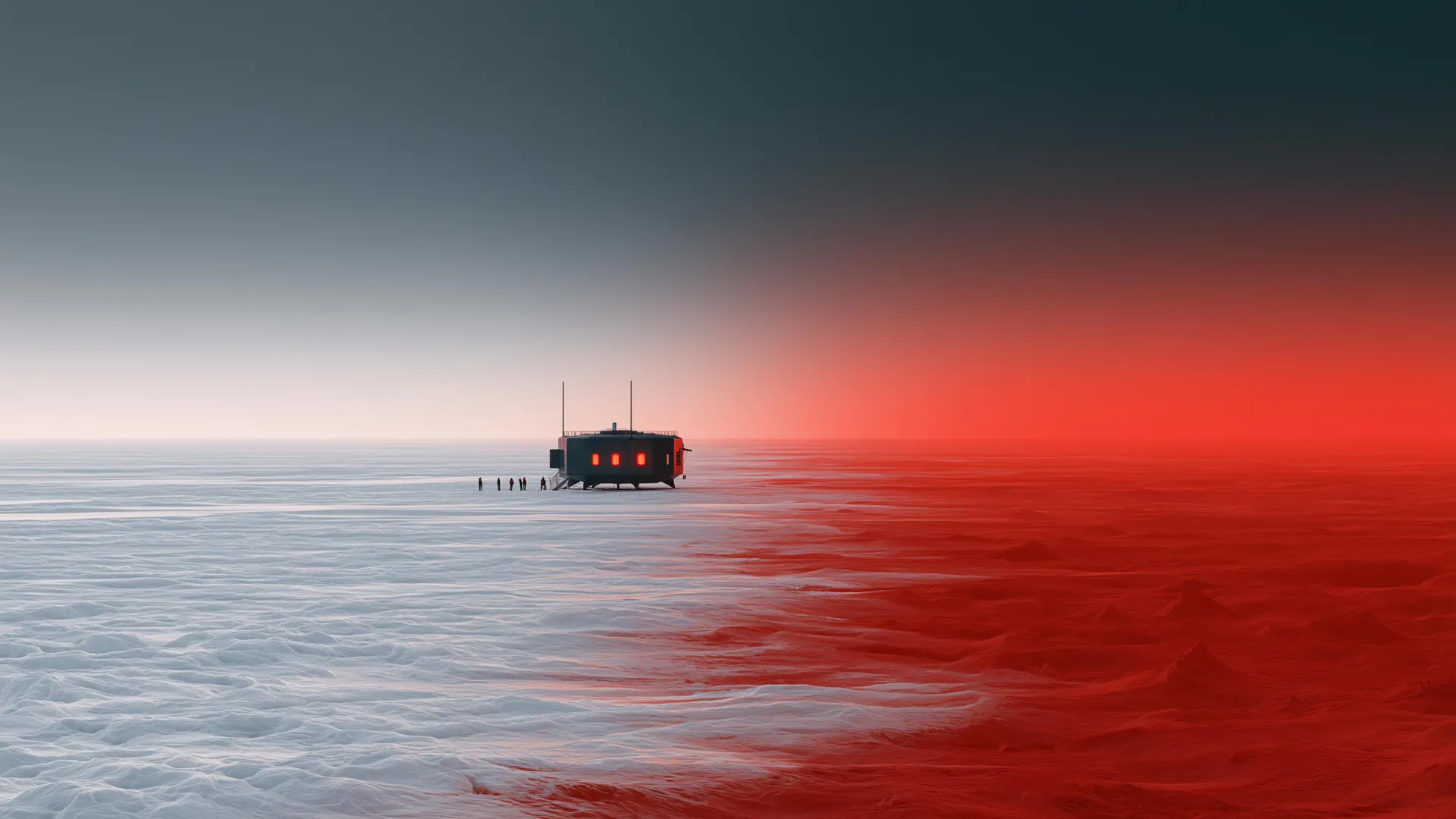
The groundbreaking research, spearheaded by Professor Jan Schmutz of the Department of Psychology at the University of Zurich and Dr. Andrea Cantisani, a psychiatrist and research associate at the University of Bern, utilized a unique combination of self-reported data and objective sensor measurements to dissect the intricate social fabric of a highly isolated team. Concordia Station, perched on the Antarctic plateau, plunges to winter temperatures as low as minus 80 degrees Celsius (-112 degrees Fahrenheit) and experiences months of complete darkness. This profound isolation, coupled with its harsh environment, makes it one of the most robust terrestrial analogues for the challenges astronauts will face on future extended voyages beyond Earth.
The Concordia Experiment: A Real-World Laboratory for Space Psychology
The ten-month overwintering mission at Concordia Station, which typically runs from February to November, saw a dedicated crew of 12 individuals living and working in complete isolation from the outside world for the vast majority of that period. During the Antarctic winter, the station is inaccessible by conventional means, with all resupply and evacuation missions suspended. This enforced confinement, extending for nearly nine months, creates a unique psychological environment that closely mirrors the conditions astronauts would endure on a multi-year mission to Mars.
The research team implemented a multi-faceted approach to capture the nuanced evolution of the crew’s social dynamics. Throughout the ten-month duration, the 12 crew members were administered standardized questionnaires at four distinct intervals. These questionnaires were designed to gauge subjective experiences related to loneliness, trust, conflict levels, the quality of social relationships, overall team cohesion, and their perception of team performance.
Crucially, the study incorporated a technological innovation: wearable sensors. Each crew member was equipped with these unobtrusive devices, which automatically recorded instances of physical proximity to other team members and the duration of these encounters. This objective data provided a quantitative measure of social interaction, offering a vital complement to the subjective self-assessments. By meticulously integrating the questionnaire responses with the sensor-generated proximity data, the researchers were able to construct a detailed, data-driven narrative of how social metrics shifted and evolved over the entire ten-month mission.
Counterintuitive Findings: More Contact, More Conflict?
One of the most striking and perhaps counterintuitive findings of the study challenged conventional wisdom regarding social interaction in isolated environments. The research revealed that increased physical proximity to other crew members did not consistently correlate with improved social outcomes. In fact, participants who reported more frequent contact with their colleagues were paradoxically more likely to experience heightened levels of conflict, diminished trust, and a perceived decrease in team performance.
This finding suggests that in environments characterized by extreme confinement and limited personal space, constant proximity can paradoxically become a significant source of psychological strain. While isolation itself presents considerable difficulties, the absence of privacy and the perpetual presence of others can create a different, yet equally potent, form of pressure.
"In small teams under extreme conditions, more contact doesn’t automatically equate to social support, but can actually increase tensions," stated Jan Schmutz, a lead researcher on the project. This observation underscores the critical distinction between mere physical co-location and genuine, supportive social interaction. The constant need for negotiation, the potential for interpersonal friction to escalate in confined spaces, and the lack of personal retreat can transform what might otherwise be positive interactions into sources of stress.
The researchers are careful to emphasize that these findings represent correlations, and direct causation cannot be definitively established from this study alone. For instance, it is plausible that individuals experiencing feelings of loneliness might proactively seek out more interaction with others, even if those encounters ultimately fail to provide the solace or support they are seeking, potentially leading to increased frustration and conflict. This complex interplay between subjective feelings and observed behaviors highlights the intricate nature of human social dynamics in extreme settings.
The Emergence of Subgroups: A Natural Tendency in Isolation?
Beyond the direct impact of contact frequency, the wearable sensor data also illuminated a significant trend in the crew’s social organization: the gradual formation of smaller social subgroups. As the ten-month mission progressed, the crew members increasingly gravitated towards spending more time with colleagues who shared similar linguistic or national backgrounds.
These emergent micro-communities likely served a crucial psychological function for individuals, providing a sense of familiarity, shared understanding, and emotional grounding during what was undoubtedly a stressful and demanding period. In the absence of external social networks, these internal bonds can offer a vital source of psychological resilience.
However, the study also points to a potential downside of this subgroup formation. While beneficial for individual well-being, these increasingly defined social divisions could, over time, contribute to social fragmentation within the team. In culturally diverse crews, such as those anticipated for international space missions, the reinforcement of national or linguistic enclaves might inadvertently weaken overall team unity and hinder effective collaboration across different cultural groups. This presents a delicate balancing act for mission planners, who must foster supportive internal networks without compromising the overarching cohesion and functional integration of the entire crew.
Implications for Future Space Exploration and Beyond
The findings from the Concordia Station study hold profound implications for the future of human space exploration, particularly for long-duration missions to the Moon and Mars. Astronauts undertaking these voyages will live and work in extremely confined environments for months, and potentially years, with limited opportunities for privacy and significantly restricted communication with loved ones and support systems on Earth. Understanding how to manage interpersonal relationships under such conditions is not merely a matter of comfort; it is fundamental to mission success and crew safety.
The insights gained could inform the selection and training of astronaut crews, emphasizing not only technical proficiency but also psychological compatibility and advanced interpersonal skills. Mission planners might need to develop strategies for actively mitigating the negative effects of excessive proximity and encouraging constructive social interactions. This could include designing habitats with more opportunities for private reflection, implementing structured team-building activities that transcend subgroup boundaries, and providing accessible psychological support mechanisms.
Furthermore, the applicability of these findings extends beyond the realm of space travel. The research offers valuable lessons for other demanding, isolated environments on Earth, such as submarines, offshore oil platforms, and remote scientific research stations. In any situation where small groups are confined for extended periods, the dynamics observed at Concordia Station are likely to manifest, requiring similar considerations for team management and psychological support.
"The results show how important it is to identify social dynamics early on and provide teams with targeted support," emphasized Schmutz. Proactive identification of potential friction points and the implementation of tailored interventions are crucial for maintaining crew morale and operational effectiveness in these challenging settings.
Technological Advancements in Extreme Environments
The successful deployment and operation of wearable proximity sensors in the harsh Antarctic environment also represent a significant technological advancement. These devices demonstrated their reliability and effectiveness in capturing objective social interaction data without substantially disrupting the crew’s daily routines. This capability opens up new avenues for future research, allowing scientists to monitor and analyze social patterns in real-time and in situ, even in the most extreme conditions.
The ability to collect such data unobtrusively is vital for developing evidence-based strategies for crew well-being. Future research stemming from this study will likely delve deeper into identifying specific types of social interactions that effectively alleviate stress versus those that inadvertently exacerbate it. This granular understanding will be invaluable for designing optimal living and working conditions for astronauts and for individuals operating in other high-stakes, isolated environments.
The Concordia Station project, therefore, stands as a critical stepping stone in our understanding of human resilience and adaptability under duress. By leveraging the unique laboratory of Antarctica, researchers are shedding light on the complex interplay of isolation, proximity, and social connection, paving the way for safer and more successful human endeavors beyond our planet and in the most challenging terrestrial settings. The lessons learned are not just about surviving extreme conditions; they are about thriving, collaborating, and achieving ambitious goals in the face of unprecedented human challenges.