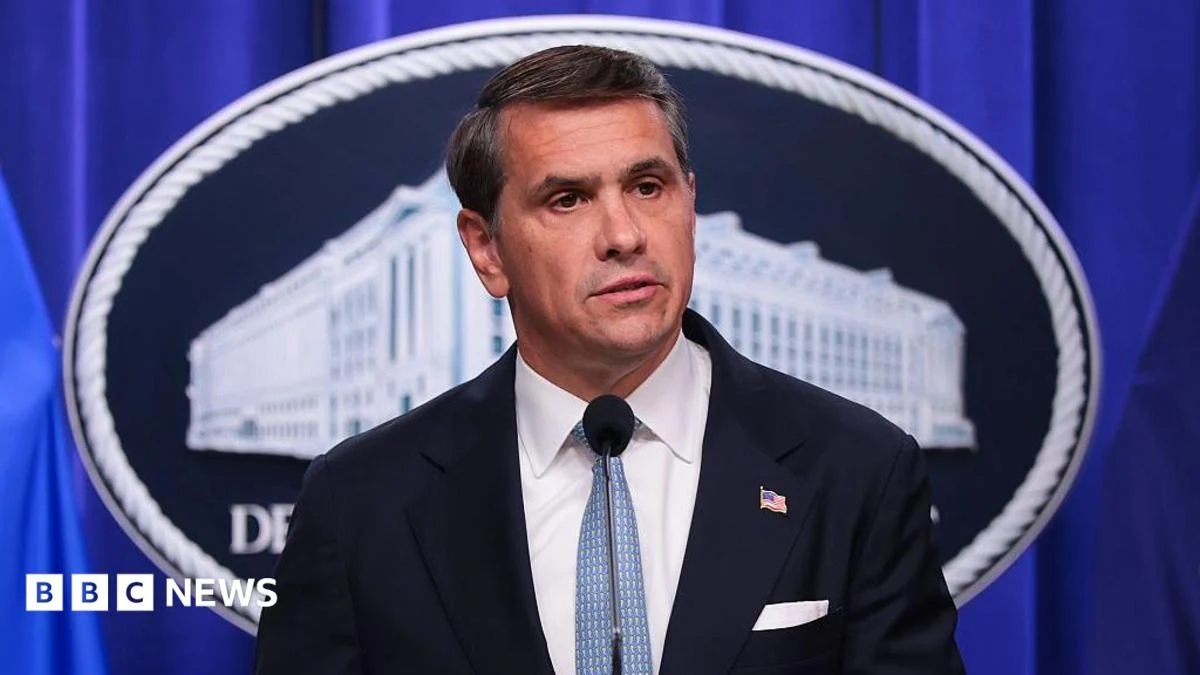
President Donald Trump’s former personal lawyer, Todd Blanche, has officially been confirmed as the United States Attorney General, assuming the nation’s highest law enforcement post after a contentious and narrowly decided Senate vote. The confirmation, achieved by a 50-49 margin, marks a significant victory for the Trump administration and brings to an end months of political wrangling and intense scrutiny over Blanche’s suitability for the role. The vote saw two Republican Senators, Susan Collins of Maine and Lisa Murkowski of Alaska, break ranks to oppose the nomination, while Senator Bill Cassidy of Louisiana emerged as the crucial swing vote, ultimately siding with the administration despite a history of animosity with President Trump.
A Divisive Confirmation: The Vote Breakdown
The Senate floor on confirmation day was a tableau of political tension, reflecting the deep partisan divisions that have characterized judicial and cabinet appointments in recent years. With all 49 Democratic senators united in opposition to Blanche’s nomination, the outcome hinged entirely on Republican unity. The final tally of 50-49 underscored the razor-thin margin by which Blanche secured his position, highlighting the significant reservations held by a segment of the Republican caucus, in addition to the unanimous Democratic rejection.
The unified Democratic opposition stemmed from a myriad of concerns, primarily revolving around fears of the Department of Justice’s politicization under Blanche’s leadership, given his close ties to President Trump. Democrats consistently voiced apprehension that Blanche, as a former personal attorney to the President, would struggle to maintain the independent ethos traditionally associated with the Attorney General’s office, potentially using the department to pursue political agendas rather than impartial justice. These concerns were amplified by Blanche’s actions during his tenure as acting Attorney General, which many Democrats viewed as demonstrating a willingness to align with the President’s political objectives.
Senator Cassidy’s Pivotal Role and Shifting Allegiances
The ultimate success of Blanche’s nomination can largely be attributed to Senator Bill Cassidy’s eleventh-hour decision to support him. Cassidy, a Republican from Louisiana, had been a focal point of anxiety for the Trump administration, given his past clashes with the President. Most notably, Cassidy was one of seven Republican senators who voted to convict President Trump during his second impeachment trial in 2021, following the January 6th attack on the U.S. Capitol. This vote led to a protracted period of acrimony between the two, culminating in Trump’s successful backing of a primary challenger against Cassidy for his Louisiana Senate seat earlier this year, effectively forcing Cassidy into retirement at the end of his current term.
Despite this turbulent history, Cassidy announced his decision on Friday, just ahead of the vote, stating his belief that Blanche was "the best option the president would put forward." His rationale, articulated to a waiting Washington, acknowledged that while President Trump ultimately dictates the direction of the Justice Department, Senate confirmation would provide Blanche with "greater leverage to push for things that should be pushed for." Cassidy also cited a reluctance to impede the department’s ongoing work in combating violent crime, suggesting a pragmatic concern for operational continuity outweighed his personal or historical grievances with the President. His decision was a testament to the complex calculations often at play in high-stakes political confirmations, where institutional concerns and strategic compromises can override personal feuds.
Republican Dissent: Collins and Murkowski’s Concerns
The two Republican senators who broke ranks, Susan Collins and Lisa Murkowski, articulated substantial concerns that echoed, in part, the broader Democratic opposition but also stemmed from specific issues they found troubling. Senator Murkowski, a frequent critic of executive overreach and a proponent of an independent judiciary, announced her opposition on Friday, citing a profound lack of confidence in Blanche’s ability to "check the worst impulses of this administration." Her primary concern centered on the "politicisation" of the Justice Department, a theme she has consistently emphasized throughout her career. Murkowski’s principled stance underscored a belief that the Attorney General must serve as an impartial guardian of the law, insulated from the political pressures of the White House, a quality she felt Blanche’s past and recent actions did not adequately demonstrate.
Senator Collins, known for her moderate stance and often a swing vote in contentious confirmations, also voiced significant reservations. While ultimately expressing trust in Blanche to provide "candid legal advice" to the president, her concerns were multifaceted. She raised questions about Blanche’s handling of the release of Jeffrey Epstein-related documents, a sensitive issue that garnered significant public attention and raised questions about transparency and accountability within the Justice Department. Additionally, Collins, like Murkowski, was deeply troubled by Blanche’s role in establishing President Trump’s proposed $1.8 billion "anti-weaponization" fund. This fund, intended to compensate individuals alleging government persecution, drew sharp criticism from across the political spectrum, with fears it could be misused for political retribution or to aid those prosecuted for their involvement in the January 6th Capitol attack.
The "Anti-Weaponization" Fund Controversy: A Major Sticking Point
The proposed "anti-weaponization" fund emerged as one of the most contentious issues during Blanche’s confirmation hearings, almost derailing his nomination. The fund, conceived by the Trump administration and championed by Blanche, was intended to create a pool of $1.8 billion to provide financial compensation to individuals who claimed to have been unfairly targeted or persecuted by government agencies. While framed by proponents as a measure to ensure justice for those wronged by overzealous federal actors, critics, including Senators Murkowski and Collins, viewed it with profound alarm.
The primary concern was the fund’s potential for political abuse. Many feared it would not be a mechanism for legitimate redress but rather a tool for political retribution, potentially channeling funds to allies of the administration, including individuals facing prosecution for their roles in the January 6th attack on Congress. This prospect ignited a firestorm of criticism, with senators from both parties expressing deep discomfort over the perception of the Justice Department establishing a fund that could effectively reward or support those accused of serious crimes against the government.
During his confirmation hearings, facing significant blowback from Republican senators, Blanche eventually pledged to "walk back" the fund, signaling a willingness to abandon the controversial scheme. However, the exact nature and legal bindingness of this commitment remain ambiguous. Critics questioned whether this was a genuine abandonment or a strategic retreat, leaving open the possibility that President Trump could later persuade Blanche, his former personal attorney, to revive a similar scheme under a different name or through alternative mechanisms. This lingering uncertainty contributed significantly to the reservations expressed by the dissenting senators.
Blanche’s Journey to Attorney General: A Timeline
Todd Blanche’s path to becoming the nation’s top law enforcement official is closely intertwined with President Trump’s second administration. His journey began well before his confirmation vote:
- Prior to April: Blanche served as Deputy Attorney General within the Department of Justice, a senior leadership role that provided him with significant insight into the department’s operations and policy-making processes. Before joining the Trump administration, he was widely known as a prominent personal lawyer for President Trump, representing him in various legal matters, further cementing their close professional relationship.
- April (Exact Date Unspecified): Blanche assumed the role of acting Attorney General following the unexpected departure of Pam Bondi, who had previously held the position. Bondi’s firing was shrouded in some mystery, though reports suggested it was related to internal disagreements or a desire by the administration for a more politically aligned leader at the helm of the DOJ. Blanche’s elevation to acting AG placed him immediately in the spotlight and under intense scrutiny, particularly regarding his early policy decisions and administrative actions.
- Summer/Fall: Confirmation hearings for Blanche’s permanent appointment commenced, becoming a forum for detailed examination of his record, his policy positions, and his suitability for the role. These hearings were marked by sharp questioning from Democrats and cautious inquiries from some Republicans, focusing on issues like the "anti-weaponization" fund, the Epstein documents, and the IRS settlement.
- Friday (Confirmation Week): Senator Lisa Murkowski publicly announced her decision to oppose Blanche’s nomination, citing concerns over the "politicisation" of the justice department and her lack of confidence in his ability to serve as an independent check on the administration.
- Friday (Confirmation Week): Senator Bill Cassidy, after days of anxious waiting in Washington, announced his decision to vote in favor of Blanche, providing the crucial vote needed for confirmation.
- Confirmation Day: The Senate held its final vote, confirming Todd Blanche as Attorney General by a 50-49 margin.
The Role of the Attorney General: Power and Responsibility
The Attorney General of the United States holds one of the most powerful and consequential positions within the federal government. As the chief law enforcement officer and head of the Department of Justice (DOJ), the Attorney General is responsible for overseeing all federal legal matters, including the enforcement of federal laws, providing legal advice to the President and other executive agencies, and representing the U.S. government in legal proceedings.
The DOJ, under the Attorney General’s leadership, encompasses a vast array of critical agencies, including the Federal Bureau of Investigation (FBI), the Drug Enforcement Administration (DEA), the Bureau of Alcohol, Tobacco, Firearms and Explosives (ATF), and the U.S. Attorneys’ Offices across the country. The Attorney General sets the tone and priorities for federal prosecutions, civil litigation, and investigations, directly impacting criminal justice policy, civil rights enforcement, national security, and economic regulation. The position demands an unwavering commitment to justice, impartiality, and adherence to the rule of law, often requiring the AG to make decisions that may run counter to the political interests of the appointing president. The independence of the Attorney General is thus considered paramount to maintaining public trust in the justice system.
Implications for the Department of Justice and Beyond
Blanche’s confirmation as Attorney General carries profound implications for the Department of Justice, the Trump administration’s legal agenda, and the broader landscape of American law enforcement.
Impact on DOJ Independence: The most significant concern raised by critics centers on the perceived erosion of the DOJ’s independence. Given Blanche’s past role as President Trump’s personal lawyer, there are widespread fears that the department may be seen as an extension of the White House’s political will rather than an impartial arbiter of justice. This perception could undermine public trust in federal law enforcement agencies and potentially lead to accusations of selective prosecution or politicized investigations. Senator Murkowski’s explicit concern about Blanche’s ability to "check the worst impulses of this administration" encapsulates this fundamental anxiety.
Future of the "Anti-Weaponization" Fund: While Blanche pledged to "walk back" the controversial $1.8 billion fund, the commitment’s legal enforceability and the administration’s long-term intentions remain unclear. Should the fund or a similar initiative be revived, it would undoubtedly reignite controversy and raise serious questions about the DOJ’s priorities and potential use of federal resources for politically motivated ends. This issue will likely remain a flashpoint for congressional oversight and public debate.
Enforcement Priorities: As Attorney General, Blanche will have the authority to shape the DOJ’s enforcement priorities. This could include a renewed focus on certain types of crime, such as violent crime, as alluded to by Senator Cassidy. However, it could also involve a shift in emphasis regarding white-collar crime, environmental enforcement, or civil rights investigations, aligning with the administration’s broader policy objectives. The influence of a politically aligned Attorney General on these priorities could be substantial.
Relationship with Congress: Blanche’s confirmation, achieved with a narrow partisan vote, sets the stage for a potentially adversarial relationship with the Democratic-controlled House (if applicable) and dissenting senators. Congressional oversight committees are likely to scrutinize the DOJ’s actions closely, particularly concerning investigations, policy shifts, and any perception of political interference. Subpoenas and requests for information could become more frequent, leading to further clashes between the executive and legislative branches.
Precedent for Presidential Appointments: The contentious nature of Blanche’s confirmation, particularly the willingness of a President to nominate a former personal attorney to such a sensitive role, sets a precedent for future administrations. It underscores the increasing politicization of high-level appointments and the diminishing bipartisan consensus on the qualifications for key positions that demand independence and impartiality.
The Road Ahead
With Todd Blanche now officially at the helm of the Department of Justice, the focus shifts from his confirmation battle to his tenure. His leadership will be closely watched by legal experts, civil liberties advocates, political observers, and the American public. The challenge for Attorney General Blanche will be to navigate the inherent tensions between serving the President who appointed him and upholding the impartial administration of justice. His actions, policies, and public statements will define his legacy and determine whether the concerns about politicization voiced during his confirmation ultimately prove to be prescient or unfounded. The coming months will undoubtedly offer the first real tests of his commitment to the independence and integrity of the nation’s top law enforcement agency.