The Telluride Film Festival, renowned for its meticulously guarded secrets and propensity for launching major awards contenders, executed one of its most audacious surprise premieres in recent memory on Sunday night, according to reports from The Hollywood Reporter. Festivalgoers, accustomed to the event’s mystique, were ushered into a 650-seat theater, their mobile devices securely locked away, with no forewarning of the cinematic event about to unfold. The only details provided were tantalizingly vague: a nearly three-hour runtime, an assurance that the film had never been publicly screened before, and the significant revelation that its principal creators would be present among the audience. The profound anticipation culminated in the unveiling of a new documentary focused on Theranos founder Elizabeth Holmes, co-directed by the acclaimed and often unconventional filmmakers Nathan Fielder and Lance Oppenheim.
The Subject: Elizabeth Holmes and Theranos’s Ascent and Fall
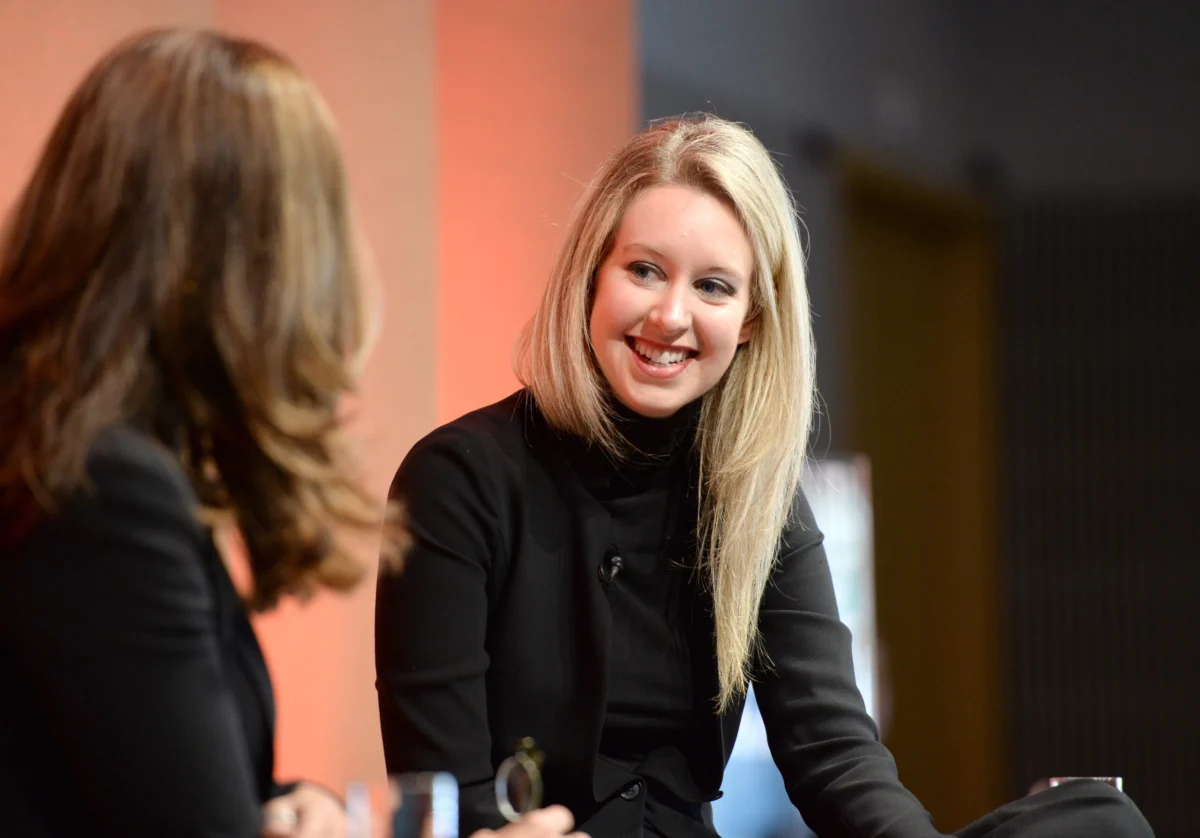
Elizabeth Holmes, a figure who captivated Silicon Valley with her audacious vision and subsequently plummeted into infamy, remains a subject of intense public fascination. Born in 1984, Holmes dropped out of Stanford University at the age of 19 to found Theranos in 2003. Her company promised a revolutionary blood-testing technology that could perform a multitude of tests from just a few drops of blood, using proprietary devices like the "Edison." This concept, if successful, had the potential to democratize healthcare, making diagnostic testing cheaper, faster, and more accessible. Holmes, often seen emulating Apple founder Steve Jobs with her black turtleneck attire and charismatic presentations, quickly became a darling of the tech world.
Theranos rapidly attracted an astounding array of high-profile investors and board members, including former Secretaries of State Henry Kissinger and George Shultz, former Secretary of Defense James Mattis, and media mogul Rupert Murdoch. The company’s valuation soared to an estimated $9 billion at its peak, with Holmes herself declared the youngest self-made female billionaire by Forbes. However, the promises of Theranos were built on a foundation of deception. The technology, particularly the Edison device, never functioned as advertised. The company often relied on modified commercial blood analyzers to process patient samples, diluting them to work with the limited blood volume, leading to inaccurate and unreliable results.
The intricate web of fraud began to unravel in 2015, spearheaded by a groundbreaking investigative series by John Carreyrou in The Wall Street Journal. Carreyrou’s reporting, based on interviews with former employees and internal documents, exposed the technological failures, the culture of fear within Theranos, and the systematic misrepresentation of its capabilities. This journalistic exposé triggered a cascade of regulatory inquiries from agencies such as the Centers for Medicare & Medicaid Services (CMS) and the U.S. Food and Drug Administration (FDA), as well as civil lawsuits from investors and partners like Walgreens and Safeway, who had heavily invested in rolling out Theranos blood-testing centers.
A Glimpse into the Final Days: "You Can See Everything"
The new documentary, titled "You Can See Everything," offers an unprecedented and potentially startlingly intimate look into Elizabeth Holmes’s life during the 34 days leading up to her reporting to federal prison in May 2023. The film reportedly captures Holmes and her husband, Billy Evans, providing a raw and unfiltered perspective on their existence as the weight of her impending incarceration loomed. The level of access granted to the filmmakers sounds exceptional, particularly given the circumstances. It has been reported that co-director Nathan Fielder, known for his unique and often boundary-pushing documentary and reality television work, resided in the couple’s guest house during the filming period. This proximity suggests an unparalleled opportunity to observe Holmes in a deeply personal setting, far removed from the public scrutiny and legal battles that have defined her narrative for years.
The film’s focus on this specific 34-day window is highly significant. It represents a liminal period for Holmes, a transition from relative freedom, albeit under intense legal pressure, to the stark reality of federal imprisonment. Documenting such a sensitive and emotionally charged period raises profound questions about the nature of truth, perception, and the motivations behind allowing such access. The title itself, "You Can See Everything," hints at a promise of full disclosure, though given Fielder’s track record, it also carries an intriguing meta-textual layer, potentially inviting viewers to question what they are truly seeing and how it is being presented.
The Legal Saga: A Timeline of Conviction and Consequence
Elizabeth Holmes’s legal journey has been a protracted and complex one, unfolding over several years and culminating in her current imprisonment.
- September 2018: Holmes and her former COO and ex-boyfriend, Ramesh "Sunny" Balwani, were indicted by a federal grand jury on charges of wire fraud and conspiracy to commit wire fraud, related to defrauding investors and patients.
- August 2020: The trial, initially scheduled for 2020, was delayed multiple times due to the COVID-19 pandemic and Holmes’s pregnancy.
- September 2021 – January 2022: Holmes’s trial commenced, lasting over three months. Prosecutors presented evidence detailing the fraudulent nature of Theranos’s technology and Holmes’s deliberate misrepresentations to investors and the public. Holmes’s defense team argued that she was a young, ambitious entrepreneur who genuinely believed in her company’s potential and was manipulated by Balwani.
- January 3, 2022: After seven days of deliberation, a jury convicted Holmes on four counts of defrauding investors: three counts of wire fraud and one count of conspiracy to commit wire fraud. She was found not guilty on charges related to defrauding patients.
- November 18, 2022: U.S. District Judge Edward Davila sentenced Holmes to 11 years and three months (135 months) in federal prison, followed by three years of supervised release. She was also ordered to pay restitution, the amount of which was to be determined later.
- February 2023: Holmes’s appeals to overturn her conviction and shorten her sentence were swiftly rejected by the Ninth Circuit Court of Appeals. Her legal team sought to remain free on bail pending a further appeal, but this request was also denied.
- May 30, 2023: Elizabeth Holmes reported to Federal Prison Camp (FPC) Bryan, a minimum-security facility in Bryan, Texas, to begin serving her sentence.
- Late 2023: Holmes pursued a different avenue for relief, filing a clemency petition with President Donald Trump. This petition, a request for a presidential pardon or commutation of sentence, is still officially listed as pending by the U.S. Department of Justice, indicating it has been opened and remains under review. The process for such petitions can be lengthy, and their success rate is historically low, particularly for high-profile cases.
In a related development, Sunny Balwani was convicted on all 12 counts of fraud against investors and patients in July 2022 and subsequently sentenced to 12 years and 11 months in prison. He reported to a federal prison in Southern California in April 2023. While both have faced similar charges and convictions, the slight differences in their sentences and the distinct paths of their post-conviction legal maneuvers highlight the complexities of the justice system.
The Filmmakers’ Lens: Fielder’s Distinctive Approach
The involvement of Nathan Fielder and Lance Oppenheim as co-directors immediately elevates "You Can See Everything" beyond a conventional true-crime documentary. Nathan Fielder, a Canadian comedian, writer, director, and actor, has carved out a unique niche in the entertainment landscape with his genre-bending work. He is best known for "Nathan for You" (2013-2017) and, more recently, "The Rehearsal" (2022). Fielder’s signature style often involves blurring the lines between reality and artifice, creating elaborate, often uncomfortable, social experiments, and exploring themes of authenticity, performance, and the human desire for connection and control. His projects frequently feature him interacting directly with real people in manufactured scenarios, prompting viewers to question the nature of the "truth" being presented. The concept of Fielder living in Holmes’s guest house and observing her in such close quarters aligns perfectly with his established methodology, suggesting a documentary that might transcend simple narrative storytelling to delve into the very act of observation and representation.
Lance Oppenheim, while having a less extensive public profile than Fielder, is a highly regarded documentary filmmaker known for his distinctive visual style and intimate character studies. His debut feature film, "Some Kind of Heaven" (2020), offered a poignant and visually striking look into the lives of residents in America’s largest retirement community, The Villages. Oppenheim’s work often explores individuals navigating unique or liminal stages of life, finding the extraordinary in the seemingly mundane, and crafting narratives with a strong sense of empathy and visual artistry. The collaboration between Fielder’s often unsettling, meta-documentary approach and Oppenheim’s more observational, aesthetically refined style could yield a film that is both intellectually challenging and deeply human. Their combined sensibilities suggest "You Can See Everything" will be far from a straightforward recounting of facts, instead offering a multifaceted and potentially unsettling exploration of its subject.
Anticipation and Implications: The A-List Mystery and Public Discourse
Beyond the shocking access and the pedigree of the directors, some of the initial buzz surrounding "You Can See Everything" at Telluride also pertains to the involvement of an unidentified "A-list actress" who reportedly becomes an integral part of the story itself. This element adds another layer of intrigue and speculation, particularly given Fielder’s penchant for incorporating performative or re-enactment elements into his work. Is the actress portraying Holmes in certain segments, perhaps exploring hypothetical scenarios or internal monologues? Is she playing a fictionalized character who interacts with Holmes, adding a layer of meta-commentary? Or is her role something entirely unexpected, characteristic of Fielder’s unpredictable narrative choices? The answer will undoubtedly shape how the film is perceived and discussed, potentially provoking further conversations about documentary ethics, the nature of truth, and celebrity.
The documentary’s release comes at a time when public fascination with Elizabeth Holmes remains high. Numerous books, podcasts, and limited series (such as Hulu’s "The Dropout" starring Amanda Seyfried, who won an Emmy for her portrayal) have explored her story, each attempting to dissect her motivations, her rise, and her spectacular fall. "You Can See Everything" has the potential to add a new, perhaps definitive, dimension to this ongoing discourse by offering a perspective from within her private world during a profoundly vulnerable period. It could reshape public perception, humanize a figure often demonized, or, conversely, solidify existing condemnations through its intimate portrayal. The ethical considerations of such a project are also salient: to what extent does granting this level of access to a convicted felon serve the public interest, and how does it balance the pursuit of journalistic truth with potential implications for rehabilitation or public sympathy?
The Telluride Tradition of Unveiling Cinematic Secrets
The Telluride Film Festival holds a unique and esteemed position in the cinematic world, particularly for its ability to foster an environment of discovery and intense critical discussion. Unlike many larger festivals, Telluride prioritizes film over celebrity, often announcing its full lineup just hours before the event begins, cultivating a sense of intimate unveiling. The festival has a storied history of hosting surprise premieres that go on to achieve significant critical acclaim and awards success. Films like "Moonlight," "Roma," "Birdman," and "Parasite" all made crucial early appearances at Telluride, benefiting from the discerning eyes of critics and industry insiders present. The choice of "You Can See Everything" for such a prestigious and secretive debut underscores the festival’s confidence in the film’s artistic merit and its potential to generate significant buzz. For a documentary to receive this kind of high-profile, hush-hush premiere signals its perceived importance and provocative nature.
Release and Reception: A24’s Strategic Move
A24, the independent entertainment company renowned for its distinctive and critically acclaimed films, is set to release "You Can See Everything" in October. A24’s involvement is a strong indicator of the film’s potential quality and its anticipated impact. The studio has a history of championing unique voices and projects that push cinematic boundaries, often garnering significant awards recognition. Their decision to acquire and distribute this documentary suggests they see it as a major cultural event. The timing of the October release strategically places the film within the crucial fall awards season, positioning it for potential consideration in documentary categories.
The recently released trailer, while brief, offered tantalizing glimpses, confirming the intimate nature of the footage and hinting at the film’s atmospheric and potentially unsettling tone. As the film approaches its broader release, it is expected to ignite widespread discussion, not only about Elizabeth Holmes and the Theranos scandal but also about the evolving landscape of documentary filmmaking, the ethics of access, and the enduring public fascination with figures who embody both ambition and deceit. "You Can See Everything" promises to be a compelling, perhaps controversial, and undoubtedly thought-provoking addition to the ongoing narrative surrounding one of Silicon Valley’s most notorious sagas.
Conclusion: A Continuing Narrative
The story of Elizabeth Holmes is far from over. Her incarceration marks a new chapter, but her legal appeals and the pending clemency petition keep her in the public eye. "You Can See Everything" offers a fresh, intimate, and potentially unsettling perspective on this complex figure during a critical juncture in her life. The combined talents of Nathan Fielder and Lance Oppenheim, coupled with the extraordinary access they were granted, suggest a documentary that will not merely recount facts but actively engage with the performative aspects of identity, truth, and the media’s role in shaping public narratives. As A24 prepares for its October release, the film is poised to reignite conversations about the Theranos scandal, the nature of ambition, and the enduring human desire to understand the minds behind monumental successes and catastrophic failures.