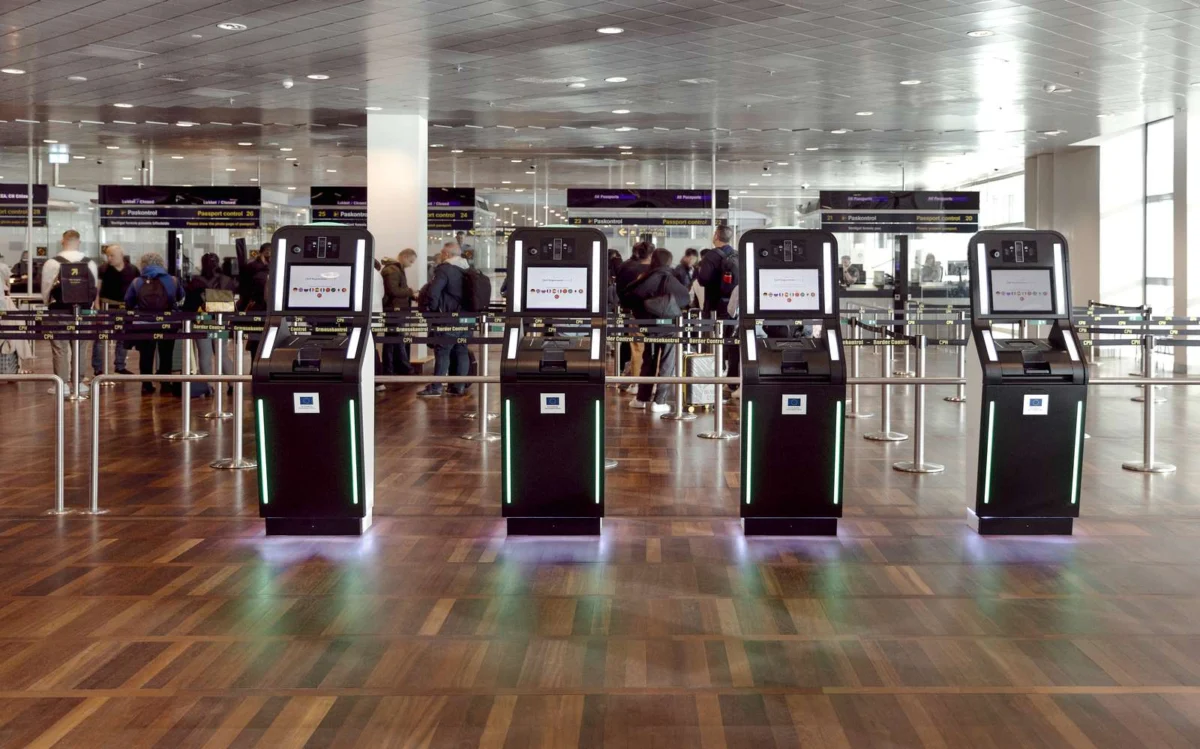
The expiration of a critical European Union policy that permitted member states to temporarily suspend biometric border checks during periods of peak congestion has sparked a formal protest from the aviation industry. On Sunday, a transitional "release valve" mechanism lapsed, effectively removing the legal discretion previously granted to border authorities to bypass parts of the Entry-Exit System (EES) when passenger volumes threatened to overwhelm airport infrastructure. This regulatory shift marks the first time since the mandatory introduction of biometric registration in April that border agencies are required to maintain full enforcement without a fallback protocol, a development that Ryanair, Europe’s largest low-cost carrier, warns could lead to systemic failures across the continent’s transport hubs.
In a strongly worded statement issued on Monday, Ryanair called upon the European Commission to immediately reinstate the ability for member states to pause checks until at least April 2027. The airline argues that the current state of infrastructure—specifically the availability of functional biometric kiosks and the sufficiency of trained border personnel—is inadequate to meet the demands of full, uninterrupted enforcement. The carrier’s leadership has characterized the rollout of the EES as a logistical failure, suggesting that the removal of flexibility will result in unprecedented delays for passengers during the busy summer and winter holiday seasons.
The Operational Reality of the Entry-Exit System
The Entry-Exit System is an automated IT system designed to register travelers from non-EU countries, including both short-stay visa holders and visa-exempt travelers, each time they cross an EU external border. The system is intended to replace the traditional manual stamping of passports, which the European Commission has long criticized as being time-consuming, prone to human error, and ineffective at identifying overstayers or individuals using fraudulent identities. By capturing biometric data, including facial images and four fingerprints, the EES aims to bolster the security of the Schengen Area while providing real-time data on border movements.
However, the implementation of this high-tech solution has been fraught with technical hurdles. The "release valve" that expired on Sunday was designed to mitigate these hurdles by allowing border guards to revert to manual checks or simplified procedures if wait times exceeded safe or manageable limits. Without this provision, border authorities are now legally mandated to capture biometric data for every applicable traveler, regardless of the length of the queue. Ryanair Chief Operating Officer Neal McMahon stated that the EU’s handling of the transition has been a "shambles from start to finish," accusing Brussels of ignoring the warnings of industry stakeholders who predicted that the system would drastically increase processing times.
A Chronology of Delays and Regulatory Shifts
The path toward a digitized European border has been marked by a series of postponements and revisions. To understand the current friction between airlines and the European Commission, it is necessary to examine the timeline of the EES development:
- April 2016: The European Commission presents the revised proposal for the Entry-Exit System as part of the Smart Borders Package.
- November 2017: The Regulation (EU) 2017/2226 establishing the EES is officially adopted by the European Parliament and the Council.
- 2020–2021: Initial launch dates are pushed back due to the global COVID-19 pandemic, which halted international travel and delayed the installation of physical hardware at airports and seaports.
- May 2023: A significant delay is announced after the central database and the necessary software components failed to meet readiness standards. The "Big Bang" implementation approach is reconsidered in favor of a phased rollout.
- April 2024: Biometric registration becomes mandatory across the bloc, but with the inclusion of the temporary "release valve" policy to allow for a transitional learning period.
- Late 2024: The expiration of the flexibility policy occurs, leading to the current state of full enforcement.
Throughout this timeline, the aviation industry has consistently raised concerns regarding the "processing penalty"—the additional time required to register a first-time traveler in the EES. Estimates from various border agencies suggest that while a manual passport check takes approximately 45 to 60 seconds, the initial EES registration can take up to three to four minutes per person. In a high-volume environment like London Stansted, Paris Charles de Gaulle, or Frankfurt Airport, these incremental delays aggregate into massive bottlenecks.
Supporting Data: The Scale of the Challenge
The scale of the challenge is underscored by the sheer volume of travelers entering the Schengen Area. According to data from Eurostat and the European Travel Commission, the EU welcomed over 700 million international travelers annually prior to the pandemic, with figures for 2024 expected to approach or exceed those levels. Of these travelers, a significant portion consists of "third-country nationals" who are subject to EES registration.
Industry analysis conducted by the International Air Transport Association (IATA) and ACI Europe (Airports Council International) suggests that without the flexibility to pause checks, major hubs could see queue lengths increase by 300% to 500% during peak hours. In the United Kingdom, which is now a third country following Brexit, the impact is particularly acute. For example, the Port of Dover and the Eurotunnel have expressed concerns that the EES could lead to 14-hour delays for vehicular traffic if the biometric capture process is not streamlined.
Ryanair’s specific grievance centers on the lack of reliable infrastructure. The carrier notes that many airports have yet to install a sufficient number of self-service kiosks, and those that are in place frequently suffer from software glitches. Furthermore, the recruitment of border police and customs officers has not kept pace with the technological requirements of the system, leaving fewer staff to troubleshoot the automated kiosks when they fail.
Official Responses and Stakeholder Reactions
While the European Commission has maintained that the EES is essential for European security and the modernization of border management, the reaction from the transport sector has been one of mounting anxiety. Ryanair’s Neal McMahon emphasized that the airline is not opposed to the concept of the EES but rather its execution. "Brussels is forcing passengers to pay the price for a failed rollout," McMahon noted, adding that the carrier believes a three-year extension of the flexibility policy is the only way to prevent a total breakdown of border operations.
Other major European carriers, including Lufthansa and Air France-KLM, have been more measured in their public statements but have privately echoed concerns regarding the readiness of the central EES database. Government officials in France and Germany have also signaled that while they support the security benefits of biometrics, the physical constraints of older airport terminals make the installation of large banks of kiosks a significant architectural and financial challenge.
In contrast, the European Commission has defended its timeline, asserting that member states have had years to prepare. A spokesperson for the Commission recently noted that the transition to a fully digital border is a "long-term investment in the safety of European citizens" and that the temporary flexibility measures were always intended to be short-term. The Commission argues that continuing to allow states to "switch off" the system would create security loopholes and undermine the integrity of the database.
Analysis of Implications: Security vs. Efficiency
The tension between Ryanair and the EU highlights a fundamental conflict in modern governance: the balance between rigorous security protocols and the economic necessity of efficient transit. The EES is a pillar of the EU’s "Security Union" strategy, aimed at identifying terrorists, criminals, and those who flout immigration laws. However, if the cost of that security is the paralysis of the continent’s aviation sector, the political fallout could be severe.
There are several potential implications of the current "no-release-valve" environment:
- Operational Bottlenecks: Airports with limited floor space will struggle to accommodate the long queues generated by the 3-minute registration process. This could lead to safety concerns within terminals and increased flight delays as crews wait for passengers stuck at immigration.
- Economic Impact on Tourism: If European borders become synonymous with multi-hour delays, the attractiveness of the EU as a tourist destination may diminish. Travelers from the US, UK, and Asia may opt for destinations with more streamlined entry processes.
- Increased Costs for Airlines: Low-cost carriers like Ryanair rely on quick turnaround times (often 25 minutes) to keep fares low. If border delays prevent passengers from reaching gates on time, or if aircraft are held on the tarmac because the terminal is over-capacity, the LCC business model faces significant financial strain.
- Technological Acceleration: On a positive note, the pressure of full enforcement may force member states to accelerate the development of mobile applications that allow travelers to pre-register their biometric data before arriving at the airport, potentially alleviating the pressure on physical kiosks.
The Path Forward: April 2027 and Beyond
Ryanair’s demand for a delay until April 2027 is based on the assessment that it will take at least three years for the necessary infrastructure to be fully deployed and for the "teething problems" of the software to be resolved. The airline’s call for action is likely to be the first of many as the European travel industry enters the winter holiday season.
The European Commission now faces a difficult choice. It can hold its ground, insisting that the EES be enforced to the letter of the law to ensure security, or it can yield to industry pressure and introduce a new legislative amendment to restore the "release valve." If it chooses the former, the upcoming months will serve as a high-stakes test of the EU’s technological infrastructure. If it chooses the latter, it risks further delaying a security project that is already years behind schedule.
As border authorities navigate this new landscape without a formal release valve for the first time, the eyes of the aviation world remain on Brussels. For Ryanair and its millions of passengers, the hope is for a pragmatic solution that acknowledges the physical realities of 21st-century travel. For the EU, the priority remains a "smart border" that is as secure as it is sophisticated, even if the transition period proves to be as turbulent as the industry fears.