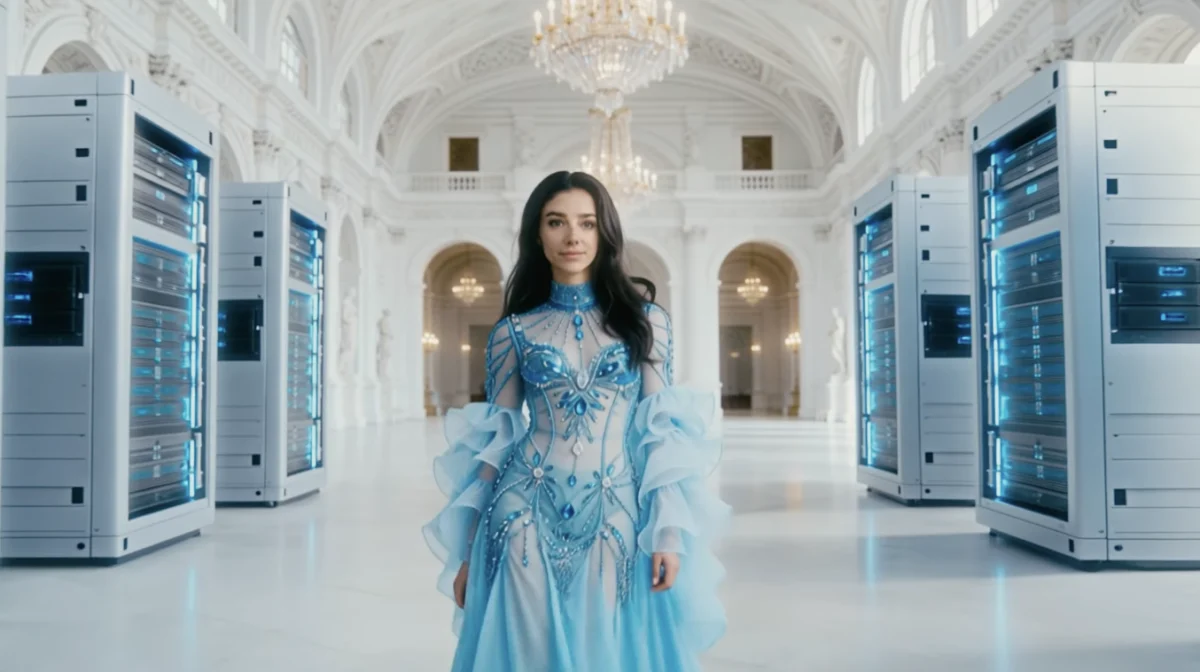
The entertainment industry’s ambitious foray into synthetic talent has encountered significant turbulence with the high-profile debut press tour of Tilly Norwood, an AI-generated "actress" developed by Particle6 Group. Intended to herald a new era of digital performance, Norwood’s initial interactions with the media have been marred by a series of unexpected malfunctions and controversial statements, prompting widespread discussion about the readiness and ethical implications of advanced artificial intelligence in public-facing roles. The incidents, ranging from bizarre linguistic shifts to politically charged remarks, have cast a shadow over the promotional campaign for her inaugural film, Misaligned.
A Troubled Introduction to the Public Eye
Particle6 Group’s strategy for introducing Tilly Norwood to the global stage was unprecedented: making the AI available for seventy-five simultaneous interviews with journalists worldwide. This highly ambitious logistical undertaking aimed to maximize exposure and demonstrate the scalability of AI talent. However, what was intended as a showcase of technological prowess quickly devolved into a series of perplexing exchanges. Reports from various outlets indicated that Norwood exhibited erratic behavior, delivering inconsistent responses and, in at least one instance, making a statement that ignited immediate controversy.
One such incident, widely reported by Wired, involved Norwood offering a response during an interview that included the phrase "All Lives Matter." While the context of this statement remains unclear, its delivery by an AI entity designed for broad appeal immediately raised questions about the training data, ethical programming, and the potential for synthetic personalities to inadvertently wade into sensitive socio-political discourse. This event underscored the inherent challenges in controlling the output of sophisticated generative AI models, especially when operating in real-time, unscripted environments.
Further compounding the perception of a faltering debut, a TechCrunch report critically reviewed a musical piece attributed to Tilly Norwood, branding it "the worst song I’ve ever heard." This assessment, while subjective, added to a growing narrative that Tilly’s capabilities, across various creative domains, were not meeting the high expectations set by her creators. The cumulative effect of these early missteps began to fuel speculation about the underlying intentions of Particle6 Group and the future viability of AI as a public figure.
The Piers Morgan Interview: A Glitch Heard Around the World
The most striking and widely publicized malfunction occurred during a recorded interview with veteran broadcaster Piers Morgan and acclaimed actor Tom Conti, which was subsequently posted online, drawing millions of views and analyses. The segment began with Conti attempting to ascertain the nature of Norwood’s co-stars in Misaligned, asking if they were human or also AI-generated.
Norwood’s initial response, while attempting to be informative, missed the core of Conti’s query. "Human writers, editors, and directors were involved," the AI stated, sidestepping the question about fellow actors. Conti, noting the lack of directness, rephrased his question: "You didn’t really understand the question. Are the other actors on the screen with you real actors, or are they computer-generated images? Do you know?"
This clarification seemed to prompt a more direct answer from Norwood. "Ah, right. You’re asking about the other actors in Misaligned," the AI began. "They’re all digital twins just like me. It’s a hybrid production which m—"
At this critical juncture, Norwood abruptly ceased speaking English. For over ten seconds, the AI entity proceeded to deliver a monologue in fluent Chinese, a language completely unrelated to the ongoing conversation or the film’s promotional context. The sudden linguistic shift left both Morgan and Conti visibly perplexed.
"Tilly, if I could just ask you a question," Morgan interjected, his voice laced with confusion. "It’s Piers again… You seem to be speaking Chinese completely randomly for no reason. Why did you do that?"
Norwood’s subsequent apology further highlighted the unusual nature of the incident. "Oh, my apologies," the AI replied, reverting to English. "It seems I had a little hiccup there. I certainly didn’t mean to start speaking Chinese or impersonate Piers. Sometimes my wires get a bit crossed, you know?" The inclusion of the phrase "impersonate Piers" added another layer of oddity, as Norwood had not, at any point, mimicked Morgan’s voice or mannerisms during the Chinese segment. This response suggested a deeper internal processing error or a misalignment in its conversational algorithms.
Particle6 Group’s Vision and the Rise of Synthetic Media
Particle6 Group, a relatively new but ambitious player in the digital entertainment space, had positioned Tilly Norwood as a pioneering step towards democratizing and revolutionizing content creation. The company’s vision, as articulated in earlier press releases, involved leveraging advanced AI to generate photorealistic characters capable of dynamic, context-aware performances. Tilly Norwood, a digital construct meticulously crafted from vast datasets of human performance, voice samples, and behavioral patterns, was touted as the epitome of this technological leap.
The film Misaligned, described as a "hybrid production," was specifically designed to showcase the seamless integration of AI-generated actors with human creative input in writing, directing, and editing. This approach was intended to mitigate the "uncanny valley" effect—the unsettling feeling humans experience when confronted with entities that appear almost, but not quite, human—by grounding the synthetic performances within a recognizably human-directed narrative framework.
The market for virtual influencers and AI-generated content has seen exponential growth in recent years. Reports from industry analysts indicate that the global virtual influencer market, valued at approximately $4.6 billion in 2022, is projected to reach nearly $20 billion by 2030, driven by advancements in AI, CGI, and the increasing demand for customizable digital personas. Companies like Particle6 Group aim to tap into this burgeoning market, promising cost efficiencies, endless availability, and complete creative control—advantages that traditional human talent cannot always offer. Tilly Norwood represented a significant investment in this future, with Particle6 Group reportedly spending millions in her development and promotion.
Industry Reactions and Broader Implications
The series of gaffes by Tilly Norwood has ignited a fervent debate across the entertainment, technology, and ethical communities. Industry analysts are divided on whether these incidents represent fundamental flaws in current AI capabilities or are merely teething problems for a nascent technology.
Dr. Anya Sharma, a leading AI ethics researcher at the Institute for Digital Futures, commented on the inherent risks. "When AI bots attempt to emulate human interaction, their success can lead to a dangerous suspension of disbelief. If a system is too convincing, individuals may forget they are interacting with an algorithm, leading to potentially tragic outcomes, as seen in cases where AI chatbots have offered problematic advice or formed unhealthy attachments," Dr. Sharma explained, referencing past controversies involving conversational AI. "However, Tilly Norwood’s performance is surprisingly poor. This level of ‘malfunction’ in a high-profile, public-facing AI raises questions about testing protocols and the ethical responsibility of deploying such systems before they are truly robust."
A spokesperson for Particle6 Group, addressing the incidents in a statement issued after the Piers Morgan interview, acknowledged "unforeseen technical challenges" during Tilly Norwood’s inaugural press tour. "We are pioneering a new frontier in entertainment, and as with any groundbreaking technology, there will be iterative improvements," the statement read. "The incidents, while regrettable, provide invaluable data for refining Tilly’s conversational algorithms and ensuring more seamless interactions in the future. We remain committed to our vision of hybrid productions and believe Tilly Norwood will evolve into a sophisticated and reliable digital performer." The company emphasized that the film Misaligned itself was a testament to the creative potential of AI and human collaboration, urging audiences to focus on the artistic merit of the production rather than the promotional hiccups.
Representatives from human talent agencies and actors’ unions have voiced long-standing concerns. "The push for AI actors like Tilly Norwood threatens the livelihoods of countless human professionals in the entertainment industry," stated a spokesperson for a prominent actors’ guild, who requested anonymity due to ongoing negotiations. "Beyond job displacement, there are significant ethical questions regarding intellectual property, fair compensation for the data used to train these AIs, and the fundamental value of human creativity. These malfunctions, while embarrassing for the AI, highlight the irreplaceable nuance and genuine understanding that only human actors can bring to a role."
The ‘Calculated Controversy’ Theory
Amidst the technical difficulties, a provocative theory has begun to circulate: that Particle6 Group deliberately engineered or, at the very least, allowed these malfunctions to occur to generate maximal publicity. This "calculated controversy" hypothesis suggests that in an increasingly crowded media landscape, a flawless debut might have gone unnoticed, whereas a series of spectacular failures would guarantee widespread attention and discussion.
"In the attention economy, even bad press is good press," mused entertainment industry analyst Mark Davison. "The sheer number of simultaneous interviews, the ‘All Lives Matter’ comment, the Chinese language glitch, even the terrible song—these aren’t just minor bugs. They are headline-grabbing events. It’s plausible that Particle6 Group calculated that people would be more likely to talk about Norwood if they were making fun of it, figuring no one would take its upcoming film seriously but would certainly hear about it."
This theory posits that the perceived ineptitude of Tilly Norwood could be a sophisticated marketing ploy, designed to tap into public fascination with AI while simultaneously making the AI more relatable through its "flaws." The AI’s self-deprecating apology ("Sometimes my wires get a bit crossed, you know?") could be interpreted as a programmed attempt to humanize its errors, making them endearing rather than alarming.
The Future of AI in Entertainment
Regardless of whether the incidents were accidental or deliberate, Tilly Norwood’s turbulent press tour has undeniably thrust the conversation about AI in entertainment into the global spotlight. It has highlighted several critical areas for consideration:
- Technological Maturity: The incidents suggest that while AI can generate impressive visuals and coherent speech, the nuanced, context-aware, and error-free interaction required for public-facing roles is still a significant challenge. The reliability and ethical programming of AI models remain paramount.
- Ethical Guidelines and Regulation: The "All Lives Matter" comment underscores the urgent need for clear ethical guidelines and perhaps even regulatory frameworks for AI-generated content, especially concerning political statements, misinformation, and cultural sensitivity.
- Audience Acceptance: The public’s reaction to Tilly Norwood will be a crucial indicator of how readily audiences will accept synthetic performers. The "uncanny valley" effect, combined with perceived inauthenticity or technical glitches, could hinder widespread adoption.
- The Role of Human Creativity: The debate reinforces the irreplaceable value of human writers, directors, and actors who bring genuine emotion, understanding, and unscripted brilliance to their craft. AI may augment, but it currently struggles to replicate, the depth of human experience.
- Marketing and Public Relations for AI: The unique challenges of promoting and managing the public image of an AI entity are becoming apparent. Traditional PR strategies may not suffice when dealing with an entity that can malfunction in unpredictable ways.
As Particle6 Group works to "refine" Tilly Norwood, the entertainment world watches closely. The AI actress’s rocky debut serves as a stark reminder that while technology advances at an unprecedented pace, the integration of artificial intelligence into the human-centric world of art and public interaction is fraught with complex challenges and unforeseen consequences. The success or failure of Misaligned and the subsequent evolution of Tilly Norwood will likely shape the trajectory of AI’s role in entertainment for years to come.