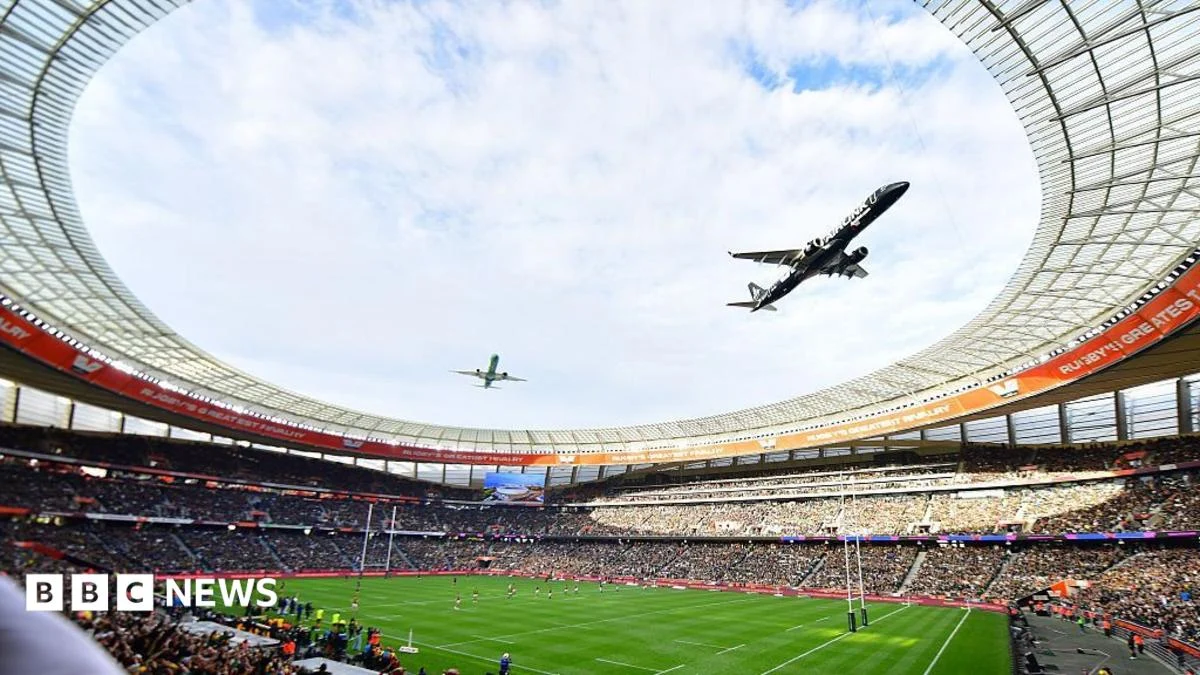
South African airline Airlink has announced the cancellation of a planned low-level flypast over Johannesburg’s Ellis Park Stadium this weekend, citing adverse weather conditions. This decision follows widespread public debate and a formal review launched by the South African Civil Aviation Authority (SACAA) into a similar, highly controversial aerial display conducted by the airline over Cape Town’s DHL Stadium the previous weekend. The initial manoeuvre, which saw two of Airlink’s aircraft flying in remarkably close formation at an exceptionally low altitude above a packed rugby stadium, ignited a fierce discussion across social media and traditional news outlets, dividing opinion between those who lauded its precision and spectacle, and those who condemned it as a reckless disregard for public safety.
The Cape Town Incident: A Daring Display Ignites Debate
On Saturday, July 13th, 2024, prior to the highly anticipated Rugby Championship match between South Africa’s Springboks and New Zealand’s All Blacks at DHL Stadium in Cape Town, Airlink executed an aerial display that quickly garnered global attention. Two of the airline’s Embraer E-Jets performed a flypast, releasing coloured flare smoke, in what was intended as a patriotic spectacle. Footage of the event, captured from various angles by spectators and broadcast media, showed the aircraft appearing alarmingly close to the stadium roof, prompting immediate and widespread reaction.
Flight tracking website Flightradar24, known for its granular data analysis of aviation movements, provided a crucial data point that underscored the perceived risk. According to their analysis, the lead aircraft in the formation passed less than 50 feet (approximately 15 metres) above the highest point of the stadium structure. For context, standard regulations for air displays, particularly over populated areas or public gatherings, typically mandate significantly greater minimum altitudes to ensure a substantial safety margin in the event of an unforeseen incident, such as an engine failure or a sudden change in wind conditions. While specific regulations vary by jurisdiction and the nature of the display, aerobatic manoeuvres are often restricted to altitudes well above 1,000 feet over congested areas. The visual proximity, compounded by the detailed flight data, fuelled the concerns of aviation safety experts and a segment of the public.
DHL Stadium, a modern venue completed in 2009 for the FIFA World Cup, has a seating capacity of 55,000. The presence of such a large crowd beneath the low-flying jets magnified the potential for catastrophic consequences should an error or malfunction have occurred. The spectacle, while undeniably impressive to many, quickly became a focal point for discussions on aviation safety protocols, regulatory oversight, and the boundaries of promotional stunts.
Regulatory Scrutiny Intensifies: SACAA Launches Investigation
In the wake of the extensive media coverage and public discourse surrounding the Cape Town flypast, the South African Civil Aviation Authority (SACAA), the nation’s primary aviation regulator, announced on Wednesday, July 17th, that it had initiated a formal review of the operation. Despite having approved the application for the flyby in principle, the SACAA acknowledged that "discussions in the media" had prompted a deeper investigation into the specifics of its execution.
The SACAA’s statement detailed the immediate steps being taken: "Following various discussions in the media relating to the events of the past weekend, the SACAA initiated compliance verifications, engaged the operator, obtained the Flight Data Recording downloads as well as other additional requirements." This process is critical. Flight Data Recorders (FDRs), commonly known as "black boxes," store a vast array of parameters including altitude, airspeed, engine performance, control surface positions, and pilot inputs. Analysis of this data will provide the SACAA with an objective and highly detailed understanding of the flight path, aircraft performance, and pilot actions during the entire display. The "other additional requirements" would likely include operational plans, risk assessments submitted by Airlink, pilot qualifications, training records, and communications between air traffic control and the display aircraft.
Furthermore, the SACAA revealed a crucial detail about the approval process: a flight simulator was used to practice for the planned Johannesburg flight. While this demonstrates a level of preparatory diligence, the core of the current investigation will focus on whether the actual execution in Cape Town deviated from the approved plan, the safety parameters, or standard operating procedures. The SACAA’s mandate is to ensure the highest levels of aviation safety and security, and any perceived breach of these standards is taken with utmost seriousness.
The Aborted Johannesburg Flypast: Weather or Wider Concerns?
Following the contentious Cape Town event, Airlink had planned a similar pre-match aerial display for Saturday, July 20th, ahead of another Rugby Championship clash, this time between the Springboks and the All Blacks at Ellis Park Stadium in Johannesburg. However, on Thursday, July 18th, Airlink confirmed it had formally withdrawn its application for this second display. The official reason provided by the airline was a "poor weather forecast" for the Johannesburg area.
While weather is a legitimate and often critical factor in aviation operations, especially for visual displays, the timing of this cancellation, coming just days after the widespread criticism and the SACAA’s announcement of an investigation, inevitably led to speculation. Aviation analysts and public commentators suggested that while weather might indeed have been a contributing factor, the intense scrutiny and the ongoing regulatory review likely played a significant role in Airlink’s decision to err on the side of caution and avoid further controversy. Proceeding with a second, potentially similar display while the first was under investigation could have exacerbated reputational damage and invited more severe regulatory action.
Chronology of Key Events:
- Saturday, July 13th, 2024: Airlink performs a low-level flypast with two Embraer E-Jets over DHL Stadium in Cape Town before the Springboks vs. All Blacks rugby match. Footage and flight data (Flightradar24: <50ft above stadium roof) spark widespread debate.
- Wednesday, July 17th, 2024: The South African Civil Aviation Authority (SACAA) announces it has initiated a formal compliance verification and review of the Cape Town incident, citing "discussions in the media." It confirms it had approved the application for the flyby but is now reviewing its execution. The SACAA also states that a flight simulator was used for practice related to the planned Johannesburg flight.
- Thursday, July 18th, 2024: Airlink confirms it has withdrawn its application for a similar aerial display planned for Saturday, July 20th, over Ellis Park Stadium in Johannesburg, citing a "poor weather forecast."
Aviation Safety Standards and Precedent
Aerial displays, while thrilling and popular, are among the most rigorously regulated activities in aviation. Pilots performing such manoeuvres are typically highly experienced, often with military backgrounds, and undergo extensive, specialized training. Regulations typically distinguish between "air shows" with choreographed aerobatics and simple "flypasts." However, even a flypast, when executed at extremely low altitudes over a congested area, falls under stringent safety protocols.
Internationally, aviation authorities like the FAA in the United States, EASA in Europe, and the CAA in the UK have strict rules governing minimum altitudes for aircraft operating over populated areas and even more stringent ones for air displays. For instance, FAA regulations (FAR Part 91.119) generally prohibit aircraft from operating below 1,000 feet above the highest obstacle within a 2,000-foot horizontal radius of the aircraft over congested areas. While waivers can be granted for air shows, these waivers come with highly specific conditions, including detailed safety plans, emergency procedures, and often require sterile airspace. The 50-foot altitude reported by Flightradar24 for the Cape Town incident is exceptionally low, even for a sanctioned display, and would likely be subject to intense scrutiny under any international regulatory framework.
Historical context offers a sobering reminder of the risks involved. While most air displays are executed flawlessly, incidents, though rare, can be catastrophic. Events like the Ramstein air show disaster in Germany (1988) or various smaller incidents globally underscore the critical importance of maintaining generous safety margins, meticulous planning, and strict adherence to approved flight profiles. The balance between creating an impressive spectacle and ensuring absolute public safety is a constant challenge for both operators and regulators.
Reactions and Divided Opinions: Spectacle vs. Safety
The reaction to Airlink’s Cape Town flypast was starkly divided. On one side, proponents praised the pilots’ skill and precision, viewing the manoeuvre as a patriotic and exhilarating prelude to a major sporting event. Many spectators felt a surge of excitement and national pride, sharing stunning videos and photos across social media platforms, applauding the "mastery of flight" demonstrated by the Airlink crew. For them, it was a memorable addition to the match-day experience, a testament to South African aviation prowess.
However, a significant number of observers, including seasoned pilots, aviation enthusiasts, and concerned citizens, voiced strong objections. They labelled the manoeuvre "reckless," "irresponsible," and a "needless risk." Concerns ranged from the immediate danger of an aircraft malfunction over a crowded stadium to the broader implications for aviation safety culture. Critics argued that the potential for a catastrophic accident, even if remote, was unacceptable given the density of the population below. Questions were raised about who approved such a low-level flight, the risk assessment process, and whether the pursuit of spectacle had overshadowed fundamental safety principles. The public debate highlighted the inherent tension between entertainment value and the absolute imperative of public safety in aviation.
Airlink’s Stance and Marketing Strategy
Airlink, as a prominent regional airline in Southern Africa, likely intended the flypast as a high-impact marketing and brand-building exercise. Aligning with major sporting events like the Rugby Championship offers unparalleled visibility, associating the airline with national pride, sporting excellence, and a sense of dynamic energy. Such displays can generate significant positive media coverage and public goodwill, translating into brand loyalty and increased passenger numbers. The use of coloured flares further amplified the visual impact, designed to create a lasting impression.
However, the subsequent controversy has undoubtedly introduced reputational risks. While some might appreciate the boldness, the perception of recklessness or a disregard for safety can severely damage public trust in an airline, an industry where safety is paramount. The cancellation of the Johannesburg flypast, even if attributed to weather, can be seen as a strategic move to mitigate further negative sentiment and demonstrate responsiveness to public and regulatory concerns. Airlink will now face the challenge of navigating the SACAA investigation while managing its public image.
The Role of Social Media in Public and Regulatory Scrutiny
The rapid dissemination of footage from the Cape Town flypast via social media platforms played a pivotal role in amplifying the debate and, consequently, in prompting regulatory action. Within hours of the event, countless videos and photographs, often accompanied by strong opinions, were circulating globally. This immediate, unmediated public response demonstrated the power of digital platforms in shaping public discourse and bringing incidents to the attention of authorities that might otherwise have received less scrutiny. The "discussions in the media" referenced by the SACAA were heavily driven by this social media virality, underscoring how quickly public sentiment can coalesce and demand accountability in the digital age.
Broader Implications for Air Displays and Regulatory Oversight
The Airlink incident and the subsequent SACAA investigation carry significant implications for the future of aerial displays in South Africa and potentially beyond. It is likely to lead to a more rigorous review of existing regulations governing air shows and flypasts, particularly those conducted over densely populated areas or major public events. Regulators may consider:
- Tightening of Minimum Altitude Requirements: A review of the specific altitude limits for various types of aerial manoeuvres.
- Enhanced Risk Assessment Protocols: Requiring more detailed and independently verified risk assessments from operators.
- Greater Transparency in Approval Processes: Potentially making details of approved flight plans and safety conditions more accessible.
- Increased Post-Event Scrutiny: A more proactive approach to reviewing actual flight execution against approved plans, even in the absence of an immediate incident.
For airlines and other operators, the incident serves as a cautionary tale regarding the balance between innovative marketing and uncompromised safety. While the desire to create memorable spectacles is understandable, the potential for public outcry and regulatory repercussions when perceived safety boundaries are pushed too far is now more evident than ever.
Looking Ahead: The SACAA Investigation and Potential Outcomes
The SACAA’s investigation will be comprehensive and thorough. Based on the analysis of Flight Data Recorder downloads, operational documents, pilot interviews, and regulatory compliance checks, the Authority will determine whether any regulations were violated, whether the approved flight plan was adhered to, and if any unsafe practices occurred.
Potential outcomes of such an investigation could range from:
- No Further Action: If the investigation concludes that all regulations were met, the approved plan was followed, and no undue risk was taken, despite public perception.
- Formal Warning or Reprimand: If minor deviations or procedural lapses are identified.
- Fines: Financial penalties for regulatory infringements.
- Suspension or Revocation of Air Operator Certificate (AOC) Privileges: In severe cases of systemic safety breaches, though this is less likely for a single flypast incident unless gross negligence is found.
- Pilot Sanctions: Individual pilots involved could face licence reviews or temporary suspensions.
- Recommendations for Regulatory Changes: The SACAA might use the findings to propose amendments to existing aviation safety regulations to prevent similar situations in the future.
The aviation industry and the public will be keenly awaiting the SACAA’s findings, which are expected to provide clarity on the safety parameters of the Cape Town flypast and potentially reshape the landscape for future aerial displays over South African skies. The incident serves as a powerful reminder that in aviation, safety is not merely a regulation; it is an absolute and non-negotiable prerequisite for public trust and continued operation.