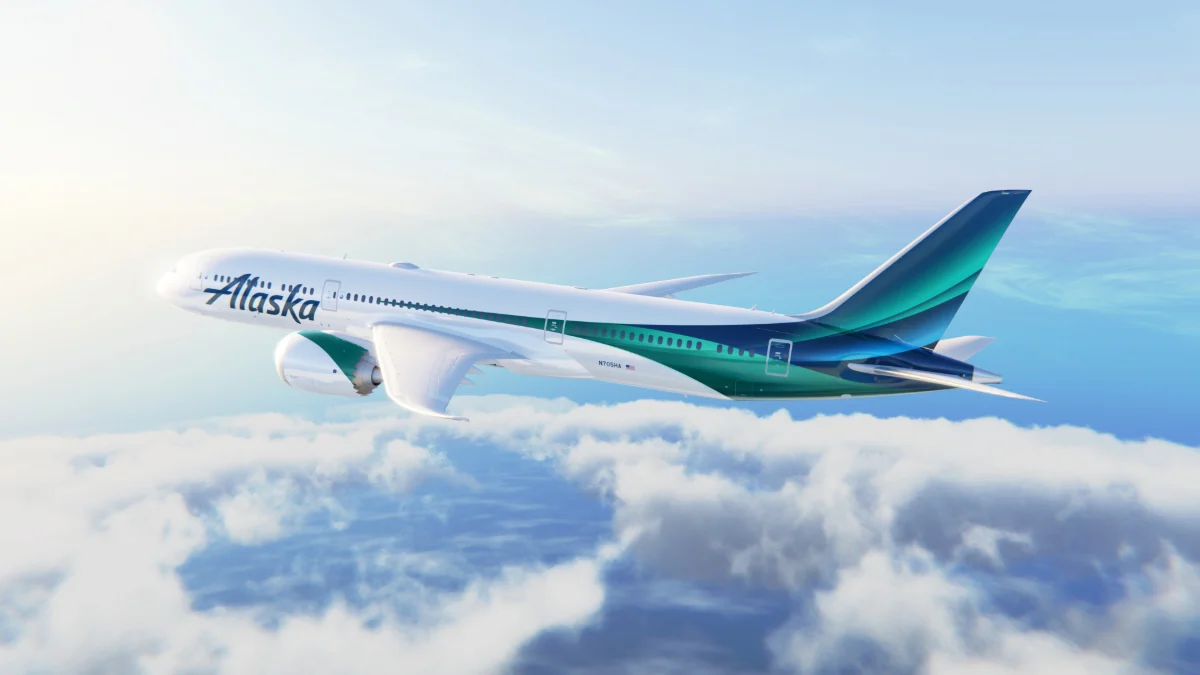
Alaska Airlines is fundamentally restructuring its cabin offerings to target the high-yield travel segment, announcing on Tuesday a major investment in premium seating across its long-haul and transcontinental fleets. The Seattle-based carrier confirmed it will introduce dedicated business class suites and a distinct premium economy cabin on its Boeing 787 Dreamliner fleet, alongside an upgraded premium configuration for its forthcoming Boeing 737 Max 10 aircraft. This move signals a definitive shift from Alaska’s historical identity as a high-value domestic specialist toward becoming a full-service international contender capable of competing with global giants on long-haul routes.
The strategic pivot comes at a critical juncture for the airline, which is navigating the complex integration of Hawaiian Airlines while simultaneously battling significant macroeconomic headwinds. By doubling down on "premiumization," Alaska is joining a broader industry trend where carriers prioritize high-margin front-cabin revenue over the increasingly commoditized economy market. The decision to equip the Boeing 787s—assets acquired through the Hawaiian merger—with international-standard business suites indicates that Alaska intends to maintain and grow a robust presence in the transpacific and potentially transatlantic markets.
A New Era of Cabin Configuration: Suites and Premium Economy
The centerpiece of Alaska’s announcement is the introduction of lie-flat business class suites. While the carrier has long offered a "First Class" product on its domestic fleet, these new suites represent a significant leap in hard-product quality. The suites are expected to feature privacy doors, a staple of modern international business class, and direct aisle access for all passengers. This configuration is specifically designed for the Boeing 787-9 Dreamliner, an aircraft capable of connecting the West Coast to deep Asia, Oceania, and Europe.
In addition to the flagship suites, Alaska is introducing a "true" premium economy product. Unlike its current "Premium Class," which primarily offers extra legroom within the standard economy cabin, the new premium economy will feature wider seats, dedicated cabin service, and enhanced amenities. This three-class configuration (Business, Premium Economy, and Economy) aligns Alaska with the global standards of its Oneworld alliance partners, such as British Airways, Qantas, and Cathay Pacific.
For the domestic and transcontinental market, the Boeing 737 Max 10 will serve as the workhorse. Alaska plans to outfit these aircraft with a specialized premium layout for high-demand routes, such as Seattle to New York and San Francisco to Washington, D.C. These routes are among the most competitive in the world, and by enhancing the seat density of its premium sections, Alaska aims to capture a larger share of corporate travel budgets.
The Evolution of Alaska Airlines: A Strategic Timeline
To understand the magnitude of this shift, it is necessary to look at the timeline of Alaska’s transformation over the last four years. The carrier has moved rapidly from a regional powerhouse to a global player through a series of calculated maneuvers.
- March 2021: Alaska Airlines officially joins the Oneworld alliance. This move provided Alaska’s frequent flyers with access to a global network and allowed the carrier to begin codesharing with international partners, setting the stage for its own international expansion.
- 2022–2023: The airline simplifies its fleet by retiring the Airbus A320 family aircraft inherited from its Virgin America acquisition, moving toward an all-Boeing 737 mainline fleet to drive operational efficiency.
- December 2023: Alaska announces its intent to acquire Hawaiian Airlines in a $1.9 billion deal. The merger was strategically designed to gain a foothold in the wide-body market and secure a dominant position in the lucrative Hawaii-to-Mainland and Hawaii-to-Asia corridors.
- September 2024: The merger with Hawaiian Airlines officially closes after receiving regulatory clearance. Alaska begins the process of integrating two distinct corporate cultures and fleet types, including Hawaiian’s Airbus A330s and Boeing 787-9s.
- Early 2025: Alaska officially announces the retrofitting of the 787s and 737 Max 10s with premium suites, marking the beginning of its "full-service international" era.
Financial Context and the "Premium" Hedge
The decision to invest heavily in premium hardware comes despite a challenging financial period. In an earnings call in July, Alaska CEO Ben Minicucci revealed that surging fuel prices had effectively wiped out the carrier’s profits for the first half of the year. The West Coast, where Alaska’s operations are concentrated, has been hit particularly hard by refining constraints and logistical bottlenecks, leading to fuel costs that frequently outpace the national average.
Due to this volatility, Alaska took the unusual step of suspending its financial guidance for 2026. However, the move toward premium seating is viewed by analysts as a "revenue hedge." Data from the International Air Transport Association (IATA) and various industry reports suggest that while premium cabins occupy only about 10% to 15% of total aircraft floor space, they can account for up to 40% of an airline’s total revenue.
By increasing the number of premium seats, Alaska is looking to improve its Total Revenue per Available Seat Mile (TRASM). High-spend travelers—both corporate and "premium leisure"—are generally less sensitive to ticket price fluctuations than budget travelers. This allows the airline to pass on a portion of its increased operating costs, such as fuel, to a customer base that prioritizes comfort and schedule over the lowest possible fare.
Integration of Hawaiian Airlines and Global Connectivity
The acquisition of Hawaiian Airlines provided Alaska with the physical tools necessary for this expansion. Prior to the merger, Alaska was limited by its narrow-body fleet, which lacked the range and cabin density required for long-haul international service. The Boeing 787-9 Dreamliners, which Hawaiian had already begun receiving, are the ideal platform for Alaska’s global ambitions.
Currently, Alaska is already leveraging its Seattle hub to feed international routes operated by partners, but it has also begun launching its own long-haul segments. The carrier has seen success in its routes to parts of Central America and Mexico and is closely monitoring the performance of its Seattle-to-Tokyo and Seattle-to-Seoul connections through its partnership with Japan Airlines and Korean Air.
The new business class suites will allow Alaska to market a seamless, high-end experience for a passenger traveling, for example, from Boise to London via Seattle, or from Portland to Sydney via Honolulu. By offering a consistent premium product across both the Alaska and Hawaiian brands, the company can compete directly with Delta Air Lines, which maintains a massive "hub-and-spoke" international operation in Seattle.
Competitive Implications and Market Reaction
The airline industry is currently witnessing what many experts call the "arms race for the front of the plane." Delta has been the leader in this space with its "Delta One" suites, followed closely by United’s "Polaris" and American’s "Flagship Business." Even low-cost and hybrid carriers are shifting; JetBlue’s "Mint" product has successfully disrupted the transcontinental market, and Southwest Airlines recently announced it would end its decades-long "open seating" policy to introduce extra-legroom options.
Alaska’s entry into the suite market is a direct challenge to these incumbents. For years, Alaska relied on its reputation for superior customer service and a cult-like loyalty among West Coast travelers. However, loyalty alone is often insufficient to win over corporate contracts that require lie-flat seats for overnight flights.
Official responses from industry analysts have been cautiously optimistic. While the capital expenditure (CAPEX) required for these retrofits is substantial, the long-term yield potential is significant. "Alaska is no longer just a ‘Goldilocks’ airline—too big to be a regional, too small to be a legacy," noted one industry consultant. "They are choosing a side, and they are choosing the side where the money is: the premium international traveler."
Broader Impact and Future Outlook
The transformation of Alaska Airlines has broader implications for the U.S. aviation landscape. As the carrier integrates the Hawaiian fleet and rolls out its new cabin interiors, the distinction between "The Big Four" (American, Delta, United, and Southwest) and the rest of the industry is blurring. Alaska is positioning itself as a fifth major player with a unique geographic advantage.
However, risks remain. The delivery schedule for the Boeing 737 Max 10 has been plagued by certification delays, which could postpone the rollout of the new transcontinental product. Furthermore, the integration of two different pilot and flight attendant workgroups following a merger is notoriously difficult and can lead to operational friction.
Nevertheless, the strategy articulated by Ben Minicucci and his leadership team suggests a clear-eyed view of the future. By focusing on premium suites and international-grade service, Alaska Airlines is betting that the future of aviation is not in the volume of passengers, but in the value of the experience. As the first 787s with the new livery and upgraded interiors take to the skies, the industry will be watching to see if this West Coast stalwart can successfully translate its regional success onto the global stage.