

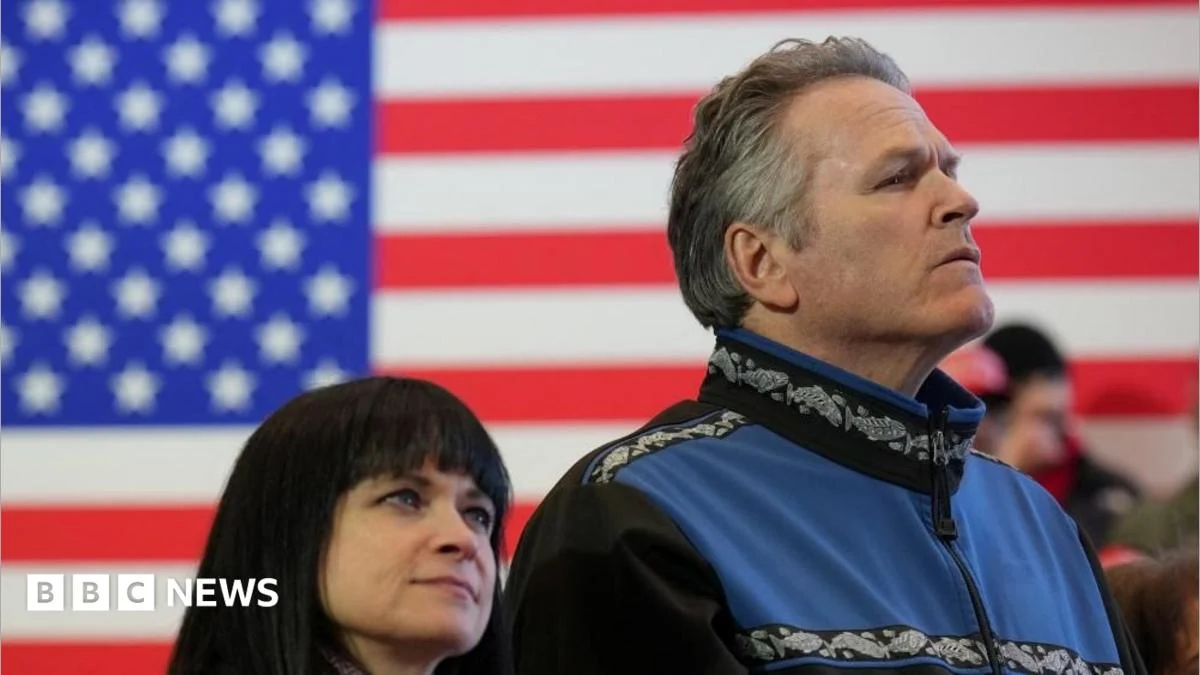
Alaska’s Republican Governor Mike Dunleavy has formally ordered an investigation into an alleged "scheme" that resulted in two men named Dan Sullivan appearing on the state’s ballot for the fiercely contested U.S. Senate race. The directive follows a detailed report by The New York Times, which suggested that individuals associated with the campaign of Democratic candidate Mary Peltola, alongside senior aides from the Democratic Senatorial Campaign Committee (DSCC), actively sought to recruit "spoiler" candidates to dilute support for the incumbent Republican Senator Dan S. Sullivan. Governor Dunleavy, in a statement released via X, indicated his response to the New York Times’ findings and his intention to probe "whether this scheme violated Alaska’s laws," though specific statutes were not immediately cited. The unfolding controversy has injected a new layer of complexity and acrimony into an already tight election, drawing national attention as Americans head to the polls for the crucial midterm elections.
The Allegations: A New York Times Exposé
The New York Times report, published earlier this week, served as the catalyst for Governor Dunleavy’s intervention. According to the newspaper, its investigation uncovered evidence suggesting a coordinated effort to encourage multiple "spoiler" candidates to enter the Senate race. Central to these allegations was the recruitment of Dan J. Sullivan, a retired teacher residing in a remote Alaskan fishing village, to run against the incumbent Senator Dan S. Sullivan. The report detailed that people connected to the "Alaskans for Mary" campaign, supporting Democratic challenger Mary Peltola, as well as senior operatives within the Democratic Senatorial Campaign Committee, were involved in these alleged recruitment efforts.
The New York Times asserted that it had reviewed text messages and conducted interviews with a dozen individuals who either participated in, were privy to, or were themselves prospective candidates targeted by this alleged plan. The overarching objective, as reported, was to confuse voters and thereby fragment the support base for the sitting Republican senator, potentially shifting the balance in a race deemed critical for national Senate control. The BBC, while reporting on the development, noted it had not independently verified the New York Times’ extensive findings.
Alaska’s Political Landscape and the Stakes
Alaska, a state with a strong independent streak, has historically leaned Republican, but recent electoral shifts and the unique ranked-choice voting system have made its races increasingly unpredictable. The current U.S. Senate contest is widely considered one of the most competitive nationwide, with analysts closely watching to see which party will gain control of Congress. The incumbent, Dan S. Sullivan, a former state Attorney General and Commissioner of Natural Resources, was first elected to the Senate in 2014, defeating Democratic incumbent Mark Begich. His re-election bid is a cornerstone of the Republican Party’s strategy to maintain or expand its narrow Senate majority.
Challenging him is Mary Peltola, a former state legislator who made history in 2022 by becoming the first Alaska Native elected to Congress, winning a special election for the state’s at-large House seat. Her campaign has focused on issues such as lowering costs for Alaskans, protecting fisheries, and advocating for local communities. The presence of a second Dan Sullivan on the ballot, especially given the incumbent’s common name, presents a unique challenge in a state where voter recognition and clear messaging are paramount. The high stakes of this particular race are magnified by its potential to influence the national balance of power, with the control of Congress having significant bearing on the legislative agenda for the remainder of the current presidential term.
Chronology of a Contentious Race
The saga of the "two Dan Sullivans" began earlier in the election cycle when Dan J. Sullivan, a retired teacher, successfully filed his candidacy for the U.S. Senate.
- Early Filings: Dan J. Sullivan, the non-incumbent, formally entered the race, a move that immediately raised eyebrows due to the identical first and last names with the sitting senator.
- Initial Republican Challenges: Recognizing the potential for voter confusion, allies of Senator Dan S. Sullivan and the Republican Party swiftly launched legal challenges aimed at removing Dan J. Sullivan from the ballot. They argued that his presence was an intentional tactic to mislead voters.
- Alaska Supreme Court Ruling: Earlier this year, the Alaska Supreme Court rejected these challenges. The court ruled that Dan J. Sullivan had met all legal requirements to run for office and that his constitutional right to appear on the ballot had not been violated. Crucially, the court found no state laws had been broken by his candidacy.
- October 28, 2026 – The New York Times Report: The New York Times publishes its investigative piece, alleging Democratic involvement in recruiting "spoiler" candidates, including Dan J. Sullivan. The report cites text messages and interviews, providing a new dimension to the controversy.
- October 28, 2026 – Governor Dunleavy’s Order: Following the NYT report, Governor Mike Dunleavy announces via X his directive to the Department of Public Safety to investigate whether the alleged "scheme" violated Alaska’s laws and if criminal charges or civil action are warranted.
- October 28, 2026 – Justice Department Amends Lawsuit: The U.S. Justice Department, which had already filed a federal lawsuit seeking to prevent the certification of results if the Trump-backed Senator Sullivan loses, amends its complaint. It incorporates significant sections of the New York Times’ reporting and Governor Dunleavy’s announcement, reiterating concerns about voter confusion.
- Ongoing Legal Battles: Alaska election officials, in turn, ask a federal court to dismiss the Justice Department’s lawsuit, asserting it lacks legal basis.
The Incumbent and the Challenger
Senator Dan S. Sullivan, 59, is a prominent figure in Alaskan politics. A graduate of Harvard University and Georgetown Law, he served as Alaska’s Attorney General and later as Commissioner of the Alaska Department of Natural Resources before his election to the Senate. He is known for his conservative stance and focus on issues vital to Alaska, such as energy development, national security, and support for the military. He has consistently championed resource extraction and advocated for Alaska’s strategic importance. His campaign has emphasized his experience and effectiveness in Washington, D.C., working for the state’s interests.
Mary Peltola, 51, has emerged as a formidable challenger. A Yup’ik Eskimo, her background as a former state legislator and her successful special election campaign have given her significant momentum. Her platform often highlights her connection to Alaska’s indigenous communities and her focus on practical solutions for everyday Alaskans, including combating high living costs and protecting Alaska’s subsistence way of life. She has portrayed herself as a pragmatic voice capable of reaching across the aisle.
Dan J. Sullivan, the non-incumbent, is a retired teacher from Nikiski, a small community on the Kenai Peninsula. He has maintained a low profile throughout the campaign and has consistently denied any links or coordination with the Peltola campaign. His platform, though less publicized, reportedly focuses on issues such as education and local concerns. The ballot is set to list the two men as Dan S. Sullivan, described as the incumbent Republican senator, and Daniel J. Sullivan Jr.
Reactions Across the Political Spectrum
The New York Times report and Governor Dunleavy’s subsequent investigation order have triggered a cascade of reactions from various political figures:
- Governor Mike Dunleavy: Stated his commitment to investigating "whether this scheme violated Alaska’s laws," emphasizing that "the evidence will determine what happens next." His statement, while not explicitly naming the Peltola campaign, referenced the NYT reporting as supporting earlier findings by the state Division of Elections.
- Senator Dan S. Sullivan: Appearing on Fox News, the incumbent senator called for Mary Peltola to "come clean" and labeled the situation a "scandal of the highest order." He and his allies have consistently accused Democrats of attempting to confuse voters and undermine the electoral process.
- Mary Peltola’s Campaign ("Alaskans for Mary"): In a statement, the campaign vehemently denied any wrongdoing or involvement. "The Alaskans for Mary campaign has no involvement with either Sullivan campaign," a spokesperson asserted, adding that they did not encourage Dan J. Sullivan to run. Prior to Dunleavy’s investigation call, the campaign also stated, "Mary got in this race because Alaskans deserve a champion who is fighting to lower their costs and put Alaska first, and no tweet or threat from any DC politician will keep her away from that fight." Peltola herself had recently paused campaigning due to minor injuries sustained by her family in a car crash.
- Democratic Senatorial Campaign Committee (DSCC): Monica Robinson, a spokesperson for the DSCC, issued a statement denying involvement, saying, "The DSCC is not involved with Dan J. Sullivan." This echoes their consistent position.
- Senator Lisa Murkowski: Alaska’s other Republican Senator, Lisa Murkowski, who often charts an independent course, accused the Democratic campaign of engaging in a "pattern of lies."
- Former President Donald Trump: A vocal supporter of Senator Dan S. Sullivan, Trump weighed in on Truth Social, pointing to the NYT report and making various allegations against Peltola. He called for her to be barred from the ballot, repeating his endorsement for the incumbent: "Dan is a GREAT man, has ALWAYS delivered for Alaska."
- Attorney General Todd Blanche: Representing the Trump administration’s Justice Department, Blanche told Fox News, "They are cheating, let’s call it what it is," signaling the federal government’s aggressive posture in the matter.
Legal Battleground: Election Law Experts Weigh In
Despite the significant political outcry and the initiation of investigations, election law experts have expressed skepticism regarding the likelihood of the second Dan Sullivan being removed from the ballot or that the alleged scheme constitutes a crime.
- Justin Levitt (Loyola Law School): A former Justice Department official and election law expert, Levitt remarked, "It turns out that convincing somebody to run for office is not a crime, even if their name happens to be the same as an incumbent." He highlighted the high bar for proving criminal intent or a violation of specific statutes in such circumstances.
- Ruth Greenwood (Harvard Law School): An election expert, Greenwood emphasized that Dan J. Sullivan possesses a constitutional right to run for office and have his name appear on the ballot, provided he meets all statutory requirements, which he has.
- Rick Pildes (New York University): An election law expert, Pildes dismissed the actual legal arguments put forth by the Justice Department’s lawsuit as a "frivolous theory" when speaking to the BBC. He noted that the lawsuit failed to cite a specific provision of law that the government sought to enforce, instead relying on a general preamble from a broad U.S. voting law.
The Alaska Supreme Court’s prior rejection of efforts to remove Dan J. Sullivan from the ballot further complicates any new legal challenges, as state courts have already affirmed his eligibility.
The Justice Department’s Intervention
Adding another powerful layer to the unfolding drama, the Trump administration’s Justice Department filed a federal lawsuit last week. Initially, the suit aimed to prevent the certification of results if the Trump-backed Senator Sullivan were to lose, citing potential voter confusion due to the presence of two identically named candidates. Following the New York Times report and Governor Dunleavy’s announcement, the Justice Department amended its lawsuit, incorporating significant sections of the story as well as the Governor’s directive. This move underscores the administration’s determination to challenge the election outcome if it does not favor the incumbent Republican.
However, Alaska election officials have not been swayed. They have formally asked a federal court to dismiss the Justice Department’s lawsuit, asserting that "the complaint has no legal basis." This legal skirmish between federal and state authorities highlights the deep divisions and high stakes surrounding the integrity of the election process. The Justice Department has, nevertheless, pledged continued action in light of the New York Times’ reporting.
Implications for Alaska and National Politics
The "two Dan Sullivans" controversy and the subsequent investigations and lawsuits carry significant implications, both for Alaska and the national political landscape.
- Voter Confidence: The allegations of a "scheme" and the ensuing legal battles could erode public trust in the electoral process, especially in a state where voters are already navigating a relatively new ranked-choice voting system.
- Election Outcome: The primary goal of the alleged "spoiler" strategy was to dilute votes. If successful, it could shift enough votes away from the incumbent to alter the outcome of a very close race, potentially determining which party controls the U.S. Senate.
- Ranked-Choice Voting: Alaska’s ranked-choice voting system, adopted in 2020, allows voters to rank candidates in order of preference rather than choosing just one. In this scenario, voters could theoretically select both Sullivans, ranking one first and the other second, or even skip one entirely. The system is designed to elect candidates with broad support and could, in theory, mitigate some confusion, as voters have multiple opportunities to express their preferences. However, the identical names still pose a challenge, particularly for less engaged voters who might only see the names on the ballot.
- Precedent for Future Elections: Should any wrongdoing be proven, or if the federal lawsuit were to succeed, it could set a precedent for how "spoiler" candidates are handled in future elections across the country, potentially impacting strategies employed by political parties.
- National Control of Congress: The ultimate question of which party controls Congress hinges on a handful of tight races like Alaska’s. A Republican victory in Alaska would be crucial for their hopes of taking the Senate, while a Democratic win would be a significant gain. The controversy threatens to delay a full picture of nationwide results, extending the period of uncertainty post-midterms.
- Political Polarization: The incident further fuels the already intense political polarization in the United States, with accusations of cheating and unethical tactics flying between the major parties.
Looking Ahead: Unresolved Questions
As the midterm elections rapidly approach, several critical questions remain unanswered. Will Governor Dunleavy’s investigation uncover sufficient evidence to warrant criminal charges or civil action, and if so, against whom? Will the Justice Department’s federal lawsuit gain traction, or will it be dismissed by the courts? Most importantly, how will Alaskan voters react to these allegations and the presence of two Dan Sullivans on their ballot? The resolution of these questions will not only determine the fate of Alaska’s U.S. Senate seat but also potentially influence the balance of power in Washington and the broader discourse on electoral integrity in American democracy.