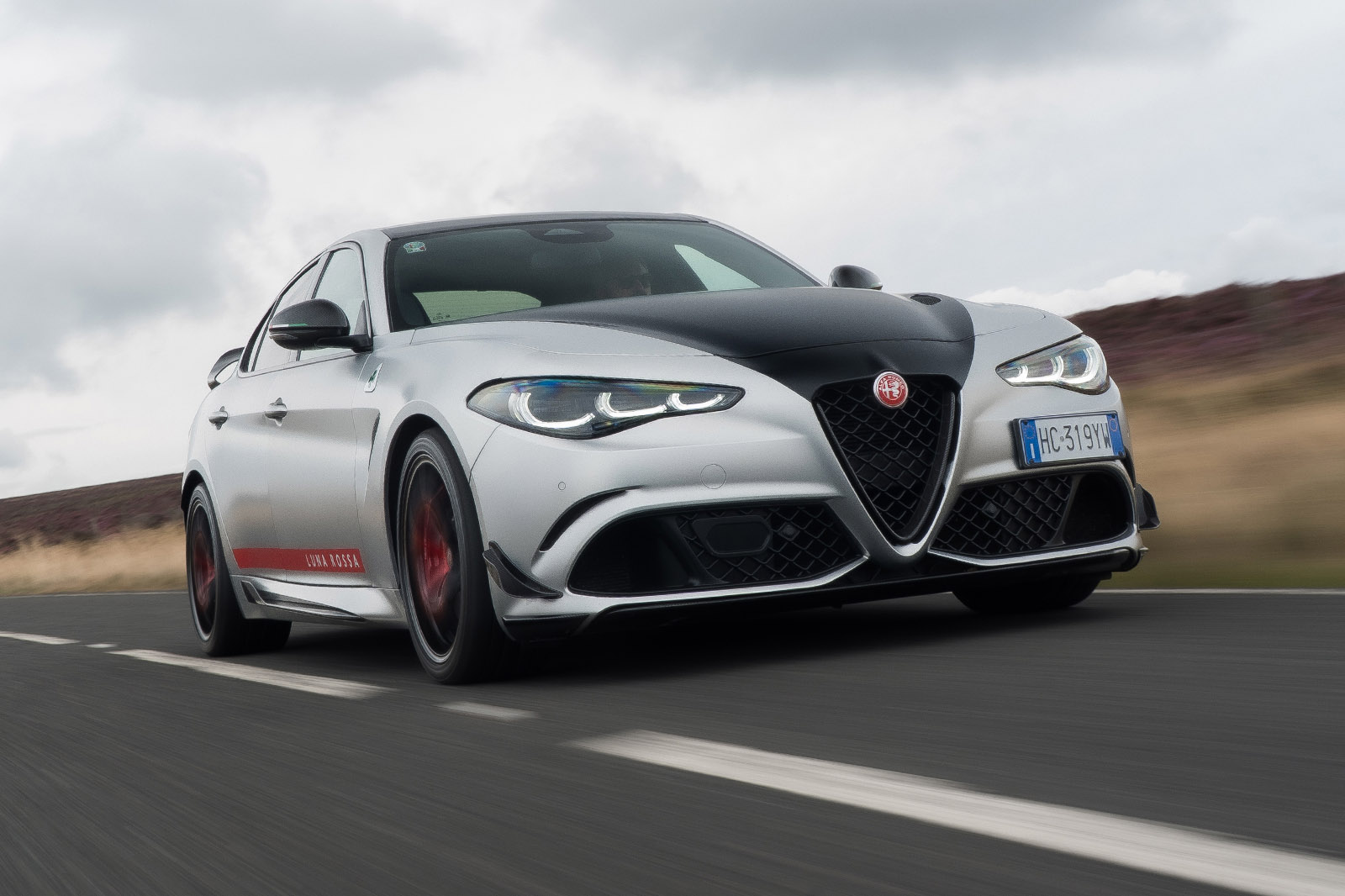
The Alfa Romeo Giulia Quadrifoglio Luna Rossa edition arrives as a limited-run celebration of the Italian manufacturer’s partnership with the Luna Rossa Prada Pirelli sailing team, a collaboration that bridges the gap between high-performance automotive engineering and elite competitive yachting. This special edition, while primarily an aesthetic and aerodynamic homage, serves as a poignant reminder of the Giulia’s standing in a rapidly evolving automotive landscape. As the industry pivots toward electrification and digital-heavy interfaces, the Giulia Quadrifoglio remains one of the few contemporary "super-saloons" that prioritizes mechanical purity and driver engagement over software-driven dynamics.
The Genesis of the Luna Rossa Partnership
The relationship between Alfa Romeo and the Luna Rossa Prada Pirelli team is rooted in a shared Italian heritage and a mutual focus on aerodynamic efficiency and lightweight construction. The Luna Rossa team, competing in the 37th America’s Cup, utilizes carbon fiber technology and fluid dynamics research that mirror the development processes found within Alfa Romeo’s high-performance "Quadrifoglio" (four-leaf clover) division.
Historically, Alfa Romeo has utilized special editions to maintain consumer interest in the Giulia platform, which originally debuted in 2015. Previous iterations, such as the GTA and GTAm, pushed the platform to its mechanical limits. The Luna Rossa edition takes a different approach, focusing on a unique livery—typically featuring a combination of white, grey, and red accents—and interior materials that evoke the world of professional sailing.
Technical Specifications and Aerodynamic Enhancements
Underneath the commemorative livery, the Luna Rossa edition retains the core mechanical architecture of the standard Giulia Quadrifoglio. The vehicle is powered by a 2.9-liter 90-degree V6 engine, an unduplicated powerplant in its class that features two single-scroll turbochargers integrated into the exhaust manifold. This engine, which draws significant engineering inspiration from Ferrari’s F154 V8 family, produces 513 brake horsepower (bhp) and 443 lb-ft of torque.
The most significant functional change for the Luna Rossa edition involves its aerodynamic package. Alfa Romeo engineers have implemented modifications designed to increase high-speed stability. According to official data, these aero adjustments generate 140kg of downforce at 186mph (300kph). While these figures are impressive on a technical datasheet, their impact on public roads is negligible, as such speeds are rarely attainable outside of unrestricted sections of the German Autobahn or closed-circuit racing environments.
The powertrain remains mated to a ZF-sourced eight-speed torque-converter automatic transmission. Power is delivered exclusively to the rear wheels via a carbon fiber driveshaft and a mechanical limited-slip differential. This setup distinguishes the Giulia from many of its German rivals, which have increasingly moved toward all-wheel-drive systems to manage high power outputs.
Interior Design and Build Quality Observations
The interior of the Luna Rossa prototype presents a mixture of innovative materials and aging architecture. The most notable addition is the use of a grey "life jacket" fabric—a technical textile that provides a tactile link to the sailing world. This material is used to brighten a cabin that has often been criticized for being overly dark and reliant on traditional leather and Alcantara.
However, the prototype status of the vehicle evaluated revealed several concerns regarding assembly quality. Observations included loose trim pieces, improperly fitted seat adjustment buttons, and fabric attached with Velcro that lacked the permanence expected of a luxury performance vehicle. Furthermore, the updated red Alfa Romeo badges showed signs of premature fading. While these issues are often attributed to the "hard life" of a pre-production test mule, they highlight the ongoing challenge Alfa Romeo faces in matching the perceived build quality of competitors like Audi or BMW.
Despite these concerns, the Giulia’s interior retains a dedicated following due to its ergonomic philosophy. In an era where physical buttons are being replaced by haptic touchscreens, the Giulia maintains a suite of tactile controls for climate and infotainment. The layout is described as "dated" by modern standards, yet it offers a level of intuitive operation that many enthusiasts find superior to modern digital-only interfaces.
Driving Dynamics: The Analogue Experience
The driving experience of the Giulia Quadrifoglio Luna Rossa remains its most compelling attribute. Unlike the Audi RS5, which utilizes variable-ratio steering and complex electronic damping to mask its weight, the Giulia employs a remarkably quick 11.8:1 steering ratio. This setup is fixed, meaning the steering response is consistent regardless of speed, providing a level of predictability that is increasingly rare.
The front-end "bite" is a hallmark of the Giorgio platform upon which the Giulia is built. The car’s weight distribution—near a perfect 50/50 split—allows for rapid direction changes with minimal body roll. The mechanical locking differential ensures that power delivery is progressive. In "Race" mode, the vehicle disables all electronic stability and traction controls. This "old-school" approach requires a high degree of driver skill but rewards the operator with a transparent chassis that communicates its limits clearly.
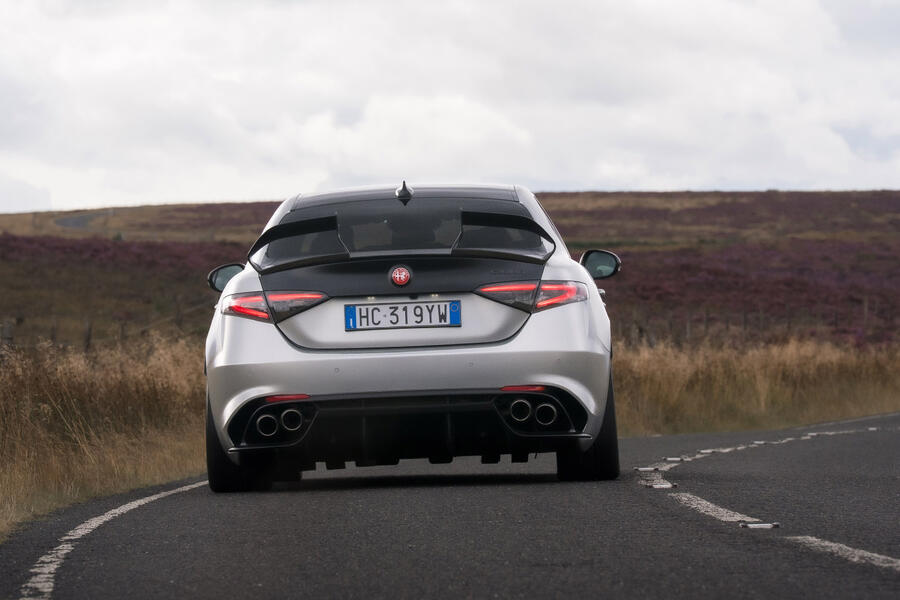
The suspension tuning continues to be a point of praise. Despite its performance orientation, the Giulia manages to damp out road imperfections with a level of sophistication that prevents the ride from becoming crashy or unsettled. This balance between track-ready stiffness and road-going compliance has been a defining feature of the Quadrifoglio since its inception.
Comparative Market Analysis
When positioned against its primary rival, the Audi RS5, the differences in engineering philosophy become apparent. The Audi RS5 is often characterized by its "digital" feel—highly capable, immensely fast, and secure thanks to its Quattro all-wheel-drive system, but occasionally criticized for a lack of emotional connection. The Giulia, by contrast, is "analogue."
Data indicates that while the RS5 may offer superior all-weather traction and a more modern interior, the Giulia Quadrifoglio holds a higher appeal for the "purist" demographic. The inclusion of an Akrapovič exhaust system in the Luna Rossa edition further emphasizes this, providing a gravelly, mechanical soundtrack that contrasts with the more muted, synthesized tones found in modern turbocharged competitors.
The Missing Link: The Manual Transmission Debate
A recurring point of discussion among enthusiasts and critics alike is the absence of a manual transmission in the current Giulia lineup. At the model’s initial launch, a six-speed manual was available in certain European markets. However, due to low take-up rates and the increasing efficiency of automatic gearboxes, the manual was phased out.
Analysts suggest that for a "special edition" like the Luna Rossa to truly stand out, the reintroduction of a manual gearbox would have provided a unique selling proposition. As BMW continues to offer a manual option in the M3 for the North American market, Alfa Romeo’s decision to remain automatic-only is seen by some as a missed opportunity to fully capitalize on the car’s "analogue" reputation.
Broader Implications for the Alfa Romeo Brand
The Luna Rossa edition serves as a "footnote" in the history of the Giulia, but it also signals the end of an era. Alfa Romeo has committed to becoming a fully electric brand by 2027. This means the current Giulia Quadrifoglio is likely the last of its kind—a rear-wheel-drive, internal combustion engine super-saloon with a direct link to the brand’s racing heritage.
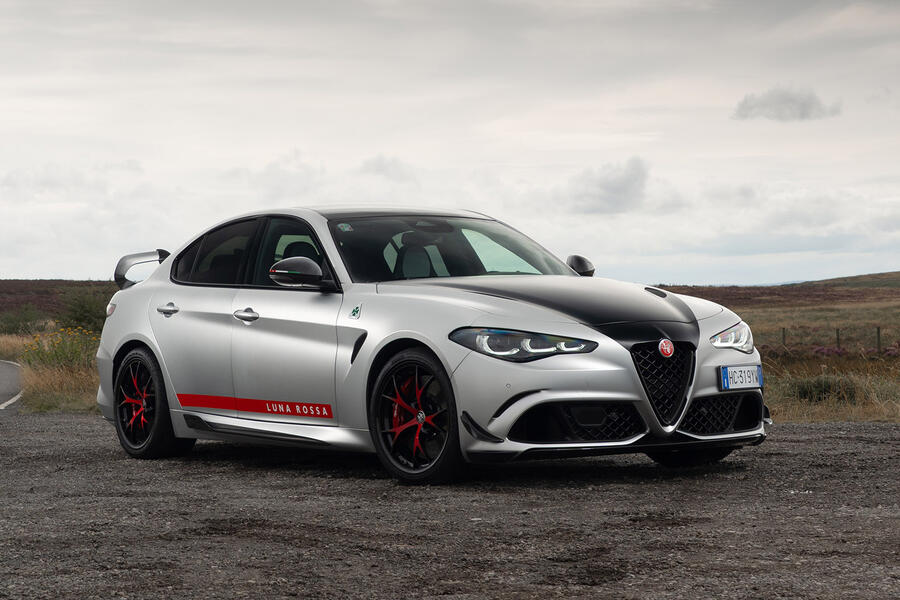
The production of such special editions is a strategy to maintain brand prestige while the company transitions its core lineup to SUVs and crossovers, such as the Tonale and the upcoming Junior. For collectors and enthusiasts, the Luna Rossa represents one of the final opportunities to acquire a brand-new vehicle built on the Giorgio platform, which cost Fiat Chrysler Automobiles (now Stellantis) an estimated $1 billion to develop.
Official Stance and Market Reception
While official sales figures for the Luna Rossa edition are closely guarded, Alfa Romeo positioning suggests it is aimed at brand loyalists who value the connection to Italian sporting excellence beyond the automotive sphere. Statements from the brand emphasize that the Luna Rossa is a "celebration of Italian soul," focusing on the synergy between the "sailing team’s pursuit of the perfect line" and the Giulia’s handling characteristics.
Industry experts note that while the Luna Rossa may not "turn the brand around" in terms of volume sales, it reinforces Alfa Romeo’s identity as a manufacturer of driver-centric vehicles. The "Verdict" on the vehicle remains consistent: despite its aging interior and the quirks of its prototype build, the Giulia Quadrifoglio remains one of the most rewarding performance cars on the market.
Summary of Findings
The Alfa Romeo Giulia Quadrifoglio Luna Rossa edition is a study in contrasts. It features:
- Performance: A 513bhp V6 engine that remains a benchmark for response and character.
- Aerodynamics: A specialized kit providing 140kg of downforce, though its real-world impact is limited.
- Design: Innovative "life jacket" textiles that refresh a familiar, if dated, cabin.
- Handling: A steering and chassis setup that defines the "analogue" driving experience in the 2020s.
Ultimately, the Luna Rossa edition is less about revolutionary mechanical changes and more about celebrating the inherent brilliance of the Giulia platform before it makes way for the next generation of electrified vehicles. It stands as a testament to a period of automotive engineering where driver feedback and mechanical purity were the primary metrics of success.