


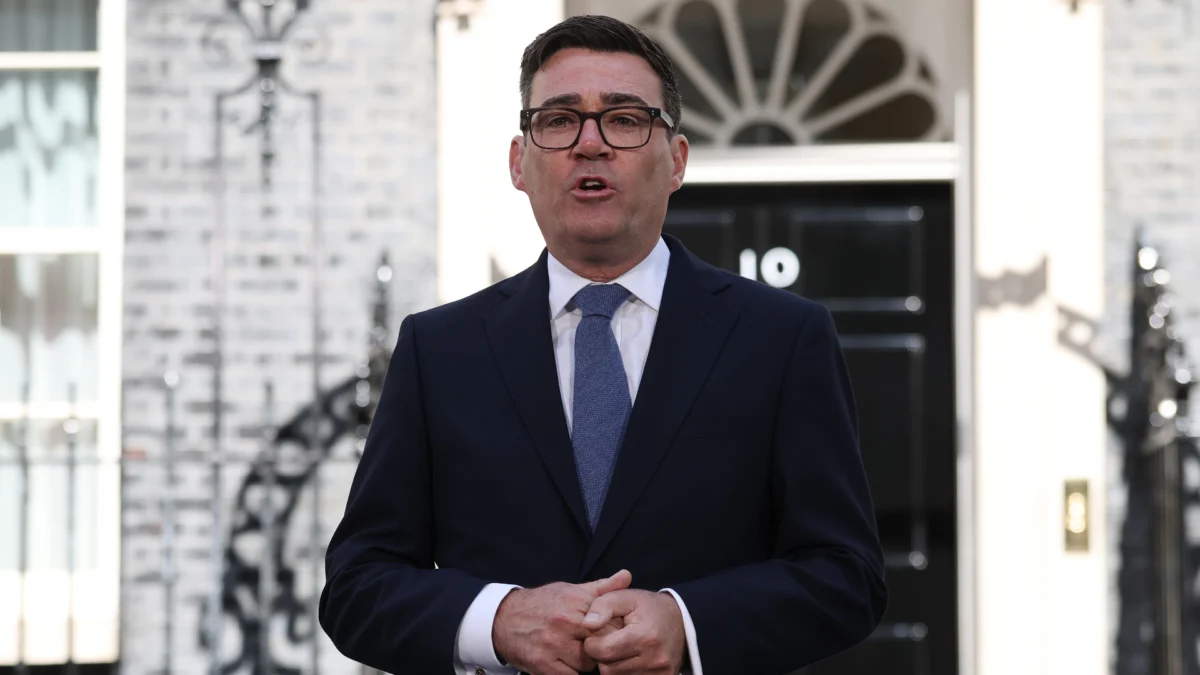
Andy Burnham, the 56-year-old leader of the Labour Party, has officially been appointed the United Kingdom’s seventh Prime Minister in ten years, marking a significant shift in the nation’s political landscape. His ascent to power follows the resignation of his predecessor, Keir Starmer, and signals a new era for the Labour Party and potentially for the country’s governance. Burnham’s appointment, confirmed after meeting with King Charles III who formally invited him to form a government, is set to commence from Monday. The immediate aftermath of this transition involves a cabinet reshuffle, with particular attention on the future of the Culture Secretary, Lisa Nandy, who has been instrumental in shaping the UK’s film and television industry policy and securing crucial funding for the British Film Institute (BFI). Despite the impending changes, Burnham and Nandy share a long-standing political alliance, suggesting a potential for continuity in key policy areas, although the full extent of the reshuffle remains a subject of keen interest.
The Road to Downing Street: Starmer’s Departure and Burnham’s Rise
The political tremors leading to Burnham’s premiership had been building for weeks, with his eventual succession widely anticipated. Keir Starmer’s tenure as leader was brought to an abrupt end after facing sustained pressure from within his own party. Months of speculation regarding his unpopularity among Labour ministers culminated in his resignation. Critics of Starmer’s leadership pointed to a perceived strategy of attempting to appeal to Conservative and Reform voters on sensitive issues such as the conflict in Gaza, transgender rights, immigration, and measures to address soaring inequality. This approach, it was argued, alienated core Labour supporters and failed to galvanize the party’s base. The prevailing sentiment was that Starmer’s leadership lacked the decisive strength and clear ideological direction needed to effectively challenge the Conservative government and the burgeoning far-right influence of Reform UK.
It was within this vacuum of leadership and strategic uncertainty that Andy Burnham emerged as the Labour Party’s presumptive successor. His supporters believe he possesses the political acumen and broad appeal necessary to confront Nigel Farage’s Reform UK directly, potentially even drawing support from disillusioned Green Party voters. Burnham’s background and political trajectory have shaped his image as a formidable contender, capable of bridging divides and energizing a diverse electorate.
A Political Journey: From Liverpool Suburb to National Leadership
Born in a Liverpool suburb, Andy Burnham’s political journey began at the tender age of 15 when he joined the Labour Party. His academic prowess led him to Cambridge University, after which he embarked on a steady rise through the ranks of British politics. During his early career, he served in government under prominent former Prime Ministers Tony Blair and Gordon Brown, gaining invaluable experience in the intricacies of national policy-making. He later held significant shadow ministerial roles under Ed Miliband and Jeremy Corbyn, a period punctuated by his multiple, albeit unsuccessful, attempts to secure the Labour Party leadership. These earlier bids, while not resulting in immediate victory, honed his political skills and solidified his position within the party hierarchy.
The "Man of the People" and the "King of the North"
From 2017 until his recent appointment as Prime Minister, Burnham served as the Mayor of Greater Manchester. This role significantly bolstered his public profile, cultivating an image as a "man of the people." Over the past decade, his political strength has resided in his ability to command widespread support across the north of England, a region often perceived as being overlooked by Westminster. A cornerstone of his mayoral tenure and a significant factor in his broad appeal was his instrumental role in championing and passing the Hillsborough Law. This landmark legislation is designed to prevent state cover-ups in the aftermath of public disasters and scandals. Its name is inextricably linked to the 1989 Hillsborough disaster, where 97 Liverpool fans tragically lost their lives in a crowd crush at a football match, and the subsequent decades-long struggle by the victims’ families to unearth the truth from official channels. The successful passage of this law cemented Burnham’s reputation as a champion for justice and accountability.
Burnham’s political stance is often described as being closer to the left of Jeremy Corbyn than to the more centrist positions of Tony Blair or Keir Starmer. This alignment, coupled with his strong regional identity, has earned him the moniker "King of the North." This regional focus is poised to become a central theme of his premiership. A key objective of his government will be to decentralize power away from London, fostering regional political hubs and bolstering infrastructure, particularly public transport in northern cities. Addressing pressing social issues such as homelessness and the provision of social housing are also high on his agenda.
Navigating Treacherous Political Waters
Burnham’s path to effective governance is fraught with significant challenges. The current political climate in Britain is characterized by the growing influence of the far-right, with politicians actively seeking to exploit immigration policies and exploit societal divisions. Nigel Farage’s Reform UK, in particular, is positioning itself as a major contender in the next general election, which is constitutionally mandated to take place no later than August 2029. In response to this electoral threat, the Conservative Party, under the leadership of Kemi Badenoch, has increasingly adopted a more hardline stance on certain policies in an attempt to reclaim voters who have shifted their allegiance to Reform. This competitive and often acrimonious political terrain presents a formidable obstacle for Burnham’s Labour government.
The Daunting Task Ahead: Economic, Social, and International Pressures
Burnham’s long-held ambition to lead the Labour Party has now materialized, but the challenges he faces are immense. The immediate priorities for his administration are multifaceted and demanding. Appointing a competent Chancellor of the Exchequer will be critical in navigating the complex economic landscape. The government must also secure £9 billion (approximately $12 billion) for the nation’s defense budget, a substantial undertaking in a period of global instability. Protecting the National Health Service (NHS), a cornerstone of British public life, from further strain and decline will require significant investment and strategic reform. Fulfilling Labour’s manifesto pledge to build 1.5 million new homes is another ambitious target that will necessitate overcoming planning hurdles and securing substantial funding. Furthermore, addressing the crisis of youth unemployment and finding pathways to employment for over a million young people in a challenging job market will be a crucial test of his government’s efficacy.
On top of these domestic pressures, Burnham must also tread a delicate line on highly sensitive issues such as immigration, policing reforms, and the UK’s stance on the conflict in Gaza. The complexities and potential for public division surrounding these issues are considerable, making a balanced and effective policy approach essential.
Despite the formidable nature of these challenges, Burnham has projected an image of unwavering readiness. Speaking after his formal election as Labour Party leader, he declared, "I am ready." He expressed profound gratitude for the support received from his MPs, stating, "What a moment… What backing you’ve given me." He concluded with a message of confidence and determination: "I have a plan. I believe in all of you, and I am confident we can do it." This declaration sets the tone for his premiership, emphasizing a proactive and united approach to tackling the nation’s most pressing issues. The coming months will undoubtedly reveal the extent to which his vision and leadership can translate into tangible progress for the United Kingdom.