


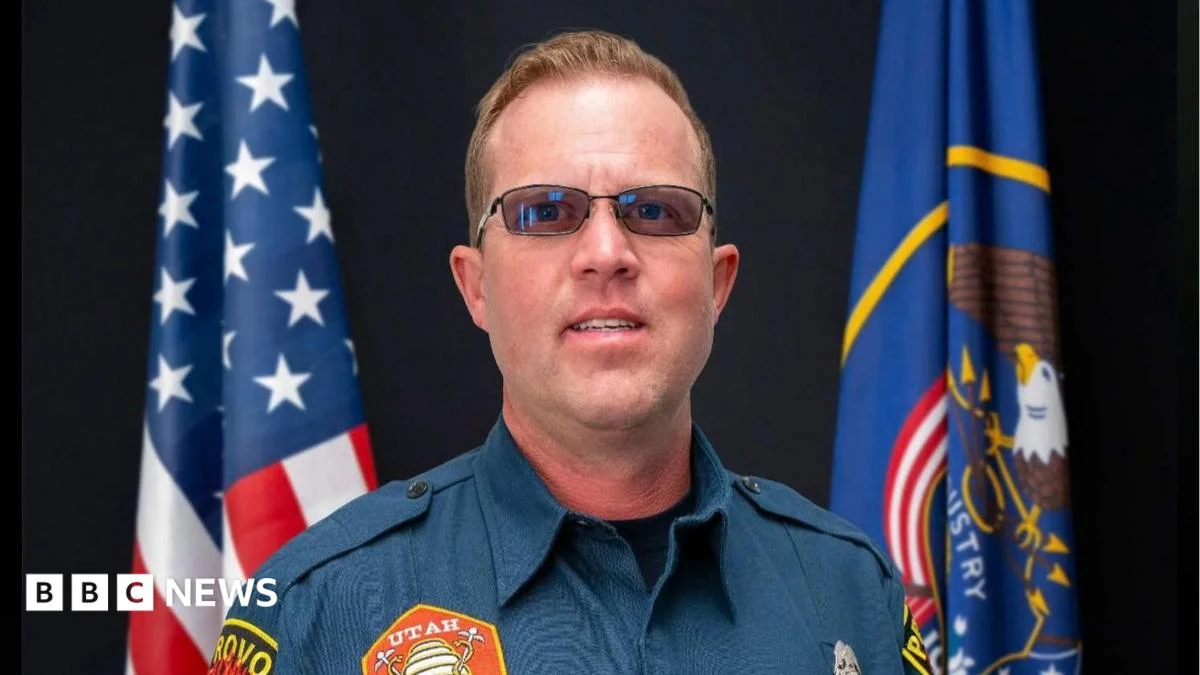
A devastating flash flood incident in southern Utah over the weekend claimed the lives of five members of a single family, including a respected fire captain, casting a pall of grief over communities in the state. The victims were identified as Spencer Long, a captain with Provo Fire & Rescue, his wife Katrina, and their three sons, Reid, Thayne, and Gage. The family had embarked on a day of hiking and recreation in the scenic, yet often perilous, landscape near Bicknell, Utah, when they were tragically caught in a sudden deluge of floodwaters. A daughter, who was not present during the outing, is the sole surviving member of the immediate family, her life irrevocably altered by the instantaneous loss.
Law enforcement officials, led by the Wayne County Sheriff’s Office, confirmed the fatalities, attributing them to the powerful and unpredictable forces of a flash flood triggered by heavy rainfall. While the initial statement from the Sheriff’s Office did not disclose the names of the deceased, the identification of the family quickly emerged from Provo Fire & Rescue, which issued a profound statement of sorrow and tribute to their fallen colleague. The tragic event underscores the inherent dangers of outdoor recreation in arid regions prone to sudden and severe weather phenomena, particularly during periods of intense precipitation.
A Community in Mourning: The Long Family’s Legacy
Captain Spencer Long was a distinguished and dedicated member of the Provo Fire & Rescue department, serving the community with valor and commitment. His death, alongside his entire immediate family, has sent shockwaves through the emergency services community and beyond. "We are absolutely heartbroken by the death of Captain Spencer Long and his family," Provo Fire & Rescue stated, extending their deepest condolences. "Our thoughts are with his family, friends, and colleagues during this difficult time." The sentiment was echoed across various fire departments and law enforcement agencies, highlighting the close-knit nature of first responder communities and the profound impact of such a loss.
The Long family was remembered as vibrant and adventurous, known for their love of the outdoors and their close family bonds. Spencer and Katrina were described as devoted parents, and their sons — Reid, Thayne, and Gage — were active and cherished members of their school and community. The GoFundMe page established to support the surviving daughter quickly gained traction, serving not only as a crucial source of financial aid but also as a public platform for friends, family, and strangers to express their grief and solidarity. The page confirmed the identities of all five deceased, linking the Wayne County Sheriff’s report with the specific tragedy that befell the Long family. It poignantly noted that the daughter’s "life has forever been changed in an instant," a testament to the abrupt and overwhelming nature of the loss.
Chronology of a Catastrophe: The Unfolding of Events
The events leading to the tragic deaths began on Friday, when the Long family arrived at a campground situated near Bicknell, Utah, for what was intended to be a day of leisure and exploration. Southern Utah is renowned for its breathtaking, rugged landscapes, drawing countless visitors seeking adventure in its numerous national parks, state parks, and wilderness areas. However, these same geological features, characterized by narrow canyons, dry washes, and slickrock formations, can transform into deadly conduits for water during heavy rainfall.
- Friday Afternoon: As the family enjoyed their outing, isolated but intense thunderstorms developed in the region. Such storms, common during Utah’s late summer monsoon season, can drop significant amounts of rain in a short period, often miles upstream from where floodwaters ultimately impact. The arid soil, unable to quickly absorb the sudden downpour, contributes to rapid runoff.
- Around 5:00 PM Local Time (23:00 GMT): Emergency services were first alerted to a critical situation at the campground. Officials from the Wayne County Sheriff’s Office, along with other responding agencies, were dispatched to the scene. The initial discovery was that of a young male victim found deceased amidst the flood debris.
- Initial Search Efforts: Responding officers and search and rescue teams immediately commenced a frantic search for other potential victims. The challenging terrain, coupled with the ongoing flood conditions and diminishing daylight, made the operation exceedingly difficult and dangerous. Despite these obstacles, another two male victims were located and confirmed deceased during this initial phase of the search.
- Search Suspension and Resumption: As night fell and visibility plummeted, search efforts were temporarily suspended, a standard protocol when conditions become too hazardous for rescue personnel. The grim reality of the situation weighed heavily on the first responders, knowing that two family members remained unaccounted for. The search resumed with renewed urgency at daybreak on Saturday, bolstered by additional resources and specialized teams.
- Saturday Discoveries: The exhaustive search on Saturday ultimately led to the tragic discovery of the remaining two individuals, who were also found deceased. This confirmation brought a somber conclusion to the search operation, solidifying the devastating fact that all five missing family members had perished.
The swiftness and destructive power of the flash flood left little chance for survival, highlighting the extreme peril posed by these natural phenomena in the region.
The Perilous Beauty of Southern Utah: Understanding Flash Floods
Southern Utah’s geology, characterized by vast expanses of slickrock, deep canyons, and arroyos (dry washes), makes it uniquely susceptible to flash floods. Unlike areas with lush vegetation and absorbent soil, the bare rock and compacted earth of this desert environment offer minimal resistance to rainfall. When heavy downpours occur, water rapidly collects and rushes down slopes, converging into existing drainages with immense force and speed.
- Hydrological Mechanics: A key factor in flash floods is the "bathtub effect." Rain falling miles away, sometimes even under clear skies at the specific location, can funnel into narrow canyons or washes, transforming a placid stream bed into a raging torrent within minutes. The water’s leading edge often resembles a wall of water, laden with debris such as rocks, trees, and mud, capable of sweeping away vehicles, structures, and individuals with terrifying ease.
- Monsoon Season Risk: Utah experiences a distinct monsoon season from mid-July through September. During this period, moisture from the Gulf of California is drawn northward, leading to an increase in isolated, intense thunderstorms. While these storms can be localized, their impact on the region’s hydrology is profound, significantly elevating the risk of flash floods. Forecasters often issue flash flood watches and warnings, but the localized nature of these storms means conditions can change rapidly and unexpectedly.
- Statistical Context: Flash floods are among the deadliest weather-related hazards in the United States, and Utah consistently ranks among the states most affected. According to the National Weather Service, flash floods claim dozens of lives annually across the country. In Utah, recreationalists in national parks like Zion and Capitol Reef (which is proximate to Bicknell) are regularly reminded of the dangers, with numerous incidents occurring over the years, some resulting in multiple fatalities. The sheer volume of water, combined with its velocity and the abrasive debris it carries, creates an environment where survival is extremely difficult once caught in the current.
Official Responses and Broader Implications
The tragedy has prompted widespread expressions of grief and calls for heightened awareness regarding outdoor safety.
- Law Enforcement and Emergency Services: The Wayne County Sheriff’s Office, responsible for the initial response and investigation, emphasized the inherent risks of flash floods and urged all residents and visitors to monitor weather forecasts closely, especially when planning activities in canyon or wash areas. The multi-agency search and rescue operation involved numerous personnel, illustrating the dedication and collaborative spirit of Utah’s first responders, who often operate in challenging and emotionally taxing circumstances. The emotional toll on these responders, especially when the victims are known members of the emergency services community, is profound.
- Provo Fire & Rescue’s Loss: For Provo Fire & Rescue, the loss of Captain Spencer Long is not just a professional void but a deep personal one. Captain Long was a respected leader and colleague, and his death will undoubtedly impact the department for years to come. Such tragedies often lead to internal reflections on responder safety, mental health support for personnel, and a reinforcement of the bonds within the department.
- Community Solidarity: The outpouring of support for the surviving daughter and the Long family is a testament to the strength and compassion of the community. Beyond the GoFundMe initiative, local churches, community groups, and individual citizens have rallied to provide emotional and practical assistance. This collective grief and support often serve as a crucial mechanism for healing in the wake of such devastating events.
- Recreational Safety Advocacy: This incident serves as a stark reminder for all who venture into Utah’s wilderness. Experts and park officials consistently advise checking weather conditions not just at the immediate location, but also upstream. Understanding terrain, having escape routes, and being prepared to postpone or cancel plans in the face of adverse weather are critical safety measures. Educational campaigns and clear signage at popular recreational sites will likely be reinforced to underscore these vital precautions. The incident highlights that even experienced outdoors enthusiasts can be caught off guard by the unpredictable nature of flash floods.
- Climate Change and Extreme Weather: While this specific event cannot be directly attributed solely to climate change, it occurs within a broader context of increasing frequency and intensity of extreme weather events globally. Scientists have observed shifts in precipitation patterns, with some regions experiencing more intense rainfall events. This trend underscores the growing importance of robust early warning systems, adaptive infrastructure, and public education on natural hazard preparedness. The unpredictability of these events demands a proactive and informed approach from both authorities and the public.
The tragic loss of Spencer, Katrina, Reid, Thayne, and Gage Long in a southern Utah flash flood is a profound reminder of nature’s power and the preciousness of life. It leaves behind a grieving daughter, a heartbroken fire department, and a community united in sorrow, yet also resolved to honor the memory of the deceased through support, remembrance, and a renewed commitment to safety in the wild, beautiful, and sometimes dangerous landscapes of Utah.