


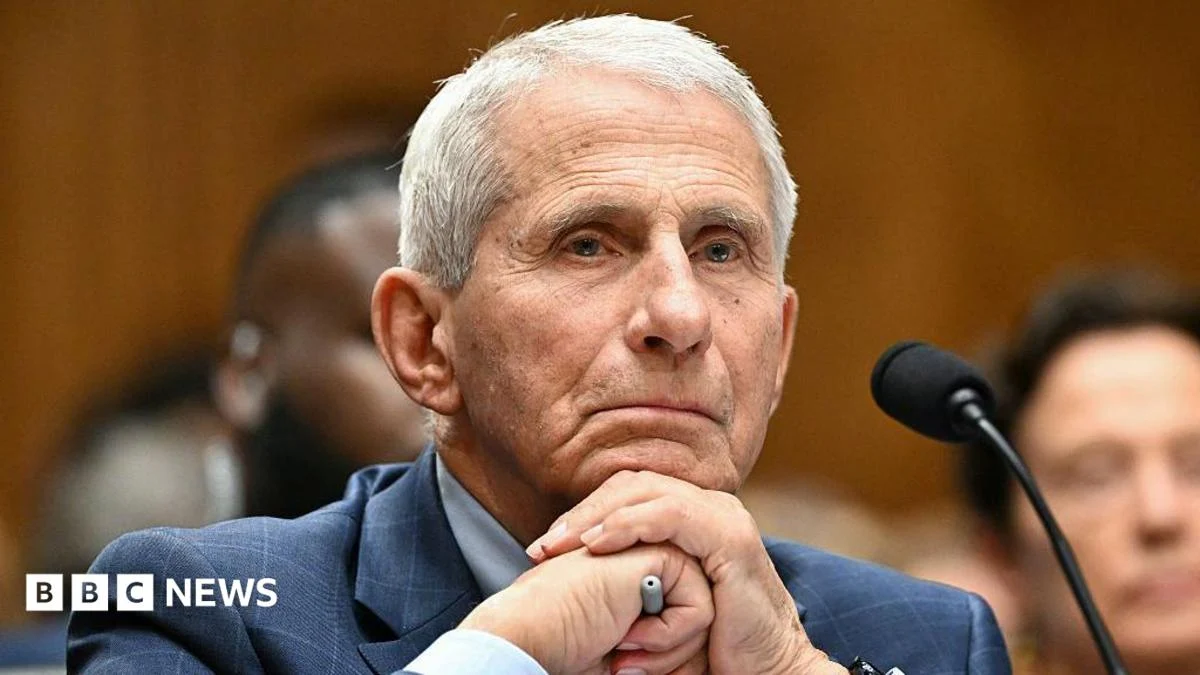
Dr. Anthony Fauci, the former director of the National Institute of Allergy and Infectious Diseases (NIAID) and a pivotal figure in the US response to the COVID-19 pandemic, invoked his Fifth Amendment right against self-incrimination at a contentious US Senate hearing on Wednesday, refusing to answer questions from lawmakers. The 85-year-old physician, who served under seven US presidents, stated his decision was driven by a fear that Republican senators, particularly Senator Rand Paul of Kentucky, would attempt to use his testimony to pursue perjury charges against him. This unprecedented move by a former high-ranking public health official has ignited a fresh wave of political debate, intensifying partisan divisions surrounding the pandemic’s origins and the government’s handling of the health crisis.
The hearing, convened by the Senate Committee on Homeland Security, quickly devolved into a heated exchange. Senator Paul, a vocal critic of Fauci throughout the pandemic, pressed the former NIAID chief on various aspects of the government’s response and the scientific understanding of the virus. Fauci, however, remained steadfast in his refusal to engage, citing his constitutional protection. "Although it pains me to do so because of the respect I have for the legislative branch of government," Fauci stated, "under the advice of my attorneys, I will invoke my right under the Fifth Amendment of the constitution to refrain from answering your questions." He elaborated that his decision stemmed from Paul’s "obvious obsession" with prosecuting him, asserting that the senator’s sole aim was to elicit statements that could be used to fulfill his "repeated public pledges that I end up, in his words, ‘behind bars.’"
The Senate Hearing: A Tense Confrontation
The atmosphere within the Senate chamber was palpably charged as Senator Paul continued his line of questioning despite Fauci’s invocation of the Fifth Amendment. Paul repeatedly invited Fauci to "apologise" for past statements and policy recommendations, maintaining his accusatory tone. At one point, David Schertler, Fauci’s legal counsel, attempted to interject during Paul’s questioning to make a "legitimate legal point," but was subsequently removed from the room by order of the committee chairman. Schertler later condemned the removal as "outrageous," characterizing it as further evidence of the "baseless and vindictive nature of this proceeding and Rand Paul’s personal vendetta against Dr. Fauci."
Senator Paul concluded his questioning by announcing that the committee would vote next week on a resolution to hold Fauci in contempt of Congress, a serious charge that could lead to a criminal referral to the Justice Department. This threat underscores the deep-seated animosity and the persistent efforts by some Republican lawmakers to hold Fauci accountable for what they perceive as missteps and obfuscations during the pandemic.
The Fifth Amendment: A Constitutional Shield Under Scrutiny
The Fifth Amendment to the US Constitution states that no person "shall be compelled in any criminal case to be a witness against himself." Invoking this right is a constitutional protection against self-incrimination and is not, in itself, an admission of guilt. Its purpose is to safeguard individuals from coercion, mistakes, and an unfair shifting of the burden of proof regarding alleged wrongdoing. However, its use by a prominent public official in a high-profile congressional hearing is rare and carries significant political weight, often interpreted by the public as an indication of something to hide, despite its legal intent.
Fauci’s legal team has clearly advised him that providing further testimony could expose him to legal jeopardy, particularly concerning potential perjury charges. Given his extensive previous testimonies before various congressional committees on COVID-19 and its origins, the risk of inadvertently contradicting earlier statements, or providing new information that could be construed differently, was deemed too high. This reflects the intense scrutiny Fauci has faced, with Republicans having long accused him of concealing information from the public and misleading the nation about the pandemic’s dangers and origins. Fauci has consistently denied any wrongdoing, famously calling the allegations against him "simply preposterous" in prior congressional appearances.
A History of Scrutiny: Fauci and His Critics
Dr. Anthony Fauci’s career spanned decades, during which he became a globally recognized expert in infectious diseases. As the director of NIAID from 1984 to 2022, he advised on every major health crisis, from AIDS to Ebola, cementing his reputation as a trusted scientific authority. However, his prominent role as a public face of the US COVID-19 response catapulted him into the political arena, making him both a lauded figure by many and a lightning rod for criticism, particularly from conservative politicians and media outlets.
From early in the pandemic, Fauci became a target for Republicans, who challenged his recommendations on mask mandates, lockdowns, and vaccine efficacy. Senator Rand Paul, a physician himself, has been a particularly persistent adversary, frequently clashing with Fauci in previous hearings and public forums. Paul has repeatedly accused Fauci of downplaying the possibility of a lab leak origin for COVID-19, of funding controversial research, and of providing inconsistent public health guidance. These accusations have fueled a narrative among critics that Fauci was less than transparent with the American public, a claim Fauci vehemently rejects.
The Pardon and Lingering Legal Vulnerabilities
Adding a layer of complexity to Fauci’s legal standing is the pre-emptive pardon he was granted by former President Joe Biden. This pardon, which covers his federal actions between 2014 and 2025, theoretically shields him from federal prosecution for actions taken during that period. The period specified (2014-2025) is notably broad, encompassing the critical years of the COVID-19 pandemic response.
However, this pardon is not absolute. It does not protect Fauci from potential state or local charges. More critically, it may not cover actions or statements made after the specified period, including his conduct during the current Senate committee hearing. If, for instance, he were to be found in contempt of Congress for refusing to testify, or if new evidence emerged concerning actions outside the pardon’s scope or timeline, he could still face legal repercussions. Indeed, following the hearing’s conclusion, Florida’s Attorney General, a Republican, announced plans to open an investigation into Fauci, signaling that state-level scrutiny is now a very real possibility, independent of federal protections.
The Shifting Sands of Pandemic Guidance
A significant point of contention raised by Republicans during the pandemic, and alluded to in the hearing, was the perceived "shifting" nature of public health guidance. Early in the pandemic, advice on masks, social distancing, and vaccine efficacy evolved as scientific understanding of SARS-CoV-2 progressed. Critics, including many Republicans, viewed these changes as evidence of confusion, incompetence, or even deliberate deception.
Fauci and other public health officials have consistently defended these evolving recommendations as a natural and necessary part of the scientific process during a rapidly unfolding global health crisis. They argued that initial guidance was based on limited information, and as more data became available through rigorous research and observation, recommendations were updated to reflect the best available science. For example, early guidance against widespread mask use was based on concerns about supply shortages for healthcare workers and an initial lack of clear evidence on asymptomatic transmission. As understanding improved, the efficacy of masks in preventing spread became clear, leading to revised recommendations. This scientific fluidity, however, was often weaponized in the highly polarized political landscape, contributing to public distrust and fueling accusations against figures like Fauci.
The Enduring Debate: COVID-19 Origins
Central to the ongoing scrutiny of Fauci is the contentious debate surrounding the origins of the COVID-19 pandemic. Two primary theories have dominated discussions: the "natural origins" theory, positing that the virus spilled over from animals to humans, and the "lab leak" theory, suggesting the virus accidentally escaped from a research facility, most notably the Wuhan Institute of Virology in China.
Former President Donald Trump, who was in office when the pandemic began in 2020, consistently promoted the lab-leak theory, often clashing with public health officials, including Fauci, who initially leaned towards natural origins. Senator Rand Paul has been a staunch advocate for the lab-leak theory, frequently using congressional hearings to press Fauci on the matter and to highlight the possibility of gain-of-function research conducted at the Wuhan lab, potentially with US funding via NIAID.
Earlier this week, Senator Paul released excerpts from Fauci’s pandemic-era diary entries, which provided a glimpse into his internal deliberations regarding the virus’s origins. The entries reflect an initial openness to both theories in February 2020, acknowledging that scientists on conference calls did not have "total agreement." However, as time progressed, Fauci appears to become more convinced of a natural origin, writing later that he was "almost certain that the virus evolved naturally from a species jump, even though… I keep an open mind about the possibility of a lab leak." He further clarified his evolving perspective, noting that "just because two alternatives are possible that does not mean that they are equally probable."
The World Health Organization (WHO) weighed in on the debate in 2025, stating that the natural-origins theory was the "best supported" idea from the available evidence, but acknowledged that until more definitive information emerges, origin determination remains "inconclusive." This scientific ambiguity continues to fuel political speculation and demands for further investigation, especially from those who suspect a cover-up.
Political Fallout and Partisan Reactions
Fauci’s decision to invoke the Fifth Amendment has predictably elicited strong reactions across the political spectrum, further deepening partisan divides. Republicans expressed outrage and frustration, viewing it as an admission of culpability or an attempt to evade accountability. Senator Ron Johnson of Wisconsin angrily declared his intention to push for a subpoena, aiming to compel Fauci to answer lawmakers’ questions, potentially under threat of legal action. The Florida Attorney General’s announcement of a state-level investigation further signals the determination of some Republican officials to pursue legal avenues.
Conversely, several Democrats rallied to Fauci’s defense, characterizing the hearing as a politically motivated attack. Senator Maggie Hassan of New Hampshire stated that the hearing was "designed to entrap" Fauci, arguing that the proceedings were less about genuine oversight and more about creating a political spectacle to discredit a respected public servant. These reactions highlight the entrenched polarization that continues to define discussions around the pandemic and its aftermath.
Amidst the hearing, former President Donald Trump took to social media, reiterating his long-standing criticism of Fauci. He called Fauci "crazy" and reaffirmed his belief that the virus originated from the Wuhan Laboratory, accusing Fauci of "always trying to protect China." Trump and Fauci frequently sparred over the handling of the pandemic, including when Trump suggested unproven treatments, illustrating a fundamental divergence in their approaches to public health and scientific evidence. This historical tension continues to influence public perception and political discourse.
Broader Implications: Public Trust and Oversight
The invocation of the Fifth Amendment by a figure as prominent as Dr. Anthony Fauci carries significant implications for public trust in government officials and scientific institutions. While legally protected, the act itself can erode confidence, particularly among those already skeptical of official narratives. It adds another layer of complexity to the ongoing quest for accountability regarding the COVID-19 pandemic, which resulted in over 1.1 million deaths in the United States and profound economic and social disruption.
Furthermore, this event underscores the challenges of congressional oversight in a highly polarized political environment. The aggressive questioning by Senator Paul and the threat of contempt charges suggest that legislative inquiries are increasingly becoming arenas for political theater rather than dispassionate fact-finding. This dynamic can hinder genuine oversight and make it difficult for the public to discern objective truths amidst partisan accusations.
Fauci’s personal journey through the pandemic has also been fraught with challenges. He faced numerous death threats during and after the coronavirus outbreak, leading to heightened security concerns. Last year, his security protection was notably removed by the Trump administration. Despite the intense criticism, it is important to remember that Fauci was also once commended by President Trump himself, receiving a presidential commendation in 2021 for his work on the US COVID vaccine project, Operation Warp Speed, highlighting the complex and often contradictory nature of his public and political relationships. The recent hearing serves as a stark reminder that the long shadow of the pandemic continues to shape America’s political landscape, with the pursuit of accountability evolving into a highly charged and legally perilous endeavor.