The automotive industry is currently witnessing an era of significant transition, where manufacturers are increasingly looking toward their heritage to inform their future electric vehicle (EV) strategies. While brands like Mini and Renault have leaned into overt nostalgia with the revival of the Cooper and the Renault 5, Audi is approaching the "retro" trend from a more functional perspective. The German automaker has confirmed the return of the Audi A2, reimagined as an all-electric hatchback designed to sit beneath the Q4 e-tron in its expanding lineup. However, unlike its contemporaries, the return of the A2 nameplate is not merely a stylistic choice; it is a byproduct of aerodynamic necessity and engineering efficiency.
The original Audi A2, produced between 1999 and 2005, was widely regarded as a car ahead of its time. It utilized an expensive, lightweight aluminum spaceframe and boasted a drag coefficient ($C_d$) as low as 0.25, making it one of the most fuel-efficient vehicles of its era. Despite its technical brilliance, the original A2 struggled with high production costs and a retail price that consumers found difficult to justify for a small car, leading to its eventual discontinuation without a direct successor. In 2024, the landscape has shifted. As Audi seeks to maximize the range of smaller EVs without resorting to heavy, expensive battery packs, the "teardrop" silhouette of the original A2 has emerged as the most logical solution for modern efficiency.
The Engineering Logic: Form Following Function
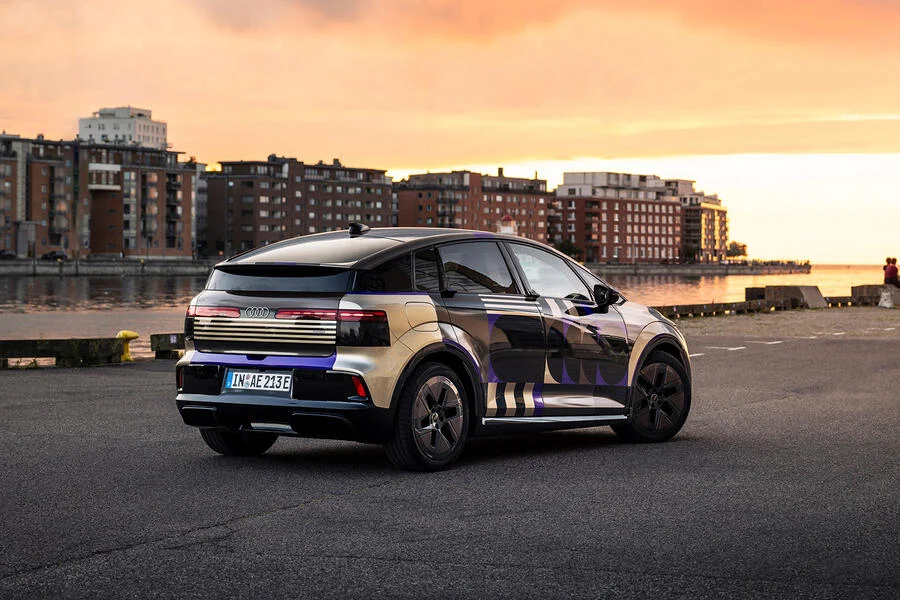
The development of the new A2 e-tron was driven by a specific goal: to create a compact EV that could achieve a competitive range while utilizing a relatively modest battery. In the world of electric mobility, aerodynamic drag is the primary adversary of highway efficiency. Audi’s engineers found that when optimizing a hatchback for the lowest possible wind resistance, the resulting shape naturally converged on the proportions of the original A2.
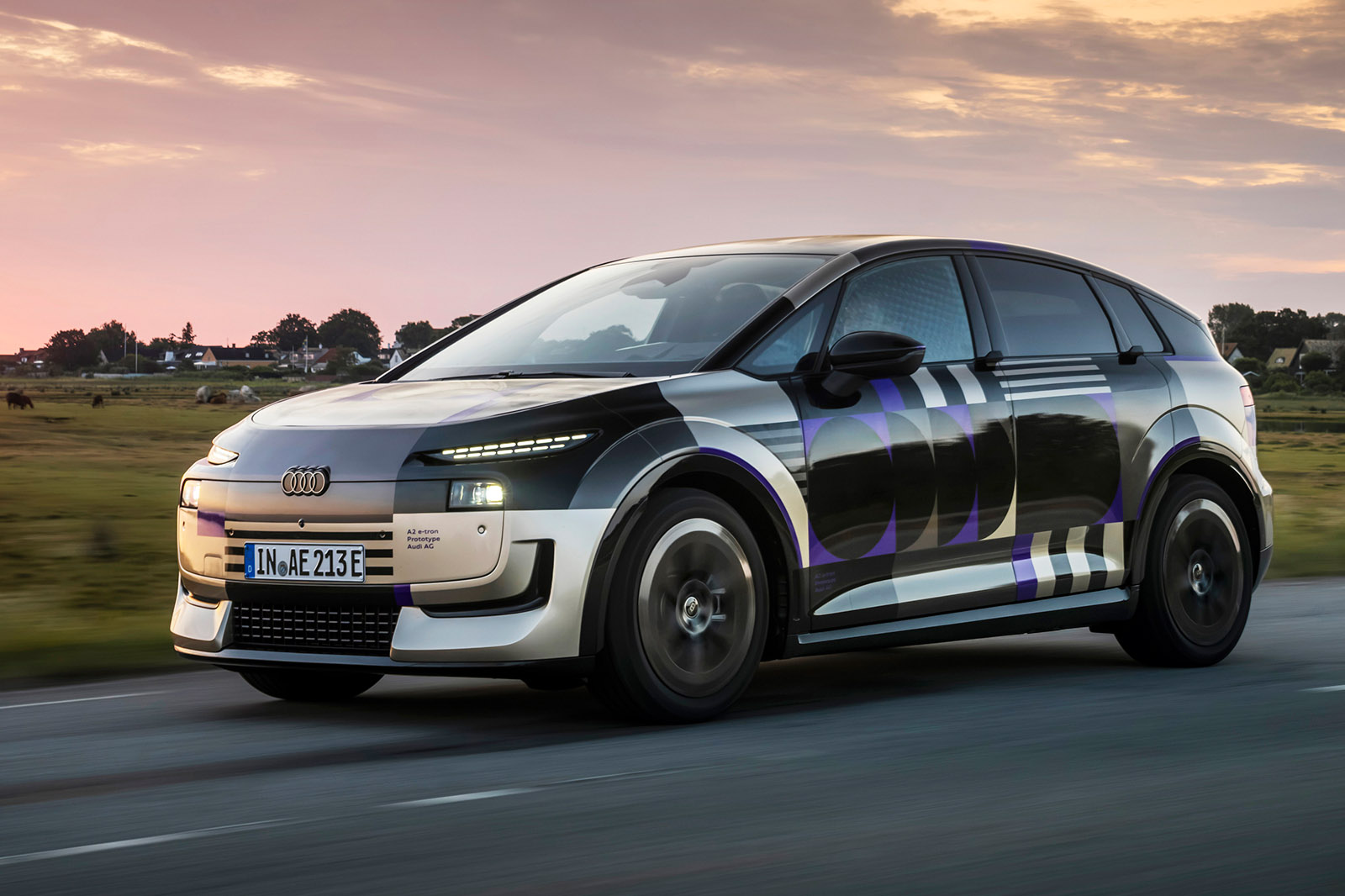
The new model features a short, bluff front end designed to part the air cleanly, transitioning into a monolithic, smooth body. The roofline tapers toward the rear in a classic teardrop profile, a shape that minimizes the vacuum-like "wake" created behind a moving vehicle. To maintain interior practicality while adhering to these aerodynamic requirements, the rear is "cut off" abruptly—a design feature known as a Kammback tail. This necessity also marks the return of the split rear window, a signature element of the first-generation A2 that was originally implemented to house a rear spoiler without obstructing the driver’s view.
While the original A2 was a radical departure from the norm due to its aluminum construction, the new A2 e-tron adopts a more pragmatically industrial approach. To ensure the vehicle remains financially viable and accessible to a broader market, Audi has moved away from the bespoke aluminum spaceframe. Instead, the A2 e-tron utilizes the Volkswagen Group’s ubiquitous MEB (Modular Electric Drive Matrix) platform, specifically the latest iteration of this architecture. This move allows Audi to leverage economies of scale while providing the vehicle with a proven, rear-wheel-drive-biased foundation.
Technical Specifications and Powertrain Innovations
The shift to the updated MEB platform introduces several key technological advancements that distinguish the A2 e-tron from earlier Volkswagen Group EVs. One of the most significant changes involves battery chemistry. While high-performance EVs often rely on Nickel-Manganese-Cobalt (NMC) batteries for their energy density, the A2 e-tron’s mid-range battery option will utilize Lithium-Iron-Phosphate (LFP) chemistry.
LFP batteries offer several advantages for a daily-use compact car. They are notably more durable and less prone to degradation when charged to 100% capacity on a regular basis, whereas NMC batteries are typically recommended to be kept between 20% and 80% for longevity. Furthermore, LFP cells are free of cobalt and nickel, reducing the environmental and ethical concerns associated with mining those materials and lowering the overall cost of the battery pack.
Complementing the battery updates is the introduction of the "APP350" electric motor. This new unit has been engineered for maximum internal efficiency. By using thinner materials in the stator and rotor, and implementing a more sophisticated lubrication system, Audi has reduced "churning losses." In previous motor designs, gears would often splash through a reservoir of oil, creating drag; the APP350 uses a separate oil pan and a more precise delivery system to ensure that lubrication is provided only where needed, thereby reclaiming energy that would otherwise be lost to friction.
Interior Design and User Experience
Inside the cabin, the A2 e-tron aims to bridge the gap between the minimalist approach of modern EVs and the premium feel expected of an Audi. While the vehicle is intended to be an entry-level model within the Audi e-tron family—effectively replacing the internal combustion A1 and the Q2 crossover—the brand has sought to maintain a sense of "Vorsprung durch Technik" through its digital interfaces.
Early looks at the prototype suggest an interior that draws heavily from the current Audi Q3. The dashboard is dominated by high-resolution digital screens, including the Audi Virtual Cockpit for the driver and a central touchscreen for infotainment. Notably, the A2 e-tron moves away from the ultra-minimalist, often criticized interface of the Volkswagen ID.3, opting instead for a control layout that feels more familiar to existing Audi owners. This includes a steering wheel with haptic and physical controls and a column-stalk array that pays a subtle stylistic homage to 1980s European design.
To address sustainability, Audi has incorporated "knitted" textiles across the door tops and dashboard. This fabric-heavy approach replaces traditional plastics and leathers with recycled materials that provide a unique tactile experience. However, initial reports suggest the interior maintains a characteristically "austere" German aesthetic, focusing on dark tones and robust build quality rather than the flamboyant luxury found in the brand’s larger e-tron GT or Q8 models.
Chronology of Audi’s Compact Segment Evolution
The path to the A2 e-tron has been marked by a series of strategic shifts within Audi’s product planning department:
- 1999–2005: The original A2 is marketed as a premium efficiency leader. Despite critical acclaim, only 176,377 units are produced over its lifespan.
- 2010: Audi launches the A1, a more conventional premium supermini based on the Volkswagen Polo platform, which proves to be a commercial success.
- 2016: The Q2 is introduced to capture the growing subcompact crossover market.
- 2021: Audi executives signal a shift in strategy, announcing that the A1 and Q2 will not be renewed for new generations as the brand focuses on larger, more profitable electric vehicles.
- 2023: Internal realization at Ingolstadt suggests that a compact, highly efficient EV is necessary to meet fleet emission targets and provide an entry point for younger buyers.
- 2024: Prototypes of the A2 e-tron begin testing, revealing a design that echoes the aerodynamic philosophy of the 1999 original.
Market Positioning and Competitive Landscape
The A2 e-tron enters a segment that is becoming increasingly crowded as European manufacturers rush to electrify their smaller models. By positioning the A2 e-tron as a "premium-ish" compact, Audi is directly challenging several key rivals.
Its most immediate competition comes from within the Volkswagen Group in the form of the Cupra Born and the Volkswagen ID.3. However, Audi’s offering is expected to command a price premium over these siblings, justified by superior interior materials, better sound insulation, and the brand’s more prestigious badge. Outside of the group, the A2 e-tron will compete with the Volvo EX30, which has set a high bar for performance and minimalist design in the small EV sector, and the Renault Megane E-Tech, which emphasizes light weight and French chic.
Significantly, the A2 e-tron currently lacks direct competition from its traditional "Big Three" rivals. BMW has yet to launch an electric successor to the i3 or an electric version of the 1 Series, and Mercedes-Benz has focused its "Entry Luxury" efforts on the upcoming CLA EV, leaving the traditional hatchback segment largely vacant. This gives Audi a strategic window to capture the premium compact EV market.
Strategic Impact and Broader Implications
The revival of the A2 nameplate signifies a broader shift in the automotive industry’s approach to sustainability. For the past decade, the trend in EVs has been "more is more"—larger batteries, higher horsepower, and faster acceleration. However, the A2 e-tron represents a return to "efficiency through intelligence."
By prioritizing aerodynamics and weight management, Audi is demonstrating that usable range does not always require a massive 100kWh battery. This approach has significant implications for the supply chain; smaller batteries require fewer raw materials like lithium and cobalt, making the vehicles more environmentally friendly to produce and more affordable to purchase.
Furthermore, the A2 e-tron serves as a critical bridge for Audi. As the brand prepares to go fully electric by the early 2030s, it needs a vehicle that can transition A1 and Q2 owners into the e-tron ecosystem. The A2 e-tron is not just a nod to the past; it is a calculated business move designed to ensure that Audi remains a relevant player in the high-volume compact segment while adhering to the stringent efficiency requirements of the electric age.
While it may not feature the exotic aluminum frame of its predecessor, the new A2 e-tron carries the same spirit of uncompromising aerodynamic logic. In an era where many EVs are criticized for being overly heavy and boxy, Audi’s return to the "teardrop" shape may once again prove that the original A2 was not a mistake, but a prophecy of the automotive future.