


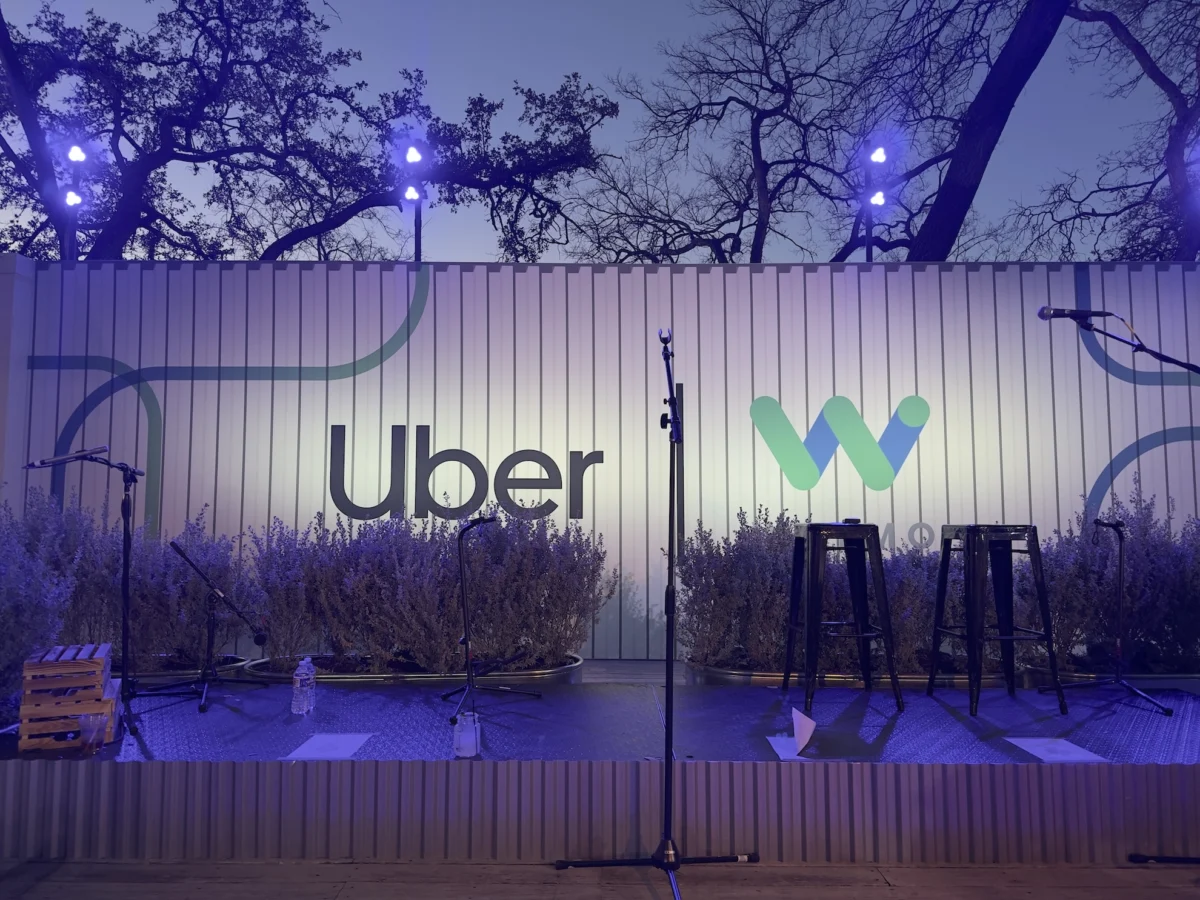
The future of autonomous transportation is currently being reshaped on multiple fronts, with a critical policy battle brewing in Washington, D.C., where ride-hailing giant Uber and autonomous vehicle (AV) leader Waymo find themselves on opposing sides of a proposed bill. This regulatory skirmish unfolds even as Uber simultaneously makes a monumental move to solidify its dominance in the global delivery market with a $14.8 billion acquisition. These developments highlight the complex interplay between technological innovation, regulatory frameworks, corporate strategy, and public interest in the rapidly evolving mobility sector. The friction in D.C. is particularly notable, given a previously reported deterioration in the Uber-Waymo partnership, now openly manifesting in divergent lobbying efforts over the very rules that will govern robotaxi deployment.
The D.C. Autonomous Vehicle Policy Battle: A Clash of Titans
The D.C. Council is currently evaluating a pivotal bill designed to permit autonomous vehicles to operate within the nation’s capital. This legislative effort has become a battleground, pitting industry titans against each other and revealing the deep divisions within the AV development community. At the heart of the conflict are Uber and Waymo, whose previously amicable (albeit strategic) alliance now appears to have fractured under the weight of competing business models and market aspirations.
Investigations into correspondence Uber submitted to the D.C. Council confirm earlier predictions of a deteriorating partnership, revealing that the two companies are actively sparring over the proposed regulations. Uber has taken a particularly aggressive stance, arguing vehemently against the current iteration of the D.C. bill. Its core contention is that the legislation, as drafted, would unfairly displace human for-hire drivers—a significant segment of Uber’s existing workforce—and effectively grant Waymo a de facto monopoly in the nascent D.C. robotaxi market. Uber’s proposed alternative advocates for a "hybrid" system, mandating that robotaxis operate on existing ride-hailing networks alongside human drivers. This approach, Uber suggests, would foster competition and integrate AVs into the established transportation ecosystem without immediately rendering human drivers obsolete.
However, sources close to the legislative process indicate that Uber’s "hybrid" proposal faces an uphill battle, with little chance of becoming law. If it were to pass, it would present a significant challenge to AV developers like Waymo, forcing them into a difficult choice: either integrate their sophisticated, multi-million-dollar robotaxi fleets onto third-party ride-hailing applications like Uber, or incur the substantial operational costs of employing human drivers alongside their autonomous vehicles. Such a requirement would fundamentally alter the economic model underpinning Waymo’s long-term strategy, which is predicated on the cost efficiencies of fully autonomous operations.
The D.C. Council held a crucial hearing on Monday to solicit public and industry feedback on the proposed bill. The diverse array of attendees underscored the wide-ranging implications of autonomous vehicle deployment. Representatives from major mobility players, including Lyft, Tesla, Uber, and Waymo, were present, alongside dozens of advocacy groups. Disability rights and accessibility advocates voiced concerns about ensuring equitable access to AV services, while local business and industry groups considered economic impacts. Highway safety organizations emphasized the paramount importance of public safety, and government officials weighed regulatory oversight. Labor unions expressed concerns about job displacement for human drivers, and various think tanks offered policy analyses.

The consensus emerging from the public testimony and subsequent discussions is that Waymo stands as one of the few companies largely in favor of the bill’s current framework. Waymo has been actively testing its AVs in Washington, D.C., for an extended period, utilizing human safety operators to comply with existing regulations and gather critical data. Consequently, Waymo has already surpassed key thresholds proposed in the bill, including the 180-day and 250,000-mile mandatory testing requirements. This substantial head start means that if the bill were to pass as written, Waymo would likely enter the commercial market with at least a six-month lead over potential competitors.
Conversely, much of the rest of the industry, including Tesla, expressed significant reservations. India Herdman, Tesla’s senior policy adviser, articulated several widespread concerns among AV developers. These objections specifically targeted the proposed 180-day, 250,000-mile mandatory testing requirement, the steep $1 million application fee, the $5 million permit fee, and the ongoing $0.15-per-mile tax. Tesla, echoing sentiments from other companies, argued that testing miles accumulated in other jurisdictions should be recognized and count towards D.C.’s mileage threshold, preventing redundant and costly testing efforts. The high fees and per-mile tax are also seen as significant barriers to entry, potentially stifling competition and innovation by disproportionately favoring established players or those with substantial capital reserves.
The D.C. Council’s deliberations reflect a broader national challenge: how to balance the promise of autonomous technology with concerns over safety, accessibility, economic impact, and fair competition. The outcome in Washington, D.C., could establish a precedent for other municipalities grappling with similar questions, further fragmenting or potentially harmonizing the patchwork of AV regulations across the United States.
Global Expansion: Uber’s Strategic Acquisition of Delivery Hero
While embroiled in the D.C. regulatory battle, Uber is simultaneously executing a colossal strategic move to cement its position as a global leader in both ride-hailing and, increasingly, delivery services. The company is in advanced stages of a massive $14.8 billion deal to acquire Germany’s Delivery Hero. This acquisition represents a significant expansion of Uber’s global footprint and strategic diversification beyond its core ride-hailing business, demonstrating a clear intent to dominate the burgeoning online delivery market.
If the acquisition successfully navigates the inevitable and rigorous regulatory hurdles—a process expected to be lengthy and complex, potentially spanning several quarters or even years due to antitrust concerns in various markets—it would grant Uber access to nearly 100 new markets across Europe, the Middle East, Latin America, and Asia. This expansion would effectively double Uber’s existing delivery footprint, placing it in direct competition with local and regional delivery services and significantly enhancing its market share in critical growth regions. The strategic rationale behind this acquisition is multifold: it allows Uber to leverage its existing technological infrastructure and operational expertise across a much wider geographical area, tap into new customer bases, and consolidate its position against competitors in the intensely competitive global food and grocery delivery sectors.
In a related but separate agreement, Delivery Hero has also committed to selling its business operations in 14 markets where Uber Eats already has a strong presence. This divestiture, valued at $1.6 billion, will go to New York-based investment firm SSW Partners. This component of the deal aims to streamline market operations, potentially reducing regulatory friction by addressing overlap and avoiding potential antitrust issues in certain regions where both Uber Eats and Delivery Hero previously operated. The overall transaction underscores a significant consolidation trend within the global delivery industry, driven by economies of scale, technological integration, and the pursuit of market leadership.

Innovation and Investment: Mobility Deals Roundup
Beyond the headline-grabbing maneuvers of industry giants, the broader mobility sector continues to attract significant investment and foster innovation, as evidenced by several recent funding rounds:
- Self Inspection Secures $10 Million for Vehicle Inspection Disruption: San Diego-based startup Self Inspection, which aims to revolutionize the often cumbersome vehicle inspection process through technology, successfully raised $10 million in a funding round. This round was notably led by the family office of Sheryl Sandberg, a testament to the increasing interest of prominent investors in disruptive mobility solutions. Strategic investments also came from tire distributor U.S. AutoForce and automotive lender Westlake Financial, signaling industry validation. Early-stage funds including Costanoa Ventures, Rebellion Ventures, and BrightCap Ventures also participated. Self Inspection’s technology, likely leveraging AI and computer vision, promises to enhance efficiency and accuracy in vehicle assessments, a critical component of the automotive aftermarket and insurance industries.
- Senra Raises $65 Million to Modernize Wire Harness Manufacturing: Senra, a startup focused on bringing modern manufacturing techniques to the production of wire harnesses—a critical but often overlooked component in complex machinery, including vehicles—secured a substantial $65 million in a Series B round. The round was co-led by Lowercarbon and Interlagos, with participation from a stellar list of venture capital firms including General Catalyst, Sequoia Capital, Andreessen Horowitz, and Founders Fund. The investment highlights a growing recognition of the need for innovation in foundational industrial processes, particularly as vehicles become more electrified and technologically advanced, requiring increasingly sophisticated and reliable wiring systems. This funding will likely accelerate Senra’s development of advanced manufacturing techniques to improve efficiency, reduce costs, and enhance the reliability of wire harnesses, a sector often described as being stuck in "Cold War-era" methods.
- Zepto Faces Lower Valuation for IPO: In a contrasting development, Zepto, an Indian fast-delivery company, is reportedly seeking a valuation for its initial public offering (IPO) significantly below its previous peak valuation of $7 billion. This report, citing anonymous sources, suggests a more cautious investor sentiment in the public markets for rapid-delivery services, potentially influenced by shifting economic conditions, increased competition, or a re-evaluation of growth prospects versus profitability. This trend is not unique to Zepto, as many high-growth startups globally have faced downward valuation adjustments as they transition from private funding rounds to public offerings.
Industry Watch: Notable Developments and Challenges
The mobility landscape is a dynamic arena, marked by continuous technological advancements, evolving regulatory challenges, and shifts in consumer preferences. Several other notable tidbits underscore these ongoing transformations:
- Chip Motors Unveils Low-Speed EV with Automated Capabilities: Miami-based startup Chip Motors revealed a new low-speed, small electric vehicle (EV) designed for short errands and family use. Crucially, the vehicle incorporates some automated driving capabilities, indicating a growing trend toward integrating varying levels of autonomy even in niche vehicle segments. This approach caters to urban mobility needs and highlights the potential for AV technology to democratize across different vehicle types.
- LAPD Ends Contract with Flock Safety Amid Privacy Concerns: The Los Angeles Police Department (LAPD) has reportedly allowed its contract with Flock Safety, a surveillance company specializing in license plate recognition cameras, to expire. This decision was made citing "serious concerns over civil liberties and privacy," reflecting a broader public and governmental scrutiny of surveillance technologies and their potential impact on individual rights. The termination of such a high-profile contract could influence other law enforcement agencies to re-evaluate their partnerships with similar surveillance providers.
- Lucid Motors Strongly Denies Bankruptcy Rumors: EV manufacturer Lucid Motors forcefully pushed back against a report alleging the company was considering filing for Chapter 11 bankruptcy. The company’s communications team, its CEO, and an official filing with the U.S. Securities and Exchange Commission (SEC) all unequivocally denied the rumors. The initial report triggered a dramatic more than 50% drop in Lucid’s stock on Tuesday, marking its largest intra-day decline ever. However, the stock has since recovered, trading approximately 28% higher than its pre-drop level, demonstrating the acute sensitivity of the market to rumors concerning the financial health of EV startups. This incident underscores the volatile nature of the electric vehicle market, where investor confidence can be easily swayed by unsubstantiated reports.
- Lyft CEO Positions Company as "The Good Uber": David Risher, CEO of Lyft, has publicly stated that Lyft is "the Good Uber," according to a report by Wired. This statement reflects Lyft’s ongoing efforts to differentiate itself from its larger rival by emphasizing a potentially more ethical, driver-friendly, or community-oriented brand image. In a highly competitive ride-hailing market, such branding efforts are crucial for attracting both customers and drivers.
- The Decline of Manual Transmission Vehicles: Preliminary government data for 2025 indicates the accelerating decline of manual, or standard, transmission vehicles in the U.S. market. The data shows that only 0.6% of new vehicles produced for the Us. market in 2025 featured stick shifts, a stark contrast to previous decades. This trend is driven by several factors, including the increasing prevalence of automatic transmissions, the rise of electric vehicles (which typically do not have multi-speed gearboxes), and a decreasing demand from consumers. The once-common manual transmission is rapidly becoming a niche offering, appealing mainly to driving enthusiasts.
- NTSB Confirms Driver Error in Fatal Tesla Crash: The National Transportation Safety Board (NTSB) confirmed that the driver of a Tesla involved in a fatal crash into a house in June had pressed the accelerator pedal to 100%. This action overrode the vehicle’s Full Self-Driving (Supervised) software, indicating that human intervention, rather than a system malfunction, was the primary cause of the incident. This finding reiterates the NTSB’s emphasis on driver responsibility even when advanced driver-assistance systems are engaged, highlighting the critical need for drivers to remain attentive and prepared to take control.
- San Francisco Mayor Calls for Tougher AV Rules After Waymo Incident: San Francisco Mayor Daniel Lurie has urged state regulators to implement more stringent rules for autonomous vehicles. This call comes in the wake of a notable incident on July 4th, when Waymo robotaxis became immobile in heavy traffic, ran out of power, and obstructed key streets, exacerbating gridlock. Mayor Lurie outlined four core requirements he believes are essential to ensure robotaxi companies can "perform reliably" during extraordinary events, such as public celebrations or emergencies. The incident underscores the ongoing challenges of deploying AVs in complex urban environments and the necessity for robust contingency protocols and regulatory oversight.
- SpaceX Aborts Starship V3 Launch: SpaceX abruptly aborted the second attempted launch of its upgraded Starship rocket system on Thursday. The abort occurred just moments after the booster ignited at the company’s complex in South Texas. While such aborts are not uncommon in experimental rocket development, this event highlights the inherent complexities and challenges of pushing the boundaries of space transportation technology, even for a company as experienced as SpaceX.
- Zoox Issues Software Recall Following Smoke Incident: Zoox, an autonomous vehicle company, issued a software recall after one of its robotaxis became "confused" by smoke emanating from an emergency fire scene in June. The incident, where the AV struggled to navigate or properly interpret its surroundings due to obscured visibility, underscores the limitations of current autonomous driving software in highly unusual and dynamic environmental conditions. Such recalls are critical for ensuring the safety and reliability of AV technology as it progresses towards broader commercial deployment.
Executive Insights: A Glimpse into Uber’s Future
Adding another layer to Uber’s multifaceted strategy, Sachin Kansal, Uber’s chief product officer, recently engaged in an insightful discussion with TechCrunch EIC Connie Loizos on the "Strictly VC podcast." Kansal provided strategic perspectives on Uber’s approach to travel, the integration of AI agents, and the company’s unique position of "playing both sides" of the robotaxi race. The interview sheds light on Uber’s long-term vision for evolving beyond its core ride-hailing and delivery services into a comprehensive mobility and logistics platform, leveraging AI to enhance user experience and operational efficiency. His comments suggest a cautious but persistent exploration of autonomous solutions, while simultaneously maintaining a robust network of human drivers—a strategy that aims to mitigate risk and capitalize on diverse market opportunities.
The confluence of these events—fierce regulatory battles, strategic acquisitions, and continuous technological advancements—paints a vivid picture of a mobility sector in flux. The outcomes of the D.C. AV bill, the success of Uber’s Delivery Hero acquisition, and the ongoing innovations and challenges faced by companies across the spectrum will collectively define the future of how people and goods move, underscoring the critical importance of both technological progress and thoughtful policy development.