

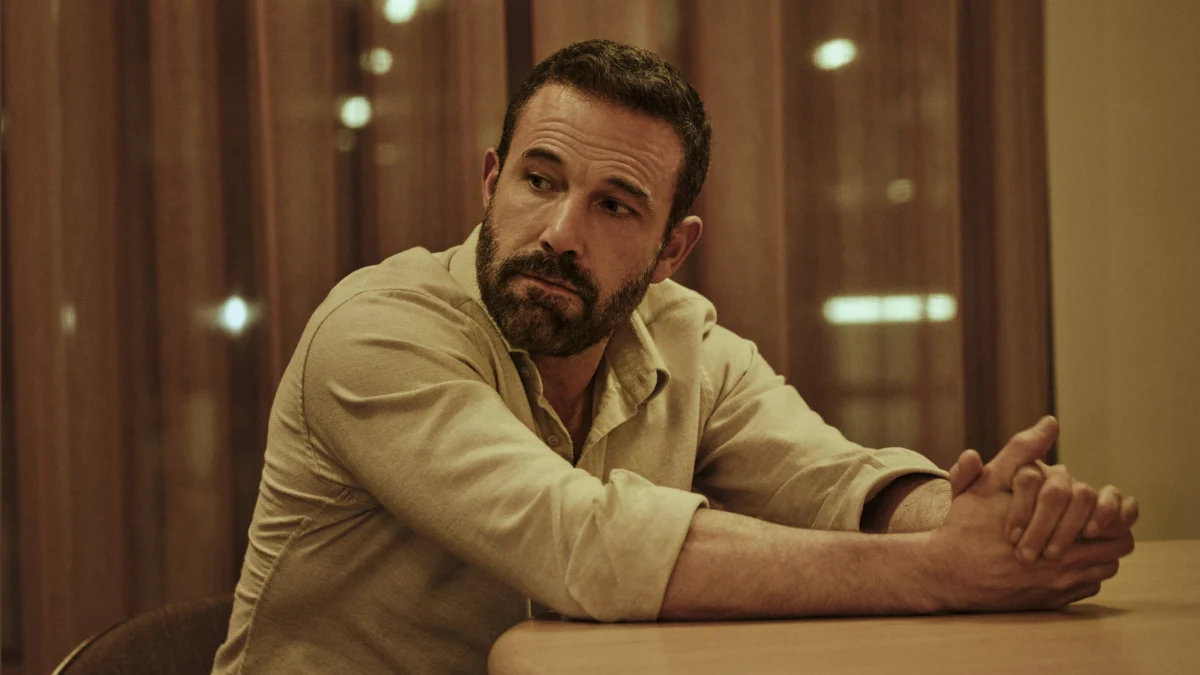
In a landmark move underscoring the entertainment industry’s accelerating embrace of artificial intelligence, streaming titan Netflix has formally disclosed the financial terms of its acquisition of InterPositive, an AI-powered filmmaking startup co-founded by acclaimed actor and director Ben Affleck. A recent regulatory filing with the U.S. Securities and Exchange Commission (SEC) revealed that Netflix paid a substantial $587 million in cash for the innovative company, a figure that solidifies the deal as one of the most significant AI-focused acquisitions in Hollywood to date and highlights the strategic importance Netflix places on integrating advanced technology into its content production pipeline.
The acquisition, initially announced in March, sent ripples through the industry, signaling a decisive step by Netflix to harness AI for enhancing its vast content creation efforts. While the initial announcement confirmed the strategic intent and InterPositive’s entire team, including Affleck, joining Netflix as a senior advisor, the financial specifics remained undisclosed. Early reports from outlets like Bloomberg had suggested a valuation potentially reaching up to $600 million, a prediction now largely confirmed by the official SEC filing. This transparency provides critical insight into the premium Netflix is willing to pay for proprietary AI technology that promises to streamline and optimize the complex, costly, and time-consuming process of post-production.
InterPositive’s Vision: Empowering Human Creativity Through AI
At the core of InterPositive’s appeal is its suite of AI tools designed to address common "real-world production challenges." Ben Affleck, speaking at the time of the acquisition announcement, articulated a vision centered on "protecting the power of human creativity." He emphasized that InterPositive’s AI is not intended to replace human artists but rather to serve as a powerful assistant, enabling filmmakers to improve their footage in post-production. Specific applications highlighted include making up for missing shots, seamless background replacements, and correcting incorrect lighting – tasks that traditionally require extensive manual labor, specialized visual effects artists, and significant time.
This focus on augmenting rather than supplanting human artistic endeavor aligns with a growing discourse within the creative industries regarding the ethical and practical integration of AI. Affleck’s public stance likely aims to alleviate concerns among creatives, many of whom have expressed anxieties about job displacement and the erosion of artistic control in the age of generative AI. By positioning InterPositive’s technology as a tool for enhancement and problem-solving, rather than a creative engine itself, Netflix and Affleck seek to foster a collaborative environment where AI assists in realizing, rather than dictating, artistic visions. The ability to efficiently address common production hiccups could free up valuable time and resources, allowing filmmakers to focus more on narrative and performance, ultimately delivering higher-quality content more consistently.
Netflix’s Strategic Imperative: A Deeper Dive into AI Integration
The acquisition of InterPositive is not an isolated incident but rather a significant acceleration of Netflix’s long-standing, albeit often discreet, commitment to artificial intelligence. The company’s most recent earnings report provided a telling statistic: approximately 300 of its titles have already utilized generative AI in the past year. This widespread adoption underscores AI’s already embedded role across various aspects of Netflix’s operations, from content recommendation algorithms and personalized user interfaces to internal production efficiencies.
For Netflix, a company that produces an unparalleled volume of original content globally, the strategic benefits of InterPositive’s technology are multifaceted.
- Cost Efficiency: Post-production, especially visual effects and correction work, can account for a substantial portion of a project’s budget. AI tools capable of automating or significantly accelerating these processes promise considerable cost savings, which can then be reinvested into more productions or higher talent fees.
- Accelerated Production Cycles: In the highly competitive streaming landscape, speed to market is crucial. AI can reduce the time spent in post-production, allowing content to reach audiences faster and enabling Netflix to maintain a fresh, diverse content library.
- Enhanced Quality and Consistency: Real-world production often involves compromises due to budget, time, or unforeseen circumstances. InterPositive’s AI can help overcome these limitations, ensuring a higher and more consistent level of visual quality across Netflix’s vast catalog, regardless of initial production challenges. This is particularly valuable for international productions that may operate with varying resources.
- Competitive Edge: By developing and integrating proprietary AI tools, Netflix can differentiate its production capabilities from competitors. This not only makes its content more efficient to produce but also potentially attracts top-tier filmmakers and talent who seek cutting-edge technological support.
- Scalability: As Netflix continues to expand its global footprint and content output, scalable solutions are paramount. AI offers a pathway to maintain high production standards across hundreds, if not thousands, of projects annually without proportionally increasing manual labor.
- Data Leverage: With decades of content data, Netflix is uniquely positioned to train and refine AI models for filmmaking. This vast dataset allows for the development of highly specialized and effective tools tailored to the nuances of visual storytelling.
The Broader Landscape of AI in Hollywood
The Netflix-InterPositive deal unfolds against a backdrop of intense debate and rapid evolution concerning AI’s role in Hollywood. The recent Writers Guild of America (WGA) and SAG-AFTRA strikes prominently featured demands for protections against AI, reflecting a widespread apprehension among creatives about job security, intellectual property rights, and the potential for AI to devalue human artistic contributions. While the unions ultimately secured some guardrails against unchecked AI use, the industry remains in a delicate dance between innovation and preservation of human artistry.
Other major studios and production houses are also heavily investing in AI, albeit with varying degrees of public transparency. Companies like Disney, Warner Bros., and Universal are exploring AI applications in areas such as script analysis, virtual production, digital human creation, and personalized content delivery. The difference with Netflix’s acquisition of InterPositive is its direct, high-profile investment in a specialized post-production AI company co-founded by a prominent figure like Ben Affleck, signaling a commitment to in-house technological advancement rather than solely relying on external vendors. This move could inspire a wave of similar acquisitions as studios vie for technological supremacy in content creation.
Ben Affleck’s Role: Bridging Art and Technology
Ben Affleck’s involvement as a co-founder of InterPositive and his subsequent role as a senior advisor at Netflix adds a unique dimension to this acquisition. Affleck is not merely a celebrity endorsement; he is an accomplished director and producer with a deep understanding of the practical challenges and artistic demands of filmmaking. His perspective lends credibility to InterPositive’s technology, demonstrating that its tools are designed with real filmmakers in mind, not just engineers.
His public statement about "protecting the power of human creativity" is crucial for managing the narrative around AI in a sensitive industry. Affleck’s presence helps bridge the often-perceived gap between the creative community and the technology sector, potentially fostering greater acceptance and collaboration. His role will likely involve guiding the integration of InterPositive’s tools into Netflix’s production workflows, ensuring they meet the practical needs of filmmakers, and advocating for AI’s constructive application within the artistic process. This high-profile artistic endorsement could be instrumental in overcoming resistance to AI adoption among talent and crews.
Implications for Filmmaking and Content Creation
The widespread adoption of AI tools like InterPositive’s has profound implications for the future of filmmaking:
- Democratization of High-End VFX: AI could make sophisticated visual effects more accessible to projects with smaller budgets, potentially leveling the playing field for independent filmmakers and international productions.
- Evolution of Skill Sets: While some traditional post-production roles might be automated, new roles will likely emerge, requiring expertise in AI supervision, prompt engineering, data curation, and integrating AI into creative workflows. VFX artists might shift from manual frame-by-frame work to directing AI models.
- Creative Freedom: By removing technical limitations and tedious manual tasks, filmmakers could gain more freedom to experiment with ambitious visuals and focus on storytelling without being constrained by the practicalities of execution.
- Ethical and IP Challenges: The use of AI, especially generative AI, continues to raise questions about intellectual property ownership (of AI-generated elements), authenticity (e.g., deepfakes, synthetic media), and accountability for AI-produced errors or biases. Netflix will need to navigate these ethical landscapes carefully.
- Post-Production Workflow Overhaul: Traditional linear post-production pipelines could become more agile and iterative, with AI offering real-time feedback and adjustments during various stages of editing and finishing.
Economic Impact and Future Outlook
From an economic standpoint, Netflix’s $587 million investment in InterPositive signals a strong belief in the long-term return on investment from AI-driven efficiency. If these tools can significantly reduce post-production costs and accelerate content delivery, the savings could easily outweigh the acquisition price over several years, while simultaneously improving content quality and subscriber retention. This acquisition could also drive up the valuation of other specialized AI startups in the media and entertainment sector, as major players recognize the necessity of acquiring such capabilities.
Looking ahead, the integration of InterPositive’s technology is expected to solidify Netflix’s position as a leader in innovative content production. It will allow the company to further scale its global content ambitions, deliver more visually polished projects, and potentially create new forms of interactive or personalized storytelling that leverage advanced AI. The era of AI-powered filmmaking is not just on the horizon; with this acquisition, Netflix is firmly planting its flag in the midst of it, redefining the boundaries of what’s possible in digital entertainment. The world will be watching to see how InterPositive’s technology, under Netflix’s vast content engine, truly transforms the creative process and the viewing experience.