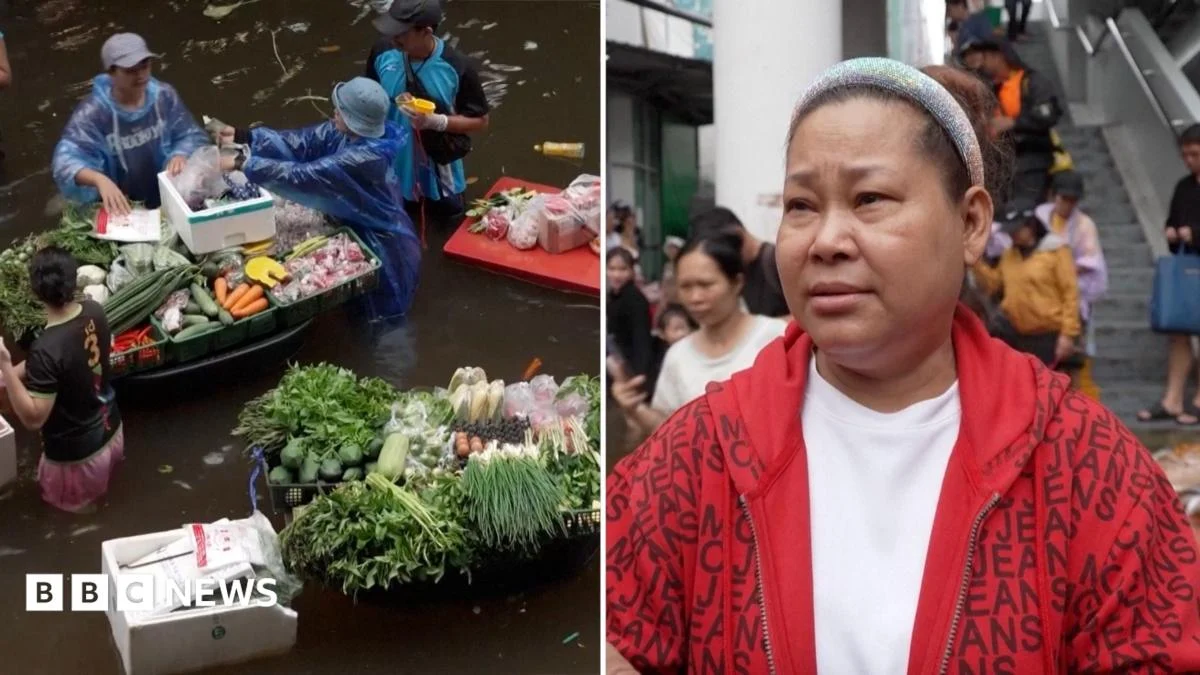
In an extraordinary display of ingenuity and community resilience, residents in Bangkok have transformed a heavily flooded street in front of a major shopping mall into a bustling, temporary floating market. This remarkable adaptation emerged as Thailand’s capital grappled with extensive flooding, prompting authorities to declare the city a disaster-affected zone following days of relentless heavy rains. The makeshift market, a vibrant testament to the human spirit in adversity, sees vendors wading through knee-deep waters to sell fresh produce, including various fish and an assortment of vegetables, from improvised floating platforms and sturdy foam boxes. Shoppers, navigating the inundated thoroughfare on foot or in small paddle boats, move between these temporary stalls, continuing their daily routines for groceries despite the challenging conditions.
Bangkok Under Water: A City Declared Disaster Zone
The recent deluge has plunged large swathes of Bangkok into disarray, marking one of the most severe flood events the city has experienced in recent years. The declaration of Bangkok as a disaster-affected zone by the Department of Disaster Prevention and Mitigation (DDPM) underscores the gravity of the situation, allowing for expedited allocation of resources and emergency aid to the affected districts. This official designation covers multiple districts across the capital, impacting hundreds of thousands of residents and causing significant disruption to daily life, transportation, and commerce.
Causes of the Deluge
The immediate trigger for the widespread flooding was an unusually prolonged period of intense rainfall, exacerbated by the annual monsoon season which typically brings heavy precipitation to Southeast Asia between May and October. Meteorological data from the Thai Meteorological Department indicated that several districts recorded rainfall exceeding 200 millimetres within a 24-hour period, far surpassing the capacity of the city’s existing drainage systems. This volume of water, combined with high tides in the Chao Phraya River, which acts as the city’s primary drainage artery, led to extensive overflows and prolonged inundation.
Beyond immediate weather patterns, Bangkok’s vulnerability to flooding is a complex issue rooted in its geographical characteristics and rapid urban development. The city is built on a low-lying delta plain, historically crisscrossed by a network of canals (khlongs) that once served as both transportation routes and natural drainage channels. Over decades, many of these canals have been filled in to make way for roads and buildings, reducing the city’s natural water retention and drainage capacity. Furthermore, Bangkok is experiencing land subsidence, sinking by several centimetres annually due to excessive groundwater pumping and the sheer weight of its urban infrastructure. This subsidence, coupled with rising sea levels, amplifies the threat of future flood events, making the city increasingly susceptible to even moderate rainfall. Climate change also plays a significant role, with scientists predicting more extreme weather events, including heavier rainfall and more intense storm surges, further complicating Bangkok’s long-term flood management strategies.
Chronology of the Catastrophe
The progression from routine monsoon rains to a full-blown urban crisis unfolded rapidly:
- Early October: Initial reports of persistent heavy rainfall across Thailand’s northern and central regions, leading to rising river levels upstream of Bangkok.
- Mid-October (Day 1-3): Continuous, exceptionally heavy downpours begin directly over Bangkok and surrounding provinces. Meteorological warnings are issued, advising residents of potential flash floods.
- Mid-October (Day 4): Water levels in major canals and tributaries within Bangkok reach critical thresholds. Sporadic street flooding begins in low-lying areas, particularly in eastern and northern districts.
- Mid-October (Day 5): Floodwaters escalate dramatically across central Bangkok. Key thoroughfares become impassable, public transport is disrupted, and commercial activities are severely impacted. The Bangkok Metropolitan Administration (BMA) begins deploying pumps and sandbags.
- Mid-October (Day 6): With floodwaters continuing to rise and showing no signs of immediate recession, the Department of Disaster Prevention and Mitigation officially declares Bangkok a disaster-affected zone. This declaration triggers emergency response protocols.
- Late October (Day 7-10): The flooding persists, with some areas reporting water depths exceeding 50 centimetres. It is during this period that communities, particularly those in resilient informal settlements and traditional market areas, begin to adapt. The makeshift floating market in front of the shopping mall emerges as a spontaneous response to the disrupted supply chains and the need for daily commerce.
- Late October (Ongoing): Authorities intensify efforts to drain water, but the sheer volume and the complexities of urban drainage mean that recovery is expected to be protracted. The temporary market continues to operate, serving as a vital lifeline for local residents.
The Makeshift Market: A Hub of Resilience
The transformation of an inundated street into a vibrant floating market offers a poignant illustration of Bangkok’s enduring spirit of adaptability. What would typically be a bustling thoroughfare for vehicles and pedestrians, now sees water as its primary medium of transport. Vendors, many of whom are small-scale entrepreneurs whose regular stalls or shops have been rendered inaccessible, have improvised with remarkable resourcefulness. Using simple wooden planks, repurposed foam boxes, and even small inflatable rafts, they create stable platforms from which to display their wares. The offerings are diverse and essential: fresh catches of fish, vibrant heaps of leafy greens, exotic fruits, and pre-prepared Thai dishes, all catering to the immediate needs of the local community.
Customers, undeterred by the challenging conditions, navigate the watery aisles. Some wade cautiously, their trousers rolled up, while others opt for the convenience of small, rented paddle boats, often operated by local youth eager to earn a small income. The atmosphere, despite the underlying difficulties, is remarkably lively. Bartering and friendly exchanges fill the air, creating a sense of community solidarity amidst the crisis. This market is not merely a place of commerce; it has become a social hub, a space where neighbours connect, share information about the flood situation, and collectively navigate the challenges imposed by the deluge. It also serves as a critical link in the local food supply chain, ensuring that residents have access to fresh produce when conventional markets are either flooded or inaccessible due to transportation issues. The market, therefore, exemplifies both economic necessity and an intrinsic cultural connection to Bangkok’s historical identity as a city of waterways.
Data Points: Quantifying the Impact
The recent flooding has had a profound impact across various sectors, quantifiable through several key metrics:
- Rainfall: The Thai Meteorological Department reported that cumulative rainfall in Bangkok over the critical mid-October period exceeded 400 mm in some districts, significantly higher than the monthly average for October. Specific stations recorded daily peaks of over 200 mm, overwhelming urban drainage capacities designed for lesser intensities.
- Affected Population: Initial estimates from the Bangkok Metropolitan Administration (BMA) suggest that over 500,000 residents in at least 25 of Bangkok’s 50 districts have been directly affected by the flooding. This includes individuals whose homes are inundated, those facing transportation difficulties, and those experiencing disruptions to essential services.
- Economic Impact: While a comprehensive economic assessment is still underway, preliminary figures from the Federation of Thai Industries and the Thai Chamber of Commerce indicate potential losses running into billions of Thai Baht. The disruption to logistics, manufacturing, retail, and tourism sectors is substantial. Small and medium-sized enterprises (SMEs), which form the backbone of Bangkok’s economy, are particularly vulnerable, with many reporting significant damage to inventory and property, alongside lost revenue due to forced closures. The informal economy, including street vendors and small market traders, also faces severe setbacks, though initiatives like the makeshift floating market demonstrate attempts to mitigate these losses.
- Infrastructure Damage: Road infrastructure, including several major arterial roads, has suffered extensive damage, with prolonged submersion leading to erosion, potholes, and structural weakening. Public transport systems, notably parts of the bus network and some elevated train stations, experienced operational difficulties. Estimates for repair and restoration of public infrastructure are projected to be substantial.
- Agricultural Impact: While Bangkok itself is predominantly urban, surrounding provinces, which supply much of the capital’s fresh produce, also experienced severe agricultural flooding. This has led to crop losses, impacting food prices and supply chains in the short to medium term.
Voices from the Floodwaters: Community and Official Perspectives
The crisis has elicited a range of responses from those directly impacted and the authorities tasked with managing the disaster.
Vendor and Resident Accounts
For the vendors at the temporary floating market, the situation is a mix of hardship and necessity. "My usual stall inside the market is under two feet of water," explained Ms. Preeya, a fish vendor, balancing precariously on her foam platform. "I have a family to feed. If I don’t sell, we don’t eat. This is how we survive now." Her sentiment is echoed by many. Mr. Somchai, who typically sells vegetables from a roadside cart, now paddles a small boat laden with produce. "It’s hard work, but people need food, and we need income. It also feels good to see neighbours helping each other, even in this difficult time."
Customers, too, express a blend of frustration and appreciation. "It’s incredibly inconvenient to get anywhere, and my daily commute takes hours," said Mrs. Supatra, navigating the flooded street in rubber boots. "But this market is a blessing. Otherwise, I’d have to travel far to find fresh food, and even then, many places are closed. It’s amazing how quickly they set this up." These accounts highlight the immediate economic pressures faced by ordinary citizens and their remarkable capacity for adaptation.
Government Statements
The Bangkok Metropolitan Administration (BMA) and national disaster agencies have acknowledged the severity of the situation and outlined their ongoing relief efforts. Bangkok Governor, Chadchart Sittipunt, addressed the public, stating, "We understand the immense challenges faced by our citizens. Our teams are working around the clock to drain water, distribute aid, and ensure public safety. We have deployed over 1,000 pumps across the city and are coordinating with the Royal Thai Army for additional resources." He further emphasized the long-term commitment to improving the city’s flood defenses, acknowledging the need for significant infrastructure upgrades.
A spokesperson for the Department of Disaster Prevention and Mitigation (DDPM) noted, "The declaration of Bangkok as a disaster zone allows us to allocate emergency funds more efficiently and mobilize resources from various ministries. Our immediate priorities are humanitarian aid, restoring essential services, and preventing further spread of disease." They also urged residents to remain vigilant, follow official advisories, and report any emergencies.
Expert Analysis
Urban planning and climate change experts have weighed in on the recurring nature of Bangkok’s flood woes. Dr. Pongsakorn Thongphakdi, an urban resilience specialist at Chulalongkorn University, commented, "What we are witnessing is a potent cocktail of natural phenomena and anthropogenic factors. Rapid, often unplanned, urbanization has paved over natural floodplains and compromised our canal systems. The land subsidence issue is critical, making Bangkok increasingly vulnerable to even moderate rainfall, let alone extreme weather events exacerbated by climate change." He advocated for a holistic approach combining ‘grey’ infrastructure (dikes, pumping stations) with ‘green’ infrastructure (restoring wetlands, creating permeable surfaces) and better urban planning regulations.
Dr. Somsak Boonchua, a climatologist, added, "The intensity and frequency of these heavy rainfall events are consistent with climate change projections for Southeast Asia. Bangkok needs to urgently integrate climate adaptation strategies into its long-term development plans, including enhanced early warning systems, improved water management, and public education on flood preparedness."
Echoes of the Past: Bangkok’s Enduring Relationship with Water
The emergence of a floating market in contemporary Bangkok, albeit under dire circumstances, resonates deeply with the city’s historical identity. For centuries, Bangkok was known as the "Venice of the East," a city intricately woven with a vast network of khlongs (canals) that served as its primary arteries for transport, trade, and daily life. Floating markets were not merely tourist attractions but the lifeblood of commerce, with vendors selling goods directly from their boats. This traditional way of life gradually diminished with the advent of modern roads and infrastructure, but the cultural memory and the practical skills associated with navigating and trading on water have clearly not faded. The temporary market thus serves as a powerful, if bittersweet, reminder of Bangkok’s watery heritage and its innate ability to leverage its unique environment, even when facing crisis.
Implications and the Path Forward
The current flooding and the community’s response carry significant implications across economic, social, and environmental dimensions.
Economic Resilience vs. Vulnerability
While the makeshift floating market demonstrates remarkable short-term economic resilience, allowing local commerce to continue, the overall economic impact of the floods is undeniably negative. Businesses face closures, supply chains are disrupted, and tourism, a vital sector for Thailand, suffers setbacks. The informal economy, while adaptable, often lacks the safety nets of formal businesses, making sustained periods of disruption devastating for many. This highlights the need for robust disaster relief mechanisms that specifically target small vendors and informal workers, alongside broader economic recovery plans.
Social Cohesion in Crisis
The spontaneous community actions, such as the floating market, underscore the strong social fabric and mutual support prevalent in many Bangkok neighbourhoods. In times of crisis, informal networks often step in where formal systems may be overwhelmed, providing essential goods, services, and emotional support. This social capital is a crucial asset for urban resilience, fostering a sense of collective responsibility and shared purpose.
Urban Planning and Climate Change
The recurring nature of significant floods in Bangkok serves as an urgent call to action for comprehensive urban planning and climate adaptation strategies. There is an undeniable need for:
- Infrastructure Upgrades: Modernization and expansion of drainage systems, pumping stations, and flood barriers.
- Nature-Based Solutions: Restoration of wetlands, creation of urban green spaces, and permeable pavements to enhance natural water absorption.
- Improved Early Warning Systems: More accurate meteorological forecasting and efficient dissemination of flood warnings to the public.
- Sustainable Urban Development: Strict regulations on land use, particularly in flood-prone areas, and an end to groundwater over-extraction to mitigate land subsidence.
- Regional Cooperation: Coordinated water management with upstream provinces and neighbouring countries to manage river flows effectively.
The Informal Economy’s Role
The temporary floating market also highlights the critical, yet often overlooked, role of the informal economy in urban resilience. During crises, when formal retail and supply chains falter, informal vendors often fill the void, providing essential goods and services directly to affected communities. Recognizing and supporting this sector, rather than merely tolerating it, could be a key component of future disaster preparedness strategies.
As Bangkok slowly begins the arduous process of draining the floodwaters and recovering from this latest deluge, the image of vendors and buyers navigating a flooded street in a makeshift floating market will likely endure. It is a powerful symbol of human spirit and ingenuity in the face of adversity, but also a stark reminder of the escalating challenges posed by rapid urbanization and a changing climate, demanding urgent and decisive action for the future resilience of this vibrant, water-bound metropolis. The temporary market, born out of necessity, offers a unique snapshot of a city grappling with its vulnerabilities while simultaneously celebrating its enduring capacity to adapt and thrive.